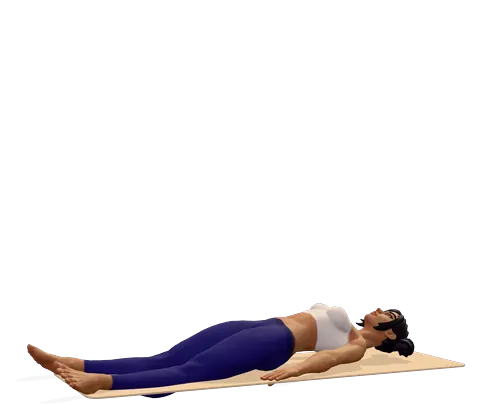
How to do body scan meditation
- Lie on your back on a mat or bed, arms by your sides, with a pillow under the knees if you like.
- Close your eyes and take a few slow breaths to settle.
- Bring your attention to the toes of your left foot and notice any sensation there.
- Move slowly up the left leg, then the right foot and leg, pausing at each area.
- Continue through the hips, belly, back, chest, hands, arms, shoulders, neck, face and head.
- If you find tension, breathe into it and let it soften a little on the out-breath.
- Finish by feeling the whole body at once, then move gently and sit up slowly.
Benefits
- Part of mindfulness programmes that have been shown to reduce stress in many studies
- Helps many people relax before sleep
- Builds awareness of where you hold tension
- May change how pain is experienced, though it does not treat its cause
Be careful
If attention to a painful or difficult area feels overwhelming, skip that part or open your eyes. Lying down may make you sleepy; sit up if you want to stay alert.
Body scan meditation is a slow, careful tour of your own body. You lie still and move your attention from one area to the next, feeling whatever is there: warmth, pressure, tingling, tightness, or nothing at all. You do not have to relax on purpose. By noticing each part in turn, most people find the body softens on its own.
The guided voice above is free body scan meditation audio in 28 languages, following a full body relaxation meditation script of about fifteen minutes, while the 3D teacher rests in savasana with the breath ring rising and falling. Below you will find where the practice comes from, how it works, how to fit it into your day and night, and what to do if it makes you sleepy or uneasy.
What is body scan meditation?
A body scan is a mindfulness exercise in which attention is the only tool. Instead of stretching or tensing muscles, you simply notice sensations area by area, in a fixed order. When the mind wanders, and it will, you note where it went and return to the part of the body you had reached.
The modern body scan meditation was made widely known by Jon Kabat-Zinn, who placed it at the heart of his Mindfulness-Based Stress Reduction (MBSR) programme, started in 1979 at the University of Massachusetts. In MBSR, the body scan is usually the first formal practice people learn, often done lying down for around 30–45 minutes. Its roots are older. The Burmese vipassana tradition "sweeps" attention through the body, and yoga has yoga nidra, in which a teacher guides awareness quickly through each body part while you lie in savasana (corpse pose). The version on this page sits between the two: slower than yoga nidra, simpler than a full vipassana sweep.
What does body scan meditation do? Its purpose
The purpose of body scan meditation is to reconnect attention with the body. Many of us live "from the neck up", thinking about the past and the future while the body quietly carries stress. The scan trains three skills:
- Noticing: feeling subtle sensations you usually miss, such as a clenched jaw or raised shoulders.
- Allowing: letting a sensation be as it is, without fighting it. This is why body scan mindfulness is used in pain programmes.
- Returning: bringing a wandering mind back, again and again, which is the core of all meditation.
How does body scan meditation work?
Two things seem to happen. First, lying still with slow breathing tends to move the nervous system toward its "rest and digest" mode. Second, attention changes how we relate to sensation. When you study an ache closely, you often find it is not one solid block but a changing mix of pressure, heat and pulsing, and the fear around it can ease. This does not treat the cause of pain, but it can change how heavy the pain feels.
Progressive muscle relaxation vs body scan
These are often confused. In progressive muscle relaxation (PMR) you tense each muscle group for a few seconds and then release it, so the relaxation comes from the contrast. In a body scan you never tense anything; you only observe. PMR is more active and can help people who cannot feel tension at all. The body scan is gentler and better for sore or injured areas. A progressive body relaxation script often mixes both, for example "feel your hand, now let it grow heavy".
How to do a body scan meditation well
The body scan meditation steps above give the order, step by step. These details make a real difference, especially if you want a guided body scan for beginners:
- Set up for comfort. This is also the simplest answer to how to completely relax your body: lie on a mat or bed, a pillow under the knees if your lower back aches, a thin cushion under the head, and a blanket, because the body cools as it rests.
- Go slowly. Spend at least a few breaths on each area. Rushing turns the scan into a checklist.
- Accept "nothing". If you feel nothing in your knee, notice "no clear sensation" and move on. That is a correct observation.
- Use the breath. Imagine breathing into the area you are feeling, and let it soften on the out-breath. This body scan meditation breathing is optional but helpful.
- Finish slowly. Roll to one side before you sit up, especially after a long scan, so you do not feel dizzy.
Choosing a length: 5, 10, 15 or 20 minutes
| Length | Best for | How to do it |
|---|---|---|
| 3–5 minutes (quick scan) | A quick reset at work or between tasks | Seated; move through feet, legs, belly, hands, shoulders and face in large sections |
| 10 minutes | Daily habit, lunch breaks | Lying or seated; one area per 20–30 seconds |
| 15 minutes | Evening wind-down | The guided session above, lying down |
| 20–45 minutes | Deep practice, MBSR style | Lying down; include toes, joints and small areas one by one. Use the meditation timer for silent practice |
For a daily routine, try a body scan meditation of 5 minutes in the morning while still in bed, and the full 15-minute guided body scan in the evening. On busy days, a body scan meditation of 10 minutes still counts. Most MBSR courses ask for one scan a day, six days a week, for eight weeks. Two or three weeks of daily practice is usually enough to notice a change in how quickly you can relax.
Body scan for sleep
A body scan for sleep is one of the most popular uses of this practice, and for good reason: attention on physical sensation leaves less room for the racing thoughts that keep you awake. To use it as a sleep aid:
- Do it in bed with the lights off, lying on your back or on your side.
- Let the voice fade into the background; you do not need to follow every word.
- If you are still awake at the end, stay with the whole-body feeling and the breath at the belly.
- For a longer, deeper version, try our guided Yoga Nidra (10, 20 or 30 minutes) or the sleep meditation.
If you want to learn the skill rather than fall asleep, practise at a different time of day and sit up. Falling asleep during a mindful body scan for sleep is fine; falling asleep every time you practise in the afternoon just means you need more rest. More ideas are on yoga for sleep and insomnia.
Body scan meditation benefits: what the science says
Most research studies the body scan as part of whole mindfulness programmes such as MBSR, so it is hard to separate its effect from the other practices. With that caution:
- Stress and anxiety: reviews of mindfulness programmes show reduced stress and anxiety for many adults, which is why a body scan meditation for anxiety is a common first tool in therapy. See yoga for stress relief and yoga for anxiety.
- Sleep: a well-known trial in older adults with sleep problems, published in JAMA Internal Medicine in 2015, found a mindfulness course improved sleep quality more than a sleep-hygiene class.
- Chronic pain: MBSR, with the body scan meditation at its core, was first built for people with chronic pain, and reviews suggest small to moderate improvements in how pain affects daily life. See yoga for chronic pain.
- Depression: mindfulness-based cognitive therapy, which includes body scan meditation, can reduce relapse in people with repeated depression, alongside their usual care.
If you live with trauma, a body scan can sometimes bring up strong feelings or memories linked to certain areas. You are always free to skip an area, open your eyes, or move. Keep the scan short and work with a trained therapist if this keeps happening.
Body scan meditation for kids and teens
Children respond well to a short, playful scan. Ask them to imagine a warm light, or a friendly caterpillar, walking slowly from their toes to their head, stopping to "say hello" to each part. Keep it to three to five minutes for young children. Teens often like a 10-minute scan before exams or bedtime; a body scan meditation for teens works best when it is optional and presented as a tool for focus and sleep, not a rule. After the scan, a minute in child's pose is a calm way to finish.
If you would rather watch the breath while sitting up, try breath awareness meditation, or browse all guided meditations.
बॉडी स्कैन मेडिटेशन (body scan meditation in Hindi) — हिंदी में पीठ के बल आराम से लेटें और आँखें बंद करें। अपना ध्यान धीरे-धीरे पैर की उँगलियों से सिर तक ले जाएँ और हर हिस्से में जो भी अनुभव हो, उसे बिना बदले महसूस करें। जहाँ तनाव लगे, वहाँ साँस छोड़ते हुए उसे ढीला होने दें। यह अभ्यास तनाव कम करने और अच्छी नींद में मदद कर सकता है।
Frequently asked questions
What is body scan meditation?
It is a mindfulness practice in which you move your attention slowly through the body, usually from the feet to the head, noticing sensations without trying to change them. It was made popular by Jon Kabat-Zinn's MBSR programme and is similar to the relaxation stage of yoga nidra.
What are the benefits of body scan meditation?
As part of mindfulness programmes, it has been linked with lower stress, better sleep quality and a gentler relationship with chronic pain. It also helps you notice where you hold tension, so you can let it go earlier in the day.
Is it okay to fall asleep during a body scan?
Yes, if you are using a body scan for sleep. If you want to build awareness, practise earlier in the day, keep the eyes slightly open, or do the scan sitting in a chair.
How long should a body scan take?
Anything from three to 45 minutes. Beginners do well with 10 to 15 minutes; the guided session on this page lasts about 15. A short daily scan is more useful than a long one once a week.
Can I do a body scan sitting up?
Yes. Sit in a chair with both feet on the floor and your hands resting on your thighs. A seated scan is less likely to make you sleepy and is easy to do at work or on public transport.
What if I feel pain or nothing at all in some areas?
Both are normal. If an area is painful, notice its edges and texture for a few breaths, then move on; you can skip it entirely if it feels too much. If you feel nothing, simply note "no sensation" and continue.
Is body scan meditation the same as yoga nidra?
They are related but not the same. Yoga nidra moves through the body quickly and adds other stages such as an intention (sankalpa), breath counting and imagery. A mindfulness body scan is slower and focuses only on feeling each area.
More guided meditations
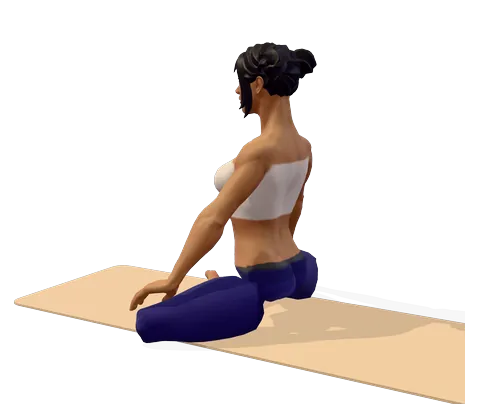 Breath Awareness MeditationRest your attention on the natural breath and gently return to it each time the mind wanders.Loving-Kindness MeditationSilently repeat warm wishes for yourself, then widen them step by step to others and to all beings.So Hum Mantra MeditationSilently hear the sound "So" as you breathe in and "Hum" as you breathe out, linking a mantra to the natural breath.OM Chanting MeditationChant OM aloud in slow, long breaths, then sit in the silence that follows the sound.Trataka Candle MeditationGaze steadily at a candle flame, then close your eyes and hold the after-image in your mind. See our full Trataka guide for more detail.Chakra Meditation (All 7 Chakras)Move your attention up through the seven chakras from the base of the spine to the crown, using colour and the seed sounds.
Meditation supports health; it does not replace medical or psychological care. If meditation brings up distressing memories or feelings, stop, open your eyes and ground yourself; talk to a professional if it keeps happening. Medical disclaimer.