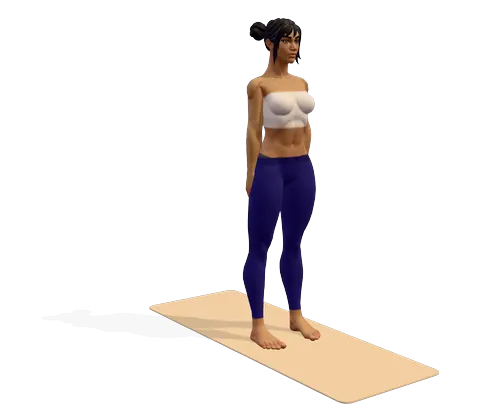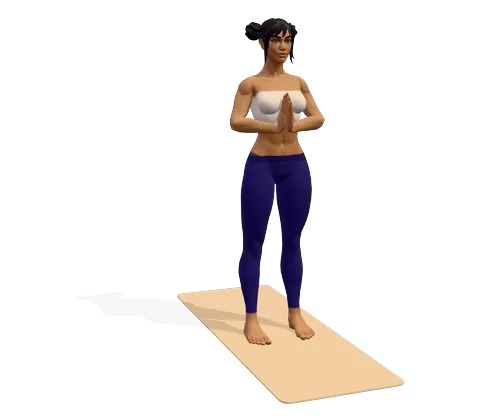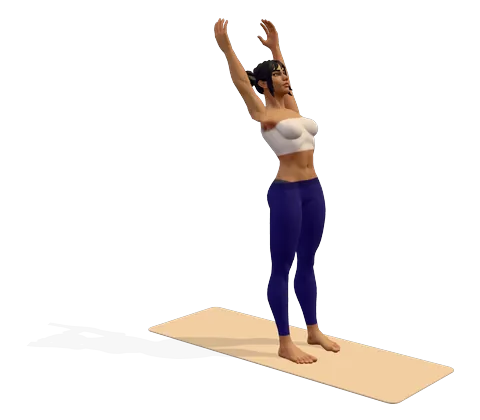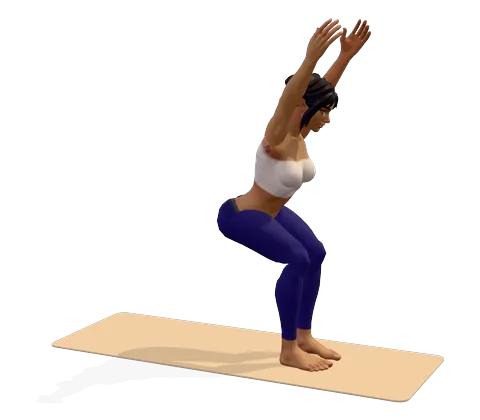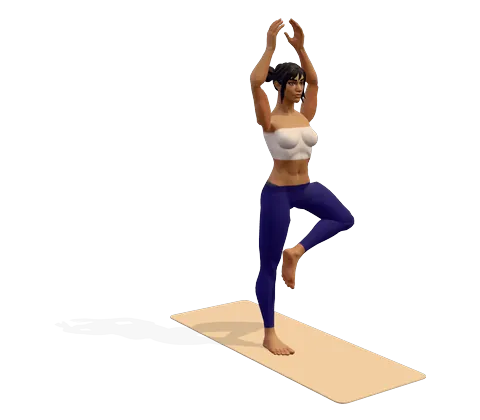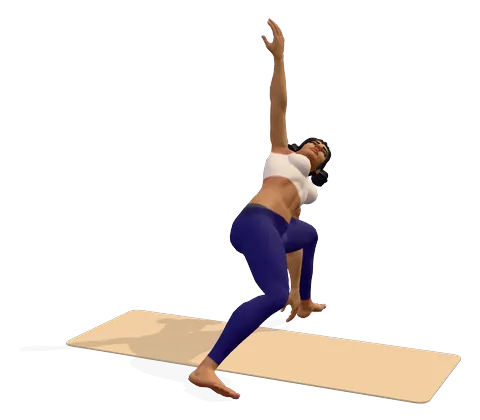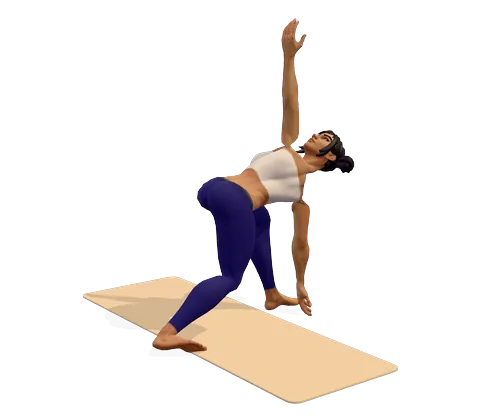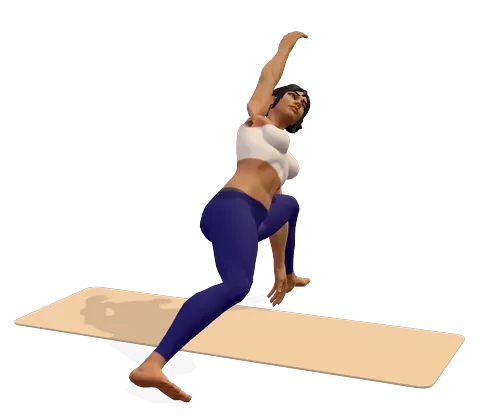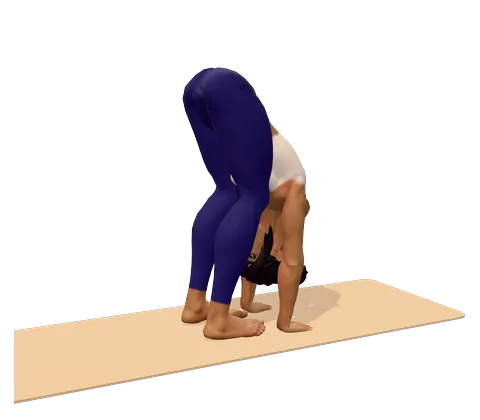
How to do Standing Forward Bend step by step
- Stand in Mountain pose with your feet hip-width apart and parallel. Place your hands on your hips.
- Breathe in and lengthen your spine. Breathing out, hinge forward from the hip joints — not the waist — keeping the front of the body long.
- Let your hands come to the floor beside your feet, or to your shins or blocks. Bend your knees as much as you need to keep the stretch comfortable.
- Let your head hang heavy and your neck relax. Shift your weight slightly toward the balls of your feet so your hips stay over your ankles.
- With each breath in, lengthen the front of the body a little; with each breath out, soften deeper into the fold.
- Hold for 5–8 breaths (30–60 seconds).
- To come up, bend your knees, bring your hands to your hips and rise slowly on an inhale with a long, flat back. Pause standing for a breath before you move on.
Where you feel Standing Forward Bend: what it stretches and strengthens
Let your upper body hang and feel the backs of your legs. In the 3D guide, turn on Body guide: areas that stretch glow green and areas that work glow saffron.
Stretches
- Hamstrings
- Calves
- Lower back
Strengthens
- Front thighs
Benefits and precautions
Benefits
- Stretches the hamstrings, calves and the whole back of the body
- Gently releases the neck and upper back as the head hangs
- Many people find the head-down position calming
- Strengthens the thighs, which work to support the fold
- Prepares the body for seated forward bends and part of every Surya Namaskar
- A simple way to counter long periods of standing or sitting
Avoid or modify if
- Acute back pain, a disc injury or sciatica — keep the knees well bent and the back flat, or practise Ardha Uttanasana with hands on a chair
- High blood pressure, glaucoma or recent eye surgery — keep the head above the heart (half fold) and ask your doctor
- Low blood pressure or dizziness — come up slowly with bent knees
- Hamstring tear or strain — bend the knees and don’t push into the stretch
- Late pregnancy — stand with feet wide, hands on blocks or a chair, and avoid compressing the belly
Standing forward bend (Uttanasana) is a simple fold: you stand, hinge at the hips and let your upper body hang toward your legs. It stretches the whole back of the body and many people find it quietening. In Surya Namaskar the same fold is called Padahastasana, "hand-to-foot pose". This guide shows how to do standing forward bend safely, its benefits, the muscles worked, variations for tight hamstrings and who should be careful.
What is Uttanasana?
In yoga, Uttanasana is a standing forward bending asana. The Sanskrit name has three parts: ut means "intense", tan means "to stretch" and asana means "pose" — so the Uttanasana meaning in English is "intense stretch pose". In Hindi, Uttanasana is written उत्तानासन and Padahastasana is पादहस्तासन. Uttanasana pronunciation: oo-tahn-AHS-uh-nuh.
Difference between Uttanasana and Padahastasana
Pada means "foot" and hasta means "hand", so the Padahastasana meaning in English is "hand-to-foot pose". In the Sun Salutation, Padahastasana is the fold with the palms on the floor beside the feet — the same shape our 3D guide shows. In some traditions the name is kept for a deeper version where you slide your palms under your feet. And in Big Toe Pose (Padangusthasana) you hold the big toes instead. All three are standing forward bends with slightly different grips.
How to do standing forward bend correctly (Uttanasana kaise kare)
The steps above show how to do Uttanasana step by step. These points make the fold safer and deeper:
- Hinge at the hips. Imagine your pelvis as a bowl tipping forward. Rounding from the waist puts the stretch in the lower back instead of the hamstrings.
- Bend the knees freely. Knees soft, belly on thighs is a better fold than straight legs with a rounded back. Straighten gradually over weeks.
- Weight forward. Don't lean back into your heels; hips stay over the ankles.
- Relax the neck. Let the head hang. Nodding "yes" and "no" gently helps release tension.
- Rise slowly. Coming up fast can make you dizzy. Bend your knees, hands on hips, and lift with a flat back.
How long to do Uttanasana
Hold for 30–60 seconds on its own. In Surya Namaskar you stay for one exhale. For a longer, calming stretch at the end of the day, you can hold a supported version (forearms on a chair) for up to two minutes.
Standing forward bend benefits (Uttanasana ke fayde)
The main Uttanasana benefits are a long stretch for the back of the body and a sense of calm:
- Hamstrings and calves. The standing forward bend stretch lengthens the back of the thighs and calves, which tighten with sitting, running and cycling.
- Back and neck release. Letting the head and spine hang with gravity gently lengthens the back and releases the neck.
- Calm. Forward folds are used in our yoga for anxiety and stress relief plans, and in bedtime routines, because many people find them soothing. Breathing slowly while folded adds to this.
- Part of a whole-body warm-up. As Padahastasana, it appears twice in each round of Surya Namaskar.
Some sources claim forward bends "cure" headaches, sinus problems or digestive issues. There is no good evidence for that. The fold is included in our sinus routine because many people find it comfortable — but if your head feels congested or pounding when upside down, come up.
Standing forward bend muscles worked
| Stretches | Works lightly |
|---|---|
| Hamstrings (back of the thighs) | Quadriceps (front of the thighs), which lift the kneecaps |
| Calves and Achilles tendons | Hip flexors, which draw the torso toward the legs |
| Muscles along the spine, neck and buttocks | Feet and ankles, which keep you balanced |
Standing forward bend for beginners: modifications
- Bent knees: the most useful standing forward fold modification. Rest the belly on the thighs.
- Hands on blocks or a chair: bring the floor closer if your hands don't reach.
- Ragdoll: hold opposite elbows and let the arms hang; sway gently side to side.
- Half forward bend (Ardha Uttanasana): hands on the shins with a flat back, looking forward. It is the "halfway up" step of many flows and a safe option for sensitive backs.
- Roll up: from the fold, bend your knees and roll up one vertebra at a time, head last — a gentle way to end.
Uttanasana variations
- Standing forward bend with clasped hands (shoulder opener): interlace the fingers behind your back and let the arms fall toward the floor.
- Standing forward bend with crossed legs: cross one ankle over the other to stretch the outer hip and thigh. Change sides.
- Legs apart: a wider stance becomes wide-legged forward bend, easier for many people.
- One leg up: lift one leg behind you into a standing split for a stronger stretch and balance.
- Twist: place one hand on the floor and reach the other arm up.
Is bending forward bad for your back?
For most healthy backs, no. Bending forward is a normal movement, and gentle folding keeps the spine mobile. The risk comes when you have an acute disc problem or sciatica, or when you fold fast with straight legs and a rounded back. In that case, keep the knees well bent, hinge from the hips and choose the half fold — our yoga for back pain plan has gentler options.
Uttanasana precautions and contraindications
Because the head goes below the heart, standing forward bend is a mild inversion. The caution box above lists who should modify it. The simple rule: if you feel dizzy, pressure in the head or eyes, or pain shooting down a leg, come up slowly and choose the half fold with your hands on a chair. You can practise it with the 3D guide in the Morning Wake-Up and Bedtime sessions of the guided sessions.
उत्तानासन / पादहस्तासन — हिंदी में: उत्तानासन कैसे करें: सीधे खड़े हों, साँस छोड़ते हुए कूल्हों से आगे झुकें और हथेलियाँ पैरों के पास ज़मीन पर रखें। घुटने थोड़े मोड़ सकते हैं। सिर और गर्दन ढीले छोड़ें, 30–60 सेकंड रुकें और धीरे-धीरे ऊपर आएँ। सूर्य नमस्कार में इसे पादहस्तासन कहते हैं। उत्तानासन के फायदे: जाँघों के पीछे और पीठ में खिंचाव, मन शांत होता है। हाई ब्लड प्रेशर, ग्लूकोमा या कमर की चोट में सावधानी रखें।
Health conditions this pose is used for
Yoga for anxiety · Yoga for stress relief · Yoga for panic attacks · Yoga for anger management · Yoga for sinusitis and allergies · Yoga for hair fall and hair growth
Where this practice is used
Chakras: Muladhara (Root Chakra)
Frequently asked questions
What is Uttanasana and its benefits?
Uttanasana (standing forward bend) is a standing fold with the head hanging toward the legs. It stretches the hamstrings, calves and back, releases the neck, and many people find it calming.
What is the difference between Uttanasana and Padahastasana?
They are very close. Padahastasana (hand-to-foot pose) is the name used in Surya Namaskar for the fold with palms beside or under the feet. Uttanasana is the general name for the standing forward bend.
Is it OK to bend my knees in standing forward bend?
Yes. Bent knees protect the lower back and let you hinge from the hips. Straighten the legs gradually as your hamstrings loosen.
How long should I hold a standing forward fold?
Hold 30–60 seconds on its own, or one exhale in Surya Namaskar. A supported version can be held longer.
Who should not do Uttanasana?
Modify or avoid it with an acute back or disc injury, sciatica, high blood pressure, glaucoma or recent eye surgery. With low blood pressure, come up slowly. In late pregnancy, use a wide stance and support.
Why do I feel dizzy after a forward bend?
Standing up quickly after the head has been low can briefly drop blood pressure. Bend your knees, bring your hands to your hips and rise slowly on an inhale, then pause.
What is the standing forward bend test?
It is a simple flexibility check where you fold forward and see how far your hands reach. It mostly shows hamstring and back flexibility, not overall health.
Padahastasana kaise karte hain?
Padahastasana step by step: stand tall, breathe out and fold forward from the hips, placing your palms beside or under your feet. Bend your knees if needed and keep your neck relaxed. Rise slowly.
This page is for general education. Check with your doctor before starting yoga if you are pregnant, have a medical condition or an injury. Stop if you feel pain, dizziness or shortness of breath.