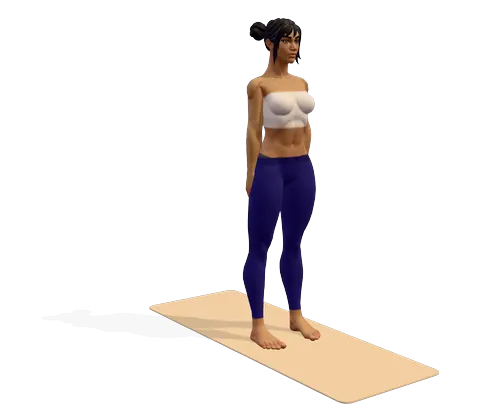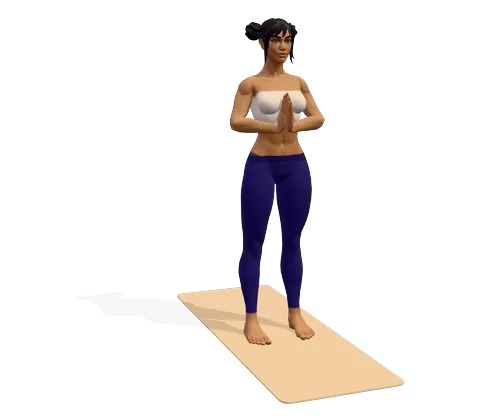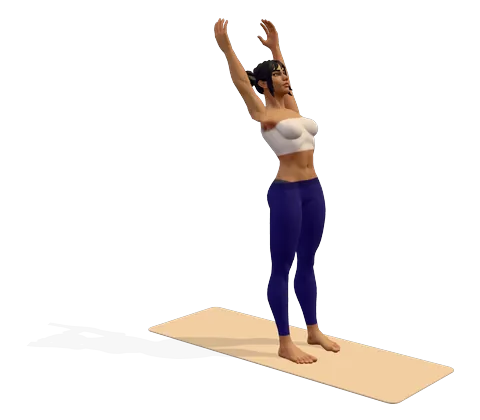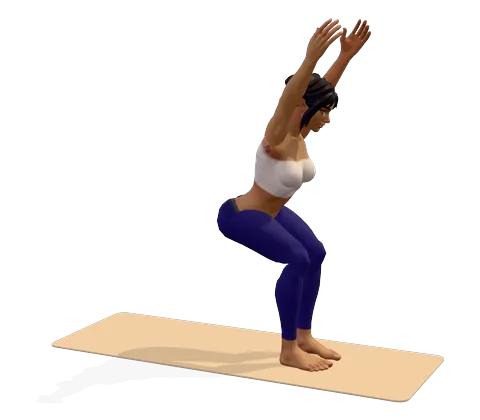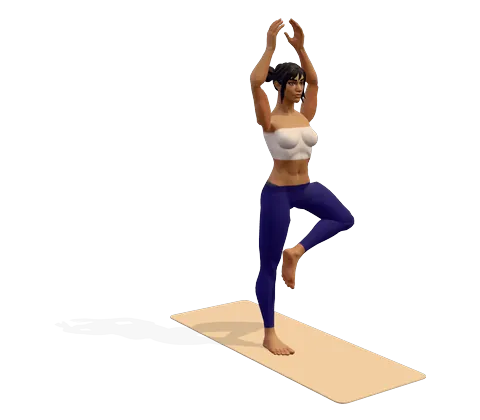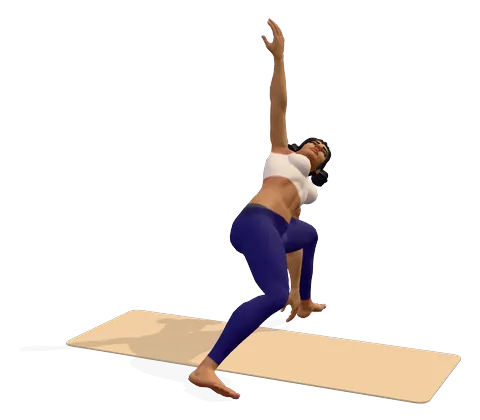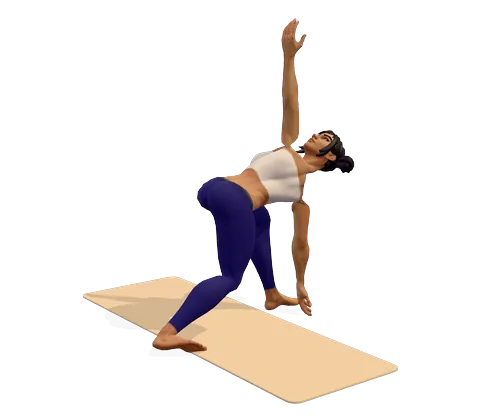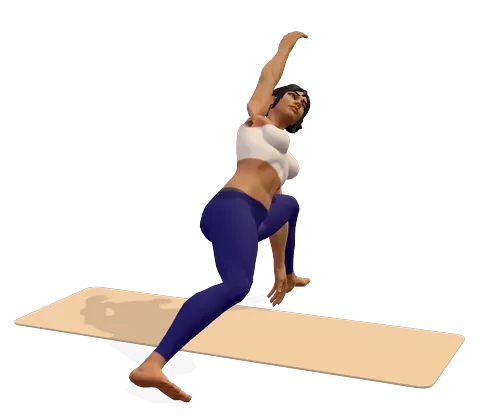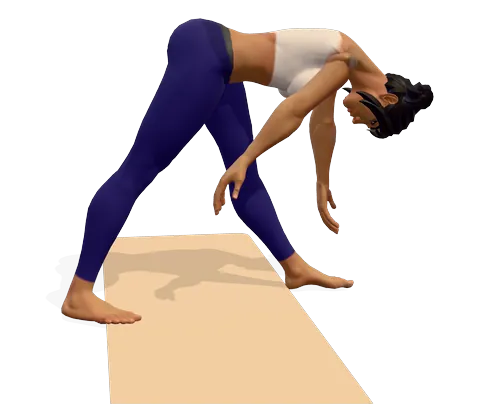
How to do Pyramid Pose step by step
- Stand at the front of your mat. Step your right foot back about three to four feet (roughly one metre) and turn the back toes out slightly, so both heels are grounded.
- Keep the front heel roughly in line with the arch of the back foot — or wider, on two separate tracks, if balance is hard. Square your hips to the front.
- Place your hands on your hips. Breathe in and lift your chest; straighten both legs without locking the front knee.
- Breathe out and fold forward from the hips over your left leg, keeping your back long for as far as you can.
- Bring your hands down beside your left foot, onto your shin, or onto blocks. Let your neck relax once your spine has lengthened.
- Hold for 3–5 slow breaths (about 20–30 seconds), pressing both feet firmly into the mat.
- To come out, bend your front knee a little, bring your hands to your hips, breathe in and rise with a long back. Step forward and repeat on the other side.
Where you feel Pyramid Pose: what it stretches and strengthens
Fold over the front leg and feel the back of the thigh lengthen. In the 3D guide, turn on Body guide: areas that stretch glow green and areas that work glow saffron.
Stretches
- Hamstrings
- Calves
- Shoulders
Strengthens
- Front thighs
Benefits and precautions
Benefits
- Stretches the hamstrings and calf of the front leg and the calf of the back leg
- Lengthens the muscles along the spine when you fold with a flat back
- Strengthens the thighs and the small muscles of the feet and ankles
- Trains balance and hip alignment in a narrow stance
- Prepares the body for deeper forward folds, splits and standing balances
- A slow, head-down pose that many people find quietening
Avoid or modify if
- Hamstring tear or strain — skip the fold until it has healed, then bend the front knee
- Acute low back pain or a disc problem — fold only halfway with a flat back and hands on blocks
- High blood pressure that is not controlled, glaucoma or dizziness — keep your head above your heart, hands on a chair or wall
- Pregnancy — widen your stance, use blocks or a chair, and do not fold deeply over the belly
- Shoulder or wrist injury — skip the reverse-prayer arm variation
Pyramid pose (Parsvottanasana) is a standing forward fold with one foot in front of the other. Both legs are straight, the hips face forward and the chest folds over the front thigh, so the shape from the side looks like a pyramid. It gives one of the strongest hamstring stretches among the standing poses and is a common step toward splits, Warrior III and revolved triangle. Below you will find what the pose is, how to get into it, cues, the muscles involved, beginner options and how it differs from similar poses.
What is pyramid pose in yoga?
It is an asymmetrical forward bend done standing. What does pyramid pose look like? Picture a narrow lunge stance with both knees straight and the upper body folded over the front leg. Other names for the pose are intense side stretch pose or, in Iyengar and Ashtanga yoga, simply Parsvottanasana.
Parsvottanasana meaning and pronunciation
What does Parsvottanasana mean? The pyramid pose Sanskrit name joins parsva ("side" or "flank"), ut ("intense") and tana ("stretch"), plus asana ("pose"). So Parsvottanasana in English is "intense side stretch pose" — the "side" refers to stretching one side of the body (one leg) at a time, not to a side bend. For Parsvottanasana pronunciation, say parsh-voh-tahn-AHS-anna.
How to do pyramid pose: cues that make it work
The steps above show how to get into pyramid pose. These pyramid pose yoga cues deal with the problems most people meet:
- Feet: wider than you think. Heel-to-arch alignment is traditional, but setting the feet on two separate tracks, hip-width apart, makes it far easier to square the hips and balance.
- Hips level and square. The front-leg hip tends to hitch forward and up. Draw it back while the back-leg hip moves forward.
- Fold from the hips, not the waist. Keep the spine long for the first half of the fold. Rounding happens only at the very end, if at all.
- Micro-bend the front knee. A locked knee pulls the stretch into the back of the knee instead of the belly of the hamstring.
- Weight in the back heel. If the back heel lifts, the stance is too long; shorten it.
Is pyramid pose an inhale or exhale?
Breathe in to lengthen the spine and lift the chest; breathe out to fold. While you hold, use each in-breath to grow longer and each out-breath to soften a little deeper. Never force the fold on a held breath.
Pyramid pose benefits
The main Parsvottanasana benefits are physical: a deep stretch for the back of the front leg and calf, active work for the thighs and feet, and practice in keeping the pelvis level. It suits runners, cyclists and people who sit a lot, since tight hamstrings often pull on the lower back. The intense side stretch pose benefits for balance also carry over to one-legged poses. As with any forward fold, it is not a treatment for back pain; if your back hurts, see our yoga for back pain plan first.
Pyramid pose muscles and anatomy: what does pyramid pose stretch?
| Stretches | Strengthens / stabilises |
|---|---|
| Hamstrings of the front leg | Quadriceps of both legs |
| Calf muscles of both legs | Gluteus medius, which keeps the hips level |
| Muscles along the spine and, with reverse prayer, the chest and front shoulders | Foot and ankle muscles, especially of the back foot |
Pyramid pose for beginners: modifications and variations
Pyramid pose variations for beginners keep the stretch but take the strain out:
- Pyramid pose with blocks: place a block on each side of the front foot and stop the fold when your hands reach them. This is the best starting point.
- Pyramid pose with a chair: rest your hands on a chair seat or a wall at hip height. A good choice for pyramid pose yoga for seniors and for anyone with high blood pressure.
- Bend the front knee: a soft knee lets you fold with a long back while the hamstrings adapt.
- Kneeling pyramid pose: from a low lunge, shift your hips back over the back knee and straighten the front leg (half splits). This takes balance out of the picture.
- Pyramid pose with back heel lifted: a shorter, high-lunge-like stance some teachers use to make squaring the hips easier.
Pyramid pose arm variations
Pyramid pose with reverse prayer (palms together behind the back) is the classic Iyengar arm position and opens the chest and shoulders. If that hurts the wrists, hold opposite elbows behind you. Pyramid pose with eagle arms adds an upper-back stretch. A bind with clasped hands behind the back is another option.
Pyramid poses for kids
Children can make a "pyramid" with hands on the floor and a gentle fold. Keep it playful, short and knee-soft.
Pyramid pose vs triangle pose and humble warrior
In triangle pose (Trikonasana) the hips open to the side of the mat and the body tilts sideways over the front leg. In pyramid, the hips face forward and you fold straight down. So Parsvottanasana vs Trikonasana is a forward fold vs a lateral stretch, and pyramid gives the stronger hamstring stretch. Parsvakonasana vs Parsvottanasana is different again: side angle has a bent front knee and is a strengthening pose.
Pyramid pose vs humble warrior: humble warrior keeps a bent front knee in a Warrior I stance and folds the chest inside the front thigh with hands clasped behind. It works the legs harder, while pyramid stretches them more.
Pyramid pose sequence and transitions
Good Parsvottanasana preparatory poses are downward dog, standing forward bend and low lunge. Common pyramid pose transitions include:
- Pyramid pose to revolved triangle: keep the legs, bring the opposite hand to the floor and twist. A revolved pyramid (pyramid pose with twist) is the halfway step.
- Pyramid pose to Warrior 3: shift weight forward and lift the back leg.
- Pyramid pose to low lunge: bend the front knee and lower the back knee, as in low lunge.
What to do after pyramid pose? A good pyramid pose counterpose is a gentle backbend such as standing with hands on the lower back, or mountain pose with a few easy breaths. You can add this sequence to your own routine in the sequence builder.
Pyramid pose chakra links are a modern idea — classical texts do not assign poses to chakras. Read more on the chakras page.
पार्श्वोत्तानासन (Parsvottanasana) — हिंदी में: सीधे खड़े होकर दाहिना पैर लगभग एक मीटर पीछे रखें और दोनों एड़ियाँ ज़मीन पर रखें। कूल्हे सामने की ओर रखें, साँस लेते हुए छाती उठाएँ और साँस छोड़ते हुए सीधी पीठ के साथ आगे वाले पैर पर झुकें। 20–30 सेकंड रुकें, फिर दूसरी तरफ़ करें। इसके फायदे: पैरों के पीछे की मांसपेशियों (हैमस्ट्रिंग) में खिंचाव, जाँघों में ताकत और संतुलन। हैमस्ट्रिंग की चोट, कमर के तेज़ दर्द या अनियंत्रित हाई बीपी में सिर नीचे न करें।
Frequently asked questions
What are the benefits of pyramid pose?
Pyramid pose stretches the hamstrings and calves, lengthens the back when done with a flat spine, strengthens the thighs and feet, and improves balance and hip alignment.
What is pyramid pose in Hindi?
Parsvottanasana in Hindi is written पार्श्वोत्तानासन and means "intense side stretch pose". The Hindi box above gives the steps and Parsvottanasana benefits in Hindi.
Why do I lose balance in pyramid pose?
Usually because the feet are on one line. Step the front foot a little to the side so the feet are hip-width apart, shorten the stance slightly and press the back heel down.
How long should I hold pyramid pose?
Hold for 3–5 slow breaths (about 20–30 seconds) per side. Beginners can hold it with hands on blocks and repeat twice rather than holding longer.
What are the Parsvottanasana precautions and contraindications?
Pyramid pose contraindications include a recent hamstring injury. With acute back pain, uncontrolled high blood pressure or glaucoma, keep your head above your heart and your hands on blocks or a chair. For pyramid pose in pregnancy, widen the stance and do not fold over the belly.
Is pyramid pose good for tight hamstrings?
Yes. The pyramid pose hamstring stretch is one of the most direct in standing yoga. Keep a slight bend in the front knee and use blocks so you stretch the muscle rather than strain the back of the knee.
Is pyramid pose one of the deep stretch yoga poses?
It is a deep stretch for the back of the legs, so warm up first with a few rounds of downward dog and lunges, and never bounce in the fold.
This page is for general education. Check with your doctor before starting yoga if you are pregnant, have a medical condition or an injury. Stop if you feel pain, dizziness or shortness of breath.