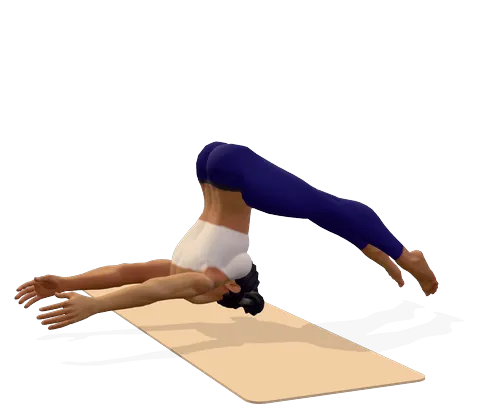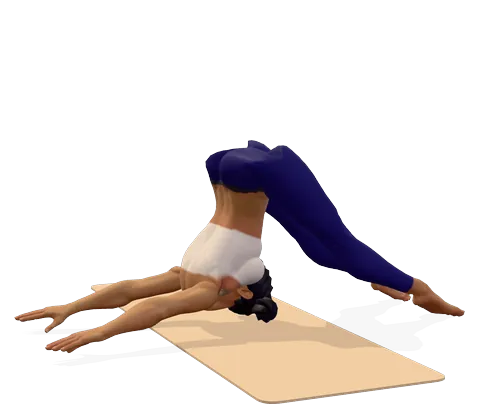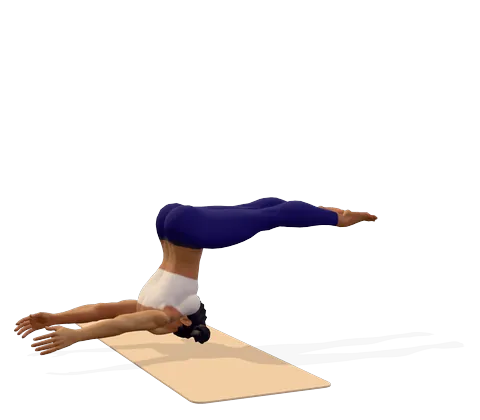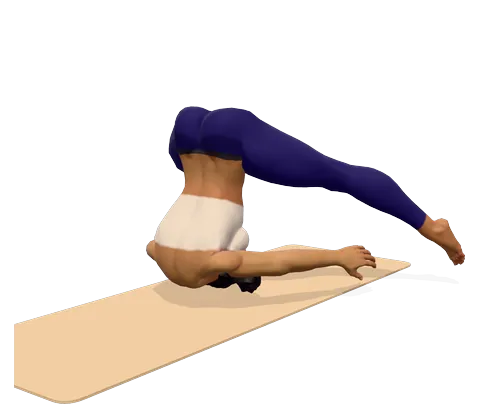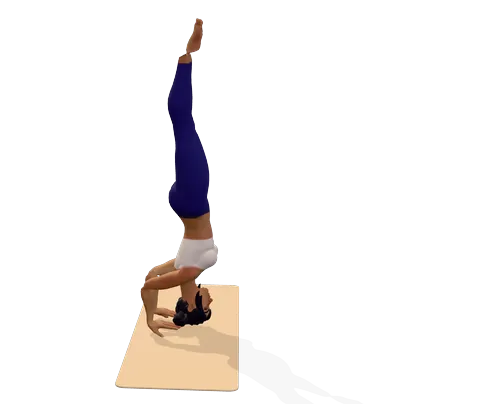
How to do Tripod Headstand step by step
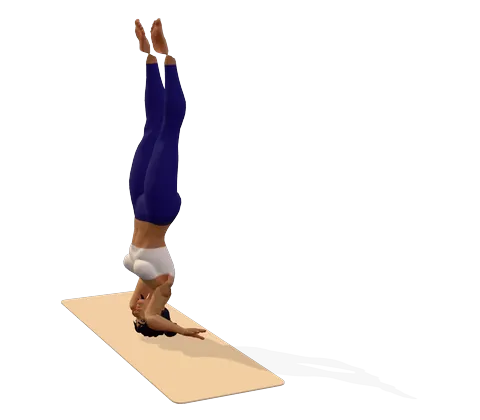
- Kneel on a folded mat or thin blanket. Place your palms flat on the floor, shoulder-width apart, fingers spread and pointing forward.
- Put the crown of your head on the mat in front of your hands, so your head and hands form a triangle. Your forearms should be upright, elbows stacked over your wrists.
- Tuck your toes, straighten your legs and walk your feet in until your hips are over your shoulders and your back is nearly vertical.
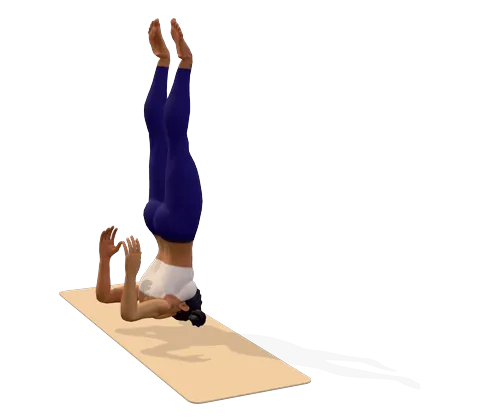
- Rest one knee, then the other, on the backs of your upper arms (tripod prep). Press into your hands so the neck stays long and light.
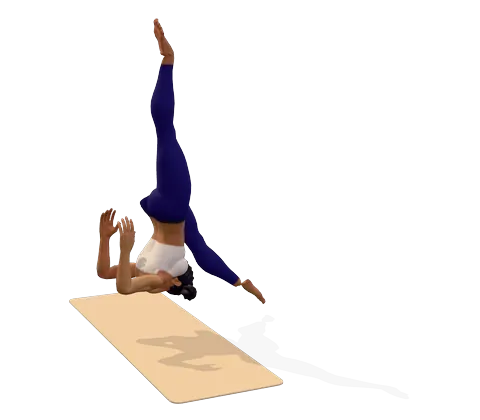
- Firm your belly and slowly lift both legs, bending the knees first if you need to, until they rise straight up with the feet together.
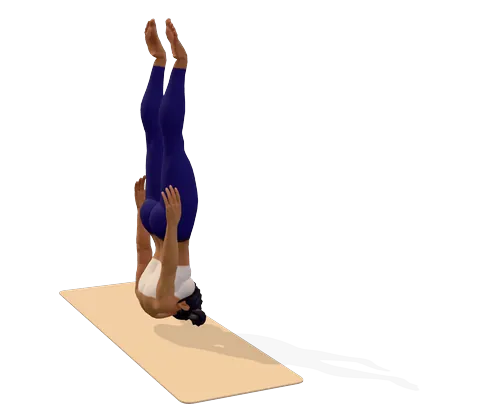
- Hold for 3–5 steady breaths (15–20 seconds), pressing the hands down the whole time.
- Bend your knees, lower your feet to the floor with control and rest in child’s pose for a few breaths before lifting your head.
Where you feel Tripod Headstand: what it stretches and strengthens
Form a triangle with your head and hands and keep your elbows over your wrists. In the 3D guide, turn on Body guide: areas that stretch glow green and areas that work glow saffron.
Strengthens
- Shoulders
- Arms
- Abs
Benefits and precautions
Benefits
- Strengthens the shoulders, arms and upper back that hold the triangle steady
- Works the abdominal and deep core muscles that lift and balance the legs
- Builds balance, body awareness and calm focus when upside down
- Teaches weight-bearing on the hands, useful for crow, side crow and handstand
- Can feel energising and refreshing for experienced, healthy practitioners
Avoid or modify if
- High blood pressure, heart disease, glaucoma, a detached retina or recent eye surgery
- Neck injury, cervical spondylosis, disc problems in the neck or osteoporosis — no weight on the head
- Pregnancy, epilepsy, a recent stroke or head injury, or during a migraine attack
- Shoulder or wrist injury, or a cold or sinus infection
- Many people choose to skip inversions during their period; avoid it within two to three hours of a meal
Tripod headstand (Salamba Sirsasana II) is an inversion in which your head and two hands form a triangle on the floor, like the three legs of a tripod, and your body rises straight up above them. The hands take a large share of the weight, so the neck is not meant to hold you on its own. It is a level-4 pose on this site: learn the prep stages, check the contraindications, and only then lift your legs.
Tripod headstand Sanskrit name and meaning
The tripod headstand Sanskrit name is Salamba Sirsasana II, often shortened to Sirsasana 2. Salamba means "supported", sirsa means "head" and asana means "pose", so it is a supported headstand. The "II" marks it as the second headstand in B.K.S. Iyengar’s system. In India the head balance is often written Shirshasana (शीर्षासन); the question "how to do shirshasana" usually refers to the classic forearm version, the headstand with clasped hands. In Sirsasana yoga practice, both versions sit near the end of a class. Do not confuse either with Janu Sirsasana, a seated head-to-knee forward bend; its benefits and how to do Janu Sirsasana are on its own page.
Tripod headstand vs regular headstand
| Tripod headstand (Sirsasana II) | Forearm headstand (Sirsasana I) | |
|---|---|---|
| Base | Crown and two palms in a triangle | Crown cradled by interlaced fingers, forearms on the floor |
| Arms | Forearms upright, elbows over wrists | Forearms flat on the mat |
| Main support | Hands and shoulders | Forearms and shoulders |
| Best for | Transitions to crow and handstand | Longer, steadier holds |
Is tripod headstand easier than headstand? For many people it is easier to get up into, because the knees can rest on the arms on the way. It is harder to hold for long, because the base is smaller and the triceps work hard. In tripod headstand vs forearm headstand, choose the forearm version for long holds and the tripod for arm-balance transitions.
Tripod headstand prep: are you ready?
Try the full pose only when you can already do these tripod headstand prep poses comfortably:
- Dolphin pose for a minute, to build shoulder strength.
- Downward-facing dog with steady hands and a long spine.
- Crow pose for several breaths, which trains the same knee-on-arm position.
- Plank and forearm plank for 30–60 seconds, for the core.
- Tripod prep: head and hands in a triangle with the knees resting on the upper arms, held for five breaths with no neck strain.
If your neck clicks, tingles, or you feel pins and needles in your arms, stop. A headstand is never worth a neck injury; see yoga for neck pain for gentler work.
How to do tripod headstand for beginners
The steps above show how to do a tripod headstand from kneeling. For tripod headstand yoga for beginners, add these points:
- Measure the triangle. Your head should be about a forearm’s length in front of the line between your hands, not level with them.
- Elbows at 90 degrees. Stack them over the wrists and hug them in; elbows splaying out drops weight into the head.
- Crown, not forehead. Rest on the very top of your head so the neck stays in its natural curve.
- Hips first, legs second. Walk your feet in until your hips are over your shoulders. When the hips are stacked, the legs feel light.
- Use a wall. Set up with your back about a hand’s width from the wall so you cannot fall backwards.
You can practise tripod headstand with blocks under your feet in the prep stage, which lifts the hips higher and makes stacking easier. Keep holds short: 15–20 seconds is plenty at first.
What if tripod headstand hurts your head?
If tripod headstand hurts your head, there is too much weight on it. Press harder into your hands, check that you are on the crown, and fold your mat once for a little padding. Headache, pressure behind the eyes or a pounding feeling in the head means come down and rest.
Tripod headstand yoga pose: muscles and benefits
The main tripod headstand muscles are the shoulders (deltoids and serratus anterior), the triceps and the forearms, which keep the triangle stable, plus the abdominal and hip flexor muscles, which lift and steady the legs. Press the Body guide button on the 3D figure to see the shoulders, arms and core glow saffron.
Yoga tripod headstand benefits are mostly about strength, balance and confidence upside down. It also trains the hand-and-head base you need for arm-balance transitions. Traditional claims that headstands improve circulation to the brain are not proven, so treat them as tradition.
Tripod headstand variations
- Tripod headstand with lotus legs: fold the legs into lotus once you are balanced. Only if lotus pose is pain-free.
- Tripod headstand to crow: bend the knees, lower them onto the upper arms and lift the head into crow pose. Twisting the knees onto one arm gives tripod headstand to side crow.
- Tripod headstand to handstand: an advanced press where you straighten the arms and lift the head off the floor.
- Tripod headstand scorpion: a backbend with the feet dropping towards the head, closely related to scorpion pose. Experts only.
You will also see the tripod headstand in gymnastics and school physical education, where it is often the first headstand taught.
Is tripod headstand safe?
It is reasonably safe for healthy people who prepare well, keep most of the weight in the hands and come down at the first sign of neck strain. It is not safe for the people listed in the caution box above, especially anyone with high blood pressure, glaucoma or a neck problem. Build a short tripod headstand sequence: dolphin, crow, tripod prep, tripod headstand, then child’s pose. You can save it with the sequence builder.
Frequently asked questions
How do you do a tripod headstand?
Place your hands and the crown of your head on the mat in a triangle, elbows over wrists. Walk your feet in until your hips stack over your shoulders, rest your knees on your upper arms, then slowly lift both legs straight up while pressing through your hands.
Is tripod headstand easier than headstand?
It is often easier to get into because the knees can rest on the arms, but harder to hold for long. The forearm headstand (Sirsasana I) is steadier for longer holds.
How much weight should be on my head?
Less than you think. Press strongly through your hands so the neck stays long and never takes all the load. If your head or neck hurts, come down.
What is the Sanskrit name for tripod headstand?
Salamba Sirsasana II, or Sirsasana 2. Salamba means supported, sirsa means head and asana means pose.
How long should I hold tripod headstand?
Start with 15–20 seconds (3–5 breaths). Build slowly, and rest in child’s pose afterwards before you sit up.
Who should not do tripod headstand?
People with high blood pressure, heart disease, glaucoma, neck or shoulder injuries, osteoporosis, epilepsy or a recent stroke, anyone pregnant, and anyone in the middle of a migraine.
This page is for general education. Check with your doctor before starting yoga if you are pregnant, have a medical condition or an injury. Stop if you feel pain, dizziness or shortness of breath.