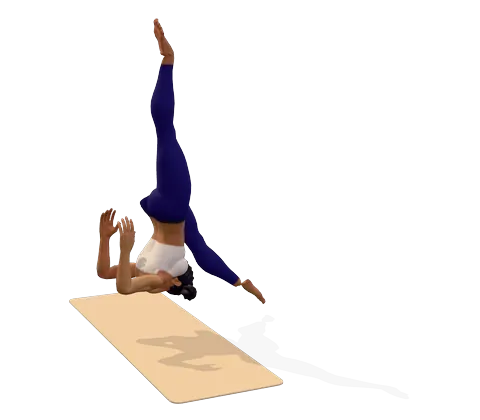
How to do One-Legged Shoulder Stand step by step
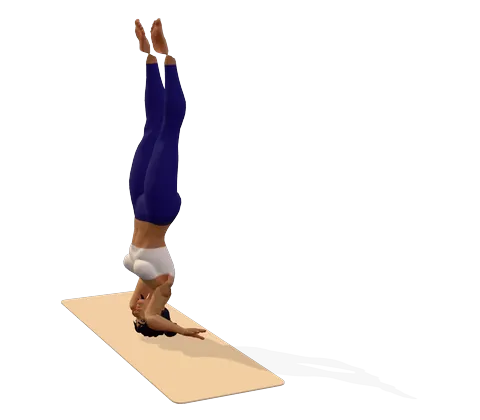
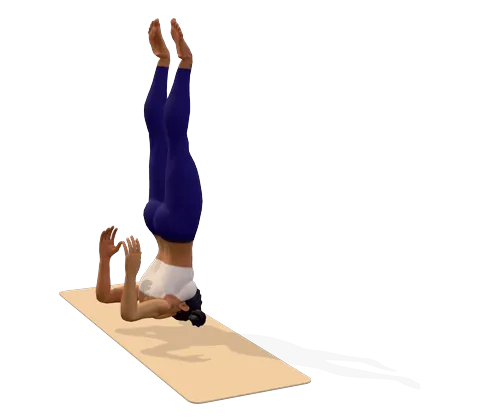
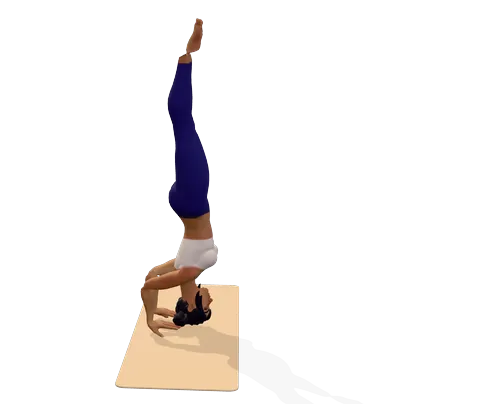
- Set up two or three folded blankets, lie with your shoulders on them and your head on the floor, then come into a full shoulder stand with your hands on your back.
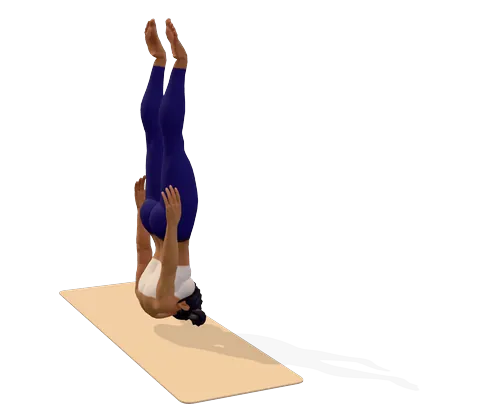
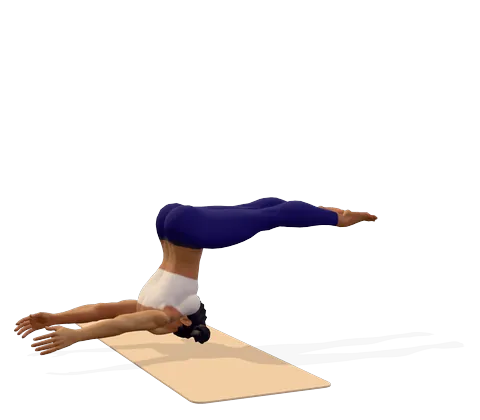
- Stack your hips over your shoulders and press both legs straight up. Take a few steady breaths here first.
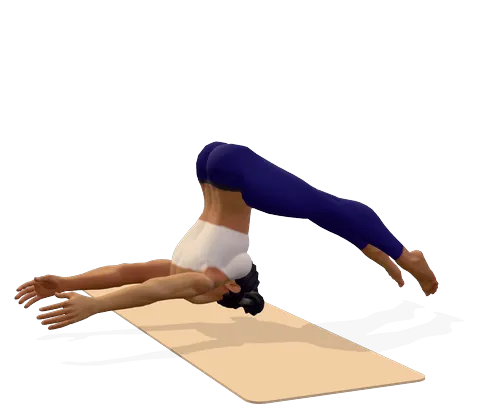
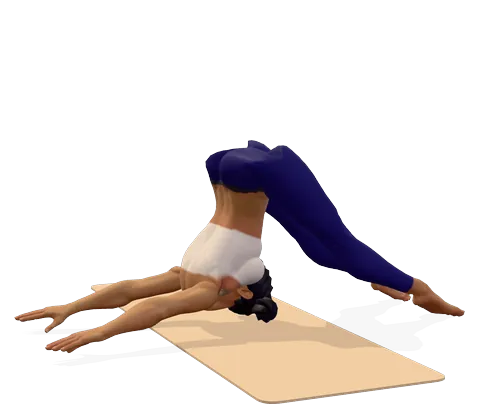
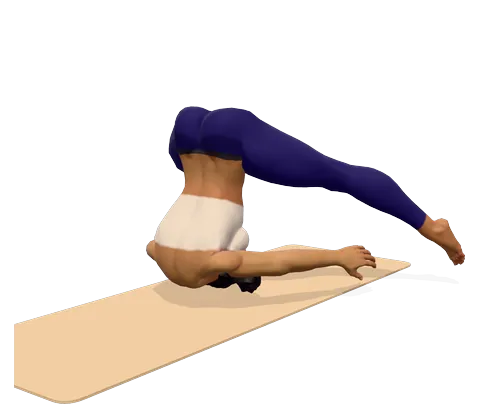
- Keep your left leg pointing straight at the ceiling. Breathing out, slowly lower your right leg over your head towards the floor behind you.
- Keep both knees straight and both hips level. Lower only as far as you can without the upright leg tilting or your back sinking.
- Stay for 15–20 seconds, breathing quietly, with your head still and your gaze on your chest.
- Breathing in, lift the right leg back up to meet the left. Pause, then lower the left leg while the right stays up.
- Come down by bending your knees, lowering your hips onto your hands and rolling your spine slowly to the floor.
Where you feel One-Legged Shoulder Stand: what it stretches and strengthens
Lower one leg while keeping the other straight up. In the 3D guide, turn on Body guide: areas that stretch glow green and areas that work glow saffron.
Stretches
- Neck
- Hamstrings
Strengthens
- Abs
- Glutes
Benefits and precautions
Benefits
- Stretches the hamstrings and back of the hip of the lowering leg
- Strengthens the hip flexors and thighs of the upright leg
- Builds core and upper-back strength to keep the pelvis level
- Trains balance and control upside down, one side at a time
- Shows up left–right differences in hamstring flexibility
- A bridge between shoulder stand and plow pose in a longer practice
Avoid or modify if
- Neck injury, cervical spondylosis, disc problems or osteoporosis — skip it and use legs up the wall instead
- High blood pressure, heart disease, glaucoma or other eye problems, or a history of stroke
- Pregnancy, epilepsy, a migraine attack, or an ear or sinus infection
- A recent shoulder injury or shoulder surgery, or a hamstring tear
- Many teachers advise skipping inversions on the heavy days of a period
One-legged shoulder stand (Eka Pada Sarvangasana) is a variation of the classic shoulder stand in which one leg stays vertical while the other lowers over your head towards the floor. It asks more of your core and hamstrings than the basic pose, and it teaches you to keep your hips level while upside down. It is an intermediate-to-advanced inversion: learn the full shoulder stand first.
What is Eka Pada Sarvangasana?
In Sanskrit, eka means "one", pada means "foot" or "leg", sarva means "all" and anga means "limb". So the name means "one-leg, all-limbs pose". It is part of the family of shoulder-stand variations taught in Hatha and Iyengar yoga, where the lowering foot often goes all the way to the floor. Our 3D guide shows a gentler version with the lower leg part-way down.
If you are asking what a shoulder stand is in the first place, start with the main Salamba Sarvangasana page. This variation only makes sense once you can hold that pose for a minute with ease.
Before you start: blankets and a safe progression
Because all your weight rests on the shoulders and upper arms, the neck must stay free. Fold two or three firm blankets into a stack about 5–8 cm high. Lie with your shoulders on the stack and your head on the floor, so there is a small space behind your neck. Never turn your head once you are up.
Build towards the pose in stages over weeks, not days:
- Legs up the wall: Viparita Karani gets you used to being upside down without neck load.
- One-legged bridge: Eka Pada Setu Bandha Sarvangasana (one leg lifted in bridge pose) trains a level pelvis with one leg moving.
- Supported shoulder stand: first with feet on a wall, then free, on blankets.
- Plow with a chair: plow pose with the feet on a chair seat shows you how far your hamstrings let your legs go over your head.
- One leg down to a chair: from shoulder stand, lower one foot onto the chair seat. Later, lower it to a block, then the floor.
Bridge is also useful on its own. Setu bandha sarvangasana for back pain is often suggested because it strengthens the buttocks and back muscles; the main setu bandha sarvangasana precautions are to keep the knees in line with the feet and not to turn the head.
How to do one-legged shoulder stand well
The steps above take you through both sides. These details make the difference:
- The upright leg is the work. Press its heel up towards the ceiling. If it tips forward as the other leg lowers, you have gone too far.
- Keep the hips square. The hip of the lowering leg tends to drop and twist. Draw it back so both hip bones face the same way.
- Straight knees. A bent lower knee lets the hamstrings off the hook. If you need to bend, you are lowering too far — stop higher.
- Move slowly and with the breath. Lower on the exhale, lift on the inhale. Dropping the leg quickly jolts the neck.
- Hands high on the back. Walk the hands towards the shoulder blades and keep the elbows no wider than the shoulders.
How long to hold it
Hold each side for 15–20 seconds to begin with, and keep the sides even. Experienced students stay 30 seconds or more per side. If your neck or face feels pressure, come down straight away.
Eka Pada Sarvangasana benefits
The benefits of the shoulder stand pose and of Sarvangasana yoga in general — upper-back strength, body control and a calm, slow breath — apply here too. On top of those, the one-legged version adds:
- Hamstring stretch: the lowering leg gets a long stretch from the sitting bone to the heel.
- Balance and control: the hips must stay level while the weight shifts, much as they do when you stand on one leg in tree pose. In yoga, the benefits of a single leg stand, such as better balance and hip control, come from one leg staying still while the other moves. The same health benefits of standing on one leg apply here, only upside down.
- Side-to-side awareness: many people find one hamstring much tighter than the other. Working one side at a time shows you where to focus.
These are practical, physical benefits. No study has tested this exact pose, so be cautious about bigger claims you may read online, such as effects on hormones or organs.
Muscles that support you
What are the shoulder muscles called, and which muscle extends the shoulder here? Pressing the upper arms into the floor is shoulder extension, done by the posterior deltoid, the latissimus dorsi, the teres major and the long head of the triceps. The medical term for the back of the shoulder is the posterior shoulder, and the muscle usually called the back of the shoulder is the posterior deltoid.
Of any muscle that supports the shoulder here, the rotator cuff matters most. Often remembered as the SITS muscles (supraspinatus, infraspinatus, teres minor and subscapularis), it keeps each shoulder joint centred while it carries your weight. The table below gives the names of the shoulder muscles and the other body parts at work.
| Body part | What it does in the pose |
|---|---|
| Back of the shoulder, lats, triceps | Press the arms down to lift the chest |
| Rotator cuff (SITS muscles) | Stabilise each shoulder joint |
| Abdominals and hip flexors | Control the lowering leg and keep the pelvis level |
| Hamstrings and calf (lower leg) | Lengthen as the leg moves over the head |
| Glutes and thigh (upright leg) | Keep the vertical leg straight and strong |
Who should not do this pose
All the shoulder stand rules apply: skip it with a neck injury, high blood pressure, glaucoma, heart disease or during pregnancy, and many teachers advise leaving out inversions on the heavy days of a period. There are also restrictions for shoulder injury. After an anterior or posterior shoulder dislocation, follow the precautions your physiotherapist gives before you put weight on the arms like this. After surgery such as a total or reverse total shoulder replacement, the usual precautions rule this pose out; ask your surgeon. With neck or shoulder trouble, our yoga for neck pain plan has safer options.
Easier option: lie on your back with one leg up the wall and the other lowered along the floor. You keep the hamstring work with no weight on the neck.
What to do after
Finish both sides, come down slowly and rest flat for a few breaths. Follow with fish pose to arch the neck and upper back the other way, then lie in corpse pose.
एक पाद सर्वांगासन (Eka Pada Sarvangasana) — हिंदी में: पहले कंबल के सहारे सर्वांगासन में आएँ। एक पैर सीधा ऊपर रखें और दूसरे पैर को धीरे-धीरे सिर के पीछे ज़मीन की ओर लाएँ। 15–20 सेकंड रुकें, फिर पैर बदलें। इससे जांघ के पीछे की मांसपेशियों में खिंचाव आता है और पेट व पीठ मज़बूत होते हैं। गर्दन की चोट, हाई ब्लड प्रेशर, ग्लूकोमा और गर्भावस्था में यह आसन न करें।
Frequently asked questions
What is the difference between shoulder stand and one-legged shoulder stand?
In the full pose both legs point straight up. In Eka Pada Sarvangasana one leg stays up while the other lowers over your head, so it adds a hamstring stretch and more core work.
Should my lower foot touch the floor?
Only if it gets there with both knees straight and the upright leg still vertical. Otherwise rest the foot on a chair or block, or stop part-way as the 3D guide shows.
Is Eka Pada Sarvangasana suitable for beginners?
Not at first. Learn legs up the wall, bridge and a steady supported shoulder stand, then try it with a chair behind your head.
Which side should I do first?
Either side is fine, but hold both for the same time. Our 3D guide keeps the left leg up and lowers the right leg first, then switches.
Why does my neck hurt in this pose?
Usually because there is no blanket under the shoulders, the elbows have slid wide, or the head turned. Come down, add height under the shoulders and keep your gaze on your chest. If pain continues, stop and ask a physiotherapist.
What is the counter pose?
Fish pose (Matsyasana), which arches the upper back and neck the other way. A few breaths in bridge also works.
This page is for general education. Check with your doctor before starting yoga if you are pregnant, have a medical condition or an injury. Stop if you feel pain, dizziness or shortness of breath.