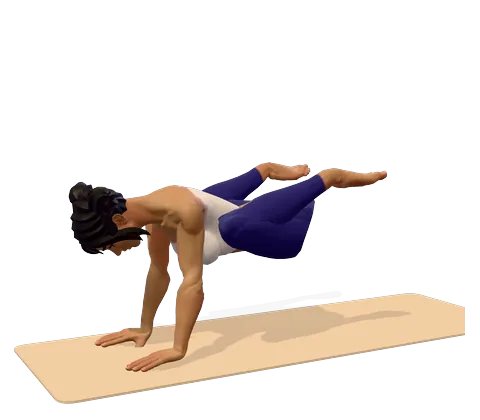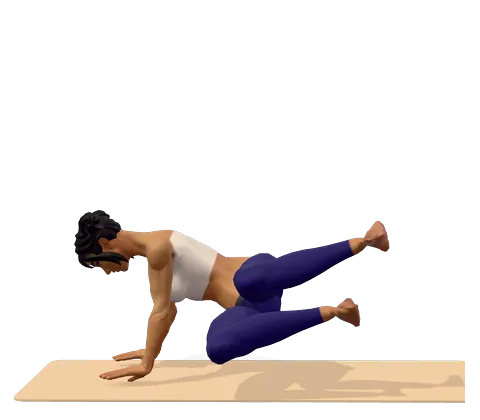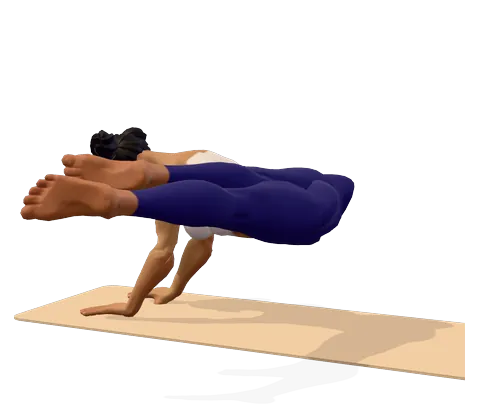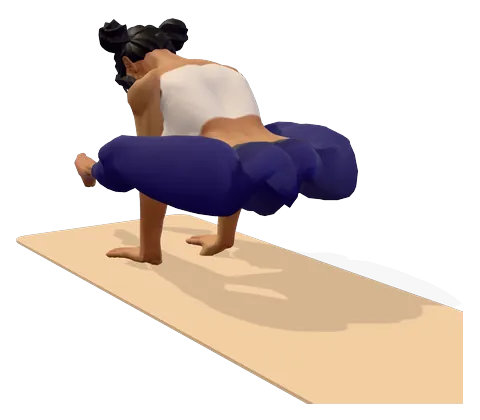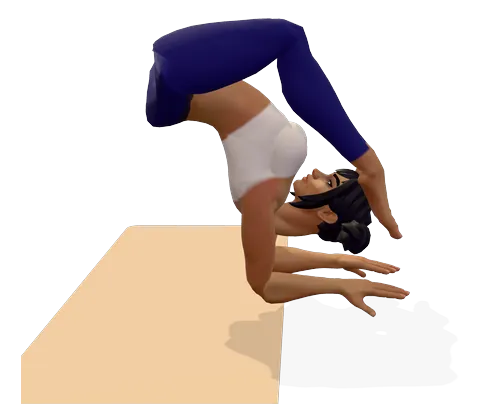
How to do Scorpion Pose step by step
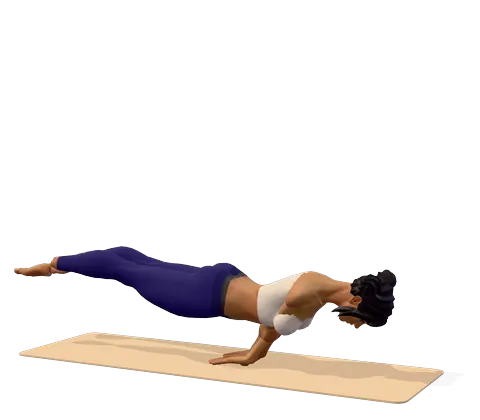
- Warm up well with dolphin, cobra, camel and a few rounds of forearm stand practice. Scorpion is the last pose of a practice, never the first.
- Kneel and place your forearms on the mat, shoulder-width apart and parallel, elbows under your shoulders and palms flat.
- Walk your feet in towards your elbows, lift one leg and kick up with control into forearm stand (Pincha Mayurasana). Find your balance with the legs straight up.
- Press your forearms firmly down, lift your head and look forward between your hands.
- Slowly bend your knees and let your feet drop towards your head, arching your whole back while your shoulders keep pushing the floor away.
- Hold for 2–4 breaths (about 10 seconds), breathing evenly.
- Straighten your legs back to forearm stand, then lower one leg at a time to the mat. Rest in child’s pose.
Where you feel Scorpion Pose: what it stretches and strengthens
Press your forearms down and let your feet drop toward your head. In the 3D guide, turn on Body guide: areas that stretch glow green and areas that work glow saffron.
Stretches
- Chest
- Abs
- Hip flexors
Strengthens
- Shoulders
- Lower back
- Arms
Benefits and precautions
Benefits
- Builds strength in the shoulders, arms and upper back
- Stretches the chest, abdomen and hip flexors deeply
- Trains balance, body control and focus under effort
- Strengthens the muscles along the spine that hold the backbend
- Brings together inversion and backbend skills for experienced practitioners
Avoid or modify if
- High blood pressure, heart disease, glaucoma, a detached retina or recent eye surgery — no inversions
- Pregnancy, epilepsy, or during a migraine attack
- Back injury, disc problems, spondylolisthesis or spinal stenosis — the deep arch compresses the lower back
- Shoulder, neck or elbow injury, or osteoporosis
- If you cannot hold forearm stand away from a wall for at least 30 seconds, you are not ready for scorpion pose
Scorpion pose (Vrischikasana) is one of the most advanced shapes in yoga: a forearm stand in which your back arches deeply, your knees bend and your feet drop towards your head, like a scorpion raising its tail to strike. It combines an inversion, a balance and a strong backbend, so the path to it matters more than the pose itself. This page explains what the scorpion pose is, the prerequisites, a step-by-step progression and who should not try it.
What is scorpion pose in yoga?
The scorpion pose Sanskrit name is Vrischikasana, also spelled Vrschikasana or written as two words, vrischika asana. Vrischika means "scorpion" and asana means "pose". In Hindi it is वृश्चिकासन. In the classical version described in B.K.S. Iyengar’s Light on Yoga, you balance on your forearms and lower your feet until the soles rest on the crown of your head. A second form is done on the hands, from handstand.
The 3D guide shows the forearm version most people learn today: forearms flat, head lifted, back arched and knees bent, with the feet above and just behind the head. Press the Body guide button to see the chest, belly and hip flexors glow green (stretch) and the shoulders, arms and lower back glow saffron (work).
Prerequisites: are you ready?
Scorpion is a level-4 pose on this site. Before you work on it, you should be able to:
- Hold forearm stand (Pincha Mayurasana) away from the wall for at least 30 seconds, and come down safely if you tip over.
- Hold dolphin pose for a minute with your shoulders stable.
- Press up into wheel pose with straight arms and practise camel pose without lower back pain.
- Lift your arms straight overhead with no pinch in the shoulders.
Never practise scorpion pose on a cold body, straight after eating, or with nobody around the first few times. A trained teacher who can spot you is the safest way to start.
How to do scorpion pose step by step (Vrischikasana kaise kare)
The steps above show how to get into scorpion pose from forearm stand. These points make the difference:
- Shoulders do the work. Keep pushing the floor away. If your chest sinks towards the mat, the bend collapses into your lower back and neck.
- Chest forward, head up. As you lift your head and look forward, let your chest move forward past your elbows; this is what lets the feet come over.
- Bend the knees first, then arch. Dropping straight legs throws you off balance. Bend the knees, then let the feet float down a little at a time.
- Spread the arch. Aim for a long curve from the upper back through the lower back rather than a sharp fold in one place.
Scorpion yoga pose for beginners: a step-by-step progression
There is no true scorpion yoga pose for beginners, but there is a sensible scorpion pose progression. Work through these stages over weeks or months:
- Floor backbends: cobra, locust, bow and camel to open the front body.
- Shoulder strength: dolphin and forearm plank, holding for longer each week.
- Forearm stand at the wall: fingertips close to the wall, heels resting on it.
- Scorpion at the wall: set your hands a little further from the wall, kick up, bend your knees and walk your feet a short way down the wall towards your head. Come out the same way.
- Free-standing: practise in the middle of the room only when steps 1–4 feel easy.
Half scorpion pose variations for beginners
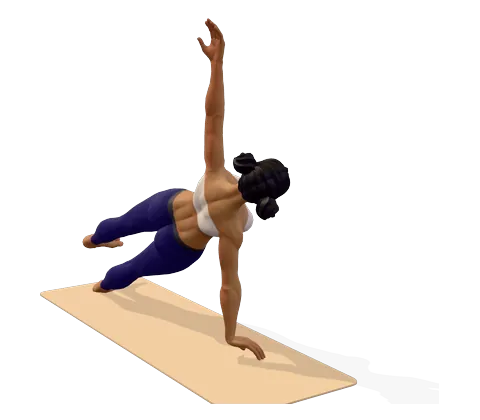
Teachers use "half scorpion" for easier shapes. The most useful is a half scorpion at the wall with only a small backbend and the knees just slightly bent. Another is the scorpion dog yoga pose: from three-legged dog, bend the lifted knee and open that hip. Half scorpion pose benefits are the same shoulder strength and front-body stretch at a safer depth.
Scorpion pose yoga benefits
Scorpion pose benefits come from what it asks of you. Supporting your weight on the forearms builds strong shoulders, arms and upper back. The arch works the muscles along the spine while it gives a deep scorpion pose stretch to the chest, abdomen and hip flexors. Balancing upside down with a curved spine trains focus. There is no research on Vrischikasana benefits for health conditions, and it is not a yoga pose for back pain; people with back problems should choose gentle poses from our yoga for back pain plan instead.
Scorpion pose variations in yoga
- Forearm scorpion pose: the version shown by the 3D guide and the one taught in most yoga forearm scorpion workshops.
- Hand scorpion: from handstand, bend the elbows slightly, arch and drop the feet. Harder on the wrists and balance.
- Scorpion pose lying down: lie on your front, arms out wide, and swing one foot across the back of the body towards the opposite hand. The benefits of this scorpion twist pose are a gentle stretch for the hips, chest and spine. It is not an inversion, so it is the scorpion pose stretch for beginners.
Scorpion pose in cheer, dance and gymnastics
The scorpion pose seen in cheerleading, dance, ballet, gymnastics and contortion is a different move. It is a standing version: you balance on one leg and pull the other foot up behind you towards the head, which needs a very flexible back and shoulders. In yoga, the closest standing shape is dancer pose. Learning how to do standing scorpion pose safely is a matter for a coach, but the backbend drills on this page help.
Scorpion pose or cobra pose? Both are backbends, but cobra keeps you on the floor with a small arch, while scorpion turns you upside down with a maximal one.
If you fall out of scorpion pose
Falls happen in every scorpion pose training. A scorpion pose fail usually means the feet dropped too fast or the chest sank. Clear the space around you, practise on a soft surface, and learn to tuck your chin and roll out, or step one foot down to the side like a half cartwheel. If you hit your head, neck or back, stop for the day and seek medical advice if pain continues.
Who should not do Vrischikasana
The caution box above lists the conditions. Scorpion is both an inversion and a deep backbend, so people with high blood pressure, heart disease or glaucoma should not do it, and neither should anyone who is pregnant or has a back, neck or shoulder injury. Afterwards, rest in child’s pose and do a gentle twist to settle the spine.
वृश्चिकासन (Vrischikasana) — हिंदी में, scorpion pose yoga in Hindi: यह बहुत कठिन आसन है। पहले कोहनियों के बल पिंचा मयूरासन में संतुलन बनाएँ, फिर सिर उठाकर घुटने मोड़ें और पैरों को सिर की ओर लाएँ। इसके फायदे: कंधे, बाजू और पीठ मज़बूत होते हैं और छाती व पेट में गहरा खिंचाव आता है। हाई ब्लड प्रेशर, हृदय रोग, ग्लूकोमा, गर्भावस्था या कमर-गर्दन की चोट में यह आसन न करें।
Frequently asked questions
What is the scorpion pose?
Scorpion pose (Vrischikasana) is an advanced forearm or hand balance with a deep backbend, in which the knees bend and the feet drop towards the head like a scorpion’s tail.
How do you get into scorpion pose?
From forearm stand, press your forearms down, lift your head, bend your knees and slowly let your feet drop towards your head while your shoulders keep pushing the floor away. Learn it at a wall first.
How long does it take to learn scorpion pose?
For most people it takes months or years, because you first need a steady forearm stand and a deep, pain-free backbend. Progress at your own pace.
What are the benefits of scorpion pose?
It strengthens the shoulders, arms and back, stretches the chest, belly and hip flexors, and trains balance and focus. It is not a therapeutic pose.
Is scorpion pose safe?
Only for experienced, healthy practitioners who meet the prerequisites. It is not safe with high blood pressure, heart or eye conditions, pregnancy, or back, neck or shoulder injuries.
What is scorpion pose called in Hindi?
वृश्चिकासन (Vrischikasana). The Hindi box above sums up the scorpion pose benefits in Hindi and how to do it.
What is half scorpion pose?
An easier shape, usually a half scorpion pose at the wall with a small backbend, or a scorpion dog from three-legged dog. It builds the same strength with less risk.
This page is for general education. Check with your doctor before starting yoga if you are pregnant, have a medical condition or an injury. Stop if you feel pain, dizziness or shortness of breath.