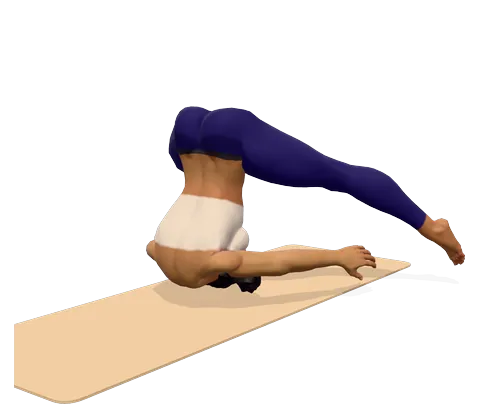
How to do Reclining Angle Pose step by step
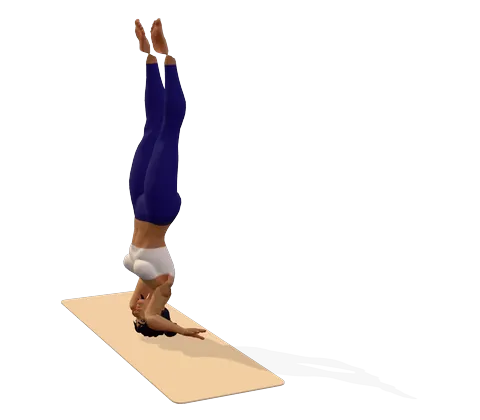
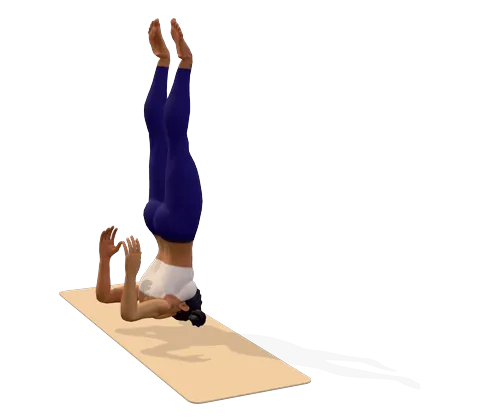
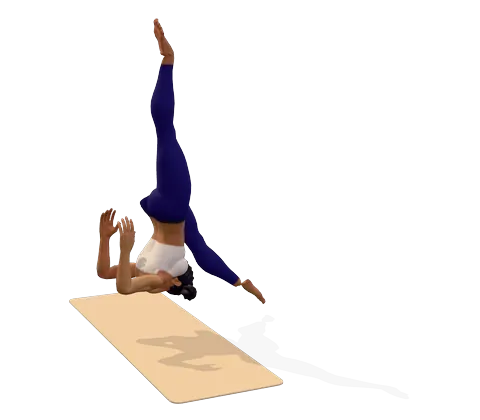
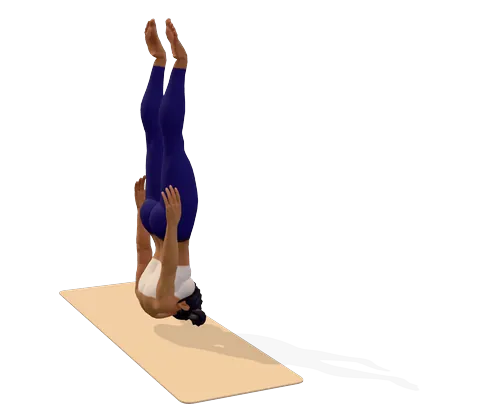
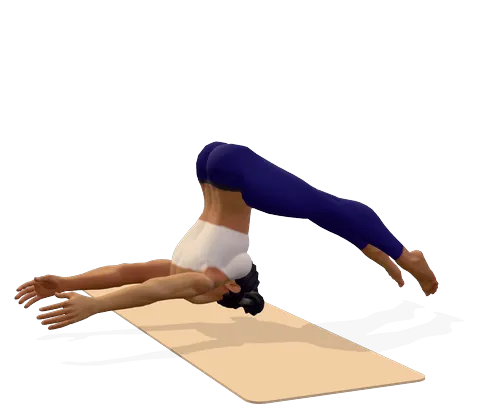
- Lie on your back with a folded blanket under your shoulders and your head on the mat. Arms by your sides, palms down.
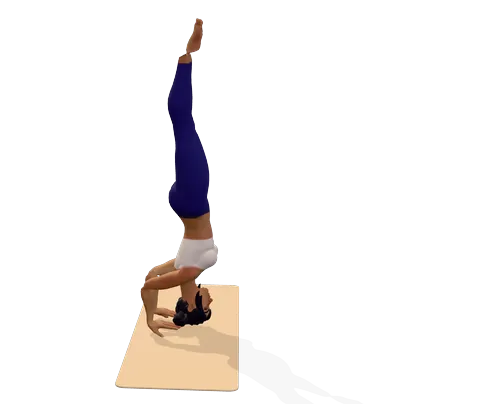
- Bend your knees, press your palms down and roll your hips up over your shoulders, supporting your back with your hands.
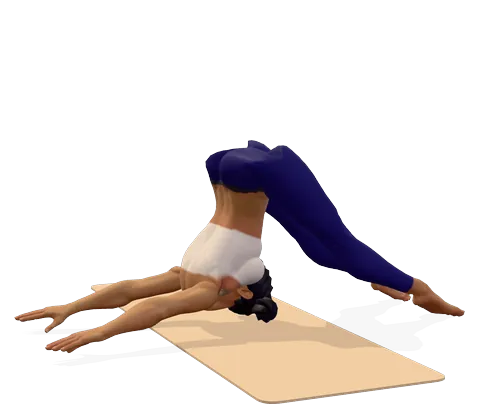
- Straighten your legs and lower them over your head into plow pose, toes on the floor behind you.
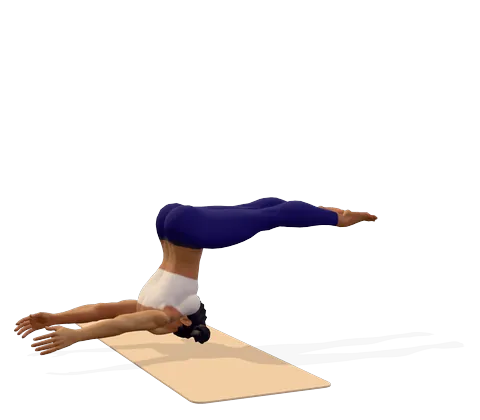
- Walk your feet apart as wide as is comfortable, keeping the knees straight and the kneecaps facing the floor.
- Reach your hands to your feet and hold your big toes with your first two fingers. Lift your hips over your shoulders and lengthen your spine.
- Hold for 3–5 breaths (about 20 seconds), keeping your neck still and your face soft.
- Release your toes, bring your legs together, place your hands on the mat and roll down slowly. Rest on your back.
Where you feel Reclining Angle Pose: what it stretches and strengthens
Widen your legs behind your head and hold your big toes. In the 3D guide, turn on Body guide: areas that stretch glow green and areas that work glow saffron.
Stretches
- Hamstrings
- Inner thighs
- Upper back
Strengthens
- Abs
Benefits and precautions
Benefits
- Stretches the hamstrings and inner thighs at the same time
- Stretches the back of the spine and the upper back
- Works the abdominal muscles that hold the hips over the shoulders
- Builds on plow pose and prepares you for the rolling movements of the Ashtanga finishing sequence
- Can feel calming at the end of a practice for people who already do plow comfortably
Avoid or modify if
- Neck injury, cervical spondylosis, disc problems or osteoporosis — do not practise
- High blood pressure, heart disease, glaucoma or a detached retina
- Pregnancy, a migraine attack, or a cold or sinus infection
- A groin or hamstring strain, or a slipped disc or sciatica that worsens with forward bending
- On a full stomach; many people choose to skip inversions during their period
Supta Konasana (reclining angle pose) is an inversion from the shoulder stand family. From plow pose, you open your legs wide behind your head and hold your big toes, so your body forms a wide angle over your shoulders. It is also called wide-legged plow pose. It is a level-3 pose on this site: learn plow first, and do not practise it with a neck problem.
Supta Konasana meaning
The name has three parts: supta means "lying down" or "reclining", kona means "angle" and asana means "pose". The angle is the wide one made by your legs. Many angles in yoga poses carry the word kona, such as bound angle and wide-angle seated forward bend. In Hindi it is सुप्त कोणासन. You will also see it named reclining wide angle pose or reclined angle pose in yoga books; it appears in the Ashtanga finishing sequence and in B.K.S. Iyengar’s Light on Yoga.
Supta Konasana is closely related to wide-angle seated forward bend (Upavistha Konasana): turn that wide leg yoga pose upside down, with your weight on your shoulders, and you have Supta Konasana.
Supta Konasana vs Supta Baddha Konasana
The names sound alike, but the poses are very different, and the searches are often mixed up:
| Supta Konasana (this page) | Supta Baddha Konasana | |
|---|---|---|
| English name | Reclining angle pose, wide-legged plow | Reclining bound angle pose |
| Shape | Inverted: hips over shoulders, legs wide behind the head | Lying flat on the back, soles together, knees open |
| Level | Intermediate (3) | Beginner, restorative |
| Main stretch | Hamstrings, inner thighs, upper back | Inner thighs, groin, chest |
| Weight on neck | Yes | No |
What is bound angle pose? It is a seated pose with the soles of the feet together and the knees open. Lying back in it gives the restful reclining bound angle pose, called Supta Baddha Konasana in Sanskrit. The meaning of Supta Baddha Konasana is reclining (supta), bound (baddha), angle (kona) pose; in Hindi it is सुप्त बद्ध कोणासन.
If you came here looking for Supta Baddha Konasana benefits, steps and precautions, or Supta Baddha Konasana for beginners, see our reclining bound angle pose guide. It is a gentle, laying down pose in yoga that suits almost everyone, and its variations use a strap around the hips and feet or a bolster under the back.
Before you try: prerequisites
- You can hold shoulder stand and plow pose for a minute each without neck discomfort.
- Your toes reach the floor in plow with straight legs.
- You can sit in a wide-legged forward bend with a long spine.
If plow is still hard, work on half plow pose first.
How to do Supta Konasana well (Supta Konasana kaise kare)
The steps above take you in and out. These cues, useful if you are learning how to cue plow pose too, keep it safe:
- Blanket under the shoulders. A firm fold under the shoulders with the head on the mat protects the curve of the neck.
- Do not turn your head. Once you are up, keep your gaze towards your belly.
- Hips high. Holding the toes is only useful if you use it to lift the hips and lengthen the spine. If the back rounds heavily, bend your knees a little.
- Width you can control. Open the legs only as wide as you can while keeping the knees straight and the toes on the floor.
- Come out slowly. Bring the legs together before you roll down; rolling down with the legs wide strains the lower back.
Supta Konasana benefits
The main benefit is a combined stretch: the hamstrings and inner thighs open at once, while the back of the spine lengthens. The abdominal muscles work to keep the hips stacked. Traditional yoga plow pose benefits, such as calming the mind and massaging the belly, are claimed for Supta Konasana too, but there is little research on this pose itself, so treat them as tradition. Press the Body guide button on the 3D figure to see the hamstrings, inner thighs and upper back glow green and the abdominals glow saffron.
Is it a yoga pose for lower back pain? No. It loads the neck and rounds the spine, so it is not one of the yoga poses for back pain relief. Choose poses from our yoga for back pain plan instead.
Supta Konasana for beginners: modifications
Useful modifications for yoga poses in the plow family work here too:
- Chair under the feet: rest the feet on a chair seat behind you instead of the floor.
- Hands on the back: keep both hands supporting the back and open the legs without holding the toes.
- Floor alternative: lie flat and do the reclining big toe pose (Supta Padangusthasana) out to the side for a wide-legged stretch in yoga with no weight on the neck. This reclined hand-to-foot pose in yoga suits most people.
What to do after Supta Konasana
After any plow variation, counter the neck with fish pose or a gentle bridge, then rest. The leg up the wall pose (Viparita Karani) is a restful follow-up, and Savasana, the final resting pose in yoga, is the relaxing pose at the end of practice. You can add these to your own sequence on the practice page.
सुप्त कोणासन (Supta Konasana) — हिंदी में: पीठ के बल लेटकर कूल्हों को कंधों के ऊपर उठाएँ और हलासन में पैरों को सिर के पीछे ज़मीन पर रखें। फिर दोनों पैरों को चौड़ा फैलाएँ और हाथों से पैरों के अंगूठे पकड़ें। 3–5 साँस रुकें और धीरे-धीरे नीचे आएँ। इससे जांघों के पीछे और अंदर की मांसपेशियों व पीठ में खिंचाव आता है। गर्दन की समस्या, हाई ब्लड प्रेशर या गर्भावस्था में यह आसन न करें।
Frequently asked questions
What is Supta Konasana?
Supta Konasana (reclining angle pose) is a wide-legged plow: you lie on your back, lift your hips over your shoulders, lower your legs behind your head, open them wide and hold your big toes.
Is Supta Konasana the same as Supta Baddha Konasana?
No. Supta Konasana is an inversion with the legs wide behind the head. Supta Baddha Konasana (reclining bound angle pose) is a restful pose lying flat with the soles of the feet together.
What are the benefits of Supta Konasana?
It stretches the hamstrings, inner thighs and the back of the spine, and works the abdominal muscles. It also prepares you for other shoulder stand variations.
How long should I hold Supta Konasana?
About 20 seconds, or 3–5 breaths. Bring your legs together before rolling down slowly.
Who should avoid Supta Konasana?
Anyone with a neck injury, osteoporosis, high blood pressure, heart disease, glaucoma or a groin strain, and anyone who is pregnant or has a migraine.
Can beginners do reclining angle pose?
Only after they are comfortable in shoulder stand and plow. Beginners can use a chair under the feet or practise reclining big toe pose on the floor instead.
This page is for general education. Check with your doctor before starting yoga if you are pregnant, have a medical condition or an injury. Stop if you feel pain, dizziness or shortness of breath.