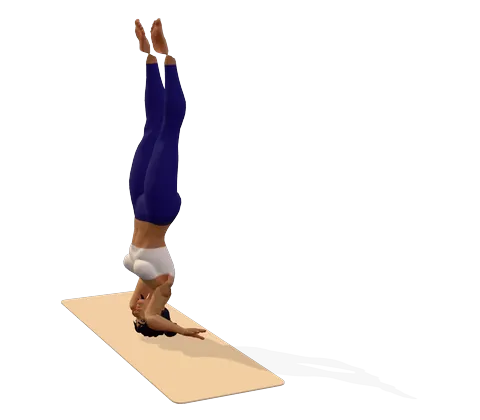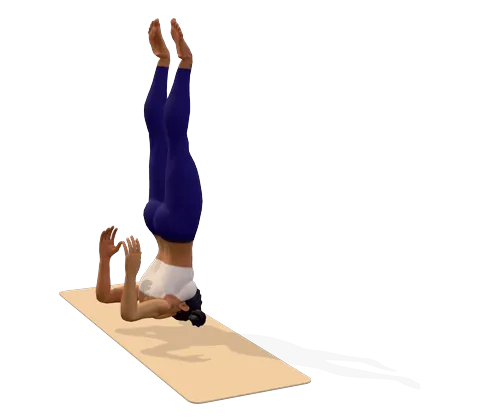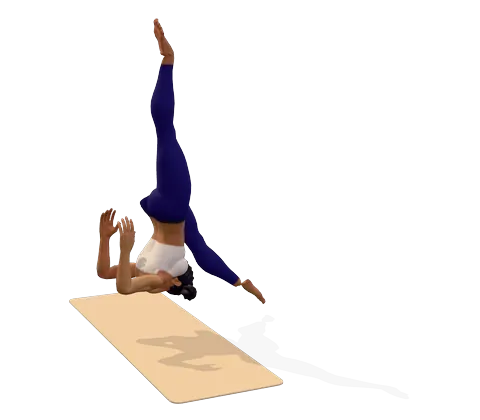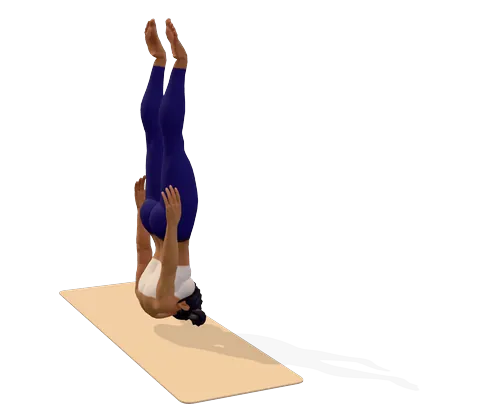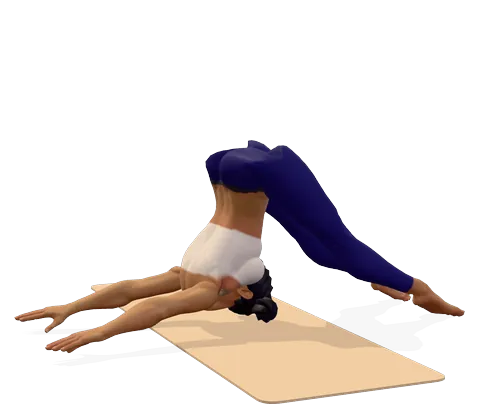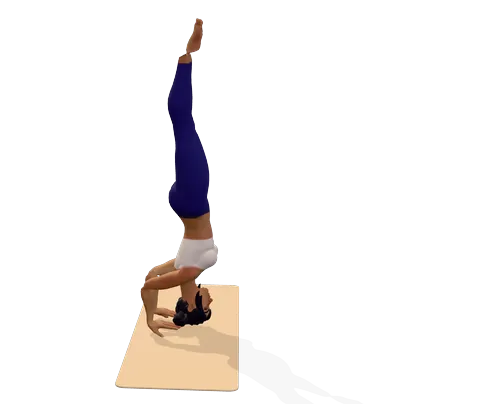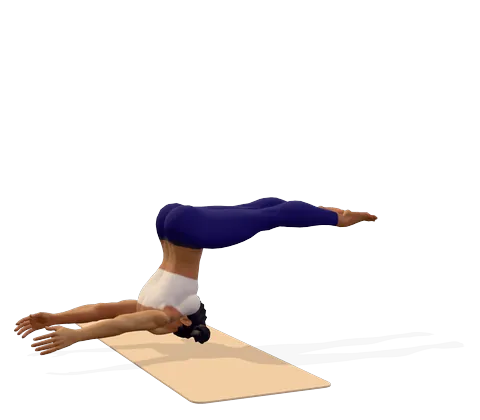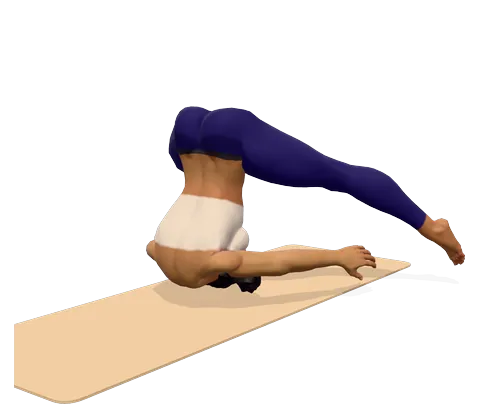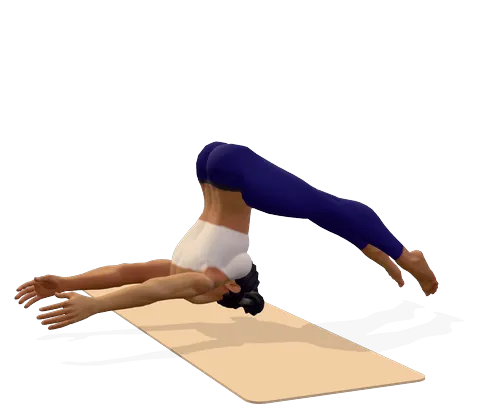
How to do Plow Pose step by step
- Fold two or three firm blankets into a stack. Lie on your back with your shoulders on the stack, your head on the floor and your arms beside you, palms down.
- Bend your knees and draw them towards your chest. Press your arms down and lift your hips, supporting your back with your hands if you need to.
- Keeping the hips over the shoulders, slowly straighten your legs over your head and lower your toes towards the floor behind you.
- If your toes reach the floor, tuck them under and lift your thighs. If they do not, rest them on a chair or a block.
- Stretch your arms along the floor, palms down, or interlace your fingers behind your back. Keep your gaze on your chest and do not turn your head.
- Breathe slowly for 30 seconds to start, building up to 1–3 minutes over time.
- To come out, place your hands on your back, bend your knees and roll down one vertebra at a time, using your arms as brakes. Rest flat for a few breaths.
Where you feel Plow Pose: what it stretches and strengthens
Lower your feet behind your head, keeping your neck relaxed. In the 3D guide, turn on Body guide: areas that stretch glow green and areas that work glow saffron.
Stretches
- Hamstrings
- Upper back
- Neck
Strengthens
- Abs
Benefits and precautions
Benefits
- Stretches the whole back of the body: spine, back of the neck, shoulders, hamstrings and calves
- Strengthens the shoulders and upper back as they hold the body up
- Gently compresses the abdomen, which many people feel as a massage for the belly
- Calms the mind and slows the breath when held quietly at the end of a practice
- Builds the control needed for shoulder stand and ear-pressure pose
- A useful stretch for tight hamstrings once the neck is well supported
Avoid or modify if
- Neck injury, cervical spondylosis, disc problems or osteoporosis — skip it or ask a physiotherapist first
- High blood pressure, heart disease, glaucoma, a detached retina or a history of stroke
- Pregnancy, epilepsy, a migraine attack, or a cold, ear or sinus infection
- A slipped disc or sciatica that worsens when you bend forward
- Many teachers advise skipping inversions during the heavy days of a period; avoid on a full stomach
Plow pose (Halasana) is an inversion in which you lie on your back, lift your hips over your shoulders and lower your straight legs over your head until your toes rest on the floor behind you. It gives a deep stretch to the whole back of the body. Like shoulder stand, it puts real load on the neck, so good setup matters more than depth.
What is plow pose in yoga?
The Halasana yoga pose is a forward-folding inversion. Your body folds at the hips like a closed pocketknife: the upper back rises vertically from the shoulders and the legs reach back over the head. Most people learn it straight after shoulder stand, and it is one of the classic finishing poses in Hatha and Ashtanga practice.
Sanskrit name and meaning
The Sanskrit name for plow pose is Halasana, and the Halasana meaning is simple: hala means "plough" and asana means "pose". In Hindi, plow pose is हलासन, and the meaning in Hindi is the same.
The shape copies the traditional Indian plough, with the legs as the blade cutting into the earth. In yoga books you will see both spellings: plough pose (UK, India) and plow pose (US). The steps and plough pose benefits are identical. Some teachers give plow pose a spiritual meaning too: turning inward and "preparing the ground" before rest and meditation.
How to do plow pose safely
The Halasana yoga steps above take you in and out. The most important part is the setup under your shoulders.
- Blanket stack: two or three firm, folded blankets under the shoulders, head on the floor. This keeps a small natural curve in the neck instead of flattening it.
- Hips over shoulders: if the hips fall back towards the head, the weight slides onto the neck. Lift the hips first, then lower the legs.
- Never turn the head: keep your gaze on your chest the whole time.
- Soft throat: breathe slowly through the nose. If you cannot breathe easily, come down a step.
- Roll out slowly: use your arms and bent knees to lower one vertebra at a time. Dropping out fast jars the spine.
Plow pose cues teachers use
If you teach or practise alone, these short plow pose cues work well: "Hips over shoulders." "Toes tucked, thighs lifting." "Shoulders drawing under, chest towards the chin." "Throat soft, eyes on the chest."
Yoga plow pose for beginners: props and progression
Is plow pose hard? For most beginners the limit is the hamstrings and upper back, not strength. In yoga classes, Halasana pose for beginners always starts with a prop under the feet. This plow pose progression takes a few weeks:
- Half plough pose (Ardha Halasana): in many Indian classes this means lying on your back and lifting both straight legs to 90 degrees, like raised leg pose. It is a good start for Ardh Halasana for beginners. Ardh Halasana precautions: bend your knees or lift one leg at a time if your lower back arches or aches.
- Legs up the wall: Viparita Karani gets you used to being inverted with no neck load.
- Feet on a chair: place a chair behind your head and lower your feet onto its seat. This is the best version of plow pose for beginners with props.
- Toes on blocks, then the floor: lower the support over time as the hamstrings release.
Half plow pose benefits (the benefits of Ardha Halasana) include stronger abdominal muscles and a gentle hamstring stretch, with no weight on the neck.
Plow pose benefits
What is plow pose good for? The main plow pose yoga benefits are a long stretch of the back body and a calming end to a practice.
Plow pose benefits for male and female practitioners are the same. The main Halasana yoga pose benefits are suppleness in the spine and hamstrings, strength in the shoulders and quieter breathing.
What does plow pose stretch?
| Stretches | Works |
|---|---|
| Muscles along the spine and the back of the neck | Shoulders and upper arms pressing into the floor |
| Hamstrings and calves | Abdominal muscles holding the hips up |
| Upper back and between the shoulder blades | Quadriceps, which straighten the knees |
The plow pose muscles stretched most are the hamstrings and spinal muscles.
Thyroid, digestion and weight loss
Plow appears in yoga for thyroid plans because it presses the chin towards the chest, but no study shows it changes thyroid hormones; keep taking your medicine. The folded position gently compresses the belly, and traditional texts link Halasana benefits to digestion. Plow pose benefits for weight loss are small: it burns few calories. For that, see yoga for weight loss.
Plow pose variations and modifications
These Halasana yoga variations and modifications change the load on the neck and hamstrings. The first two are the best plow pose variations for beginners.
- Bent knees: in yoga classes, plow pose with bent knees resting on the forehead takes pressure off tight hamstrings and the lower back.
- Knees down: from plow pose, bending the knees down beside the ears to close them is a separate pose, Karnapidasana (ear-pressure pose).
- Wide-legged plow: toes wide apart on the floor for a stretch in the inner thighs.
- Arms supporting the back: hands stay on the back instead of stretching along the floor. Easier to keep the hips high.
Plow pose vs shoulder stand
In shoulder stand the legs point straight up and the weight sits on the shoulders and upper arms. In Halasana the legs fold over the head, so the spine rounds more and the hamstrings stretch hard. Plow is usually done straight after shoulder stand; beginners sometimes find it easier because the feet have a support.
A short plow pose yoga sequence
Warm up with bridge pose and cat–cow, then shoulder stand, plow and ear-pressure pose. Counter with fish pose to arch the neck the other way, then rest in corpse pose. You can build and save this order in the sequence builder.
Is plow pose dangerous? Yoga plow pose precautions
For a healthy person with good setup, plow is reasonably safe. The risk rises on a bare floor, with the head turned, or with an existing neck problem. These Halasana yoga precautions are strict: no neck injury, high blood pressure, glaucoma, heart disease or pregnancy.
Plow pose with back pain, sciatica or scoliosis
Plow rounds the spine strongly under body weight. That can feel good for a stiff back, but it can aggravate a bulging disc or sciatica. With scoliosis, the uneven load on the neck makes it one to learn with a teacher. If you want poses for yoga for back pain relief, gentler yoga poses for low back pain, such as wind-relieving pose, are in our yoga for back pain plan.
हलासन (Halasana) — हिंदी में: कंधों के नीचे मोड़े हुए कंबल रखकर पीठ के बल लेटें। कूल्हे ऊपर उठाएँ और पैरों को सिर के ऊपर से ले जाकर पंजे पीछे ज़मीन पर टिकाएँ। गर्दन न घुमाएँ और 30 सेकंड से शुरू करें। हलासन के फायदे: रीढ़, कंधे और जांघों के पीछे की मांसपेशियों में खिंचाव आता है और मन शांत होता है। गर्दन की चोट, हाई ब्लड प्रेशर, ग्लूकोमा और गर्भावस्था में यह आसन न करें।
Health conditions this pose is used for
Frequently asked questions
How do you do plow pose step by step?
Lie with your shoulders on folded blankets, lift your hips over your shoulders, then lower your straight legs over your head until your toes touch the floor or a chair. Keep your head still and breathe slowly. Roll out one vertebra at a time.
Is plow pose safe for everyone?
No. It loads the neck, so skip it with a neck injury, high blood pressure, glaucoma, heart disease or during pregnancy. Healthy beginners should use a blanket stack and a chair behind the head.
What if my feet do not reach the floor in Halasana?
Rest them on a chair, a block or a bolster. Do not force the toes down, as that pulls the hips back and puts weight on the neck.
How long should I hold plow pose?
Start with 30 seconds and build up to 1–3 minutes. Follow it with fish pose for about half that time.
Can kids do plow pose?
Yes, briefly and on a soft mat. Children are often flexible, but never push on a child's legs or back.
Is plow pose good for back pain?
It can ease a stiff upper back, but it is not a good choice for disc problems or sciatica. Choose gentler poses and ask a physiotherapist if you have back pain.
What is Halasana called in Hindi?
It is हलासन (halasan), from हल, a plough. Halasana benefits in Hindi-language guides (हलासन के फायदे) are the same as in English ones: a stretch for the spine and hamstrings and a calmer mind.
Can I do Halasana during my period?
Many teachers advise skipping inversions on the heavy days of a period. Legs up the wall or reclining bound angle pose are restful alternatives.
This page is for general education. Check with your doctor before starting yoga if you are pregnant, have a medical condition or an injury. Stop if you feel pain, dizziness or shortness of breath.