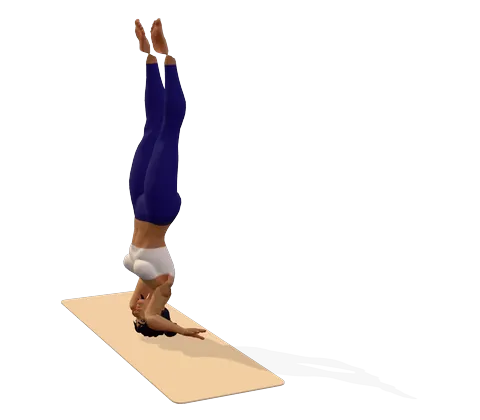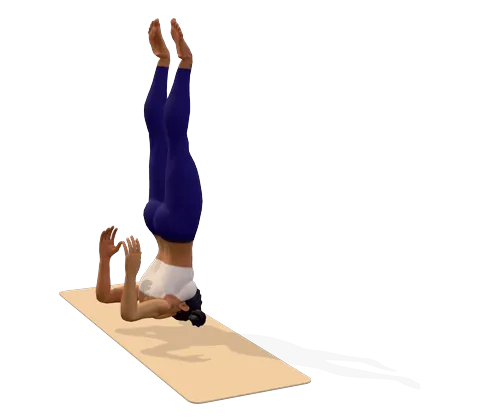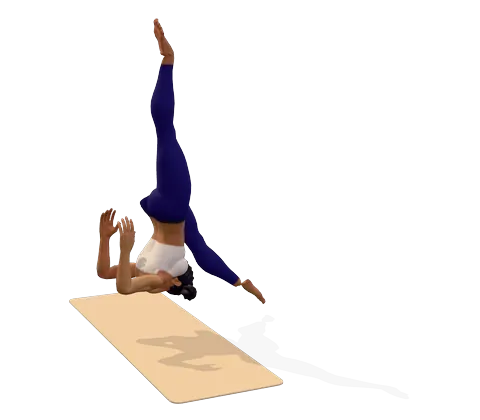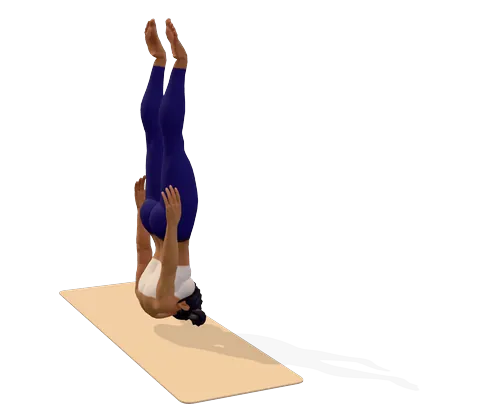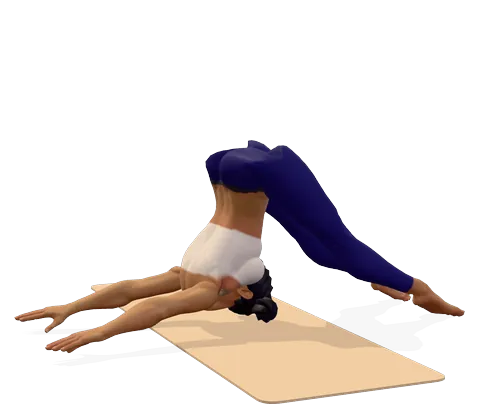
How to do Ear-Pressure Pose step by step
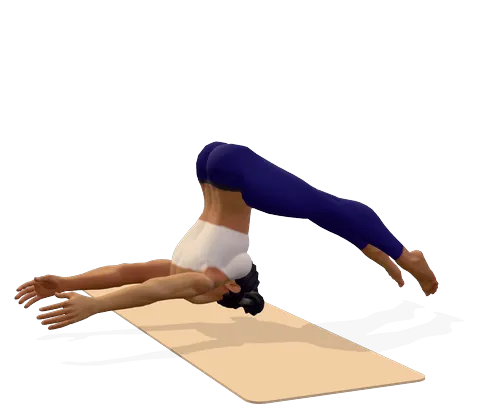
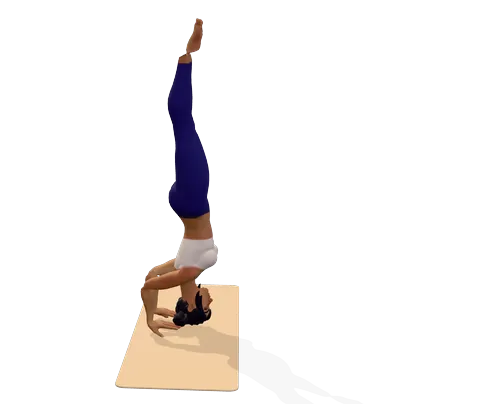
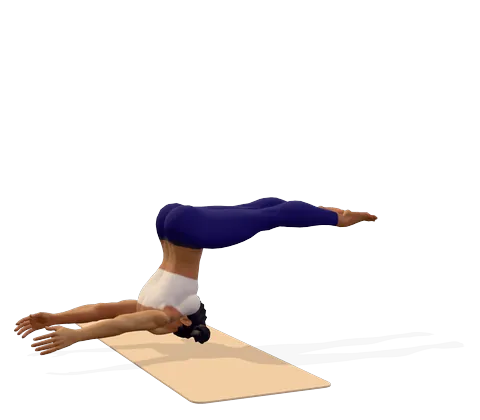
- Set up two or three folded blankets and lie with your shoulders on them, head on the floor. Come into plow pose with your toes on the floor behind your head.
- Keep your hips lifted over your shoulders. Stretch your arms along the floor behind your back, palms down.
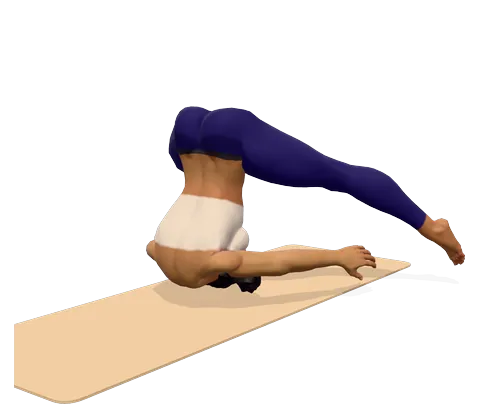
- Breathing out, bend your knees and lower them slowly towards the floor beside your ears. Rest your shins and the tops of your feet on the mat.
- If your knees reach your ears, let them rest there lightly. Keep your head still and your gaze on your chest.
- Breathe softly into your back for 20–30 seconds. The breath will feel shorter because your belly is folded; keep it smooth.
- To come out, straighten your legs back into plow, place your hands on your back and roll down slowly one vertebra at a time.
Where you feel Ear-Pressure Pose: what it stretches and strengthens
Bend your knees beside your ears and breathe gently. In the 3D guide, turn on Body guide: areas that stretch glow green and areas that work glow saffron.
Stretches
- Upper back
- Lower back
- Neck
Benefits and precautions
Benefits
- Gives a deep stretch to the whole back, from the neck to the lower spine
- Stretches the shoulders and upper back while the arms press into the floor
- Stretches the back of the thighs and the buttocks with the knees bent
- Turns attention inward: the knees muffle outside sound, which many people find calming
- Completes the shoulder stand and plow sequence before the counter pose
Avoid or modify if
- Neck injury, cervical spondylosis, disc problems or osteoporosis — do not practise it
- High blood pressure, heart disease, glaucoma, a detached retina, epilepsy or pregnancy
- An ear or sinus infection, a cold, or ear pain; also a migraine attack
- A knee replacement or recent knee surgery, or a slipped disc or sciatica that worsens when you bend forward
- Many teachers advise skipping inversions on the heavy days of a period; avoid on a full stomach
Ear-pressure pose (Karnapidasana) is an inversion in which you roll back into plow, then bend your knees and lower them beside your ears so that they gently cover them. It is also called knee-to-ear pose. It is the deepest pose in the shoulder-stand family, with the whole spine rounded and the legs folded close to the head, so it suits experienced students with a healthy neck.
What is ear-pressure pose in yoga?
The ear-pressure pose Sanskrit name, Karnapidasana, has a simple meaning: karna means "ear", pida means "pressure" and asana means "pose". In the ear-pressure position the knees press lightly against the ears and close them, which shuts out outside noise and turns your attention inward. In the Ashtanga closing sequence it comes straight after shoulder stand and plow pose.
Not to be confused with head-to-knee pose. The seated head to knee pose (Janu Sirsasana) is a forward bend with one leg straight, and the standing head to knee pose of hot yoga is a balance. Karnapidasana is an inversion.
Before you start: setup and progression
All your weight rests on the upper back and shoulders, and your neck is bent further forward than in any other pose. Fold two or three firm blankets into a stack about 5–8 cm high. Lie with your shoulders on the stack and your head on the floor, so the back of your neck is not pressed flat. Never turn your head.
Work towards the pose in stages:
- Legs up the wall (Viparita Karani) to get used to being upside down.
- Supported shoulder stand on blankets, held for a minute or more with an easy neck.
- Plow with the feet on a chair, then on the floor.
- Knees to the forehead: from plow, bend the knees and rest them on your forehead instead of beside the ears. This is sometimes called half ear-pressure pose.
- Knees beside the ears, shins on the floor: the full pose.
How to do ear-pressure pose well
The steps above take you in and out. These points make the pose comfortable and safe:
- Hips stay high. The pose starts from a strong plow. If the hips drop back towards your face, weight moves onto the neck.
- Lower the knees slowly. Bend them one at a time if you need to, and stop when you feel the stretch, even if the knees stay above the floor.
- Light touch on the ears. The "pressure" is gentle. Do not squeeze your head with your knees.
- Shoulders under you. Press the arms down and draw the shoulder blades towards each other so you rest on the tops of the shoulders.
- Breathe into your back. With the belly folded, the breath moves into the back ribs. Keep it slow and smooth, never forced.
How long to hold it
Start with 20 seconds (a few breaths) and build to about a minute over time. Come out sooner if your face flushes, your breath becomes short or your neck complains.
Ear-pressure pose benefits (Karnapidasana ke fayde)
The main Karnapidasana benefits are a long stretch of the back and a quiet, inward feeling. With the spine rounded from neck to tailbone, the muscles along the spine, the upper back and the back of the neck all lengthen. The bent knees also stretch the buttocks and the back of the thighs.
Because the knees cover the ears, many people find the pose calming, and it is often used to settle the mind before the final rest. Traditional texts also link the folded belly to digestion. These are the ear-pressure pose yoga benefits you can expect; there is no good evidence for bigger claims about hormones or organs.
Ear-pressure pose variations
- Knees on the forehead: the half version above, and the right yoga pose for beginners to this family to start with. Some call it forehead to knee pose.
- Knees on blocks: place a block beside each ear and rest the knees on them if they do not reach the floor.
- Hands on the back: keep your hands supporting the back instead of stretching the arms. This helps the hips stay high.
- Arms wrapped around the legs: an advanced option where the arms hug the backs of the knees.
Ear pressure when your head is down
Some people feel pressure in the ears or face when the head is down in any inversion. A mild sense of fullness can be normal, but pain, ringing or a blocked feeling is a sign to come out. To relieve pressure in your ears after coming up, sit upright, swallow or yawn gently, and breathe slowly through the nose. This is usually enough to help relieve ear pressure and balance it again. This yoga pose does not treat blocked ears; if the feeling lasts, or you have ear pain or an infection, see a doctor and skip inversions until it clears.
Who should avoid Karnapidasana
Skip it with a neck injury, high blood pressure, glaucoma, heart disease, epilepsy or during pregnancy. Many teachers advise leaving out inversions on the heavy days of a period. It is not one of the yoga poses for back pain relief: strong forward rounding can aggravate a slipped disc or sciatica. For gentler options, see our yoga for neck pain plan.
Knees and knee surgery
The knees bend fully in this pose, though they carry no weight. If you have knee pain, keep the knees on the forehead or on blocks, one of the simplest yoga modifications for bad knees. After a total knee replacement or other knee surgery, deep knee bending is usually limited for months. These post-op knee replacement surgery precautions, after a TKA (total knee arthroplasty), come from your surgeon and PT (physiotherapist); follow them before trying this pose. Yoga poses after knee replacement are best chosen with that team, and our yoga for knee pain plan lists yoga poses for knee pain relief that are safer choices.
What to do after
Straighten your legs back into plow, roll down slowly and rest flat for a few breaths. Then take fish pose as the counter pose to arch the neck and upper back the other way, and finish in corpse pose.
कर्णपीड़ासन (Karnapidasana) — हिंदी में: "कर्ण" का अर्थ है कान और "पीड़ा" का अर्थ है दबाव। हलासन में आने के बाद घुटनों को मोड़कर कानों के पास ज़मीन पर रखें और हाथ पीछे ज़मीन पर फैलाएँ। 20–30 सेकंड रुकें। इससे पूरी पीठ में खिंचाव आता है और मन शांत होता है। गर्दन की चोट, हाई ब्लड प्रेशर, ग्लूकोमा, कान के संक्रमण और गर्भावस्था में यह आसन न करें।
Frequently asked questions
How do you do ear-pressure pose?
Come into plow pose on folded blankets, then bend your knees and lower them beside your ears, shins on the floor and arms stretched behind your back. Hold for 20–30 seconds and roll out slowly through plow.
What does Karnapidasana mean?
"Karna" means ear and "pida" means pressure. The knees press gently on the ears, which is why it is also called knee-to-ear pose.
Is Karnapidasana good for beginners?
No. It is an advanced inversion that bends the neck strongly. Beginners should learn legs up the wall, supported shoulder stand and plow with a chair first, then try the knees-on-forehead version.
What if my knees do not reach the floor?
Rest them on your forehead or on blocks beside your ears. Never push them down or pull them with your arms.
Is it normal to feel pressure in my ears or face?
A little fullness can be normal when your head is down. Pain, ringing, a blocked feeling or a pounding head are signs to come out at once.
What is the difference between plow pose and ear-pressure pose?
In plow the legs are straight with the toes on the floor behind your head. In Karnapidasana the knees bend and come down beside your ears, so the spine rounds even more.
What is the counter pose for Karnapidasana?
Fish pose (Matsyasana), which arches the upper back and neck the other way. Hold it for a few calm breaths.
This page is for general education. Check with your doctor before starting yoga if you are pregnant, have a medical condition or an injury. Stop if you feel pain, dizziness or shortness of breath.