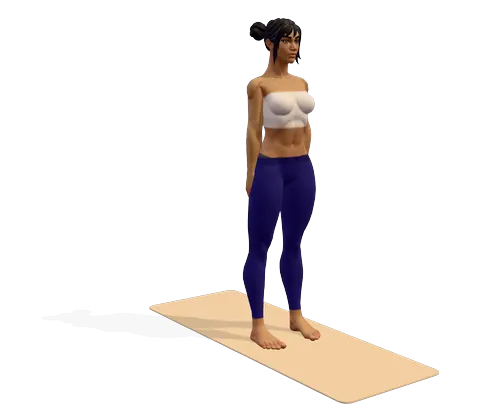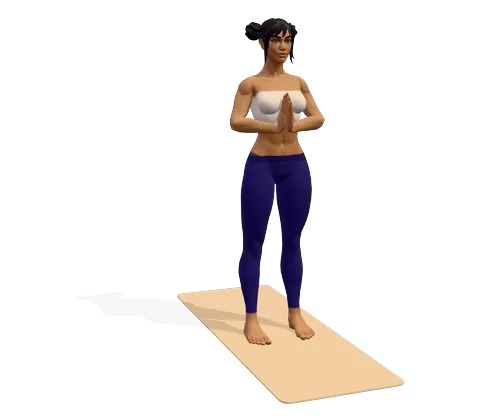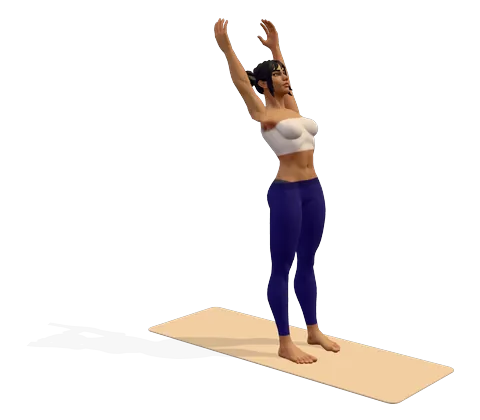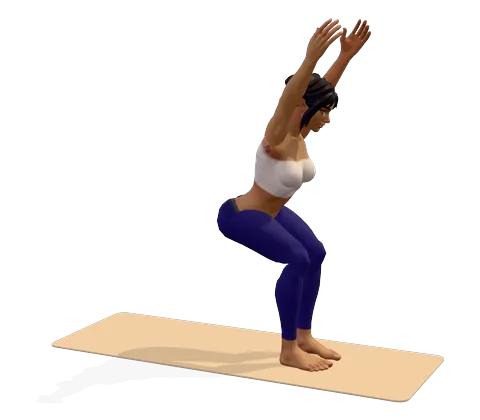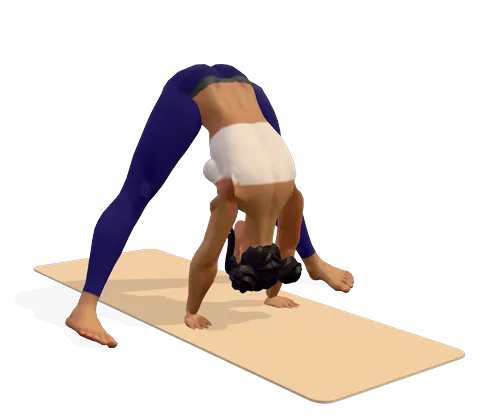
How to do Wide-Legged Forward Bend step by step
- Stand facing the long side of your mat. Step your feet wide apart — about one leg-length — with the outer edges of the feet parallel and toes pointing forward.
- Place your hands on your hips. Lift the arches of your feet and firm your thighs.
- Breathe in and lift your chest. Breathe out and fold forward from the hips, keeping your back long.
- Halfway down, place your hands on the floor (or blocks) under your shoulders and lengthen your spine once more.
- Breathe out and fold deeper, bending your elbows straight back and moving your hands in line with your feet. Let your head hang.
- Hold for 5–8 slow breaths (about 30–45 seconds), keeping your weight slightly forward over the balls of your feet.
- To come out, bring your hands to your hips, bend your knees a little, and rise on a breath in with a long back. Step your feet together.
Where you feel Wide-Legged Forward Bend: what it stretches and strengthens
Fold from the hips and let your head hang heavy. In the 3D guide, turn on Body guide: areas that stretch glow green and areas that work glow saffron.
Stretches
- Hamstrings
- Inner thighs
- Lower back
Strengthens
- Front thighs
Benefits and precautions
Benefits
- Stretches the hamstrings, inner thighs and calves
- Lengthens the back and lets the neck and shoulders hang free
- Strengthens the feet, ankles and the muscles that hold the knees straight
- Gives a gentle head-down position with a stable base, easier than most inversions
- The arm variations open the chest and the front of the shoulders
- A slow, cooling fold that many people use to settle down after standing poses
Avoid or modify if
- High blood pressure that is not controlled, glaucoma, a detached retina or recent eye surgery — keep your head above your heart with hands on blocks or a chair
- During a migraine attack, or with vertigo — skip the head-down fold
- Acute low back pain or a disc problem — fold only halfway with a flat back and bent knees
- Groin or hamstring strain — narrow the stance and bend your knees
- Pregnancy — keep a shorter stance, hands on blocks and the head up; skip the headstand preparation
Wide-legged forward bend (Prasarita Padottanasana) is a standing fold with the feet set far apart. Because the base is wide, the fold is steadier than a feet-together standing forward bend, and most people can bring their hands to the floor sooner. It stretches the backs of the legs and the inner thighs, and the head hangs gently below the heart. This page explains the meaning of the name, how to do the pose, its four classic variations, props, and who should keep the head up.
What is Prasarita Padottanasana?
What is a forward fold in yoga? Any pose where you bend forward from the hips so the chest moves toward the legs. What is wide legged forward fold? It is the version where the legs are spread wide. The Sanskrit name tells you exactly this.
Prasarita Padottanasana meaning and pronunciation
What does Prasarita Padottanasana mean? The Prasarita Padottanasana translation is: prasarita — "spread out" or "expanded", pada — "foot", ut — "intense", tana — "stretch", and asana — "pose". So the wide legged forward bend Sanskrit name means "spread-feet intense stretch". For Prasarita Padottanasana pronunciation, say pra-SAR-ee-tah pah-doh-tahn-AHS-anna. The wide legged forward bend in Hindi is written प्रसारित पादोत्तानासन, and the Prasarita Padottanasana meaning in Hindi is the same.
How to do wide legged forward bend pose in yoga
The steps above show how to get into the wide legged forward fold. These wide legged forward fold cues help with alignment:
- Feet parallel, not turned out. Turning the toes out collapses the arches and the knees. Some people turn the heels out slightly to protect the knees.
- Distance matters. About one leg-length apart is typical; taller or more flexible people go wider. If your feet slide, you are too wide.
- Hips over heels. Many people lean back as they fold. Keep your hips stacked over your heels and your weight a little toward the toes.
- Long back first. A flat-back halfway lift before the full fold spreads the stretch through the hamstrings instead of the lower back.
- Soft knees, never locked. Lift the kneecaps with your thigh muscles, but do not press the knees backward.
How to improve wide legged forward fold
How to get better at wide legged forward fold? Practise it three or four times a week after a warm-up, and use blocks so you can relax instead of straining. Tight hamstrings and inner thighs lengthen over weeks; forcing the stretch makes muscles guard.
Prasarita Padottanasana benefits
The main wide legged forward bend benefits are for the legs and back: it lengthens the hamstrings, calves and adductors while the spine hangs with gravity. The feet and thighs work to hold the base, so it is active as well as a stretch. Because the head goes down with a very stable base, many teachers use it as a gentle alternative to full inversions.
A slow fold with long out-breaths can feel calming, which is why it often appears near the end of standing sequences and in yoga for stress routines. Claims that forward folds cure headaches or high blood pressure are not supported by evidence — and people with uncontrolled high blood pressure should keep the head above the heart (see our yoga for high blood pressure plan for safer poses).
Wide legged forward fold muscles: what does it stretch?
It stretches the hamstrings, the adductors along the inner thighs, the calves and the muscles along the spine. It strengthens the quadriceps and the small muscles of the feet. Is wide legged forward fold a hip opener? Yes, in the sense that it stretches the inner thighs and asks the hips to flex deeply. Is wide legged forward fold an inversion? It is a mild one: the head is below the heart, but your weight stays on your feet.
Prasarita Padottanasana variations A, B, C and D
In Ashtanga yoga the wide legged forward fold is taught in four versions, often called Prasarita Padottanasana A B C D. The legs are the same; only the arms change:
| Variation | Arms | Adds |
|---|---|---|
| A | Hands on the floor between the feet, elbows bent back | The basic fold shown in the 3D guide |
| B | Hands stay on the hips | More core work and balance |
| C | Fingers clasped behind the back, arms fall overhead | A wide legged forward fold with shoulder opener and chest expansion |
| D | Fingers hold the big toes | A deeper fold, like big toe pose |
If your shoulders are stiff, hold a strap between your hands for Prasarita Padottanasana C rather than forcing the clasp.
Wide legged forward bend twist
For the revolved wide legged forward bend (Parivrtta Prasarita Padottanasana), place one hand under your face on the floor or a block and reach the other arm up as you twist. Parivrtta Prasarita Padottanasana benefits add upper-back rotation to the leg stretch. Keep the hips level and twist from the ribs.
Wide legged forward fold for beginners: modifications and props
- Wide legged forward fold with blocks: put one or two blocks under your hands or your head. Resting the crown on a block is soothing and takes strain off the neck.
- Wide legged forward fold with a chair: rest your forearms on a chair seat. Good for seniors, for anyone with high blood pressure, and for a pregnant practitioner.
- Restorative wide legged forward fold with bolster: fold over a bolster placed on a chair and stay for 1–2 minutes, breathing slowly.
- Bent knees: a soft bend protects the lower back if your hamstrings are tight.
If you are pregnant, a wide legged forward fold with a shorter stance, hands on blocks and head up is usually comfortable; skip it if you feel dizzy and follow your midwife's advice.
Standing vs seated wide legged forward fold
The seated wide legged forward fold is Upavistha Konasana. Seated wide legged forward fold benefits are similar — hamstrings and inner thighs — but you are not bearing weight, so it is gentler on the feet and has no head-down effect. The standing wide leg forward fold builds more strength in the legs and lets gravity help the fold.
Preparatory poses and a wide legged forward fold sequence
Good Prasarita Padottanasana preparatory poses are triangle pose, a standing forward bend and downward dog. A simple wide legged forward fold sequence: triangle on both sides, then the fold (A, then C), a twist on each side, and a transition from the wide legged forward fold to goddess by bending the knees and rising — see goddess pose. Finish in mountain pose, the simplest wide legged forward fold counter pose. You can play a flow like this with voice guidance in the guided sessions.
Wide legged forward fold to headstand
Some teachers use the wide stance to practise lowering the crown to the floor and moving from the wide legged forward fold to tripod headstand. This is an advanced step: learn headstand with a teacher first, and skip it with neck problems, high blood pressure, glaucoma or pregnancy.
प्रसारित पादोत्तानासन (Prasarita Padottanasana) — हिंदी में: पैरों को लगभग एक पैर की लंबाई जितना फैलाएँ, पंजे सीधे सामने रखें। हाथ कमर पर रखें, साँस लेते हुए छाती ऊपर उठाएँ और साँस छोड़ते हुए कूल्हों से आगे झुकें। हथेलियाँ पैरों के बीच ज़मीन पर रखें और सिर को ढीला छोड़ दें। 30–45 सेकंड रुकें और धीरे से ऊपर आएँ। प्रसारित पादोत्तानासन के फायदे: जाँघों के पीछे और अंदर की मांसपेशियों में खिंचाव, पीठ को आराम और मन शांत। अनियंत्रित हाई बीपी, ग्लूकोमा या माइग्रेन के दौरे में सिर नीचे न करें।
Where this practice is used
Chakras: Ajna (Third Eye Chakra)
Frequently asked questions
What are the benefits of wide legged forward bend?
It stretches the hamstrings, inner thighs and calves, lengthens the back, strengthens the feet and thighs, and gives a gentle, stable head-down position that many people find calming.
What does Prasarita Padottanasana mean?
It means "spread-feet intense stretch pose": prasarita (spread out), pada (foot), ut (intense), tana (stretch) and asana (pose).
What are Prasarita Padottanasana ke fayde (benefits in Hindi)?
Prasarita Padottanasana in Hindi is प्रसारित पादोत्तानासन. Its main benefits are a stretch for the back of the legs and inner thighs, a relaxed back and neck, and a calmer mind. See the Hindi box above.
What are the Prasarita Padottanasana contraindications?
Prasarita Padottanasana precautions: keep your head above your heart if you have uncontrolled high blood pressure, glaucoma or recent eye surgery, and skip the fold during a migraine attack or vertigo. Bend your knees for acute back pain, and use blocks in pregnancy.
How long should I hold wide legged forward bend?
Hold for 5–8 slow breaths (30–45 seconds). In a restorative version with the head on a block, you can stay 1–2 minutes if it feels comfortable.
Can beginners do Prasarita Padottanasana?
Yes. It is one of the easier forward folds because the wide base keeps you stable. Beginners should bend the knees slightly and place their hands or head on blocks.
This page is for general education. Check with your doctor before starting yoga if you are pregnant, have a medical condition or an injury. Stop if you feel pain, dizziness or shortness of breath.