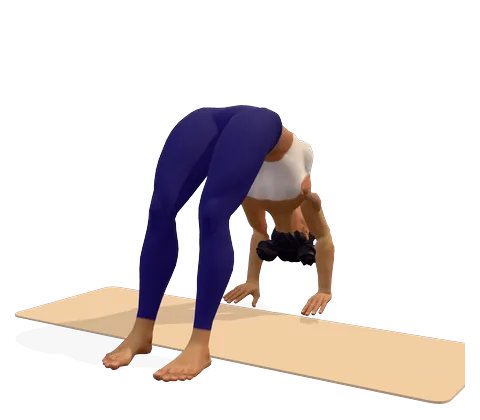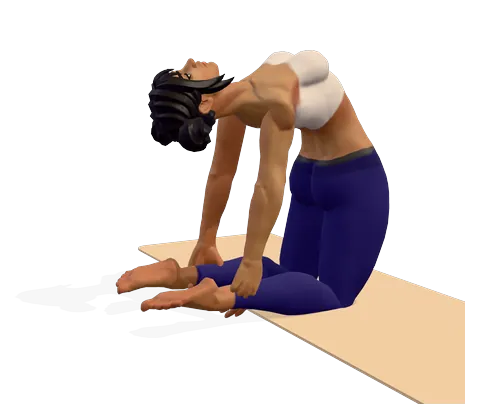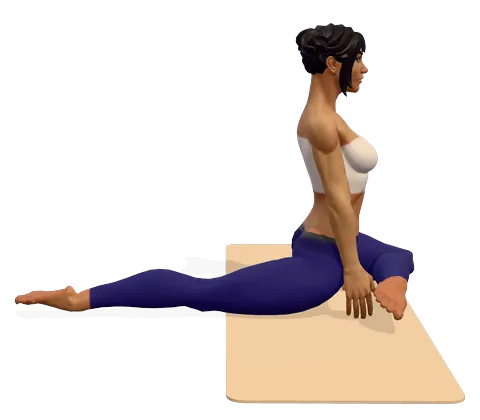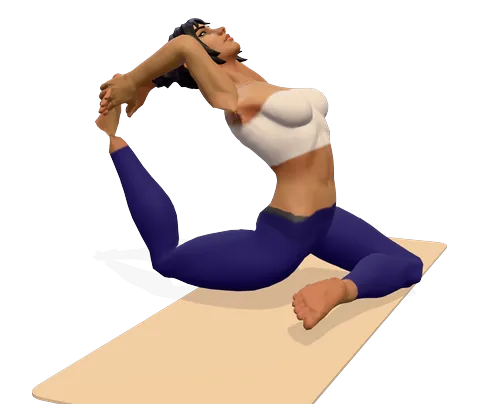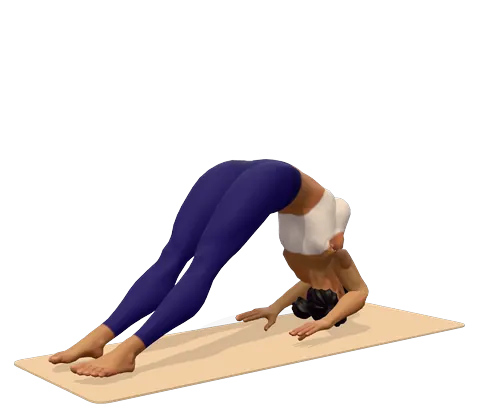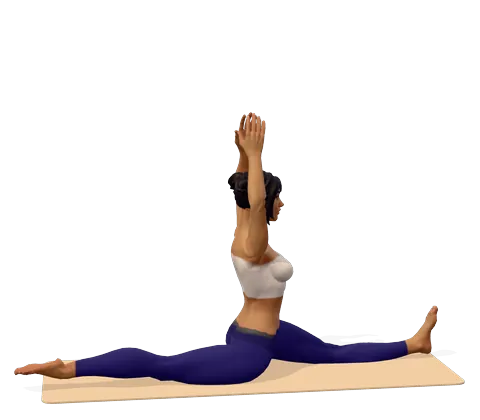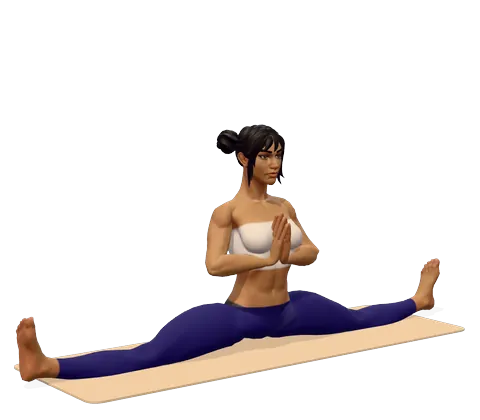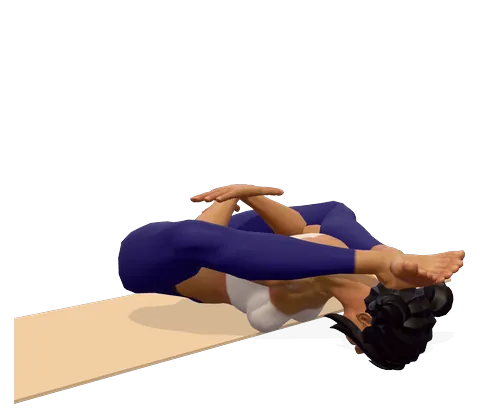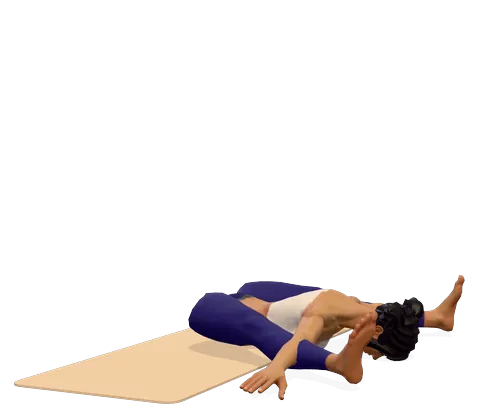
How to do Tortoise Pose step by step
- Warm up with a few forward bends and hip openers. Sit on your mat and open your legs a little wider than hip-width, with your knees bent and feet flat.
- Fold forward from the hips and bring your chest between your knees. Your belly should reach your thighs before you go further.
- Slide one arm at a time under the same-side knee, palms down, and reach the arms out to the sides, slightly back toward the hips.
- Slowly slide your heels forward to straighten the legs a little. The backs of the knees press down onto your upper arms and draw the chest lower.
- Let your chest and then your chin or forehead move toward the floor. Keep the back of the neck long and the breath slow and even.
- Hold for 5–8 breaths (about 30 seconds). Stay with the knees bent if the stretch is already strong behind the knees or in the back.
- To come out, bend your knees, draw your arms out one at a time and slowly roll up to sitting. Lean back on your hands and gently rock your knees side to side.
Where you feel Tortoise Pose: what it stretches and strengthens
Slide your arms under your knees and fold down. In the 3D guide, turn on Body guide: areas that stretch glow green and areas that work glow saffron.
Stretches
- Hamstrings
- Lower back
- Upper back
Benefits and precautions
Benefits
- Stretches the hamstrings, inner thighs, lower back and the backs of the shoulders
- Opens the hips in flexion, which prepares for deeper seated forward bends
- The inward, folded shape encourages slow breathing and a quiet, calm focus
- Mild pressure on the abdomen, traditionally linked with easier digestion
- Builds the flexibility needed for the full "sleeping tortoise" in Ashtanga yoga
Avoid or modify if
- Disc herniation, sciatica or acute lower back pain — the deep rounded fold loads the discs; skip it
- Hamstring or groin injury, or pain behind the knee
- Shoulder or elbow injury — the legs press on the upper arms
- Pregnancy, recent abdominal surgery or a hernia — the belly is compressed
- Osteoporosis: avoid deep rounded forward bends under load
Tortoise pose (Kurmasana) is a deep seated forward bend: you fold between your legs, thread your arms under your knees and reach them out to the sides, so the body looks like a tortoise with its legs spread and its head drawing in. It needs open hamstrings, hips and a supple back, which is why it is rated an intermediate-to-advanced pose. This page covers what the name means, how to do it step by step, prep poses for beginners, the main variations and who should skip it.
Tortoise pose meaning and Sanskrit name
The tortoise yoga pose Sanskrit name is Kurmasana: kurma means "tortoise" and asana means "pose". What is a Kurma? In Hindu stories, Kurma is the tortoise form of the god Vishnu, who carried a great mountain on his back so the ocean could be churned. The tortoise posture in yoga has a second, quieter meaning. The Bhagavad Gita compares a calm mind to a tortoise drawing in its limbs, just as you draw your senses inward. Many teachers use tortoise pose as a moment of that inward attention.
How do you say tortoise in Hindi? The everyday word is kachhua (कछुआ); kurma (कूर्म) is the Sanskrit and formal Hindi word. To write tortoise in Hindi, use कछुआ; Kurmasana itself is written कूर्मासन.
Is tortoise pose for beginners?
The full pose is not. You are probably ready to start working toward it when you can:
- Fold forward in seated forward bend with the belly close to the thighs (knees may bend).
- Sit in wide-angle seated forward bend with your hands on the floor well in front of you.
- Squat in garland pose with heels down and chest between the knees.
Tortoise pose yoga for beginners means working on these first, then trying the pose with the knees bent, as the 3D guide shows.
How to do tortoise pose: a step-by-step progression
Instead of step-by-step pictures, the 3D figure shows tortoise pose from any angle; rotate it to see where the arms go. Work through the steps of this yoga progression two or three times a week as your tortoise pose prep.
Stage 1: Soles together
Sit in bound angle pose, then slide the feet forward to make a diamond shape and fold over them. This opens the hips and the lower back gently.
Stage 2: Arms under the knees
Sit with the knees high and bent, feet wide. Fold forward and slide the arms under the knees, hands holding the outside of the ankles. Stay here and breathe. A folded blanket under your seat makes this far easier.
Stage 3: Arms out to the sides
Reach the arms out sideways under the legs, palms down, and let the knees rest on the upper arms. Put a bolster or cushion under the chest if it is far from the floor.
Stage 4: Straighten the legs
Slide the heels forward a little at a time. The full tortoise yoga pose has straight legs, the chest and chin on the floor and the arms long. Many people practise for years at stage 3, which already gives the stretching tortoise pose benefits.
Tortoise pose variations in yoga
Half tortoise pose (Ardha Kurmasana)
In yoga, the half tortoise pose Sanskrit name is Ardha Kurmasana ("half tortoise"). You kneel, sit on your heels and fold forward with the forehead on the floor and the arms stretched in front, palms together. It looks like child's pose with active arms. Half tortoise pose benefits are a gentle stretch of the back and shoulders and a calming, head-down rest, so it is a good choice for beginners and for kids who love a "turtle" shape.
Full tortoise and sleeping tortoise pose
In the sleeping tortoise pose of Ashtanga yoga (Supta Kurmasana) the hands bind behind the back and the feet cross in front of the head. This is a very advanced shape and needs a teacher.
Softer and seated versions
A relaxed, knees-bent tortoise pose held for a few minutes appears in some Yin yoga classes. Let the back round gently and support the head on a block rather than pulling yourself down.
Tortoise pose in Ashtanga yoga
In the Ashtanga primary series, Kurmasana follows Bhujapidasana (shoulder-pressing pose) and leads straight into Supta Kurmasana. The arm balance before it warms the shoulders and the hips in exactly the right way, which is why the order works.
Tortoise pose benefits and muscles
The main tortoise pose yoga benefits are physical: a long stretch for the hamstrings, the inner thighs and the whole back, and more space in the hips. Because the head is down and the body folds inward, the pose also tends to slow the breath and quieten the mind. Some teachers call it turtle pose; the yoga benefits are the same. Traditional texts link the belly pressure with digestion; treat that as tradition, not proven fact.
| Stretches | Works |
|---|---|
| Hamstrings and calves | Quadriceps, gently, to straighten the legs |
| Inner thighs (adductors) and buttocks | Shoulder muscles holding the arms long |
| Muscles along the spine and the backs of the shoulders | Deep core, to keep the breath steady |
Common mistakes and fixes
- Forcing the legs straight. Bend the knees; the shape comes from the hips, not from pressing the knees down.
- Pulling with the neck. Keep the neck long and let the head rest where it lands.
- Holding the breath. A folded posture already limits the belly; breathe into the back ribs.
Is tortoise pose good for back pain?
Usually not. Deep, loaded forward folds can irritate a disc problem or sciatica. If you are asking which yoga asana helps relieve back pain, gentler choices such as child's pose or a supported pigeon pose for lower back pain linked to tight hips are safer. Our yoga for back pain plan lists the best asanas for back pain relief and how to practise them.
कूर्मासन (Kurmasana) — tortoise pose in Hindi: पैर फैलाकर बैठें और घुटने थोड़े मोड़ें। आगे झुकें, दोनों हाथ घुटनों के नीचे से निकालकर बगल में फैलाएँ, हथेलियाँ ज़मीन पर। धीरे-धीरे छाती और ठुड्डी को नीचे आने दें और 20–30 सेकंड रुकें। इससे जांघों, कमर और कंधों में खिंचाव आता है और मन शांत होता है। कमर दर्द, स्लिप डिस्क, हर्निया या गर्भावस्था में यह आसन न करें।
Frequently asked questions
What is tortoise pose in yoga?
Tortoise pose (Kurmasana) is a deep seated forward bend in which the arms reach out to the sides under the knees and the chest folds toward the floor. It stretches the hamstrings, hips and back.
What does Kurmasana mean?
"Kurma" means tortoise and "asana" means pose. Kurma is also the tortoise form of Vishnu in Hindu stories, and the pose reflects the idea of drawing the senses inward like a tortoise.
What is half tortoise pose?
Half tortoise (Ardha Kurmasana) is a kneeling pose: sit on your heels, fold forward with the forehead down and stretch the arms in front with palms together. It is much easier than full tortoise pose.
How long should I hold tortoise pose?
About 5–8 breaths (30 seconds) is enough. In a gentle Yin-style version with bent knees and support, some people stay a few minutes.
Can beginners do tortoise pose?
Beginners should prepare with seated forward bend, wide-angle forward bend, bound angle and garland pose, and try tortoise only with the knees well bent.
What do we call tortoise in Hindi?
Tortoise is "kachhua" (कछुआ) in everyday Hindi and "kurma" (कूर्म) in Sanskrit, so the pose is कूर्मासन in Hindi.
Who should not do tortoise pose?
Skip it with a disc problem, sciatica, acute back pain, hamstring or shoulder injury, a hernia, osteoporosis, or during pregnancy.
This page is for general education. Check with your doctor before starting yoga if you are pregnant, have a medical condition or an injury. Stop if you feel pain, dizziness or shortness of breath.