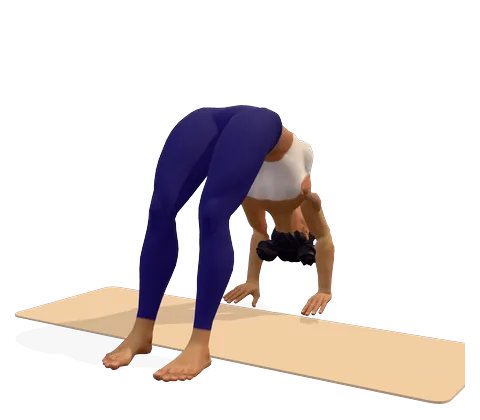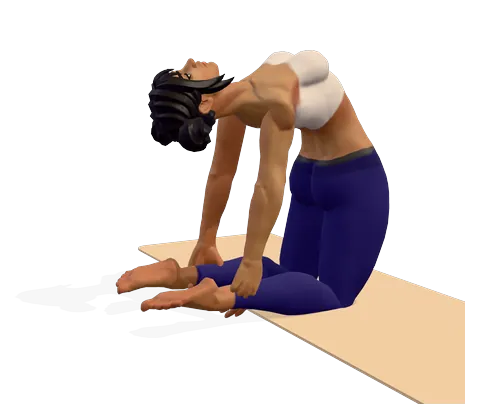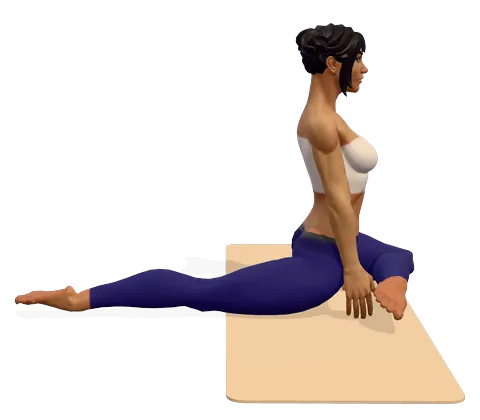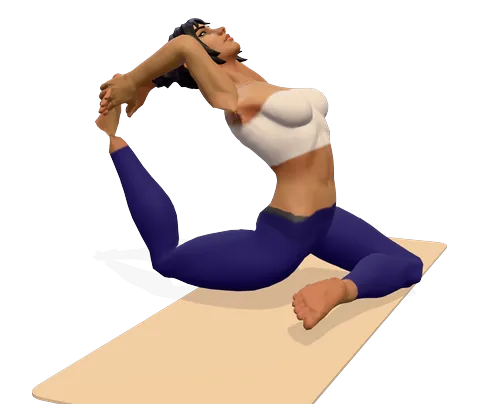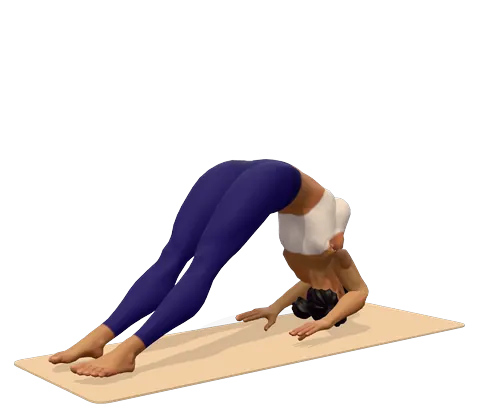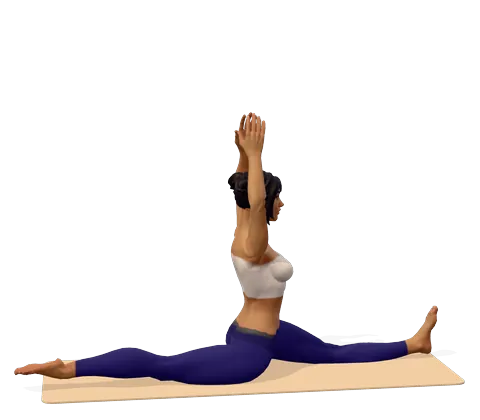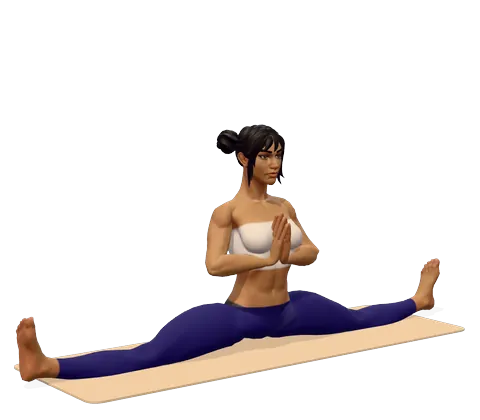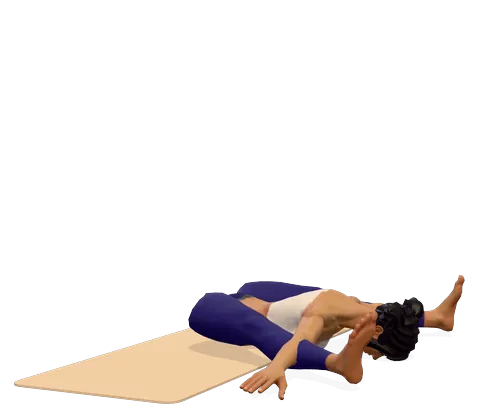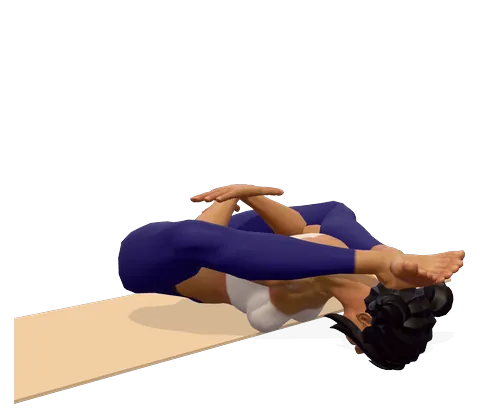
How to do Sleeping Tortoise Pose step by step
- Warm up fully, then sit with your legs apart, a little wider than your hips, and bend your knees slightly.
- Fold forward and slide your arms under your knees, one at a time, until your shoulders are under the backs of your knees. This is tortoise pose.
- Bend your knees more and draw your feet toward each other in front of your head, heels just off the floor.
- Bend your elbows and sweep your hands behind your back. Hold hands, fingers or wrists behind your waist, or hold a strap.
- Cross one ankle over the other in front of your forehead and let your forehead or chin rest on the floor.
- Stay for 3–5 slow breaths (about 20 seconds), breathing into your back. Keep the neck long and the face relaxed.
- To come out, uncross your ankles, release your hands, slide your arms out from under your legs and sit up slowly. Repeat with the other ankle on top if you wish.
Where you feel Sleeping Tortoise Pose: what it stretches and strengthens
Bind your hands behind your back and cross your feet in front of your head. In the 3D guide, turn on Body guide: areas that stretch glow green and areas that work glow saffron.
Stretches
- Hamstrings
- Lower back
- Shoulders
Benefits and precautions
Benefits
- Gives a deep stretch to the hamstrings, lower back and back of the shoulders
- Opens the hips and shoulders in a way few other poses can
- Compresses and folds the abdomen, which is traditionally linked to digestion
- Asks for slow, calm breathing in a small space, which trains patience and focus
- Symbolises pratyahara, the drawing in of the senses, like a tortoise inside its shell
Avoid or modify if
- Advanced pose — only after a flat, easy tortoise pose and deep forward folds without strain
- Herniated disc, sciatica or any recent back injury — avoid; the spine is deeply rounded under load
- Shoulder, elbow or knee injury — avoid, because the bind and the leg pressure load these joints
- Pregnancy, hernia or recent abdominal surgery — avoid
- High blood pressure, heart disease or glaucoma — the head is low and the belly compressed; ask your doctor first
- Never let anyone push your legs or head down; stop at any sharp or nerve-like pain
Sleeping tortoise pose (Supta Kurmasana) is an advanced seated forward fold. Your shoulders slide under your knees, your hands bind behind your back and your ankles cross in front of your head, so the whole body curls into a compact shell. It is part of the Ashtanga primary series and needs very flexible hamstrings, hips and shoulders. This page explains the name, the prerequisites, how to do it step by step, its benefits and who should not try it.
What is sleeping tortoise pose?
Supta Kurmasana meaning, word by word: in Sanskrit, supta means "reclining" or "sleeping", kurma means "tortoise" or "turtle" and asana means "pose". So Supta Kurmasana is the sleeping tortoise pose, also called the sleeping turtle pose or reclining tortoise pose. Tucked under its own legs, the body looks like a tortoise that has pulled its head and limbs into its shell, the typical tortoise sleeping position.
The image is meaningful. In yoga philosophy the tortoise withdrawing its limbs stands for pratyahara, the withdrawal of the senses from the outside world. The Bhagavad Gita uses this picture to describe a steady mind. That is the deeper meaning behind the phrase "sit like a tortoise": turn your attention inward, calmly.
Supta Kurmasana vs Kurmasana
Kurmasana, tortoise pose, is the first stage: you fold forward with your arms under your knees and stretched out to the sides, legs mostly straight. Supta Kurmasana goes further: the knees bend, the arms wrap behind the back and bind, and the ankles cross in front of the head. In the Ashtanga primary series they are done one after the other, and some teachers call the pair "tortoise and sleeping tortoise". If tortoise pose is not easy yet, sleeping tortoise is not the next step.
Supta Kurmasana prerequisites and preparation
There is no Supta Kurmasana for beginners. Supta Kurmasana preparation takes months, and hamstring flexibility is only one part of it; be honest about whether you are ready. You should be able to:
- Fold flat in seated forward bend and wide-angle seated forward bend without pulling or rounding hard.
- Rest in tortoise pose with your chest and shoulders on the floor.
- Bind your hands behind your back in twists such as Marichi's pose.
- Hold head-to-knee pose easily; the benefits of Janu Sirsasana for the hamstrings and lower back are exactly what you need here.
- Draw one leg toward the back of the shoulder in a deep hip opening pose, the groundwork for the foot-behind-the-head poses.
If you feel pain in the lower back, the back of the knee, the inner elbow or the shoulder, you are not ready. Forcing this pose, or letting someone push you into it, can injure the discs, hamstrings and shoulders.
How to do sleeping tortoise pose safely
The steps above follow the 3D guide. These details make the difference:
- Shoulders deep first. The further your shoulders slide under your knees, the easier the bind and the foot cross become.
- Bind before you cross. With your hands bound behind the back first, draw the feet together. Practise Supta Kurmasana with a strap between the hands if they do not meet.
- Feet close to the floor. Keep the heels low as you cross the ankles; lifting the feet high strains the knees and hips.
- Breathe into the back. The belly is compressed, so let each breath widen the back ribs.
- Exit slowly. The Supta Kurmasana exit is the reverse of the entry: uncross the feet before you release the hands, then come up slowly.
A sensible Supta Kurmasana hold time is about 20 seconds (3–5 breaths) at first. In Ashtanga practice it is held for five breaths.
Stages on the way
Many practitioners spend a long time in half-way stages: feet together but not crossed, hands holding a strap, or only the bind without the feet. Each stage gives most of the stretch with less strain.
Supta Kurmasana benefits and muscles stretched
For those who are ready, sleeping tortoise pose gives one of the deepest stretches in yoga:
| Area | What happens |
|---|---|
| Hamstrings | Long stretch as the knees press the shoulders down |
| Lower and middle back | The spine rounds forward fully |
| Shoulders | Internal rotation for the bind behind the back |
| Hips and groin | Deep external rotation to bring the feet in front of the head |
Traditional texts say the pose calms the mind and aids digestion because the belly is folded. These are traditional claims without research on this pose. It is not one of the back pain yoga poses: with a disc problem it can make pain worse. For lower back pain yoga poses, see the gentle options in our yoga for back pain guide. Press the Body guide button on the 3D demo to see the stretched areas glow green.
Supta Kurmasana contraindications
The sleeping tortoise pose contraindications are in the caution box above. In short: avoid it with any disc, back, shoulder, elbow or knee problem, in pregnancy, with a hernia, and with glaucoma, heart disease or high blood pressure unless your doctor agrees. If you feel tingling or numbness in the arms or legs, come out at once; the bind and leg pressure can press on nerves.
What to do after
Counter the deep forward bend with a gentle backbend, such as a low bridge or sphinx pose, and rest in a reclining hip opener. Supta Baddha Konasana benefits the hips and belly after a long fold because it opens what the tortoise closed. You can plan the order in the sequence builder.
Turtle pose for kids
Children love sea animals yoga poses, but the full sleeping tortoise is not for them. A simple "turtle" (sitting with the soles of the feet together and folding forward, arms under the knees) is safe and fun.
Frequently asked questions
What is Supta Kurmasana?
Supta Kurmasana, or sleeping tortoise pose, is an advanced seated forward fold in which the arms go under the knees and bind behind the back, and the ankles cross in front of the head.
What does Supta Kurmasana mean?
Supta means sleeping or reclining, kurma means tortoise and asana means pose. The body looks like a tortoise that has drawn its limbs into its shell.
What are the prerequisites for sleeping tortoise pose?
A flat, comfortable tortoise pose, easy seated and wide-leg forward folds, a bind behind the back in twists such as Marichyasana, and open hips.
What are the benefits of Supta Kurmasana?
A deep stretch for the hamstrings, back, hips and shoulders, and practice in calm breathing in a compressed position. It is traditionally linked to calming the mind and supporting digestion.
What if my hands do not meet behind my back?
Hold a strap between your hands, or hold your ankles. Never force the bind; the shoulders and elbows are easy to strain here.
How long should I hold sleeping tortoise pose?
About 20 seconds, or 3–5 slow breaths. In Ashtanga practice it is held for five breaths.
Who should avoid Supta Kurmasana?
Beginners, and anyone with a disc problem, sciatica, a shoulder, elbow or knee injury, a hernia, pregnancy, glaucoma, heart disease or high blood pressure.
This page is for general education. Check with your doctor before starting yoga if you are pregnant, have a medical condition or an injury. Stop if you feel pain, dizziness or shortness of breath.