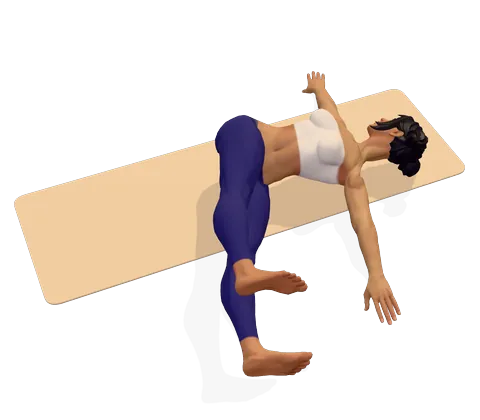
How to do Revolved Abdomen Pose step by step
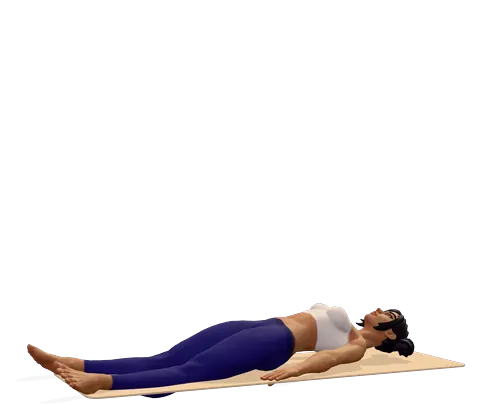
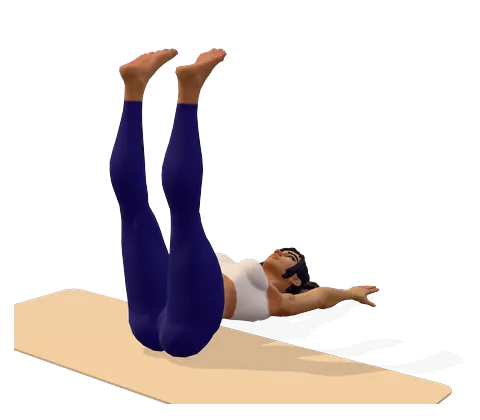
- Lie on your back and stretch your arms out to the sides at shoulder height, palms down. Press the backs of your shoulders into the mat.
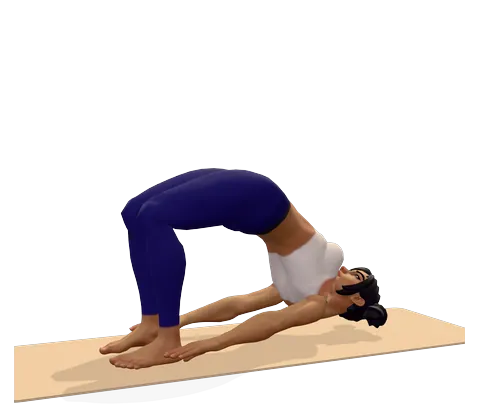
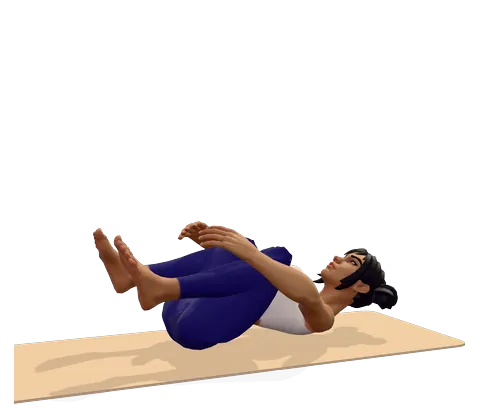
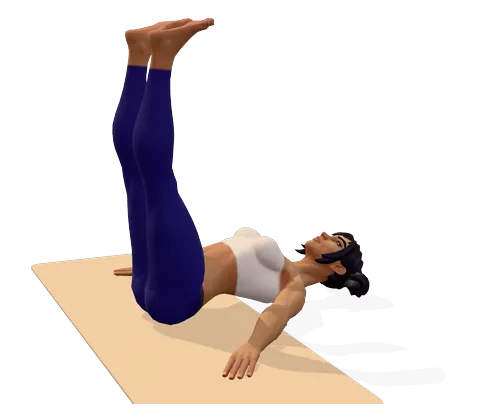
- Bend your knees into your chest, then straighten both legs up toward the ceiling, feet together (keep the knees bent if your hamstrings or core are not ready).
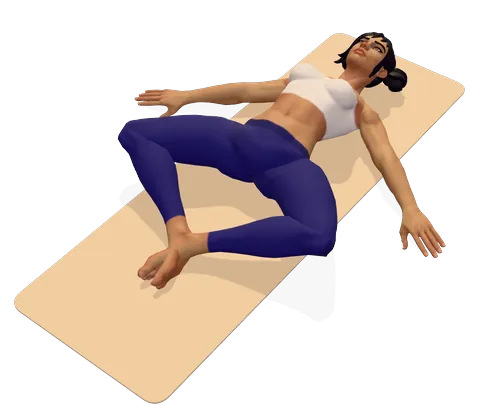
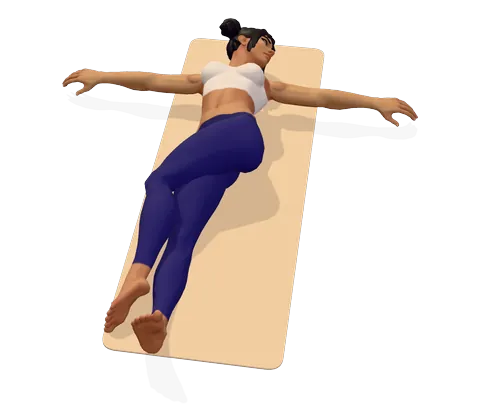
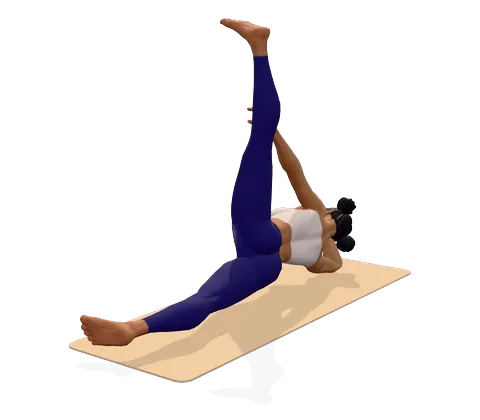
- Breathe out and slowly lower both legs to the left, keeping them together. Go only as low as you can while your right shoulder stays on the mat.
- Turn your head gently to the right. Reach your feet toward your left hand and keep your legs straight and heavy.
- Hold for 3–5 breaths (about 30 seconds). Breathe into your right side ribs and feel the waist lengthen.
- Breathe in, draw your belly button in and lift your legs back to the centre using your core, not a swing.
- Repeat on the right side, then bend your knees, hug them to your chest and rest.
Where you feel Revolved Abdomen Pose: what it stretches and strengthens
Lower your legs to one side while both shoulders stay down. In the 3D guide, turn on Body guide: areas that stretch glow green and areas that work glow saffron.
Stretches
- Side waist
- Lower back
- Chest
Strengthens
- Abs
Benefits and precautions
Benefits
- Stretches the side waist, lower back and chest in one long twist
- Strengthens the abdominal muscles, especially the obliques, as you lower and lift the legs
- Gently mobilises the lower and middle spine; often used in routines for back stiffness
- Traditionally used to support digestion and ease gas and bloating
- Builds the core control needed for twisting and balancing poses
- Calming when done slowly at the end of a practice
Avoid or modify if
- Pregnancy — avoid; deep twists and lying on the back are not advised
- After abdominal surgery or a hernia, and while you are on abdominal precautions — wait until your surgeon clears you
- Acute disc injury, sciatica or sacroiliac pain — use the bent-knee version with a block, or skip, and ask your physiotherapist
- Do not practise on a full stomach; wait 2–3 hours after a meal
- Shoulder injury — keep the arms lower, closer to the body
Jathara Parivartanasana (revolved abdomen pose) is a lying twist in which both legs lower to one side while your arms stay wide and your shoulders stay down. It looks calm, but lowering and lifting two straight legs asks a lot of the abdominal muscles, which is why it sits between a relaxing stretch and a core exercise. Below you will learn what the Sanskrit name means, how to do it safely, its benefits for the back and digestion, easier versions and who should avoid it.
What is revolved abdomen pose?
The name is literal. Jathara means "abdomen" or "stomach", parivartana means "turning" or "revolving", and asana means "pose". So it is often translated as stomach turning pose; some books call it Jathara Parivrtti. In yoga, "revolved" means a twist, so this is a revolved abdomen pose: the belly turns while the shoulders stay still.
Unlike the standing revolved poses, such as revolved triangle pose (Parivrtta Trikonasana), revolved side angle pose or revolved chair pose in yoga, you do not need balance or leg strength. The floor supports the whole upper body. Some teachers also use a seated version, often called upavistha jathara parivartanasana, where you twist from sitting; this page covers the classic lying pose.
How to do Jathara Parivartanasana (Jathara Parivartanasana kaise kare)
Yoga Jathara Parivartanasana is easiest to learn by watching. The steps above follow the 3D guide, with straight legs lowered to the left, head turned right. What matters most:
- Shoulders first. Both shoulder blades stay on the mat. The depth of the twist is decided by the shoulder, not by how close the feet get to the floor.
- Legs together. Squeeze the inner thighs and ankles so the legs move as one piece. This protects the lower back.
- Slow down. Take three or four breaths to lower the legs. Letting them drop loads the lower back.
- Lift with the belly. To return, breathe out, draw the navel in and lift. If you have to swing, use the bent-knee version.
You should feel a stretch along the side of the waist and the lower back on the side opposite your legs, and effort in the belly. Pain in the lower back or a pull in the groin means go less deep.
Jathara Parivartanasana with bent knees and other modifications
These modifications for yoga poses make it suitable for beginners:
- Bent knees: keep the knees bent at 90 degrees over the hips and lower them to the side. This is the best yoga pose for beginners to learn the twist and is much easier on the back.
- Block or cushion: place a block or bolster where the knees or feet land, so they do not hang.
- Feet on the floor: with feet flat and knees bent, this becomes the gentle monkey twist pose.
- Stronger: stop the legs a few centimetres above the floor and hold, then pass through the centre to the other side without resting.
Jathara Parivartanasana benefits
Core: how to work your stomach muscles in a twist
The obliques (the muscles on the side of the stomach) control the lowering, while the deep transverse abdominis holds the belly flat. The bent-knee version works well among supine transverse abdominis muscle exercises (also called transverse abdominal muscle exercises): move slowly and keep the navel drawn in. It will not burn belly fat on its own. No yoga poses for belly fat work like that; a regular routine with diet does, see yoga for belly fat.
Back stiffness
Gentle twists are common lower back pain yoga poses, and the bent-knee version is one of the kindest beginner yoga poses for back pain. The revolved abdomen pose in yoga rotates the lower and middle spine while the floor keeps you stable. Like other yoga poses for lower back pain relief, it works best done slowly and often. See our yoga for back pain plan for a full routine.
Digestion, gas and bloating
Traditionally, twists are counted among the yoga poses to aid digestion, and many people find they help with trapped gas, bloating and sluggish bowel movements. People looking for yoga for stomach issues or a gastric problem often start with twists like this one. There is little research on this single pose, but it fits well among gas relieving yoga poses such as wind-relieving pose. See yoga for gas and bloating and yoga for constipation. Practise on an empty stomach: yoga poses for digestion after eating should be very gentle, such as sitting in Vajrasana, not deep twists.
Yoga poses for stomach pain or abdominal pain are not a substitute for care. Sudden, severe or lasting abdominal pain needs a doctor, not a twist.
Muscles stretched and worked
| Stretches | Works |
|---|---|
| Obliques and side waist (opposite the legs) | Obliques and rectus abdominis |
| Lower back muscles | Transverse abdominis (deep core) |
| Chest and front of the shoulders | Inner thighs, to keep the legs together |
Press the Body guide button on the 3D demo to see the stretch areas glow green and the belly glow saffron.
Contraindications and abdominal precautions
Jathara Parivartanasana contraindications are listed in the caution box above. What are the abdominal precautions? After abdominal surgery, including laparoscopy or a C-section, surgeons often give rules to avoid lifting, straining and twisting for several weeks. Follow them exactly; this pose loads the belly and should wait until you are cleared. Skip it in pregnancy, and use only the bent-knee version with a disc problem.
When to practise and what to pair it with
Hold each side for about 30 seconds, once or twice. It works well near the end of a session, after backbends or forward bends and before rest. Pair it with revolved head-to-knee pose: Parivrtta Janu Sirsasana benefits include a similar side-waist stretch while seated. Add it to your own routine in the sequence builder.
जठर परिवर्तनासन (Jathara Parivartanasana) — हिंदी में, योग के फायदे (yoga ke fayde in Hindi): पीठ के बल लेटें और बाँहें कंधों की सीध में फैलाएँ। दोनों पैर ऊपर उठाएँ और साँस छोड़ते हुए उन्हें धीरे-धीरे बाईं ओर नीचे ले जाएँ, सिर दाईं ओर घुमाएँ। दोनों कंधे ज़मीन पर रखें और 30 सेकंड रुकें, फिर दूसरी तरफ़ करें। इसके फायदे: पेट की मांसपेशियाँ मज़बूत होती हैं, कमर की अकड़न कम होती है और पाचन में मदद मिल सकती है। गर्भावस्था और पेट की सर्जरी के बाद यह आसन न करें।
Frequently asked questions
What are the benefits of Jathara Parivartanasana?
It stretches the side waist, lower back and chest, strengthens the abdominal muscles (especially the obliques), mobilises the spine and is traditionally used to support digestion.
What does Jathara Parivartanasana mean?
Jathara means abdomen, parivartana means turning and asana means pose, so it is the revolved abdomen pose or stomach turning pose.
Should my legs be straight or bent?
Beginners, people with tight hamstrings and anyone with back pain should bend the knees. Straight legs are harder for the core and the lower back.
Why does my shoulder lift off the floor?
Your legs are going lower than your spine can twist. Stop them higher, rest them on a block, or bend the knees.
Is revolved abdomen pose good for gas and bloating?
Many people find twists help trapped gas, and it is often included among yoga poses for digestion and bloating, and yoga poses for digestion and constipation. Practise on an empty stomach and see a doctor for ongoing stomach problems.
Is Jathara Parivartanasana good for lower back pain?
The bent-knee version is a gentle twist many people find helpful for back stiffness. With a disc problem or sciatica, ask your physiotherapist first.
Can I do it during pregnancy?
No. Deep twists and lying on the back for long are not advised in pregnancy. Choose an open seated twist that turns away from the belly instead.
This page is for general education. Check with your doctor before starting yoga if you are pregnant, have a medical condition or an injury. Stop if you feel pain, dizziness or shortness of breath.