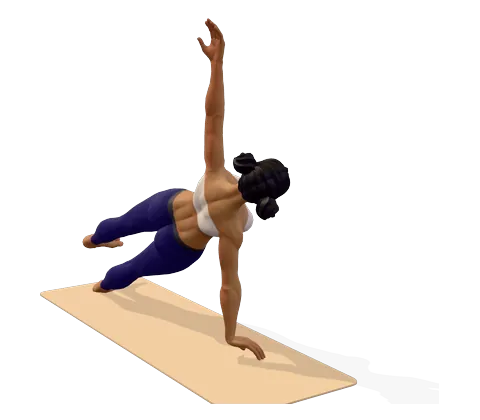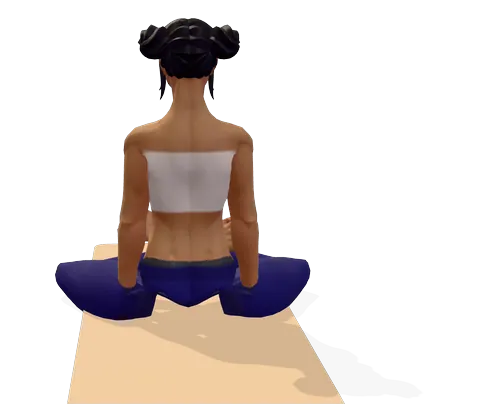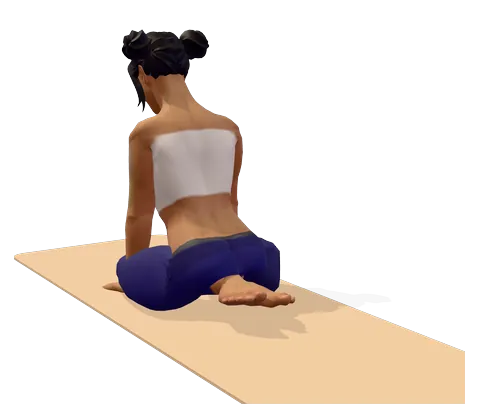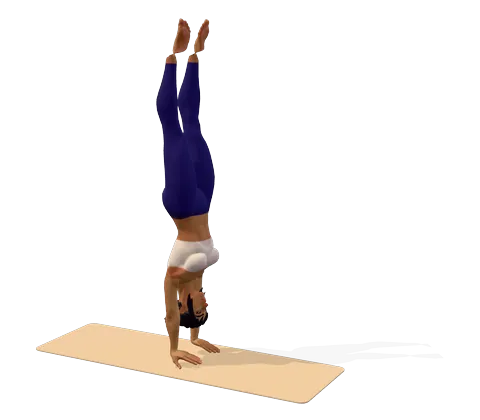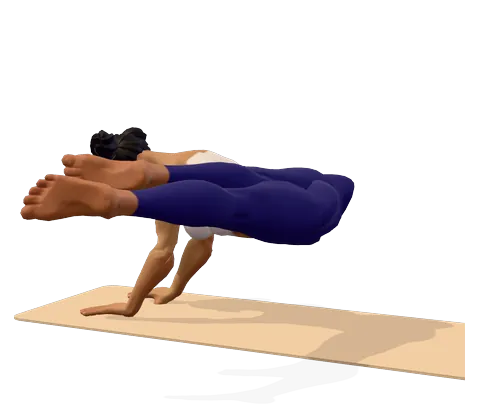
How to do Eight-Angle Pose step by step
- Warm up your hips, hamstrings, wrists and core. Sit on the mat with your legs stretched out in front of you.
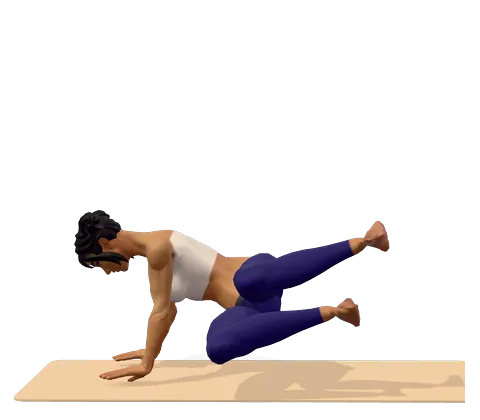
- Bend your left knee and lift your left leg with both hands. Thread your left arm under the knee and hook the back of the knee as high as you can over your left upper arm, close to the shoulder.
- Place both palms on the floor beside your hips, shoulder-width apart, fingers pointing forward.
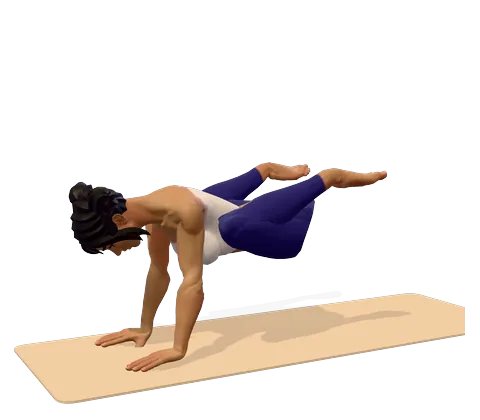
- Press into your hands and lift your hips and your right leg off the floor. Cross your right ankle over your left ankle.
- Bend your elbows toward 90° and lean your chest forward and down. At the same time squeeze your thighs around your left arm and stretch both legs out to the left.
- Hold for 2–5 breaths (about 10 seconds). Look forward or slightly down, and keep the elbows hugging in.
- To come out, bend your knees, lift your chest, lower your hips to the floor and uncross your ankles. Rest, then repeat on the other side.
Where you feel Eight-Angle Pose: what it stretches and strengthens
Squeeze your legs around one arm and lean forward. In the 3D guide, turn on Body guide: areas that stretch glow green and areas that work glow saffron.
Stretches
- Side waist
- Hamstrings
Strengthens
- Arms
- Abs
- Wrists
Benefits and precautions
Benefits
- Strengthens the wrists, arms, chest and shoulders
- Builds strong oblique and deep core muscles
- Stretches the hips and hamstrings and adds a gentle twist
- Improves balance, coordination and focus
- Teaches leverage: a clear sense that technique matters more than raw strength
Avoid or modify if
- Wrist, elbow or shoulder injury, including carpal tunnel syndrome and frozen shoulder
- Hamstring or groin strain, or hip pain when you hook the leg over the arm
- Pregnancy, recent abdominal surgery or a hernia
- Back pain that gets worse with twisting or loaded forward bending — skip it and ask a physiotherapist
- Not a beginner pose: learn crow, chaturanga and side crow first
Eight angle pose (Astavakrasana) is an arm balance in which one leg hooks over the upper arm, the ankles cross, and both legs stretch out to the side while the chest lowers forward. It looks complicated, but it relies on leverage more than strength: once the leg is hooked and the elbows bend, the legs and chest balance each other like a seesaw. This guide covers the name and story, the prep poses, how to get into eight angle pose step by step, modifications and safety.
Eight angle pose Sanskrit name and meaning
The 8 angle pose Sanskrit name, Astavakrasana (also written Ashtavakrasana), joins ashta ("eight"), vakra ("bent" or "crooked") and asana ("pose"). It is named after the sage Ashtavakra, and "eight angle" is a loose English rendering of "eight bends". The pose appears in B.K.S. Iyengar's classic book Light on Yoga and in many modern Vinyasa classes.
Eight angle pose mythology: the story of Ashtavakra
In the most common telling, from the Mahabharata, the sage was still in his mother's womb when he corrected his father's recitation of sacred verses. His angry father cursed him, and he was born with a body bent in eight places. As a boy he still became a brilliant scholar: he won a famous debate at the court of King Janaka and freed his father. The Ashtavakra Gita, a dialogue on the nature of the self, carries his name. The eight angle pose story is a good reminder that an unusual shape can hold great strength.
Not the same as "eight point pose" in yoga: that is Ashtanga Namaskara (knees-chest-chin pose) from sun salutation, where eight points of the body touch the floor.
Is eight angle pose for beginners?
No, but it is often the next step after a steady side crow. You are ready to start the eight angle pose preparation when you can:
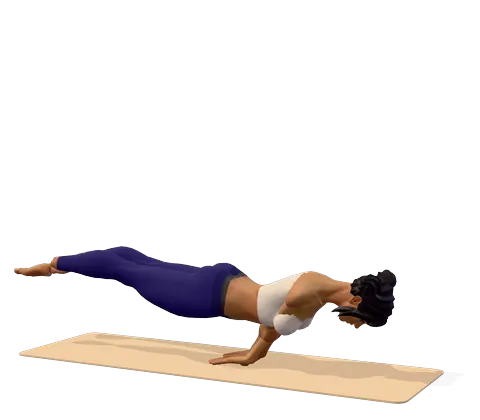
- Lower slowly through chaturanga with elbows hugging in.
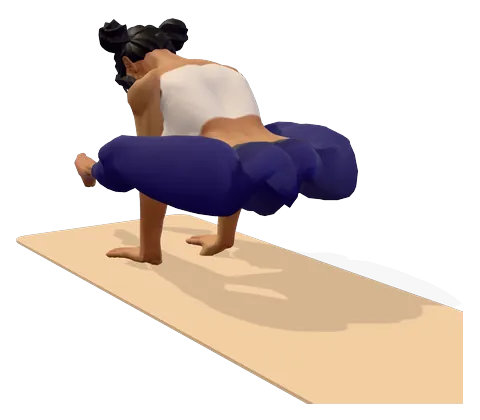
- Hold side crow pose, which uses the same bent-arm shelf.
- Lift your leg high enough to rest the back of the knee on your upper arm while seated.
Eight angle pose prep poses
These astavakrasana prep poses train each part of the shape:
- Hamstrings: reclining hand-to-big-toe pose, with a strap.
- Hips: a seated "leg cradle", rocking the shin in your arms like a baby, to open the outer hip for the hook.
- Twist: Marichi's pose to rotate the chest toward the leg.
- Core: boat pose and slow leg lifts, which build the strength to keep the legs up.
- Arms: chaturanga push-ups and short holds in crow pose.
How to get into 8 angle pose step by step
The steps above list the full entry. This eight angle pose tutorial breaks it into three checkpoints, so you know where to stay.
Checkpoint 1: The hook and the lift
From sitting, hook the leg high over the arm and press both hands down to lift the hips, with the other leg straight on the floor or lifted. This lift alone is called elephant's trunk pose (Eka Hasta Bhujasana) and is a useful pose on its own.
Checkpoint 2: Cross and squeeze
Cross the free ankle over the hooked one and squeeze the legs toward each other. The squeeze is what holds you: loose legs slide down the arm.
Checkpoint 3: Lean and extend
Bend the elbows and move the chest forward as the legs straighten out to the side. The chest goes down as the legs go out. Keep the elbows over the wrists, close to a 90 degree angle, like in chaturanga.
Eight angle pose modifications and variations
- Eight angle pose with blocks: put a block under each hand. The extra height gives the hips room to lift and makes the entry easier.
- Bent legs: keep the knees bent and ankles crossed. This eight angle pose modification suits beginners who have the lift but not the hamstrings.
- Hips down: stay seated and lift only the feet with ankles crossed, to practise the squeeze.
- Straight-arm variation: advanced students keep the arms straight and the chest higher. Other 8 angle pose yoga variations flow from here into side crow or a jump back to chaturanga.
Eight angle pose benefits
The main eight angle pose benefits are strength in the arms, chest, shoulders and obliques, better balance and more mobile hips and hamstrings. Astavakrasana benefits for the mind are simpler: it asks for full attention, so it is a good focus practice. As with other 90 degree yoga pose shapes such as chaturanga, the benefits depend on keeping the elbows stacked over the wrists.
| Strengthens | Stretches |
|---|---|
| Triceps, chest (pectorals) and shoulders | Hamstrings of both legs |
| Obliques and deep core | Outer hip and buttock of the hooked leg |
| Inner thighs, which squeeze the arm | Muscles along the spine, through the twist |
Is eight angle pose good for back pain?
No. It is a strength pose with a loaded twist, not a yoga pose for back pain. If your back hurts, beginner yoga poses for back pain are a better fit, such as child's pose for back pain and gentle cat and cow. Our yoga for back pain plan lists yoga poses for back pain relief with a guided session.
An eight angle pose sequence
A simple eight angle pose flow: sun salutations, boat pose, reclining hand-to-big-toe pose, Marichi's pose, crow, side crow, then eight angle pose on each side. Finish with a gentle supine twist and a few minutes of rest. You can save this 8 angle pose yoga flow in the sequence builder and let the voice lead you.
Frequently asked questions
What is eight angle pose in yoga?
Eight angle pose (Astavakrasana) is an arm balance in which one leg hooks over the upper arm, the ankles cross, and both legs stretch out to the side while the chest lowers forward on bent arms.
Why is it called eight angle pose?
It is named after the sage Ashtavakra, whose name means "bent in eight places". "Ashta" means eight and "vakra" means bent.
How do you get into eight angle pose?
Sit, hook one leg high over the same-side upper arm, place your hands beside your hips and lift. Cross the other ankle over, then bend your elbows, lean forward and stretch your legs to the side.
Is eight angle pose harder than side crow?
Most people find it a step harder, because it needs open hamstrings and hips as well as arm strength. Learn side crow first; they share the same bent-arm shelf.
What can I do if I can't lift my hips?
Put a block under each hand for more height, keep your knees bent, and practise the lift with one leg hooked (elephant's trunk pose) before crossing the ankles.
What are the benefits of Astavakrasana?
It strengthens the wrists, arms, chest, shoulders and obliques, stretches the hamstrings and hips, and improves balance and focus.
Who should not do eight angle pose?
Skip it with wrist, elbow or shoulder injuries, hamstring or hip strains, back pain that worsens with twisting, during pregnancy, or after abdominal surgery.
This page is for general education. Check with your doctor before starting yoga if you are pregnant, have a medical condition or an injury. Stop if you feel pain, dizziness or shortness of breath.