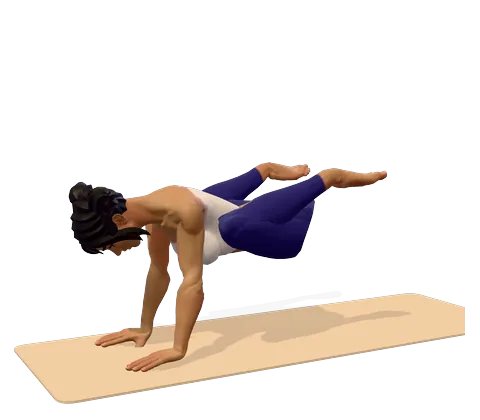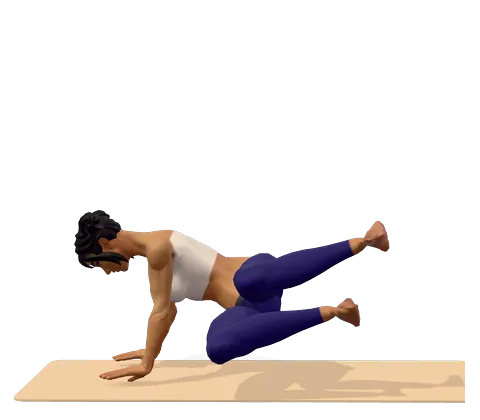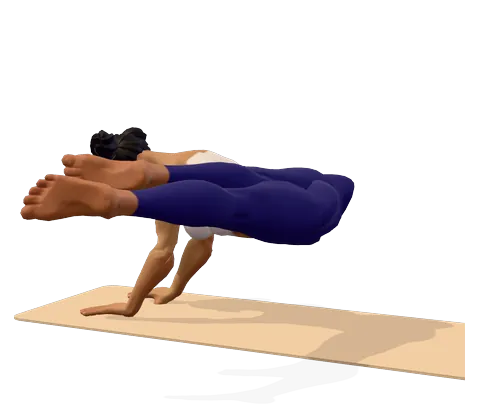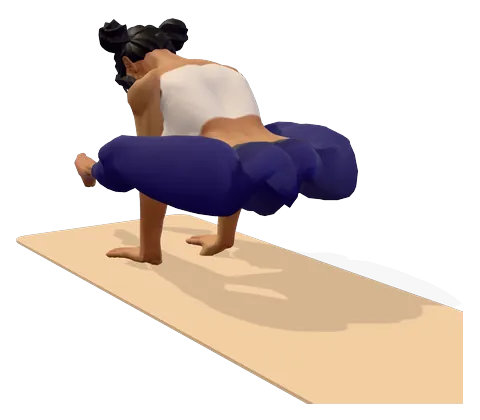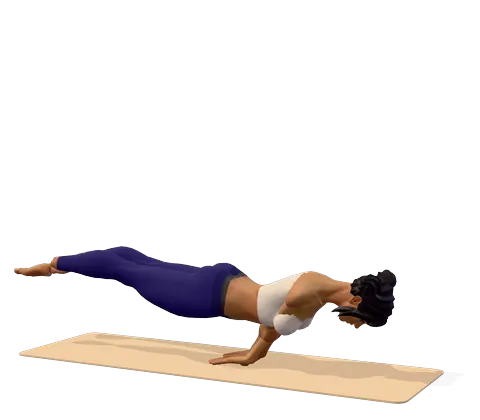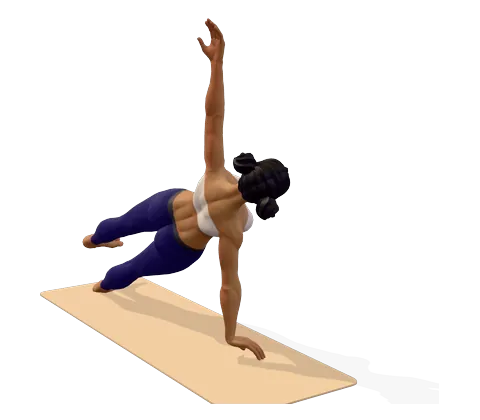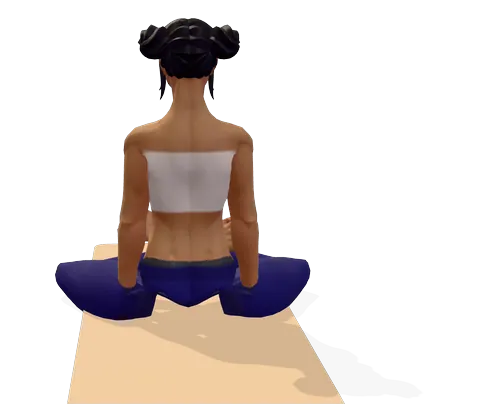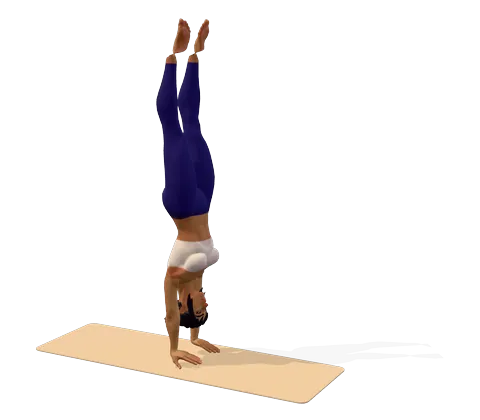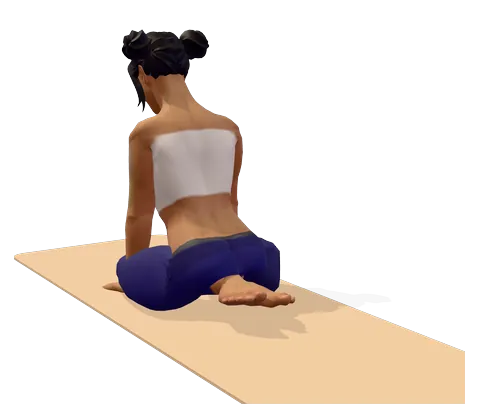
How to do Pendant Pose step by step
- Kneel and sit on your heels. Cross your ankles and place a block on each side of your knees, palms flat on the blocks and fingers pointing forward.
- Lean forward until your shoulders are over your hands. Round your upper back and breathe out, drawing your belly in.
- Press firmly down, straighten your arms and draw your knees toward your chest.
- Tip forward a little more and let your crossed feet lift off the floor, heels close to your seat. Your body now hangs between your arms in a pendant position.
- Hold for 2–5 breaths (about 10 seconds), or swing gently forward and back.
- Lower your knees and feet with control and sit back on your heels. Change the cross of your ankles and repeat.
Where you feel Pendant Pose: what it stretches and strengthens
Tuck your knees in and swing your body up. In the 3D guide, turn on Body guide: areas that stretch glow green and areas that work glow saffron.
Strengthens
- Abs
- Arms
- Wrists
Benefits and precautions
Benefits
- Strengthens the wrists, arms, chest and shoulders
- Works the deep abdominal muscles and hip flexors intensely
- Teaches the rounded "hollow" shape used to jump back in flowing yoga
- Builds the core control needed for crow and other arm balances
- Trains balance, concentration and steady breathing under effort
Avoid or modify if
- Wrist, elbow or shoulder injury, including carpal tunnel syndrome
- Knee or ankle pain when kneeling — pad the knees or skip the pose
- Pregnancy, hernia or recent abdominal surgery
- High blood pressure — breathe steadily and keep holds short
Pendant pose (Lolasana) is a small but tough arm balance. You kneel with your ankles crossed, place your hands beside your knees, round your back and lift your whole body so it hangs between your arms like a pendant on a chain. It is short and quiet, yet it asks for more core strength than many bigger-looking poses. Like every page in our library of yoga poses and benefits, this one explains the name, the honest prerequisites, a block-based progression and how the pose fits into a yoga practice.
What is pendant pose in yoga?
In Sanskrit lola means "swinging", "dangling" or "trembling", and it is also used for an earring or pendant that swings from the ear. Asana means "pose". So Lolasana is the swinging pendant: once you lift, you can rock gently forward and back like a pendant on a chain.
In flowing styles such as Ashtanga and Vinyasa yoga, the lolasana lift is the key to the "jump back": from a seated or kneeling position you lift, swing the legs back between the arms and land in chaturanga. Learning pendant pose on its own is the first step toward that skill.
Prerequisites: is pendant pose right for you yet?
Pendant pose looks like it should be easier than crow pose, but for most people it is harder. In crow the knees rest on the arms. In Lolasana nothing rests anywhere: your core has to lift and hold the legs. Before you try it, you should be able to:
- Hold boat pose for 30 seconds — one of the key benefits of boat pose is exactly the belly strength this lift needs.
- Hold a strong plank for 45 seconds with straight arms.
- Kneel comfortably in Vajrasana with crossed ankles.
- Ideally, lift your hips in scale pose (Tolasana), its seated cousin.
Arm length matters. If your arms are short compared with your torso, your hands may not reach low enough for the feet to clear the floor. Blocks are the answer, not a sign of weakness.
How to do pendant pose: cues that make the lift happen
The steps above show how to get in and out. These are the details that decide whether your feet leave the floor:
- Round the upper back. Push the floor away until the space between your shoulder blades widens. A flat back makes the lift almost impossible.
- Belly in before you press. Breathe out fully and hollow the belly first; then press.
- Shoulders forward of the wrists. Lean forward a little more than feels natural. The lean takes weight off the feet.
- Heels to seat. Squeeze the crossed shins toward the back of your thighs so the legs become a compact bundle.
- Soft gaze forward. Looking at your knees rounds you too much; looking far forward flattens you. Look at the floor just ahead of the mat.
Pendant pose for beginners: a block progression
- Knees only: hands on tall blocks, toes on the floor. Lean forward and lift just the knees. Hold for three breaths.
- One foot at a time: from stage 1, lift one crossed foot, then the other, for a moment each.
- Full lift on blocks: both feet and knees off the floor for two breaths.
- Lower blocks, then the floor: reduce the height as you get stronger.
- Swing: rock gently forward and back — the true "pendant".
Practise short, fresh attempts two or three times a week at the end of your warm-up, when your core is awake but not tired.
Pendant pose benefits and muscles worked
Lolasana is a strength pose first. It loads the pushing muscles of the arms and chest and asks the deep abdominal muscles to lift the legs against gravity with no help.
| Body area | Role in Lolasana |
|---|---|
| Triceps, chest, front shoulders | Press the floor away |
| Serratus anterior | Rounds the upper back and holds the shoulder blades wide |
| Rectus abdominis, transverse abdominis | Curl the pelvis and hollow the belly |
| Hip flexors | Draw the knees toward the chest |
| Wrist flexors and forearms | Carry the whole body weight |
It is not a pose for sore backs. If you are looking for yoga poses for lower back pain relief or low back pain, or chair yoga poses for back pain, start with our yoga for back pain plan.
Lolasana, the chakras and the breath
Many modern teachers link Lolasana with the navel chakra (Manipura), because the whole effort comes from the centre of the body. This is a traditional and symbolic idea rather than a measured effect; you can read more about it on our chakras page. What you will certainly notice is the breath: long exhales make the lift easier, while holding your breath makes you shake.
Pendant pose vs crow and scale pose
All three lift the body on the hands, but the levers differ. Crow rests the knees on the upper arms and leans far forward. Scale pose lifts a lotus from sitting, so the legs are already folded close to the body. Pendant pose lifts from kneeling with nothing to rest on, which makes it the most demanding of the three for the core. Many practitioners learn crow first, then scale, then pendant.
Who should avoid Lolasana
Skip pendant pose with wrist, elbow or shoulder injuries, in pregnancy, with a hernia or after recent abdominal surgery. Kneeling on crossed ankles can bother sensitive knees or the tops of the feet, so pad them with a folded blanket or leave the pose out. With high blood pressure, breathe steadily and keep holds very short. Stop if you feel sharp pain anywhere.
Where pendant pose fits in a practice
Warm up with wrist circles, cat and cow, a few rounds of Sun Salutation, plank and boat pose. Try pendant pose three to five times, resting between attempts. Afterwards, stretch the wrists, rest in child's pose and do a gentle backbend such as sphinx to balance all that rounding. You can build this into your own sequence with the session builder, and the voice guide will count your breaths.
Frequently asked questions
What is Lolasana in English?
Lolasana means pendant pose. "Lola" is Sanskrit for swinging or dangling, like an earring, and "asana" means pose.
Why can I not lift my feet in Lolasana?
Usually the arms are too short for the torso, the back is not rounded enough, or the core is not yet strong enough. Put your hands on blocks, round your upper back, breathe out and lean further forward.
Is Lolasana harder than crow pose?
For most people, yes. In crow your knees rest on your arms; in pendant pose nothing rests anywhere, so the core must lift the legs on its own.
How long should I hold pendant pose?
Start with 1–2 breaths and build to about 10 seconds. Several short, clean lifts are better than one long, shaky one.
Do I need blocks for Lolasana?
Most beginners do. Blocks add height so the feet can clear the floor. Lower them as you get stronger.
What does Lolasana prepare you for?
It teaches the lift used to jump back from sitting to chaturanga in Ashtanga and Vinyasa yoga, and it builds core strength for other arm balances.
Who should not do pendant pose?
Avoid it with wrist, elbow or shoulder injuries, in pregnancy, with a hernia or recent abdominal surgery. Pad the knees or skip it if kneeling is painful.
This page is for general education. Check with your doctor before starting yoga if you are pregnant, have a medical condition or an injury. Stop if you feel pain, dizziness or shortness of breath.