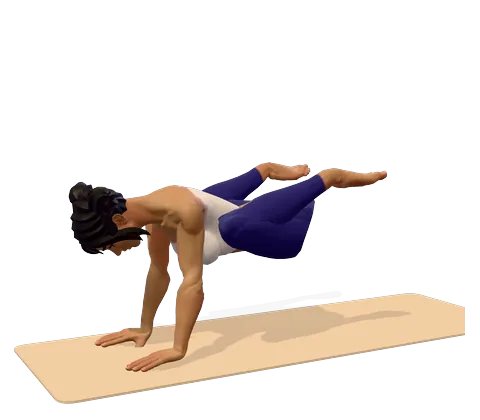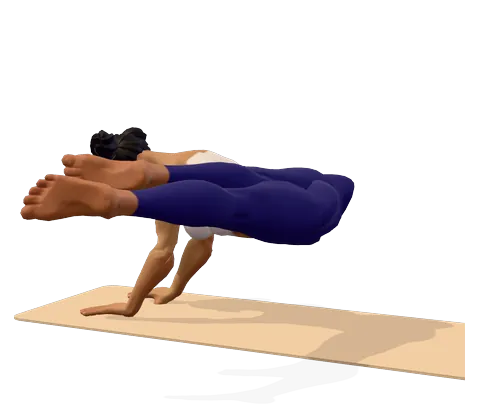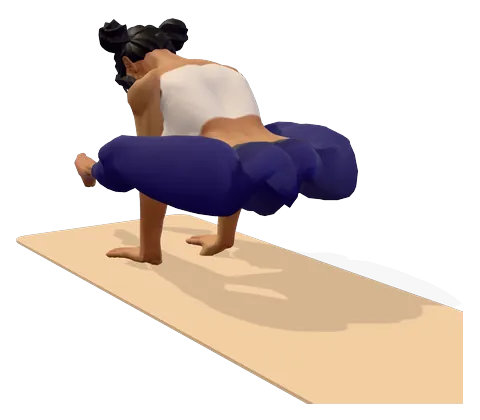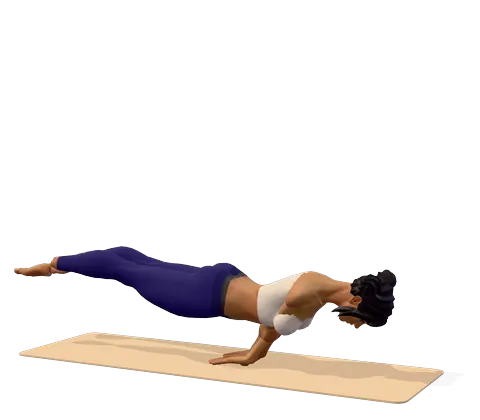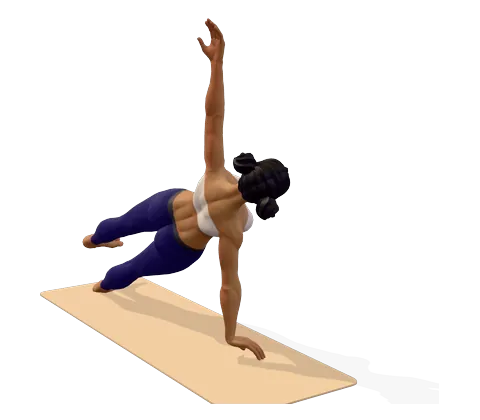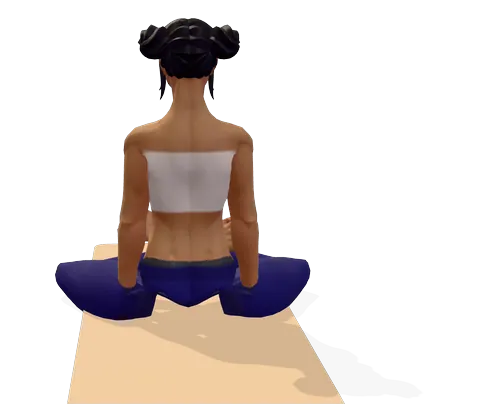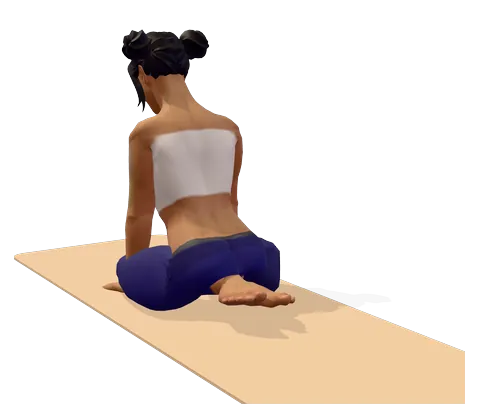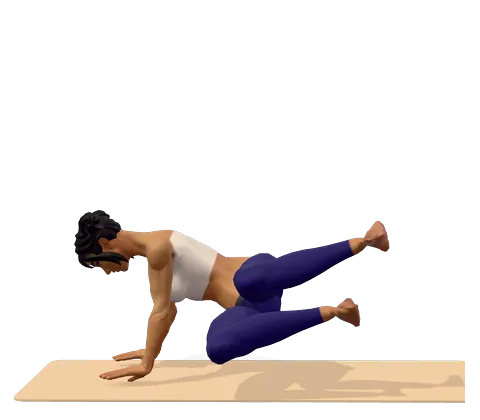
How to do Side Crow Pose step by step
- Warm up with twists, a few rounds of crow pose and some core work. Squat on the balls of your feet with your knees and feet together.
- Keep your knees together and turn them to the left while your chest turns to the right, as in a prayer twist.
- Place your hands on the floor shoulder-width apart, fingers spread, on the side your chest faces. Bend your elbows to about 90°, like in chaturanga, to make two "shelves".
- Rest the outside of your right thigh, just above the knee, on the back of your left upper arm. Twist a little more so the thigh sits firmly on the shelf.
- Look forward, shift your weight into your hands and lean forward until your feet lift. Keep your feet together and draw your heels toward your seat.
- Hold for 2–5 breaths (about 10 seconds), keeping your elbows hugging in.
- To come out, lower your feet slowly, come back to the squat and untwist. Repeat on the other side with the knees turned to the right.
Where you feel Side Crow Pose: what it stretches and strengthens
Twist deeply and balance your legs on one arm. In the 3D guide, turn on Body guide: areas that stretch glow green and areas that work glow saffron.
Stretches
- Side waist
Strengthens
- Arms
- Wrists
- Abs
Benefits and precautions
Benefits
- Strengthens the wrists, arms, shoulders and upper back
- Works the oblique muscles and deep core through the twist
- Improves balance, coordination and focus
- Builds on crow pose and leads toward harder arm balances such as eight-angle pose
- Adds spinal rotation, which keeps the middle back mobile
Avoid or modify if
- Wrist, elbow or shoulder injury, including carpal tunnel syndrome and frozen shoulder
- Pregnancy — avoid deep twists and arm balances with a risk of falling
- Disc problems or back pain that gets worse with twisting — ask a physiotherapist first
- Recent abdominal surgery or a hernia
- Put a cushion in front of your face while learning and practise on a non-slip mat
Side crow pose (Parsva Bakasana) is a twisting arm balance: from a squat you turn your knees to one side, rest the outer thigh on the back of one bent arm and lean forward until your feet float. Many students find it easier to balance than regular crow, because the base is wider and the hips stay lower, but it asks for a real twist and strong arms. This page explains the name, the preparation, the steps for beginners, useful variations and how to stay safe.
What is side crow pose? Sanskrit name and meaning
In yoga, the side crow pose Sanskrit name is Parsva Bakasana: parsva means "side" or "flank", baka means "crane" and asana means "pose". So a word-for-word name would be side crane pose, and some yoga teachers use that name. You may also hear sideways crow pose in yoga classes, or twisted crow. The sanskrit for crow pose itself is Kakasana (kaka is crow), and the two bird names are often swapped.
Do not confuse it with Parsva Balasana. That is thread the needle, a gentle kneeling shoulder stretch — one letter different, a completely different pose.
Is side crow pose for beginners?
Side crow is an intermediate to advanced pose. Before you try it, you should be able to:
- Hold crow pose for a few breaths. Is crow pose for beginners? It is usually the first arm balance, so learn it first.
- Lower slowly through chaturanga with elbows hugging in — the same arm shape.
- Twist deeply in a squat, with your elbow outside the opposite knee.
Side crow pose preparation
These poses to prepare for crow pose and side crow warm up the twist, the core and the arms:
- Revolved side angle pose and a prayer twist in a squat — they teach the exact twist you need.
- Marichi's pose and half lord of the fishes pose for seated rotation.
- Boat pose with a twist to wake up the oblique muscles.
- Plank and a few rounds of crow as prep for crow pose and its sideways version.
How to do side crow pose for beginners
The steps above give the full shape. These stages and side crow pose cues make it reachable.
Stage 1: Twist and place hands
Squat with the knees together, twist, and place both hands on the floor. Stay here and just feel how far the knees sit from the arms. The deeper the twist, the easier the balance.
Stage 2: Side crow pose with blocks
Rest your forehead on a yoga block placed in front of you as a third point of contact, or stand your feet on a block to start higher. Crow pose with blocks works the same way: the support removes the fear of tipping forward.
Stage 3: One foot, then both
Lift the top foot, then the bottom one, keeping the feet together. Build from one breath to five.
Side crow pose tips
- Look forward. Dropping the head tips you onto your face.
- Elbows at 90°. Keep them over the wrists and hugging in, not splaying out.
- Squeeze the feet together. Pressing the feet and knees together lifts the legs and makes you lighter.
- Protect your skin. Some people wear long sleeves or shin sleeves for crow pose work; the arm contact point can bruise at first.
Side crow pose variations in yoga
- Two-arm "shelf" side crow: the outer thigh rests on one arm only — the version the 3D figure shows and the best start.
- Split-arm side crow: the outer thigh rests on one arm and the hip on the other. It feels more stable but needs a deeper twist.
- Side crow pose legs extended: straighten both legs out to the side. This extended side crow yoga pose needs much more core strength.
- Side crow split pose: scissor the legs apart, one forward and one back, into Eka Pada Koundinyasana I. Some teachers call related versions flying side crow yoga pose.
- Side crow pose one arm: balancing the hips on a single arm is an advanced side crow pose for experienced students only.
From side crow, many people move on to other yoga poses like crow, such as eight-angle pose, which uses the same bent-arm shelf.
Side crow pose benefits: what does crow pose work?
The main side crow yoga pose benefits are strength, balance and rotation. What muscles does crow pose work? The same arm and core muscles as regular crow, with more demand on the obliques because of the twist.
| Area | Main muscles |
|---|---|
| Arms and wrists | Triceps, forearm and wrist muscles |
| Shoulders and upper back | Deltoids, serratus anterior, rhomboids |
| Core | Obliques, transverse abdominis, hip flexors and inner thighs |
Side crow pose calisthenics fans like it for the same reason as yoga students: it builds useful pushing strength with no equipment.
Side crow vs crow pose and crane
In crow the knees rest on the backs of both arms and the hips lift high. In side crow the knees turn to one side and rest on one arm, so the hips stay lower. The difference between crow pose and crane pose is only the arms: bent for crow, straight for crane. Side crow is always done with bent arms. Regular crow also has a one-legged crow pose variation, with one leg stretched back.
A side crow yoga sequence
Try this side crow peak pose sequence: wrist warm-up, sun salutations, revolved side angle on both sides, boat pose, crow, then side crow on each side. Finish with a supine spinal twist and child's pose. You can save a crow pose yoga flow like this in the sequence builder.
पार्श्व बकासन (side crow pose in Hindi): पंजों के बल बैठें, घुटने साथ रखें और उन्हें एक ओर मोड़ें, छाती दूसरी ओर घुमाएँ। हथेलियाँ ज़मीन पर रखें, कोहनियाँ मोड़ें और बाहरी जांघ को एक बाँह के पीछे टिकाएँ। आगे देखें और धीरे से पैर उठाएँ। फायदे: बाँहें, कंधे और पेट की तिरछी मांसपेशियाँ मज़बूत होती हैं और संतुलन बढ़ता है। कलाई या कंधे की चोट, कमर दर्द और गर्भावस्था में यह आसन न करें।
Frequently asked questions
What is side crow pose?
Side crow pose (Parsva Bakasana) is a twisting arm balance. From a squat, you turn your knees to one side, rest your outer thigh on the back of one bent arm and lean forward until your feet lift.
Is side crow harder than crow?
It needs a deeper twist and more oblique strength, but many people find it easier to balance because the hips stay lower. Learn crow first, then side crow.
How do I do side crow pose for beginners?
Warm up with twists and crow, then squat, twist, place your hands and rest your outer thigh on one bent arm. Rest your forehead on a block while you learn, and lift one foot at a time.
What is the Sanskrit name for side crow pose?
Parsva Bakasana: "parsva" means side, "baka" means crane and "asana" means pose. Do not confuse it with Parsva Balasana, which is thread the needle.
What are the benefits of side crow pose?
It strengthens the arms, wrists, shoulders and oblique muscles, improves balance and focus, and prepares you for eight-angle pose and other arm balances.
Why do I fall forward in side crow?
Usually the head drops or the elbows splay. Look forward, keep the elbows at 90° over the wrists, and put a cushion or block in front of your face.
Who should avoid side crow pose?
Skip it with wrist, elbow or shoulder injuries, during pregnancy, after abdominal surgery, or if twisting worsens a back problem.
This page is for general education. Check with your doctor before starting yoga if you are pregnant, have a medical condition or an injury. Stop if you feel pain, dizziness or shortness of breath.