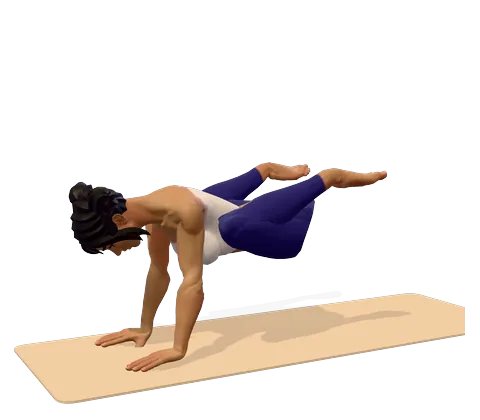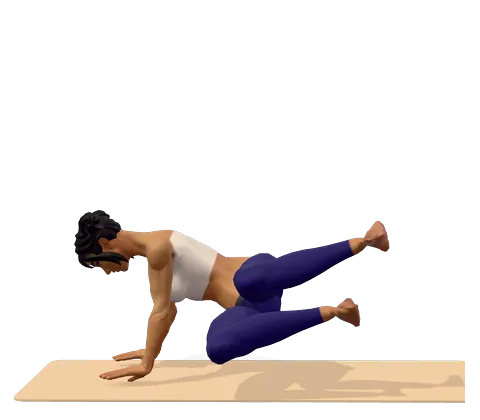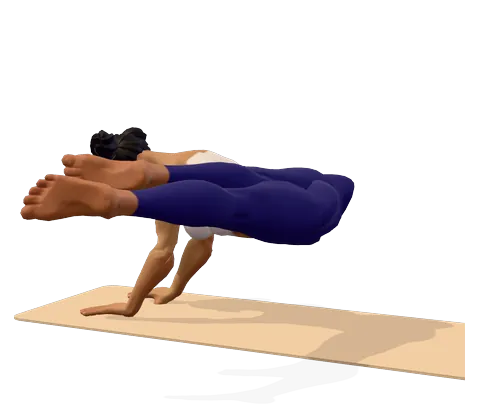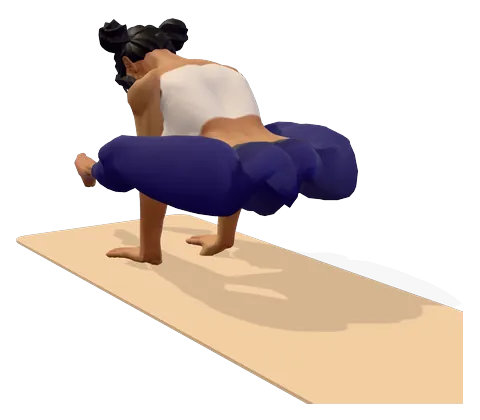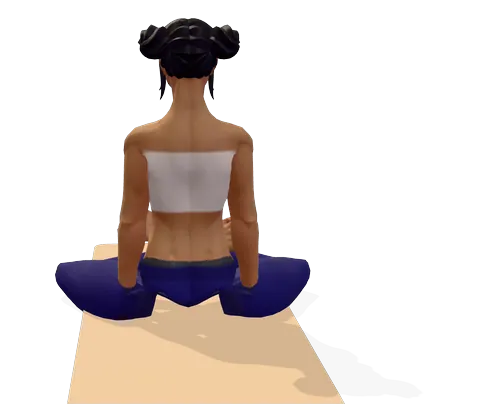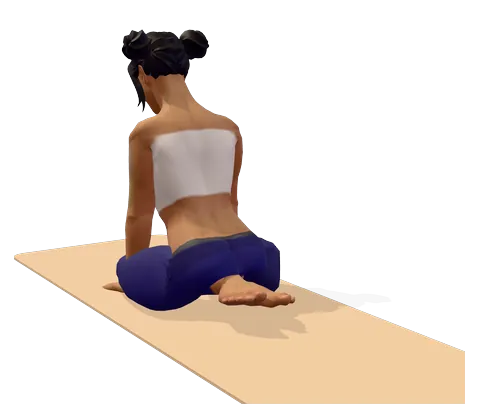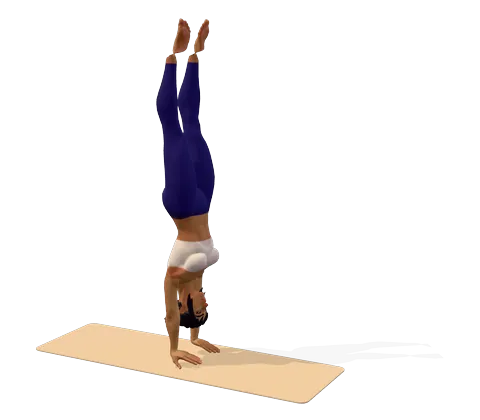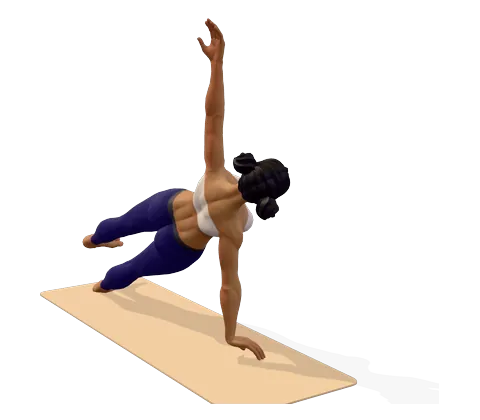
How to do Side Plank Pose step by step
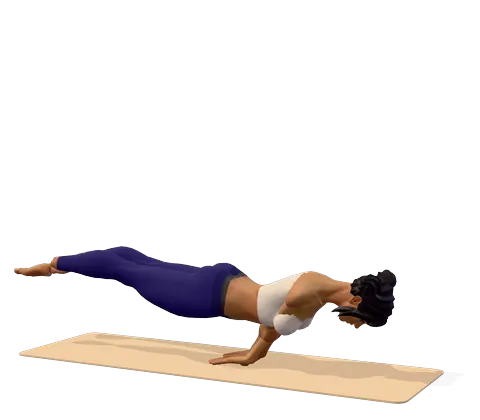
- Start in plank: hands under your shoulders, legs straight back, body in one line from head to heels.
- Move your right hand a little forward and toward the centre of the mat. Roll onto the outer edge of your right foot and stack your left foot on top.
- Press the floor away with your right hand and lift your hips until your body is straight again — no sagging and no piking.
- Reach your left arm straight up so both arms form one line. Look forward, or up at your left hand if your neck is comfortable.
- Hold for 3–5 breaths (20–30 seconds), keeping the bottom shoulder active and the hips lifted.
- Lower your left hand to the mat, return to plank and rest in child's pose. Repeat on the other side.
Where you feel Side Plank Pose: what it stretches and strengthens
Lift your hips high and balance on your side. In the 3D guide, turn on Body guide: areas that stretch glow green and areas that work glow saffron.
Strengthens
- Side waist
- Shoulders
- Wrists
Benefits and precautions
Benefits
- Strengthens the obliques, deep core and the outer hip (gluteus medius)
- Builds strong wrists, arms and shoulder stabilisers
- Trains lateral core endurance, which supports the lower back
- Improves balance and body awareness on one side at a time
- Useful in core routines that also aim to reduce belly fat, alongside diet and cardio
- Prepares you for arm balances such as side crow
Avoid or modify if
- Wrist, elbow or shoulder injury, including a recent dislocation or rotator cuff tear — use the forearm version or skip it
- Pregnancy — use the knee-down version only if it feels easy, and stop if you feel strain in the belly
- Hernia, separated abdominal muscles (diastasis recti) or recent abdominal surgery or C-section — ask your doctor first
- High blood pressure — keep breathing smoothly and choose short holds
- Stop if you feel sharp pain in the lower back or the supporting shoulder
Side plank pose (Vasisthasana) turns an ordinary plank on its side: you balance on one hand and the outer edge of one foot, with your body in a straight line and the top arm reaching up. It is one of the best exercises for the sides of the waist and the shoulders, and it has easy versions for beginners. Below you will find proper form, beginner and advanced variations, the muscles worked and how to fit it into a sequence.
Is side plank a yoga pose? Name and meaning
Yes. The side plank yoga pose name in Sanskrit is Vasisthasana (वसिष्ठासन), after Vasishtha, one of the great sages of Indian tradition; asana means "pose". What is Yoga Vasistha? It is a classic text written as a dialogue between the sage Vasishtha and Prince Rama, which is why his name is familiar to many yoga students. Vasisthasana pronunciation is roughly "vah-sish-TAH-sah-nah".
Fitness trainers call the same shape the side plank exercise or side bridge. The yoga and gym versions differ mostly in the top arm: yoga reaches it to the sky, the gym often rests it on the hip.
How to do a side plank correctly
The steps above show how to perform a side plank from the starting position in plank pose. These side plank pose cues keep the form clean:
- Side plank arm position: place the bottom hand slightly in front of the shoulder, not directly under it. This takes pressure off the wrist and lets you push the floor away.
- Side plank shoulder position: press down through the palm so the bottom shoulder lifts away from your ear. A collapsed shoulder is the most common mistake.
- Hips up and forward: imagine a pane of glass behind you. The hips should neither sag toward the floor nor push back toward the glass.
- Stack or stagger the feet: stacked feet are harder; placing the top foot in front of the bottom one gives a wider, steadier base.
- Long neck: look forward or up, never let the head drop.
How long to hold, sets and reps
Start with 15–20 seconds on each side and build to 30–45 seconds. In the gym, side plank exercise sets and reps look like 2–3 holds per side, two to four times a week. Stop the set when your hips begin to sink; good form matters more than time.
Side plank pose for beginners: modified versions
How do you do a side plank for beginners? In yoga, start with a supported position from this list, and move on when you can hold it for 30 seconds with steady breathing:
- Side plank with knee down: keep the bottom knee on the mat, shin pointing back, and lift the hips. This modified side plank yoga version is the safest start.
- Side plank pose on elbow: the forearm version spares the wrist and is easier to balance. Keep the elbow under the shoulder.
- Supported side plank: press the soles of your feet against a wall, or put your top foot on the floor in front of you.
Side plank pose benefits in yoga, and muscles worked
What does side plank work? Mostly the muscles that stop you from bending sideways. Here is the side plank exercise muscles worked in one table:
| Main muscles | What they do in the pose |
|---|---|
| Obliques and quadratus lumborum | Hold the waist level and stop the hips sagging |
| Gluteus medius (outer hip) | Lifts and steadies the pelvis |
| Deltoids, serratus anterior, rotator cuff | Stabilise the bottom shoulder |
| Wrist and forearm muscles | Carry your body weight |
Are side planks effective? For building side-core endurance, yes — that is the main side plank exercise benefit. The side bridge is a standard exercise in back-care programmes because it trains the trunk to stay steady without bending the spine. That makes the side plank a sensible plank for back pain once the acute phase has passed; side planks exercises for lower back pain should feel like effort in the waist, not pain in the spine. See our yoga for back pain plan for gentler starting poses.
Do planks help with posture? They strengthen the trunk that holds you upright, which supports the work in yoga for posture. Side plank also appears in our yoga for belly fat routine — though no exercise removes fat from one spot. For the side plank yoga pose for scoliosis, a small uncontrolled study reported smaller curves in people who held it daily on one side; ask your specialist before trying this.
Side plank pose variations
Once the basic shape is steady, these yoga side plank pose variations add balance, strength or a stretch:
- Side plank tree pose: place the sole of the top foot on the inner bottom thigh, as in tree pose.
- Side plank with leg lift: lift the top leg in line with the hip — also called side plank star pose.
- Side plank split pose: hold the big toe of the top foot and extend the leg toward the ceiling. This is the full classical Vasisthasana and needs open hamstrings.
- Side plank with rotation: thread the top arm under your waist, then open back up. Side plank twist benefits include mobility for the upper back and shoulders.
From here, some people take the pose into side crow, a side plank peak pose sequence for arm balancers.
Side plank vs plank
A front plank spreads your weight over two hands and two feet and works mainly the front of the core. Side plank halves the base, so the obliques, hip and one shoulder do much more. Upward-facing plank pose (Purvottanasana) is the face-up partner that stretches the chest and strengthens the back of the body. A balanced core practice uses all three.
A simple side plank yoga sequence
Prep poses for side plank in yoga class: cat and cow for the spine, downward dog and plank for the shoulders, and gate pose to stretch the side body. After side plank on both sides, rest in child's pose, add a gentle seated twist such as Vakrasana, and finish in Shavasana. The Core Strength session in our guided practice includes side plank with voice cues and a breathing ring.
Side plank pose in Hindi — steps and benefits of the side plank exercise (वसिष्ठासन): प्लैंक की स्थिति से शुरू करें और दाएँ हाथ तथा दाएँ पैर के बाहरी किनारे पर शरीर को घुमाएँ। बायाँ पैर दाएँ पैर के ऊपर रखें और कूल्हे ऊपर उठाएँ, ताकि सिर से एड़ी तक शरीर एक सीधी रेखा में रहे। बायाँ हाथ ऊपर उठाएँ, 20–30 सेकंड रुकें और फिर दूसरी ओर करें। फायदे: कमर के किनारे की मांसपेशियाँ, कंधे और कलाइयाँ मज़बूत होती हैं और संतुलन बेहतर होता है। शुरुआत में नीचे वाला घुटना ज़मीन पर रखें।
Health conditions this pose is used for
Yoga for scoliosis · Yoga for belly fat
Frequently asked questions
What muscle does side plank work?
Mainly the obliques, the quadratus lumborum in the lower back, the outer hip (gluteus medius) and the shoulder stabilisers of the bottom arm.
How long should I hold a side plank?
Beginners can start with 15–20 seconds per side. Build up to 30–45 seconds, 2–3 sets per side, and stop when your hips start to sink.
What is the easiest side plank for beginners?
The knee-down version: keep the bottom knee on the mat and lift the hips. The forearm version is also easier on the wrist.
Is side plank good for lower back pain?
It can help once acute pain has settled, because it trains the trunk to stay steady. Keep the hips in line and stop if the pose causes pain in the spine or down a leg.
What is the Sanskrit name for side plank?
Vasisthasana (वसिष्ठासन), named after the sage Vasishtha. It is sometimes spelled Vasishthasana.
Does side plank reduce belly fat?
It strengthens the waist muscles, but spot reduction does not happen. Combine core work with regular activity and a healthy diet to lose belly fat.
Who should avoid side plank?
People with wrist, elbow or shoulder injuries, a hernia, separated abdominal muscles or recent abdominal surgery should skip it or ask a doctor. In pregnancy use only the knee-down version if it feels easy.
This page is for general education. Check with your doctor before starting yoga if you are pregnant, have a medical condition or an injury. Stop if you feel pain, dizziness or shortness of breath.