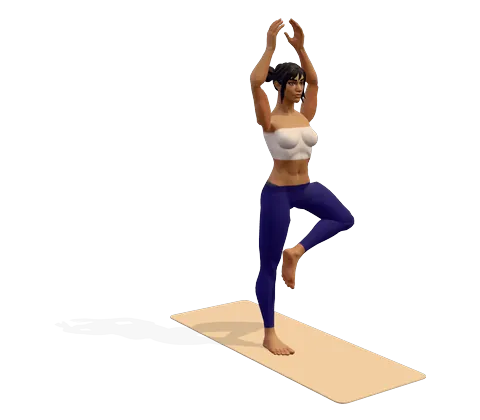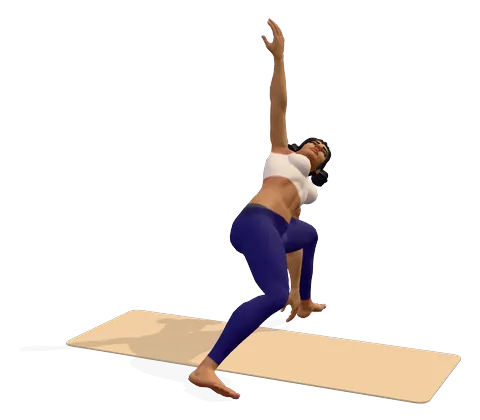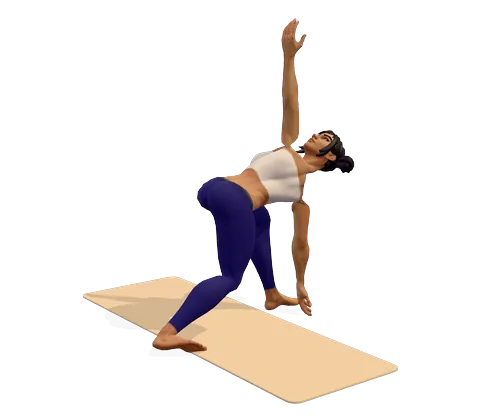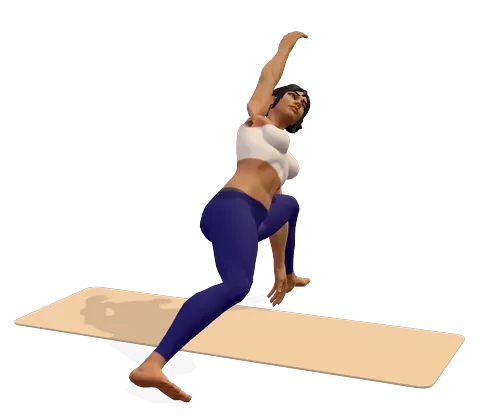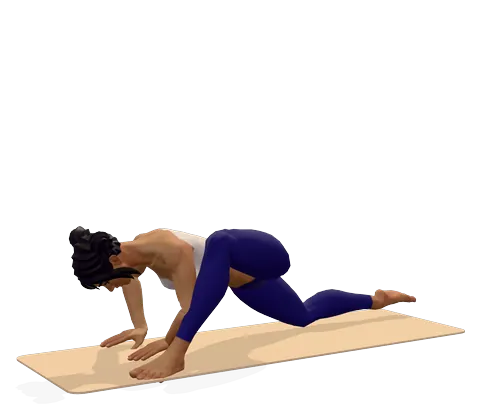
How to do Lizard Pose step by step
- Start on your hands and knees or in Downward Dog. Step your left foot forward to the outside of your left hand, so both hands are inside the front foot.
- Walk your left foot a little toward the left edge of the mat and let the left knee open slightly out, over the ankle or just behind it.
- Lower your right knee to the mat and slide it back. Rest the top of the right foot down. Pad the knee with a blanket if needed.
- Keep your arms straight and your hands under your shoulders. Lengthen your spine forward and look at the floor a little ahead.
- Let your hips sink low toward the floor, inside the front foot. Feel the stretch at the front of the right hip and the inner left thigh.
- Stay for 30–60 seconds (6–10 breaths). Relax the jaw and let each exhale soften the hips.
- Press into your hands, tuck your back toes and step back to Downward Dog or hands and knees. Repeat with the right foot forward.
Where you feel Lizard Pose: what it stretches and strengthens
Let your hips sink low inside the front foot. In the 3D guide, turn on Body guide: areas that stretch glow green and areas that work glow saffron.
Stretches
- Hip flexors
- Inner thighs
- Hamstrings
Strengthens
- Front thighs
- Glutes
- Shoulders
Benefits and precautions
Benefits
- Stretches the hip flexors at the front of the back leg
- Opens the inner thigh and groin of the front leg and stretches the hamstrings
- Strengthens the thighs and glutes of the front leg and the shoulders and arms
- Improves hip mobility for squatting, running and deeper hip openers
- A slow hold can feel calming and teaches you to breathe through strong sensation
Avoid or modify if
- Knee pain: pad the back knee well and keep the front knee over or behind the ankle
- Hip replacement, hip labral tear or groin pinching: keep the stance shallow and hands on blocks, or skip it; ask your physiotherapist
- Wrist pain: use blocks, make fists or come onto the forearms on blocks
- Pregnancy: keep hands on high blocks and the stretch mild, because ligaments are looser; ask your midwife or doctor
- Groin or hamstring strain: do not push deep; back off to low lunge
Lizard pose (Utthan Pristhasana) is a deep, low lunge in which both hands come down inside the front foot and the hips sink toward the floor. It stretches the front of the back hip, the inner thigh and groin of the front leg, and the hamstrings.
What is lizard pose? Sanskrit name
The lizard pose Sanskrit name is Utthan Pristhasana, sometimes spelled Uttana Pristhasana. Utthan is usually translated as "stretched out" or "extended", prishtha as "back" (of the body) and asana as "pose". The name is modern rather than from the old texts, which is why most classes skip the Sanskrit and say lizard pose or lizard lunge.
How to do lizard pose step by step: key cues
The steps above follow the 3D figure, which keeps the back knee down and the arms straight, the easiest full version. These lizard pose cues help you do it correctly:
- Front knee over or behind the ankle. Never in front of the toes.
- Foot wide, knee slightly open. Let the front knee fall a little out to the side.
- Long spine. Reach the chest forward instead of collapsing.
- Sink, do not force. Let gravity lower the hips on the exhale.
- Shoulders away from the ears. Press the floor away with straight arms.
Hold 30–60 seconds in an active class. In lizard pose yin yoga style, hold 2–4 minutes with props, never into sharp pain.
Lizard pose benefits
The main benefits of lizard pose are for hip mobility. The back leg's hip flexors, which shorten with sitting, get a long stretch; the front leg's inner thigh and groin open; the hamstrings lengthen as the hips sink. The front leg and the arms also work to hold you up. Lizard pose benefits for female and male practitioners are the same: freer hips and stronger legs. It is a staple in our yoga for tight hips plan and helpful for desk workers.
There are mental benefits of doing lizard yoga pose too: a strong but safe stretch teaches you to stay calm and breathe slowly through discomfort.
Lizard pose: what does it stretch?
| Stretched | Worked |
|---|---|
| Hip flexors (iliopsoas) of the back leg | Quadriceps and glutes of the front leg |
| Inner thigh (adductors) and groin of the front leg | Shoulders and arms, holding the chest up |
| Hamstrings of the front leg | Core, keeping the spine long |
Yoga lizard pose for beginners: modifications
- What is lizard pose with blocks? Hands on one or two blocks inside the front foot. The hips stay higher, and it is the best lizard pose prep.
- Lizard pose knee down: always start with the back knee on a blanket. Lifting it is optional.
- Stay in low lunge: low lunge with the hands on the front thigh is a gentler starting point.
Lizard pose and lizard lunge yoga variations
- Forearms down: lower onto the forearms on the floor or on blocks. This deepens the stretch a lot.
- Back knee lifted: press the back heel away and straighten the back leg, a stronger, more active lizard lunge yoga pose.
- Lizard pose with twist: keep the right hand down, place the left hand on the left knee and roll the knee out, turning the chest up. The twisted lizard pose benefits are an extra stretch in the inner thigh and chest.
- Lizard pose with quad stretch: from the twist, bend the back knee and hold the back foot. Go slowly.
- Lizard pose bind: the bound lizard pose benefits include a shoulder stretch, but it needs open hips and shoulders. Advanced.
- Flying lizard yoga pose: an arm balance with the front leg over the upper arm and the back leg lifted. Flying lizard pose benefits are arm and core strength; it needs solid crow pose first.
Lizard pose vs dragon pose, runner's lunge and pigeon
- Lizard pose vs dragon pose: dragon is the yin yoga name for long-held low lunges, and a lizard-like shape is one of them. The difference is mostly how long and how passively you hold.
- Lizard pose vs runner's lunge: in a runner's lunge the hands are on both sides of the front foot and the back knee is often lifted. In lizard both hands are inside the foot and the hips sink lower.
- Lizard pose to pigeon pose: a natural transition. Slide the front foot across toward the opposite hand and lower into pigeon pose.
- Lizard pose to revolved crescent lunge: bring the torso up, palms together, and twist into revolved low lunge.
Build a hip sequence with the sequence builder, or practise hip openers with voice in our guided sessions.
उत्थान पृष्ठासन (Lizard pose yoga in Hindi: name, steps and benefits): बायाँ पैर आगे बाएँ हाथ के बाहर रखें और दायाँ घुटना ज़मीन पर टिकाएँ। दोनों हाथ आगे वाले पैर के अंदर की ओर ज़मीन पर रखें और कूल्हों को धीरे-धीरे नीचे जाने दें। 30–60 सेकंड रुकें, फिर दूसरी तरफ़ करें। इससे कूल्हों के आगे का हिस्सा, जाँघ का अंदरूनी भाग और हैमस्ट्रिंग खिंचते हैं। घुटने के नीचे कंबल रखें और तेज़ दर्द हो तो तुरंत बाहर आएँ।
Frequently asked questions
What is lizard pose good for?
It stretches the hip flexors, inner thighs, groin and hamstrings, strengthens the front leg and shoulders, and improves hip mobility for sitting, running and squatting.
Why does my front knee hurt in lizard pose?
Usually the knee is in front of the ankle or the stance is too short. Step the foot forward, let the knee open slightly and use blocks.
What are the lizard pose benefits and precautions?
Benefits: open hips, stretched hamstrings and hip flexors, stronger legs. Precautions: pad the back knee, protect sensitive wrists, avoid deep versions with hip or groin injuries, and keep it mild in pregnancy.
How do I do a lunge properly before lizard?
For a lunge for beginners, place the front knee over the ankle, the back knee down on a blanket and the hips level. Once that is comfortable, move the hands inside the front foot for lizard.
Is lizard pose a good exercise for runners?
Yes. Lizard stretches the tight hip flexors and hamstrings runners often have. Do it after a run, not cold.
Where should my hands be in lizard pose?
Both hands go inside the front foot, under your shoulders, on the floor or on blocks. The forearms come down only in the deeper variation.
This page is for general education. Check with your doctor before starting yoga if you are pregnant, have a medical condition or an injury. Stop if you feel pain, dizziness or shortness of breath.