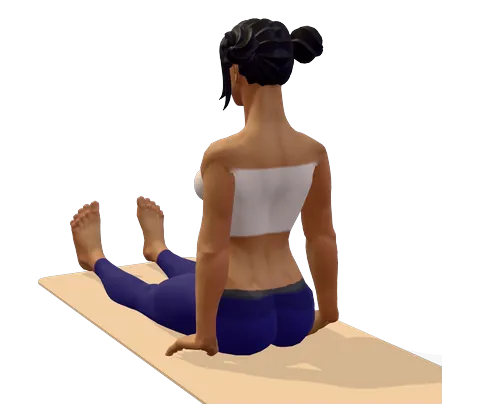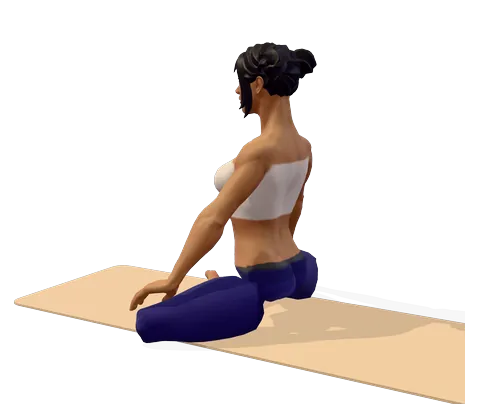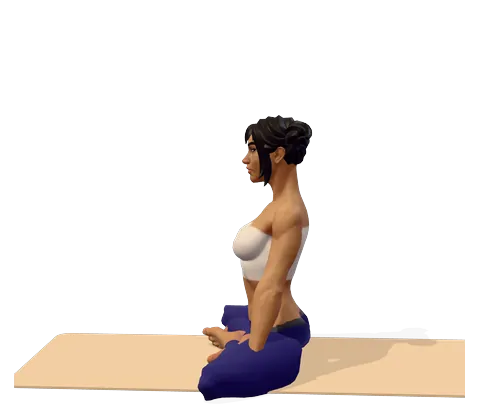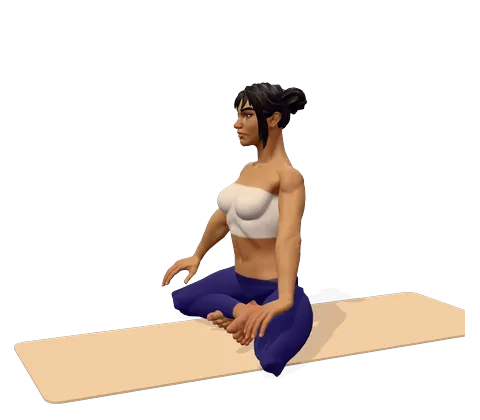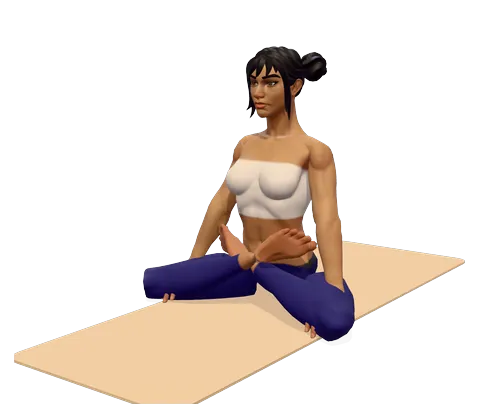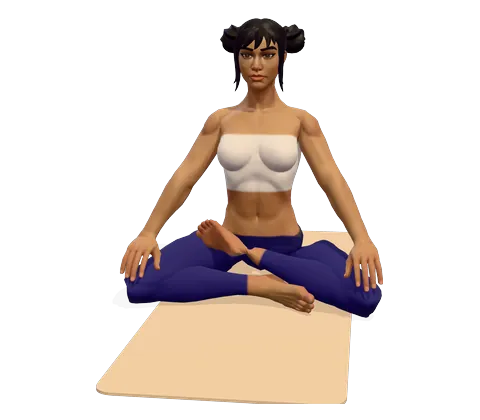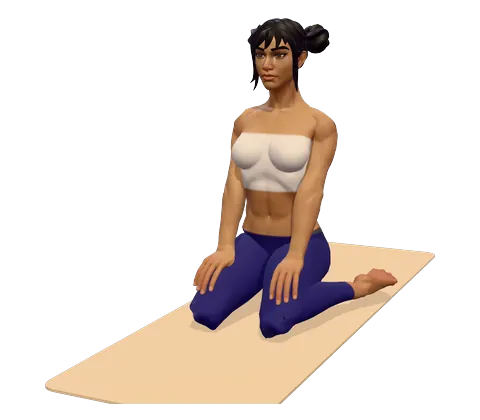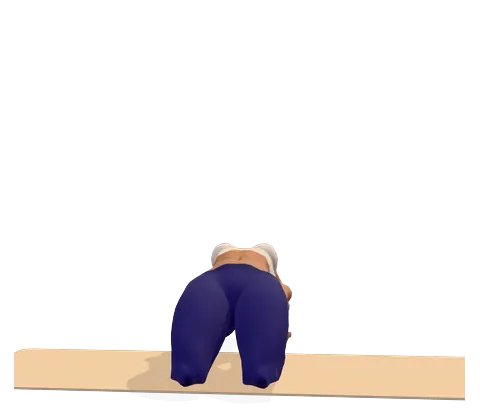
How to do Reclined Thunderbolt Pose step by step
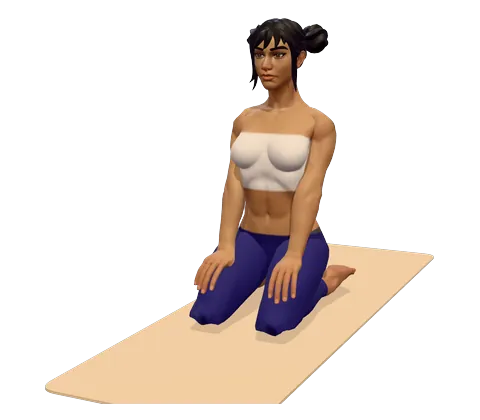
- Sit in Vajrasana: kneel with your knees together and sit back on your heels, tops of the feet flat on the mat.
- Place your hands on the floor beside your feet. Lean back slowly and lower one elbow, then the other, onto the floor.
- Keep your knees together and on the floor. If your knees lift, stay on your elbows; this is your pose for now.
- If you are comfortable, slide your elbows forward and lower your back and head to the floor, one part at a time.
- Rest your hands on your thighs near the knees, or fold your arms above your head. Relax your belly and breathe slowly through your nose.
- Hold for 15–30 seconds (3–6 breaths). Do not let your lower back arch sharply.
- To come up, press onto your elbows one at a time, then your hands, and lift yourself back to Vajrasana. Stretch your legs out in front and shake them gently.
Where you feel Reclined Thunderbolt Pose: what it stretches and strengthens
Lower back slowly onto your elbows, then onto your back, knees together. In the 3D guide, turn on Body guide: areas that stretch glow green and areas that work glow saffron.
Stretches
- Front thighs
- Hip flexors
- Abs
Strengthens
- Lower back
Benefits and precautions
Benefits
- Gives a deep stretch to the front of the thighs (quadriceps) and the hip flexors
- Stretches the abdominal wall and opens the chest
- Stretches the front of the ankles and feet
- Strengthens the lower back muscles that control the lowering and the lift
- Can encourage deeper belly breathing
Avoid or modify if
- Knee injury, meniscus tear or knee replacement — avoid; stay upright in Vajrasana on a cushion, or skip kneeling poses
- Ankle injury — avoid until it has healed
- Slipped disc, spondylolisthesis or acute low back pain — avoid; the lying-back position can compress the lower back
- Neck problems — keep the back of the head on a folded blanket and do not tip onto the top of the head
- Pregnancy, hernia or recent abdominal surgery — avoid
Supta Vajrasana, the reclined thunderbolt pose, is a kneeling backbend in which you sit on your heels in Vajrasana and then lie back until your back and head rest on the floor, keeping your knees together. It gives a deep stretch to the front of the thighs, hips and belly. It looks restful, but it asks a lot of the knees, ankles and lower back, which is why it is rated an advanced pose. This page explains the Supta Vajrasana meaning, the prerequisites, the procedure, the benefits, easier variations and the precautions.
Supta Vajrasana is a level 3 (advanced) pose. Do not try it if you have a knee, ankle or lower back problem. Make sure you can sit in Vajrasana comfortably first, and use the elbow stage for as long as you need.
Supta Vajrasana meaning
In Sanskrit, supta means lying down or reclined (literally "sleeping"), vajra means thunderbolt or diamond, and asana means pose. So the reclined thunderbolt pose means Vajrasana done lying back. It is also called the sleeping thunderbolt pose. In Hindi it is सुप्त वज्रासन.
Prerequisites: start with Vajrasana
You are ready to try the reclined pose only if all of these are true:
- You can sit in Vajrasana for two minutes without knee or ankle pain.
- You can lean back onto your hands in Vajrasana and feel a stretch in the thighs, not the knees.
- You are comfortable in a gentle backbend such as Camel Pose or Half Camel.
- You have no current lower back pain.
How to do Vajrasana step by step
To perform Vajrasana, kneel with your knees together, feet together or the big toes touching, and sit back on your heels with your spine tall and your hands on your thighs. The benefits of sitting in Vajrasana include a steady, upright posture and a gentle stretch for the knees and ankles; in India it is often done after meals. Vajrasana benefits in English and in Hindi sources are much the same, and the benefits of Vajrasana yoga practice are modest: many people find it a comfortable seat after meals and a calm position for breathing. Does Vajrasana help in weight loss? Not by itself; it burns very few calories. It can support a healthy routine, as described in our yoga for weight loss plan.
Supta Vajrasana procedure and safe technique
The steps above follow the 3D figure: kneeling on the heels, back and head on the mat, hands resting on the thighs. Unlike a flat Supta Vajrasana image or stick diagram, the animated 3D figure can be rotated so you see the knee and back position from the side. These points keep it safe:
- Go down in stages. Hands, then one elbow, then the other, then the back. Stop at any stage where the thighs feel a strong stretch.
- Knees stay down and together. If they lift off the floor, your thighs are not ready; stay on your elbows or use a bolster behind you.
- Protect the lower back. Draw the tailbone gently toward the knees so the lower back does not arch sharply.
- Head on the floor, not the crown. Rest the back of the head down. Tipping onto the top of the head puts the neck at risk.
- Come up the way you went down. Never sit straight up from lying flat; use the elbows.
Supta Vajrasana breathing technique
Breathe slowly through the nose into the belly and lower ribs. The stretched abdomen makes belly breathing more noticeable, which is one reason teachers like it. Do not hold your breath.
Supta Vajrasana benefits
The main Supta Vajrasana benefits are stretches that few poses give together. The quadriceps and hip flexors lengthen strongly, the belly and chest open, and the front of the ankles stretch. The lower back muscles work to control the lowering and the lift. Other quoted Supta Vajrasana advantages, such as better digestion or relief for tired legs, come from tradition rather than research, so treat them as possible, not certain.
Muscles stretched and worked
| Stretched | Worked |
|---|---|
| Quadriceps (front of the thighs) | Lower back muscles, controlling the lowering and lift |
| Hip flexors | |
| Abdominal wall and chest |
Supta Vajrasana for beginners and variations
- Elbow stage: stay on the elbows with the chest open. For many people this is the full pose for weeks.
- Bolster behind: place a bolster or two stacked pillows lengthways behind you and lie back onto it.
- Knees slightly apart: a small gap between the knees can ease the thighs, but do not let the feet splay out.
- Arms overhead: once comfortable, fold your arms above your head for a stronger chest stretch.
Other Supta Vajrasana variations include arching the back with the crown on the floor, similar to fish pose. That version is for experienced students only.
Supta Vajrasana vs similar poses
- Matsyasana and Supta Vajrasana: fish pose is done with straight or crossed legs and lifts the chest on the elbows; it has no knee bend.
- vs Supta Virasana: in reclining hero pose the hips sit on the floor between the feet instead of on the heels.
- vs reclined butterfly: reclined butterfly pose yoga (Supta Baddha Konasana) is a gentle restorative pose. Supta Baddha Konasana benefits, like other reclined butterfly pose benefits, are rest and an easy hip opening, very different from this strong stretch.
Is Supta Vajrasana one of the yoga poses for sleep? Not really: a deep backbend is stimulating. For bedtime yoga poses for sleep and relaxation, reclined butterfly is a better choice, as in our yoga for sleep plan.
Supta Vajrasana precautions and contraindications
The knees and the lower back take the most load. Come out at once if you feel pain inside the knee, pinching in the lower back or strain in the neck. People with knee problems should read yoga for knee pain first. Avoid the pose during pregnancy and after abdominal surgery.
After reclined thunderbolt pose yoga practice, balance the backbend with a gentle counter pose: hug your knees to your chest, then roll into a reclined twist. The benefits of a reclined twist pose here are simple: it releases the lower back after the arch.
सुप्त वज्रासन (Supta Vajrasana benefits in Hindi): वज्रासन में बैठें, हाथ पीछे रखें और धीरे-धीरे एक-एक कोहनी ज़मीन पर टिकाएँ। आराम हो तो पीठ और सिर ज़मीन पर रखें, घुटने साथ और ज़मीन पर रहें। 15–30 सेकंड रुकें, फिर कोहनियों के सहारे ऊपर आएँ। इससे जाँघों के आगे, कूल्हों और पेट में गहरा खिंचाव होता है। घुटने, टखने या कमर में दर्द हो तो यह आसन न करें।
Frequently asked questions
What does reclined thunderbolt pose mean?
Supta means reclined or lying down, and vajra means thunderbolt. Supta Vajrasana is Vajrasana done lying back, with the back and head on the floor.
What are the benefits of Supta Vajrasana?
It stretches the front of the thighs, hip flexors, belly, chest and ankles, and works the lower back muscles that control the lowering.
Is Supta Vajrasana safe for beginners?
Beginners should practise Vajrasana first and then only the elbow stage or a bolster version. The full pose is advanced.
Why do my knees lift when I lie back?
Your thighs are too tight for the full pose. Stay on your elbows or lie back on a bolster until the knees can stay down.
Who should not do Supta Vajrasana?
Avoid it with knee, ankle, lower back or neck problems, during pregnancy, and after abdominal surgery or with a hernia.
How long should I hold Supta Vajrasana?
Hold for 15–30 seconds at first. Come up slowly using your elbows, then stretch your legs out.
What is the difference between Supta Vajrasana and Supta Virasana?
In Supta Vajrasana you sit on your heels before lying back. In Supta Virasana the hips sit on the floor between the feet.
This page is for general education. Check with your doctor before starting yoga if you are pregnant, have a medical condition or an injury. Stop if you feel pain, dizziness or shortness of breath.