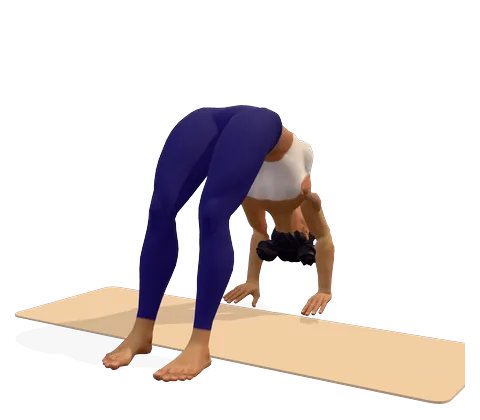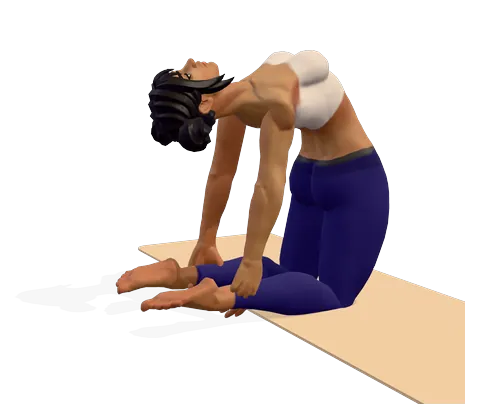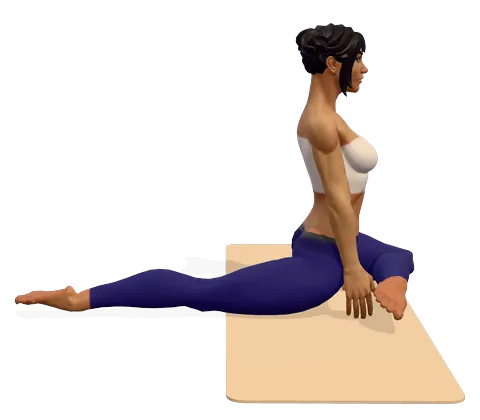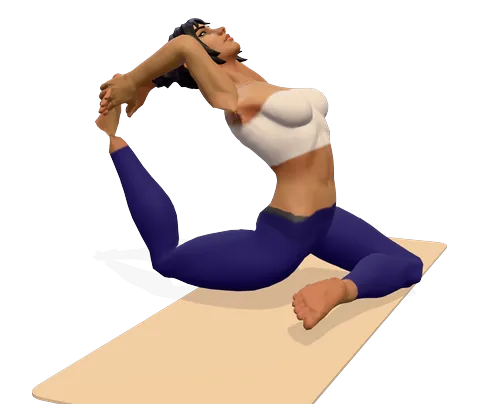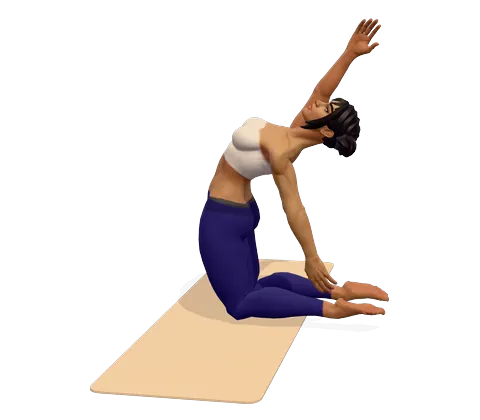
How to do Half Camel Pose step by step
- Kneel with your knees hip-width apart and your thighs upright. Rest the tops of your feet on the mat, or tuck your toes under to lift your heels.
- Place both hands on your lower back, fingers pointing down. Breathe in and lift your chest, drawing your elbows toward each other.
- Press your hips gently forward so they stay over your knees. Lengthen your tailbone down.
- Breathe out and reach your left hand back to hold your left heel. Keep your hips moving forward as you reach.
- Breathe in and sweep your right arm up and back over your head. Open your chest toward the ceiling and look up toward your right hand.
- Hold for 3–5 breaths (about 20 seconds). Keep your neck long and your lower back comfortable.
- Bring your right hand to your lower back, lift your chest to come up, and rest. Repeat on the other side, then sit back on your heels.
Where you feel Half Camel Pose: what it stretches and strengthens
Hold one heel and reach the other arm up and back. In the 3D guide, turn on Body guide: areas that stretch glow green and areas that work glow saffron.
Stretches
- Chest
- Hip flexors
- Front thighs
Strengthens
- Glutes
- Lower back
Benefits and precautions
Benefits
- Stretches the front of the body: chest, abdomen, hip flexors and thighs
- Strengthens the back muscles and glutes that hold the backbend
- Opens the shoulders and the chest; a good counter to slouching
- A safe step toward full camel pose, one side at a time
- Can leave you feeling more awake and energised
Avoid or modify if
- Lower back pain, spondylolisthesis or a recent back injury — keep both hands on the lower back and lift only a little, or skip
- Neck problems — keep your chin slightly tucked and look forward, not back
- Knee pain — put a folded blanket under your knees; skip if kneeling hurts
- High or low blood pressure, heart disease or migraine — lift gently, never drop the head back, and come up slowly
- Pregnancy — only a very gentle version with your doctor's approval; avoid deep backbends
- Come up slowly and pause before standing if you feel dizzy
Half camel pose (Ardha Ushtrasana) is a kneeling backbend in which one hand holds the heel and the other arm reaches up and back. Because you bend back one side at a time, it is gentler and easier to control than full camel pose, and it is a good way to learn the shape before trying both hands on the heels. This guide covers the Sanskrit name, how to do it, the benefits of camel pose in its half form, variations and who should be careful.
What is half camel pose?
Ardha Ustrasana meaning, word by word: in Sanskrit, ardha means "half", ushtra means "camel" and asana means "pose". Sanskrit for camel pose is therefore Ushtrasana (also spelled Ustrasana), and the half camel pose in Sanskrit is Ardha Ushtrasana or Ardha Ustrasana. The name comes from the shape: the arched back and lifted chest look like a camel's hump.
What is the camel pose in yoga? It is a kneeling backbend with both hands on the heels. Full camel pose is shown on its own page. The half camel pose yoga teachers use most often is the one the 3D guide shows: left hand on the left heel, right arm reaching overhead. Because the chest turns slightly toward the lifted arm, some call it a half revolved camel pose. Another common version, taught in many Indian schools, keeps both hands on the lower back.
How to do half camel pose (Ardha Ushtrasana kaise kare)
Follow the steps above, then use these half camel pose cues to refine it:
- Hips over knees. This is the most important cue. If your hips move back toward your heels, the bend collapses into the lower back.
- Lift before you bend. Lift the chest up first, then back. Think of arching over a big ball.
- Reach, do not drop. Keep the lifted arm active and long so the side of your waist stretches.
- Neck in line. Look up toward your hand, but do not let the head hang back.
- Toes tucked for beginners. Tucking your toes lifts the heels, so they are easier to reach.
You should feel a stretch through the front of the thighs, hips, belly and chest, and your back and buttocks working. A pinch in the lower back means lift the chest more and bend back less.
Half camel pose benefits
What is the camel pose good for? The main camel pose yoga benefits apply to the half version too, in a gentler form:
- Posture. Using half camel pose for posture makes sense: opening the chest and shoulders counters the rounded shape of long hours at a desk or phone. See our yoga for posture plan.
- Hip flexors and thighs. Kneeling with the hips forward stretches the front of the hips, which tighten with sitting.
- Back strength. The back muscles and glutes work to hold you up, which is why careful backbends appear in yoga for back pain routines. Half camel pose for back pain should stay small and pain-free.
- Breathing and energy. An open chest makes a full breath easier, and many people feel more awake after backbends.
Half camel pose muscles stretched and worked
| Stretches | Works |
|---|---|
| Chest and front of the shoulders | Glutes |
| Hip flexors and quadriceps | Muscles along the lower spine |
| Abdomen and side waist | Upper back and shoulder of the lifted arm |
Press the Body guide button on the 3D demo to see these areas glow.
Half camel pose variations and props
- Hands on lower back: the easiest version and the best way to learn how to do camel pose for beginners.
- Camel pose with blocks: place tall blocks beside your heels and rest your hand on a block instead of the heel.
- Against a wall: kneel facing a wall with your thighs touching it, so your hips cannot slide back.
- Blanket under the knees if kneeling is uncomfortable; with half camel pose knee pain is usually eased by extra padding.
- Full camel: once both sides feel easy, reach both hands to the heels. See the camel pose page for Ustrasana step by step.
Ardha Ustrasana vs camel pose and standing backbends
Half camel pose vs camel pose: the half version puts only one hand on the heel, so the backbend is smaller and one arm helps you balance. Among yoga poses, camel pose in its half form is a natural step between the gentle standing backbends and the full camel. The benefits of Ardha Chakrasana (standing backward bend) and Hasta Uttanasana (raised arms pose) are similar, but in half camel your thighs anchor you, so you can open the hips further. The cat and camel pose in physiotherapy is something else: a rounding and arching movement on hands and knees, like cat pose and cow pose.
Ardha Ustrasana contraindications
Read the caution box above before you start. Backbends can bother the lower back and neck, so move slowly and stop at a pinch or sharp pain. If you have high or low blood pressure, come up slowly and sit on your heels for a few breaths before standing. In a class, adjustments in the camel should only ever lift the chest; nobody should push your hips or head.
Prep poses and sequences
Good Ardha Ustrasana prep includes low lunge for the hip flexors, cat and cow for the spine, and cobra pose. After half camel, rest in child's pose to release the back. In yoga sequences with camel pose, the half version usually comes first as a warm-up. Camel yoga pose for kids works well as the half version with hands on the lower back.
अर्ध उष्ट्रासन (Ardha Ustrasana in Hindi): घुटनों के बल खड़े हों, घुटने कूल्हों की चौड़ाई पर रखें। छाती ऊपर उठाएँ, बायाँ हाथ पीछे ले जाकर बाईं एड़ी पकड़ें और दायाँ हाथ ऊपर और पीछे की ओर फैलाएँ। 3–5 साँस रुकें, फिर दूसरी तरफ़ करें। अर्ध उष्ट्रासन के फायदे (Ardha Ushtrasana ke fayde): छाती और कंधे खुलते हैं, जाँघों और कूल्हों में खिंचाव आता है और कमर मज़बूत होती है। कमर या गर्दन में दर्द हो तो धीरे और कम झुकें।
Frequently asked questions
What are the benefits of Ardha Ustrasana?
Half camel pose stretches the chest, abdomen, hip flexors and thighs, strengthens the back and glutes, opens the shoulders and helps counter slouching. It is also a safe step toward full camel pose.
What is half camel pose called in Sanskrit?
Ardha Ushtrasana, also spelled Ardha Ustrasana: ardha = half, ushtra = camel, asana = pose.
How long should I hold half camel pose?
A good half camel pose hold time is 3–5 breaths, about 20 seconds, on each side. Beginners can repeat a short hold twice rather than stay longer.
Is half camel pose good for beginners?
Yes. It is one of the easiest kneeling backbends. Start with both hands on your lower back, tuck your toes, and add the heel reach when that feels easy.
What is the difference between half camel and camel pose?
In camel pose both hands hold the heels and the backbend is deeper. In half camel one hand holds a heel while the other arm reaches up, so it is gentler and easier to control.
Why does half camel pose hurt my lower back?
Usually the hips have moved back behind the knees, or you are bending back more than lifting up. Press the hips forward, lift the chest first and bend back less.
Who should not do half camel pose?
People with an acute back or neck injury, severe knee pain, uncontrolled blood pressure or heart disease, and those in pregnancy unless their doctor agrees to a very gentle version.
This page is for general education. Check with your doctor before starting yoga if you are pregnant, have a medical condition or an injury. Stop if you feel pain, dizziness or shortness of breath.