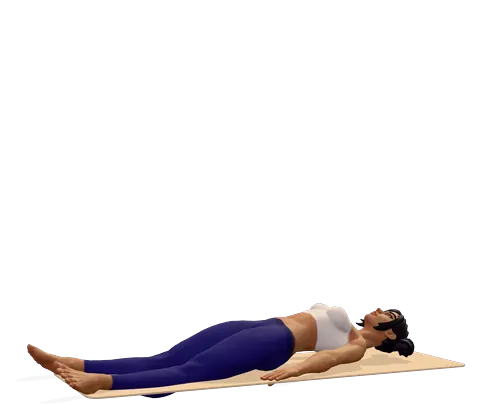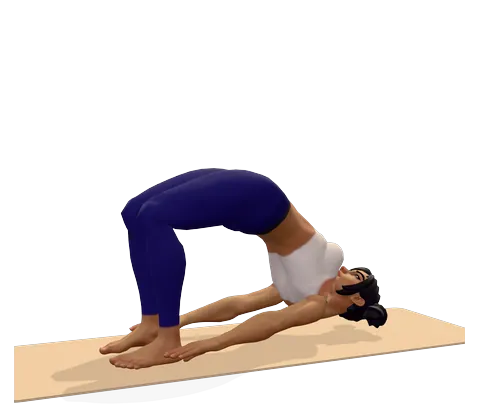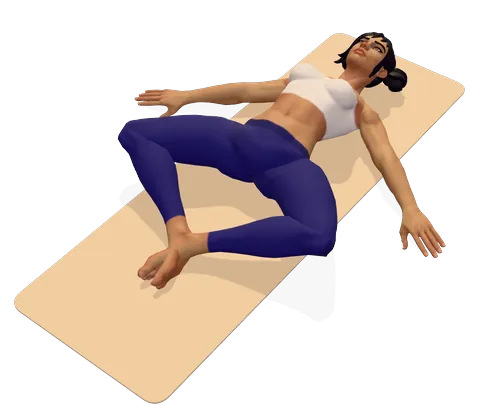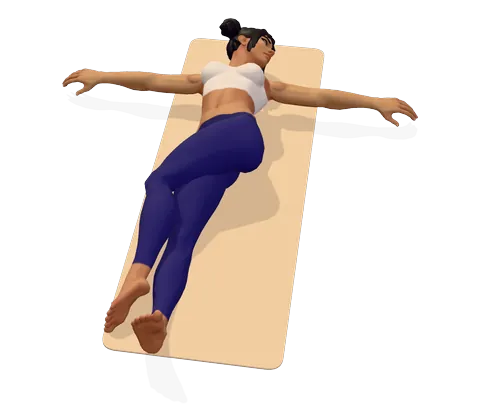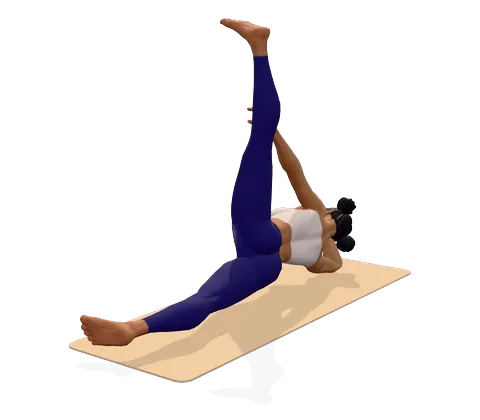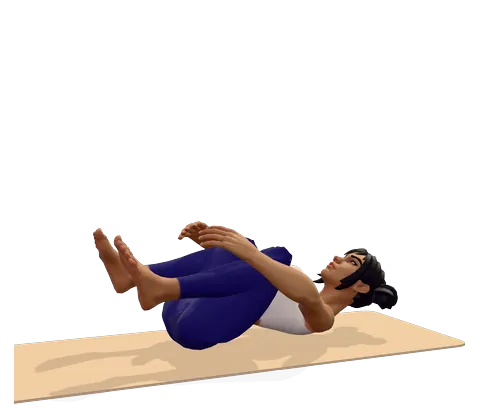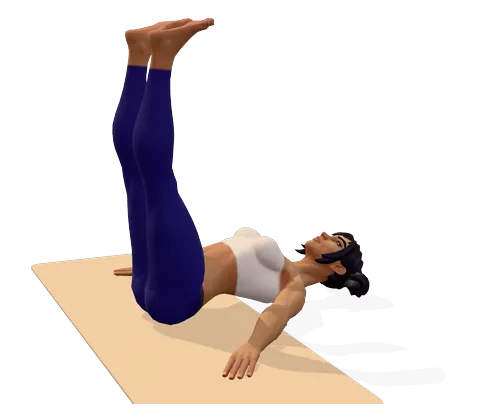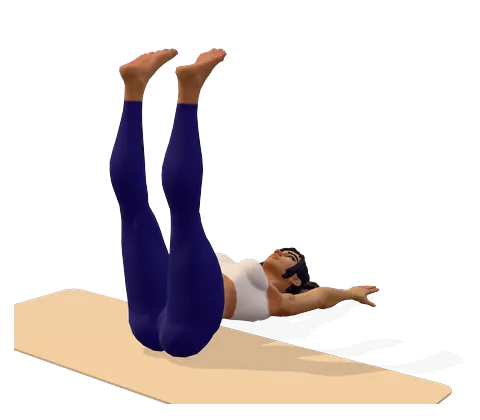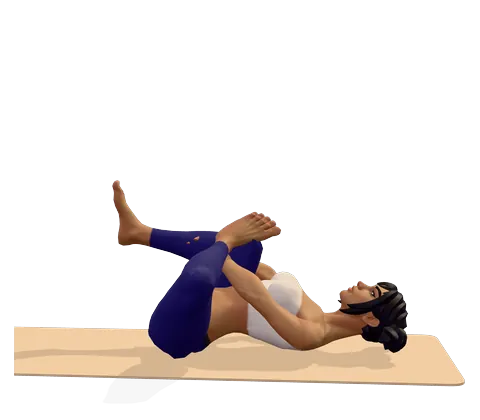
How to do Eye of the Needle Pose step by step
- Lie on your back with your knees bent and your feet flat on the floor, hip-width apart.
- Cross your left ankle over your right thigh, just below the knee. Flex your left foot so the toes point toward your shin.
- Lift your right foot off the floor and bring your right thigh toward you.
- Thread your left hand through the gap between your legs and bring your right hand around the outside. Clasp your hands behind your right thigh.
- Gently draw the right thigh toward your chest and let your left knee open away from you. Keep your head, shoulders and lower back resting on the mat.
- Hold for about 45 seconds, breathing slowly into the outer left hip and buttock.
- Release your hands, place both feet on the floor and uncross your legs. Repeat with the right ankle over the left thigh.
Where you feel Eye of the Needle Pose: what it stretches and strengthens
Cross your ankle over the knee and draw your legs toward you. In the 3D guide, turn on Body guide: areas that stretch glow green and areas that work glow saffron.
Stretches
- Glutes
- Hip flexors
Benefits and precautions
Benefits
- Stretches the outer hip and buttock (gluteal and piriformis muscles)
- Eases tightness from sitting, running and cycling
- A gentle, supported alternative to pigeon pose with no weight on the knee
- Can ease lower back discomfort linked to tight hips
- Relaxing enough for the end of a class or before sleep
Avoid or modify if
- Knee pain or injury in the crossed leg — keep the foot flexed and move the ankle further from the knee, or skip it
- Hip replacement — ask your surgeon; crossing the legs and deep hip bending may be restricted
- Later pregnancy — avoid lying flat on your back for long; do a seated figure four on a chair instead
- Sharp pain in the hip joint or groin — ease off or stop
- Sciatica that gets worse in the pose — stop and ask your physiotherapist
Eye of the needle pose (Sucirandhrasana) is a gentle hip stretch done lying on your back. You cross one ankle over the opposite thigh, thread a hand through the gap and draw your legs toward you. It is also called reclined pigeon pose or the supine figure four stretch, and it is one of the kindest ways to open tight hips because the floor supports your back and there is no weight on the knee. This page explains how to do eye of the needle pose, its benefits, useful variations and how it differs from thread the needle pose.
What is eye of the needle pose?
What is eye of the needle pose in yoga? In short, the eye of the needle definition is a lying stretch for the outer hip and buttock. The legs form the number 4, which is why many trainers call it the supine figure four, and the space between the crossed leg and the lifted leg is the "eye" your arm threads through. So the yoga pose known as eye of the needle is the same as reclined pigeon pose, reclined half pigeon and supine figure four yoga. Some teachers also call it eye through the needle pose.
Eye of the needle pose Sanskrit meaning
The eye of the needle pose Sanskrit name is Sucirandhrasana: suci means "needle", randhra means "hole" or "opening" and asana means "pose". So the eye of the needle meaning here is simply the gap your hand passes through. This explanation of the name has nothing to do with the biblical saying about a camel and the eye of a needle, which has a different meaning. Some books use the name Supta Kapotasana ("reclined pigeon pose"), so you may see reclined pigeon pose Supta Kapotasana in yoga classes too.
How to do eye of the needle pose
The steps above follow the 3D figure, left hip first. A few details make the stretch work:
- Flex the top foot. Pulling the toes of the crossed foot toward the shin helps protect the knee.
- Cross below the knee. The ankle rests on the thigh just below the knee, not on the kneecap.
- Keep the pelvis level. Both sides of the back of the pelvis stay on the mat. Do not let the hips roll to one side.
- Relax the upper body. Head and shoulders stay down. If you cannot reach your thigh without lifting your head, use a strap.
What you should feel: a stretch deep in the outer hip and buttock of the crossed leg. You should not feel it in the knee. If you do, move the ankle further toward the hip of the lower leg or bring the legs less far in.
Eye of the needle pose benefits
The main eye of the needle pose benefits are a deep but gentle stretch for the outer hip and buttock muscles, including the piriformis, and a little release for the hip flexors. Long hours of sitting, running and cycling tighten these muscles. Reclined pigeon benefits are similar to seated pigeon, but because you lie on your back, it is easier to relax and to control how deep you go. Sucirandhrasana benefits also include calm: it is quiet enough to use in a bedtime routine. Tap Body guide in the 3D viewer to see the stretched areas glow green.
Eye of the needle for lower back pain and sciatica
Tight hips can pull on the pelvis and add strain to the lower back, so a gentle hip stretch often feels good for people with back stiffness. This is why the reclined pigeon stretch appears in many yoga poses for back pain relief. As a yoga pose for lower back pain, it is safer than full pigeon pose for lower back pain because the spine is supported. For buttock pain related to sciatica, a gentle eye of the needle may ease tension, but stop if pain spreads down the leg and ask a physiotherapist. See yoga for back pain, yoga for sciatica and yoga for hip pain for full sessions and more poses for yoga for back pain.
Variations: for beginners, yin and at the wall
- Pigeon stretch for beginners: keep the lower foot on the floor and just cross the ankle over the thigh. This is the easiest reclined pigeon.
- With a strap: loop a strap behind the lifted thigh if your hands do not reach.
- Wall eye of the needle pose: lie near a wall with the lower foot flat on it and the other ankle crossed over. The wall holds the leg for you, so you can relax completely.
- Eye of the needle pose yin yoga: in the eye of the needle yin pose, you stay passive for 3–5 minutes, often with the lower foot on the wall or a block.
- Supported reclined pigeon prep on bolster: rest the lower foot on a bolster or chair seat so you do not need to hold the leg.
- Supine figure four twist: keeping the legs crossed, let both knees fall to the side of the crossed leg for a twist. Keep it slow.
Eye of the needle vs thread the needle pose
The names sound alike but the poses are different. Thread the needle pose (Parsva Balasana, the thread the needle pose Sanskrit name) is done on hands and knees: you slide one arm under the chest and rest the shoulder and side of the head on the mat. Threading the needle pose stretches the upper back and shoulders, while eye of the needle stretches the hips. Benefits of thread the needle pose include relief for stiff shoulders, so the thread the needle yoga pose is one of the useful yoga poses for upper back pain. A child pose thread the needle variation starts from child's pose — another good choice, like child's pose for back pain. There is also a thread the needle yin pose held longer.
When to practise
Eye of the needle fits well after walking, running or a long day at a desk, and at the end of a practice. Warm up with half wind relieving pose, then do eye of the needle on both sides and finish with a supine twist. The Hip Opener session in guided practice includes hip stretches like this, with the voice counting the breaths.
Frequently asked questions
How do you do eye of the needle pose?
Lie on your back with your knees bent. Cross one ankle over the opposite thigh, lift the lower foot and hold behind that thigh with both hands. Draw the legs gently toward you, hold about 45 seconds and switch sides.
What are the benefits of eye of the needle pose?
It stretches the outer hip and buttock, including the piriformis, eases tightness from sitting and sport, and may relieve lower back stiffness linked to tight hips.
Is eye of the needle the same as reclined pigeon?
Yes. Eye of the needle (Sucirandhrasana), reclined pigeon and supine figure four are names for the same lying hip stretch.
Is eye of the needle the same as thread the needle?
No. Thread the needle is done on hands and knees and stretches the upper back and shoulders. Eye of the needle is done on your back and stretches the hips.
Why do I feel eye of the needle in my knee?
The crossed ankle may be too close to the knee or the foot is not flexed. Flex the foot, move the ankle toward the other hip and draw the legs in less.
Is eye of the needle good for sciatica?
It may ease buttock tightness that contributes to sciatic-type pain. Stop if pain spreads down the leg, and ask a physiotherapist for advice.
This page is for general education. Check with your doctor before starting yoga if you are pregnant, have a medical condition or an injury. Stop if you feel pain, dizziness or shortness of breath.