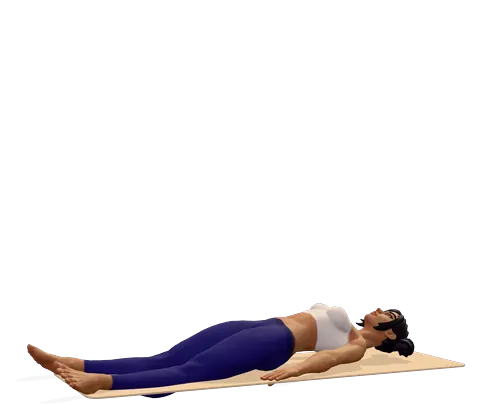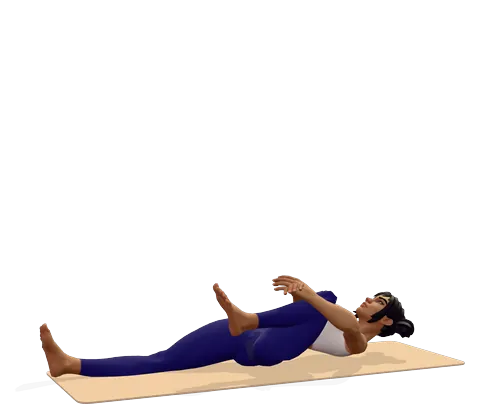
How to do Half Wind-Relieving Pose step by step
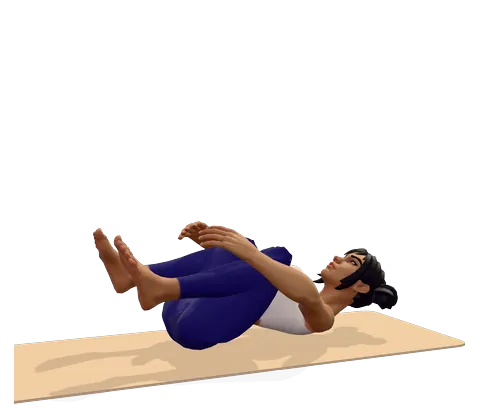
- Lie on your back with both legs straight and your arms by your sides.
- Bend your left knee and draw your left thigh toward your chest.
- Hold your left shin with both hands, just below the knee. If your knee is sensitive, hold behind the thigh instead.
- Keep your right leg long on the mat with the toes pointing up and the back of the leg resting down.
- Breathing out, gently hug the knee a little closer. If your neck is comfortable, lift your head slightly toward the knee; otherwise keep it on the mat.
- Hold for about 30 seconds with slow belly breaths. Feel the thigh press into the belly as you breathe in.
- Lower your head, release the leg and stretch it out. Repeat with the right knee.
Where you feel Half Wind-Relieving Pose: what it stretches and strengthens
Hug one knee to your chest while the other leg stays long. In the 3D guide, turn on Body guide: areas that stretch glow green and areas that work glow saffron.
Stretches
- Glutes
- Lower back
- Hip flexors
Strengthens
- Abs
Benefits and precautions
Benefits
- Gently stretches the lower back, buttock and hip of the bent leg
- Stretches the hip flexor of the straight leg
- Traditionally used to help release trapped gas and ease bloating
- Lightly works the abdominal muscles, especially when the head lifts
- A comfortable way to ease lower back stiffness after sitting or sleeping
- Easy for beginners and a preparation for full wind relieving pose
Avoid or modify if
- Pregnancy — do not press the knee into the belly; move the knee out to the side instead
- Recent abdominal or hip surgery, a hernia, or a hip replacement with limits on bending — ask your surgeon first
- Neck pain — keep your head on the mat
- Knee pain — hold behind the thigh instead of over the shin
- Disc problems or sciatica that worsen when you bend forward — ask your physiotherapist before practising
Half wind relieving pose (Ardha Pavanamuktasana) is a single knee to chest stretch done lying on your back: one knee is hugged in, the other leg stays long on the floor. It is one of the easiest yoga poses there is, and it is often used to ease a stiff lower back and to help release trapped gas. This page explains what the wind relieving pose is, how to do it, its benefits, useful variations and who should be careful.
What is the wind relieving pose?
The Sanskrit name has four parts: ardha means "half", pavana means "wind" or "air", mukta means "released" and asana means "pose". In full wind relieving pose (Pavanamuktasana) you hug both knees to the chest. The half version works one leg at a time and is also called Eka Pada Pavanamuktasana ("one-leg wind relieving pose"), Ardha Pawanmuktasana or simply single knee to chest.
The name describes its traditional use: the pressure of the thigh on the belly is said to help move gas along the intestines. That is why this wind relieving yoga pose is often found in morning routines and after-meal stretches.
How to do wind relieving pose (Ardha Pawanmuktasana kaise kare)
The steps above follow the 3D figure, left knee first. A few points make the pose comfortable:
- Hold below the knee or behind the thigh. Holding over the shin gives a deeper hug; behind the thigh is kinder to the knee.
- Keep the other leg long. The straight leg rests on the mat with the toes up. This gives a gentle stretch to the front of that hip.
- Shoulders down. Let the shoulders rest on the floor as you pull; the arms do the work, not the neck.
- Head lift is optional. Lifting the head toward the knee adds work for the belly. With neck pain, leave it out.
What you should feel: a gentle stretch in the lower back and buttock of the bent leg, a mild stretch at the front of the other hip, and the belly pressing against the thigh as you breathe in. Working one half of the body and then the other makes it a balanced yoga pose that shows if one hip is tighter.
Half wind relieving pose benefits
The main half wind relieving pose benefits are a gentle lower back and hip stretch and a light massage of the belly. Ardha Pawanmuktasana benefits also include a stretch for the hip flexor of the straight leg, which is often tight after sitting.
Wind relieving pose benefits for gas and bloating
Wind relieving pose benefits for digestion are mostly traditional and practical: many people find that hugging the knees in helps them pass trapped gas and eases a bloated feeling. Studies on this single pose are limited, so think of it as a comfortable helper, not a treatment. Other yoga poses to release trapped wind include full Pavanamuktasana, child's pose and a supine twist. See yoga for bloating and yoga for constipation for full sessions.
Single knee to chest stretch for the lower back
Outside yoga, the same shape is the single knee to chest exercise used by many physiotherapists. It gently rounds the lower back and lets the muscles there lengthen, which is why it is sometimes called single knee-to-chest decompression. As a yoga pose for lower back pain, it suits stiffness and mild aches best.
- Single knee to chest with towel: if you cannot reach your leg comfortably, loop a towel or strap behind the thigh and hold its ends.
- Single knee to chest pull: pull only as far as feels good. A strong pull is not better.
- Single knee to chest cross body pull: draw the knee gently toward the opposite shoulder to stretch the outer hip and buttock.
Single knee to chest for a bulging disc: some disc problems feel better with gentle forward bending and some feel worse. If you have a diagnosed disc bulge or pain spreading into a leg, ask your physiotherapist before you practise, and stop if the leg pain increases.
For more poses for yoga for back pain, see yoga for back pain and yoga for sciatica. These yoga poses for back pain relief and low back pain work best as part of regular, gentle movement.
Half wind relieving pose vs full wind pose
In full wind pose yoga (Pavanamuktasana) both knees come to the chest, so the lower back rounds more and the belly is pressed harder. The half version is the usual preparatory asana for Pawanmuktasana: it is gentler on the back, easier to breathe in, and it stretches the hip of the straight leg too. Start with half, then move to full when both sides feel easy.
Half wind relieving pose for beginners
This half wind relieving yoga pose is ideal for beginners, seniors and anyone who wants a gentle start. You can do it in bed in the morning or at the end of a class. Some people add it to some workouts as a cool-down: poses for back pain like this relax the back after running or lifting. It also works as a relaxing pose at the end of yoga, just before Savasana. Pair it with stick pose for a two-minute morning stretch.
अर्ध पवनमुक्तासन (Ardha Pavanamuktasana) — हिंदी में: पीठ के बल लेटें और दोनों पैर सीधे रखें। बायाँ घुटना मोड़कर छाती की ओर लाएँ और दोनों हाथों से घुटने के नीचे पकड़ें, दायाँ पैर सीधा ज़मीन पर रहे। साँस छोड़ते हुए घुटना थोड़ा और पास लाएँ और लगभग 30 सेकंड रुकें, फिर दूसरे पैर से करें। अर्ध पवनमुक्तासन के फायदे: पेट की गैस निकालने में मदद, कमर और कूल्हे में हल्का खिंचाव। गर्भावस्था या पेट के ऑपरेशन के बाद घुटना पेट पर न दबाएँ।
Frequently asked questions
How do you do half wind relieving pose?
Lie on your back, bend one knee and hug it toward your chest with both hands while the other leg stays long on the floor. Breathe slowly for about 30 seconds, then switch legs.
What are the benefits of Ardha Pavanamuktasana?
It gently stretches the lower back, buttock and hip, lightly presses the belly, and is traditionally used to help release trapped gas. It is also a good preparation for full wind relieving pose.
Does wind relieving pose really help with gas?
Many people find it helps them pass trapped gas and feel less bloated. The evidence comes mainly from experience and tradition, so see a doctor if bloating is frequent or painful.
Is single knee to chest good for lower back pain?
For stiffness and mild aches it often feels good. With a disc problem or pain that spreads into a leg, ask a physiotherapist first.
Should I lift my head in half wind relieving pose?
It is optional. Lifting the head adds work for the belly. Keep it down if you have neck pain.
When is the best time to do it?
In the morning before getting up, or at least 2 hours after a meal. It also fits well at the end of a practice.
Ardha Pawanmuktasana ke fayde kya hain?
It helps release gas, eases lower back stiffness and gently stretches the hips. See the Hindi box above for the steps.
This page is for general education. Check with your doctor before starting yoga if you are pregnant, have a medical condition or an injury. Stop if you feel pain, dizziness or shortness of breath.