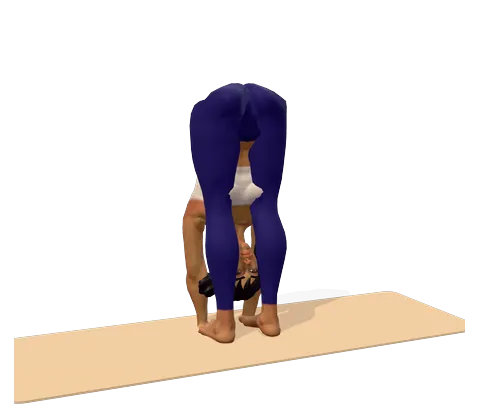
How to do Hand Under Foot Pose step by step
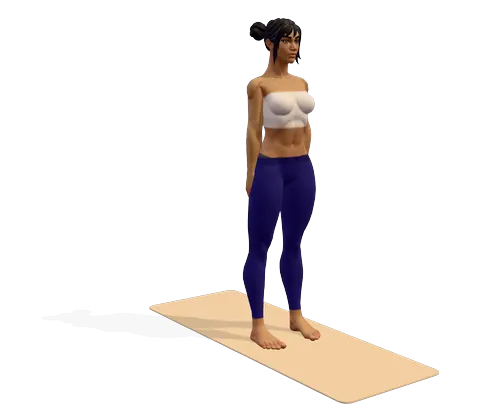
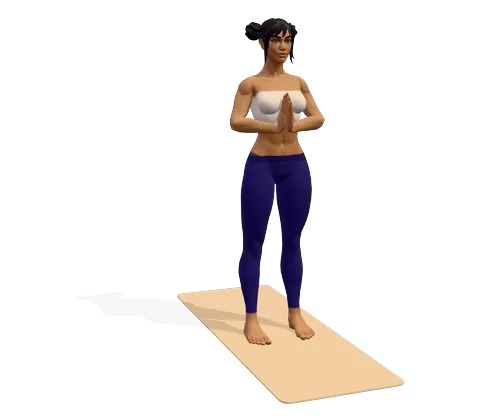
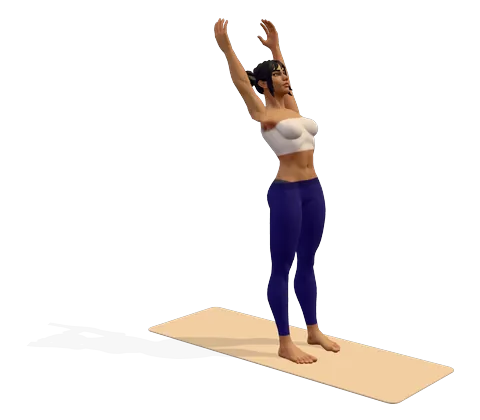
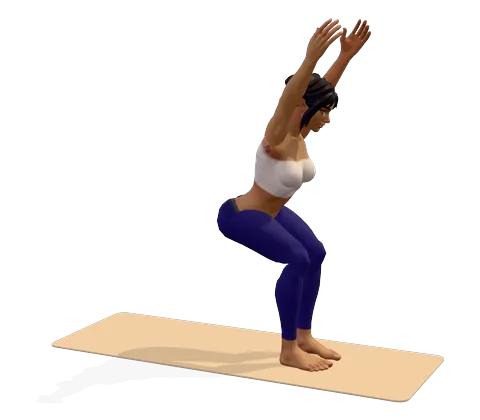
- Stand in Mountain pose with your feet hip-width apart. Breathe in and raise your arms overhead, lengthening your spine.
- Breathing out, fold forward from your hips, keeping your back long for as long as you can.
- Bend your knees as much as you need and place your hands flat on the floor beside your feet.
- Lift your toes, slide your palms under your feet, palms up, and lower your toes onto them so the toes reach your wrist creases.
- Let your head hang and your neck relax. Bend your elbows out to the sides and draw your chest gently toward your thighs.
- Straighten your legs only as far as is comfortable. Hold for 20–30 seconds (4–6 breaths), breathing slowly.
- To come out, slide your hands out, bend your knees, place your hands on your hips and rise slowly with a long back, head coming up last.
Where you feel Hand Under Foot Pose: what it stretches and strengthens
Slide your palms under your feet and let your head hang. In the 3D guide, turn on Body guide: areas that stretch glow green and areas that work glow saffron.
Stretches
- Hamstrings
- Calves
- Lower back
Strengthens
- Wrists
Benefits and precautions
Benefits
- Deeply stretches the hamstrings, calves and the back of the body
- Releases tension in the lower back, neck and shoulders
- Gives a gentle stretch to the wrists and the soles of the feet
- Brings a calm, inward feeling, as in most forward bends
- Can help digestion by gently compressing the abdomen
- Builds flexibility for Sun Salutation and seated forward bends
Avoid or modify if
- Slipped disc, sciatica or acute lower back pain — avoid the deep fold; do a halfway lift with bent knees instead
- High blood pressure, heart disease, glaucoma or a detached retina — avoid keeping the head low; practise a halfway lift instead
- Vertigo or low blood pressure — come up very slowly, head last, and sit if you feel dizzy
- Pregnancy (after the first trimester) — avoid the deep fold; use a wide stance with hands on a chair
- Osteoporosis, hamstring injury or recent abdominal surgery — skip it and ask your doctor or physiotherapist
Padahastasana, the hand under foot pose, is a deep standing forward bend in which you slide your palms under your feet so the toes rest on your wrists. It is one of the classic poses of Hatha yoga and of the traditional Indian Surya Namaskar, and it gives the whole back of the body a strong stretch. This guide explains the Padahastasana meaning in English, how to do it step by step, its benefits and the precautions you should know first.
What is hand under foot pose?
Padahastasana meaning in English
The name joins three Sanskrit words: pada means "foot", hasta means "hand" and asana means "pose". So Padahastasana (also written Pada Hastasana) means hand to foot pose or hand under foot pose. Some teachers reverse the words and call it Hasta Padasana; the pose is the same. In Ashtanga yoga it is called Padahastasana too, and in English classes you may hear "gorilla pose" because of the rounded shape with the arms hanging. The Padahastasana pronunciation is roughly PAH-dah-hahs-TAHS-ah-nah.
Do not confuse it with Utthita Hasta Padasana ("extended hand and foot pose") or Parsva Hasta Padasana: these are wide-legged standing poses with the arms stretched out, not forward bends.
How to do Padahastasana (Padahastasana kaise kare)
The steps above follow the 3D guide. The most important part of the Padahastasana procedure is the order: fold first, bend the knees, place the hands under the feet, and only then straighten the legs as far as they will go. Pulling yourself down with straight legs strains the lower back.
Tips for a safe hands under feet yoga pose
- Hinge at the hips, not the waist. Keep the back long as you go down. Rounding happens naturally at the end, but it should not start there.
- Weight over the balls of the feet. Leaning back into the heels makes the hamstrings grip.
- Soft elbows out to the sides. A gentle pull on the hands helps the chest come toward the legs.
- Safe position of the hands. Palms face up with the fingers pointing back toward the heels; if the wrists complain, place the hands on the floor instead.
- Heavy head. Nod "yes" and "no" slowly to release the neck.
- Breathe into the back. Each exhale lets the body release a little more.
Padahastasana benefits
The main Padahastasana benefits come from the long stretch of the hamstrings, calves and back. Standing on your hands also gives a gentle stretch to the wrists and a little massage to the soles of the feet, a gentle version of the hand and foot massage benefits people enjoy after a long day, as the muscles of the hands and feet press against each other. Many people find the hanging head relaxing for the neck and shoulders, and forward bends in general tend to have a calming, quieting effect.
The fold also compresses the abdomen gently, which is why yoga tradition links Pada Hastasana benefits with digestion. Is it good for belly fat? No single pose removes fat from one area; regular practice, movement and diet together help, as explained in our yoga for belly fat plan.
Padahastasana muscles stretched and worked
| Stretched | Worked |
|---|---|
| Hamstrings | Wrists and forearms (holding and stretching under the feet) |
| Calves | Quadriceps, gently, to straighten the knees |
| Lower back and the whole back of the body | Deep abdominal muscles as you fold |
Is Padahastasana a good yoga pose for back pain?
Not always. Many lists of yoga poses for low back pain and asanas for back pain relief include deep forward bends, but rounding forward under your own weight can aggravate a slipped disc or sciatica. If you have general stiffness, a gentle version with very bent knees can feel good. If you have a diagnosed disc problem, choose the halfway lift or the poses in our yoga for back pain plan, which are among the best asanas for back pain in a safe order, and ask your physiotherapist. Gentler lower back pain yoga poses, such as the cat and cow movement done in a yoga pose on hands and knees, are usually a better place to start.
Padahastasana for beginners
- Bend the knees a lot. Belly on the thighs matters more than straight legs.
- Hands on the shins or blocks if the hands cannot reach under the feet yet.
- Feet hip-width apart rather than together gives the belly more space.
- Start with a halfway lift. Ardha Uttanasana teaches the hip hinge first.
- Hold for less time: 3 breaths is enough at first.
Warm up with Mountain pose (if you are unsure how to perform Tadasana, start there; it is the simplest of the Tadasana exercises for beginners) and a few rounds of cat pose and cow pose. These are the easiest modifications for yoga poses in this family: less depth, more support. New to yoga? Read yoga for beginners first.
Padahastasana vs Padangusthasana
Both are standing forward bends from the same family. In Padangusthasana (big toe pose) you hook your big toes with the first two fingers; in Padahastasana your palms go under your feet. The steps of Padangusthasana are the same up to the grip. Padahastasana gives a slightly deeper stretch and a wrist stretch, so it usually comes second. Uttanasana is the simplest version, with the hands on the floor. The reclined hand to foot pose in yoga, Supta Padangusthasana, gives a similar hamstring stretch lying on your back, which is kinder to a sensitive lower back.
Padahastasana in Surya Namaskar
In the traditional 12-step Surya Namaskar, steps 3 and 10 are called Hasta Padasana or Padahastasana. There the hands are usually placed beside the feet, not under them, to keep the flow moving. You can practise it with voice guidance in our Surya Namaskar session.
Padahastasana contraindications and precautions
Padahastasana puts the head below the heart and flexes the spine deeply. Avoid it with high blood pressure, heart disease, glaucoma, a detached retina, a slipped disc, sciatica, osteoporosis, recent abdominal surgery and after the first trimester of pregnancy. With low blood pressure or vertigo, come up very slowly. If you feel pain, pins and needles or dizziness, bend your knees and rise.
Hand to foot pose in Hindi
पादहस्तासन (Padahastasana) — हिंदी में: सीधे खड़े हों, साँस छोड़ते हुए कूल्हों से आगे झुकें। घुटने थोड़े मोड़ें और हथेलियों को पैरों के नीचे रखें, सिर को ढीला छोड़ दें। 20–30 सेकंड रुकें और धीरे-धीरे ऊपर आएँ। पादहस्तासन के फायदे (Padahastasana ke fayde): जाँघों के पीछे, पिंडलियों और पीठ में अच्छा खिंचाव, मन शांत होता है। हाई ब्लड प्रेशर, स्लिप डिस्क या गर्भावस्था में यह आसन न करें।
Frequently asked questions
What is Padahastasana in English?
It means hand under foot pose or hand to foot pose: pada is foot and hasta is hand. It is a deep standing forward bend with the palms under the feet.
What are the benefits of Padahastasana?
It stretches the hamstrings, calves and back, releases the neck and shoulders, stretches the wrists and has a calming effect.
Who should not do Padahastasana?
Avoid it with high blood pressure, heart disease, glaucoma, a slipped disc, sciatica, osteoporosis, recent abdominal surgery, and after the first trimester of pregnancy.
Can I bend my knees in hand under foot pose?
Yes. Bending the knees protects the lower back and lets your palms reach under your feet. Straighten them only as far as is comfortable.
How long should I hold Padahastasana?
Hold for 20–30 seconds (4–6 breaths). Beginners can start with 3 breaths.
What is the difference between Padahastasana and yoga Hasta Padasana?
They are two names for the same forward bend. The order of the words changes, the pose does not.
This page is for general education. Check with your doctor before starting yoga if you are pregnant, have a medical condition or an injury. Stop if you feel pain, dizziness or shortness of breath.