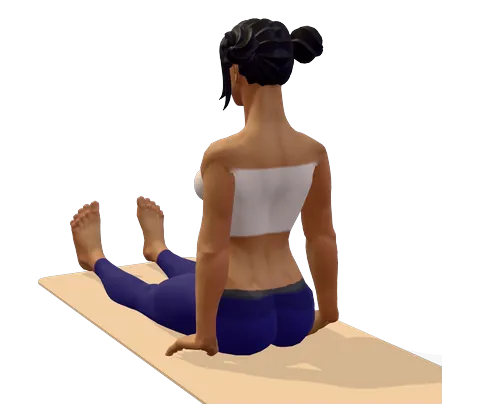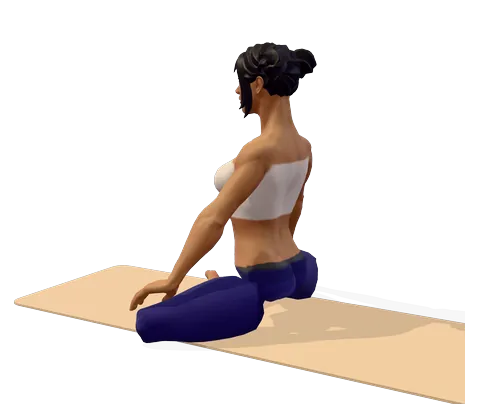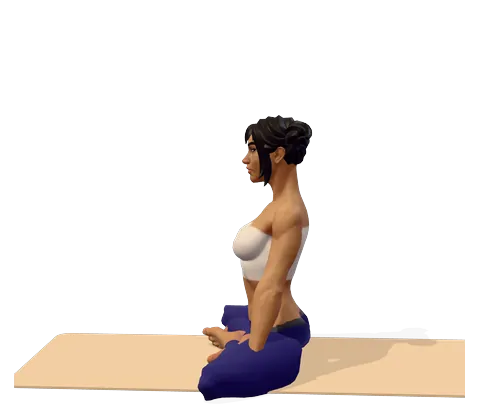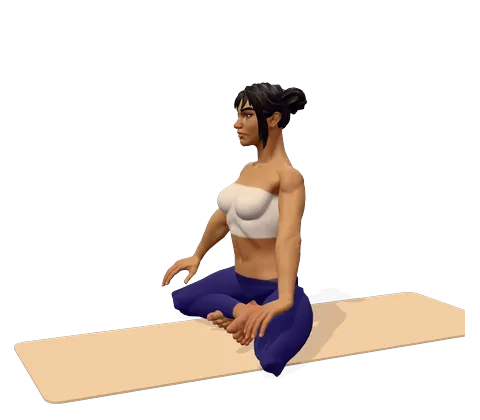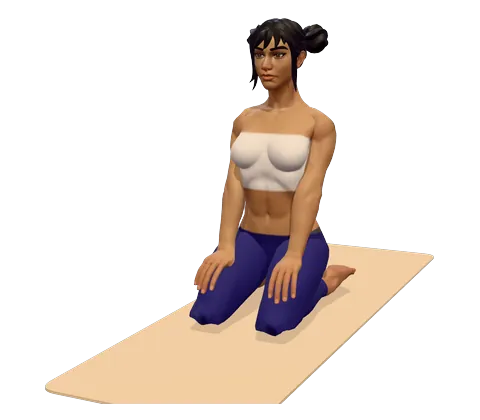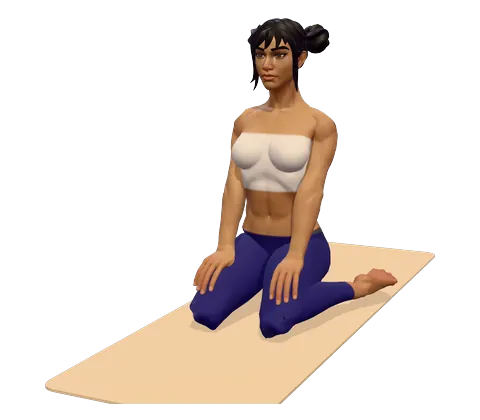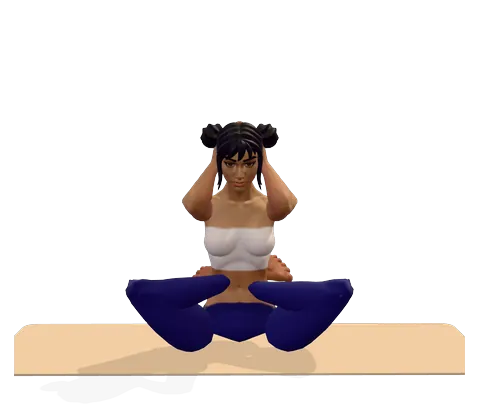
How to do Embryo in Womb Pose step by step
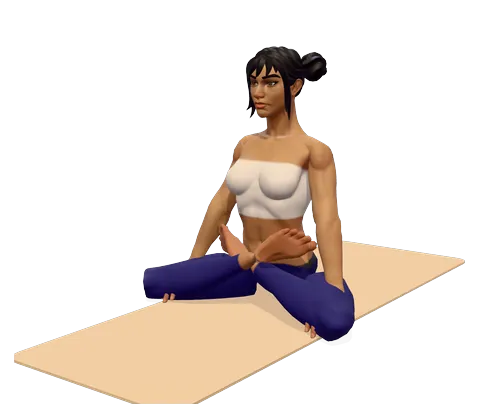
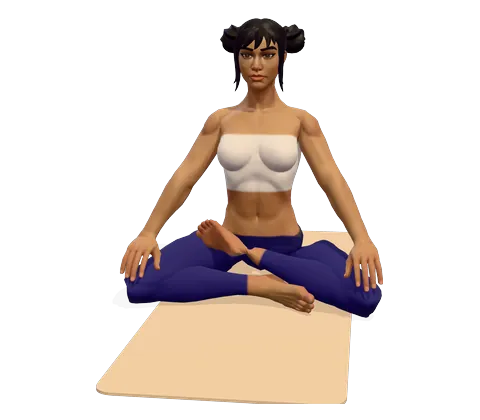
- Sit in full lotus on a soft mat: right foot on the left thigh, left foot on the right thigh. Continue only if lotus is completely comfortable.
- Slide your right hand, then your left, down into the gap between each thigh and calf, working the forearms through up to the elbows. A little water on the arms helps them slide.
- Lean back slightly and lift your knees toward your chest, so that you balance on your sitting bones with your lotus legs raised.
- Bend your elbows and bring your hands up to your face. Hold your ears (or rest your hands on your cheeks).
- Keep your chest lifted and your spine as long as you can. Look straight ahead and breathe steadily.
- Hold for 10–20 seconds (2–4 breaths) at first.
- Lower your feet toward the floor, slowly draw the arms back out, and release the lotus one leg at a time. Next time, cross the legs the other way.
Where you feel Embryo in Womb Pose: what it stretches and strengthens
Balance on your sitting bones with your arms threaded through your legs. In the 3D guide, turn on Body guide: areas that stretch glow green and areas that work glow saffron.
Stretches
- Knees
- Hip flexors
- Lower back
Strengthens
- Abs
- Spine
Benefits and precautions
Benefits
- Builds core strength and balance on the sitting bones
- Deepens hip, knee and ankle flexibility from the lotus position
- Folds and gently compresses the abdomen; traditionally said to support digestion
- Demands steady attention, which many practitioners find calming
- Prepares the body for other advanced lotus variations
Avoid or modify if
- Beginners and anyone without a comfortable, pain-free full lotus
- Knee, hip or ankle injury, or a knee or hip replacement — do not attempt
- Pregnancy — despite the name, this pose is not for pregnant women; it compresses the abdomen
- Hernia, recent abdominal surgery or a slipped disc
- Tailbone (coccyx) pain — balancing on the sitting bones may aggravate it
Embryo in womb pose (Garbhasana) is an advanced seated balance built on full lotus. You thread your arms through the gaps between your thighs and calves, lift your knees, hold your ears and balance on your sitting bones — curled up like an embryo in the womb. It asks for very open hips, a strong core and good balance, so it is rated level 4. This guide explains the meaning, the prerequisites, how to do it step by step, what it is good for and who should not try it.
What is embryo in womb pose?
The Sanskrit garbha means "womb" or "embryo" and asana means "pose". Its other name, Garbha Pindasana, adds pinda, "embryo" or "body", so both names describe a baby in womb yoga pose. In English you may see it called the womb pose, the fetus pose or the embryo pose in yoga.
In Garbhasana yoga, the name describes the shape only. Garbhasana has no link to pregnancy, to baby positioning in the womb, or to garbh sanskar (traditional prenatal practices). It is also not the same as the baby crow yoga pose, which is an arm balance on bent arms.
Prerequisites: who is ready for Garbhasana?
Do not try this pose unless you can sit in full lotus pose on both sides for a minute or more without knee pain. The lotus must also be loose enough that your thighs and calves leave a gap for your arms. Never force the arms through; that twists the knees.
- Lotus: easy and pain-free, with the heels close to the belly.
- Core and balance: you can hold boat pose steadily for 20–30 seconds.
- Preparation: bound angle, half lotus and garland pose build the hip flexibility you need.
How to do embryo in womb pose (Garbhasana kaise kare)
Follow the steps above slowly, ideally near the end of a practice when your hips are warm. These tips help:
- Lotus high on the thighs. The higher the feet sit in the hip creases, the bigger the gap for the arms.
- Wet or bare arms. Traditional teachers suggest a little water on the forearms. Long sleeves make threading impossible.
- Lean back, lift from the belly. Tilt back just enough to find the balance point behind your sitting bones, then draw the belly in.
- Spine long. The back naturally rounds, but try to keep the chest lifted rather than collapsing.
- Use padding. Practise on a thick mat or folded blanket; the sitting bones and tailbone carry all your weight.
Garbha Pindasana in Ashtanga
In the Ashtanga primary series, Garbha Pindasana is followed by rolling on the rounded back in a circle, then rocking up to balance in rooster pose. Only try the rolling with an experienced teacher and a very soft surface.
Garbhasana benefits
What are the Garbha Pindasana benefits? The pose strengthens the abdominal and back muscles that keep you balanced, deepens the hip, knee and ankle flexibility of lotus, and folds the abdomen, which traditional texts say stimulates digestion. The concentration needed to stay steady also makes it a quietening pose for the mind. These are traditional and practical benefits; there is little research on this particular pose.
Muscles stretched and worked
| Stretches | Works |
|---|---|
| Knees and ankles (deep lotus flexion) | Abdominal muscles (holding the balance) |
| Hip flexors and outer hips | Muscles along the spine (lifting the chest) |
| Lower back (gentle rounding) |
Easier versions for beginners
- Half lotus balance: one leg in half lotus, the other foot on the floor; hug the knees and lift slightly.
- Cross-legged balance: sit cross-legged, hold your shins and lean back to balance on your sitting bones.
- Boat pose with bent knees: builds the same core balance without any knee rotation.
- Happy baby: if you just want a curled "baby" shape, happy baby pose in yoga is a gentle lying option. What is happy baby pose good for? The benefits of happy baby pose are a passive release of the lower back and hips, with no balance or lotus needed. A modified happy baby pose, holding one foot at a time, is easier still.
Is embryo in womb pose safe in pregnancy?
No. Despite the name, pregnant women should not do this pose: it compresses the abdomen, needs a deep lotus (joints are looser in pregnancy) and carries a real risk of rolling or falling. Good yoga poses for pregnant women and other pregnant people are supported and open, not folded — see yoga for pregnancy and prenatal yoga. For pregnancy yoga for back pain and prenatal yoga for lower back pain, gentle cat-cow, wide-knee child's pose and side-lying rest are common choices. Is bridge pose safe during pregnancy? Many teachers keep it short and gentle in early pregnancy, and later avoid long periods lying flat on the back — ask your midwife or doctor. Back pain relief in early pregnancy through yoga should always be cleared with them first.
Who should not do Garbhasana
Skip this pose if you have any knee, hip or ankle injury, a joint replacement, a hernia, a slipped disc, recent abdominal surgery, tailbone pain or you are pregnant. Stop at once if you feel pain in a knee or the arms feel trapped. For most people, safer poses such as wind-relieving pose give a similar curled-up feeling without the risk. Build your base with the guided sessions first.
गर्भासन (Garbhasana in Hindi) — हिंदी में: पद्मासन में बैठें और दोनों हाथ जाँघ और पिंडली के बीच से निकालें। घुटने ऊपर उठाकर नितंबों पर संतुलन बनाएँ और दोनों हाथों से कान पकड़ें। 10–20 सेकंड रुकें, फिर धीरे से बाहर आएँ। गर्भासन के फायदे (Garbhasana ke fayde): पेट और पीठ की मांसपेशियाँ मज़बूत होती हैं, संतुलन और एकाग्रता बढ़ती है। यह कठिन आसन है — घुटने की समस्या में और गर्भावस्था में बिल्कुल न करें।
Frequently asked questions
What is embryo in womb pose?
It is Garbhasana (also called Garbha Pindasana): an advanced lotus balance in which the arms thread through the legs, the hands hold the ears and you balance on your sitting bones, curled like an embryo.
What are the benefits of Garbha Pindasana?
It strengthens the core and back, improves balance and concentration, and deepens hip, knee and ankle flexibility. Traditionally it is also said to support digestion.
Can pregnant women do Garbhasana?
No. The name refers only to the shape. The pose compresses the abdomen and needs a deep lotus and balance, so it is not suitable in pregnancy.
I cannot get my arms through my legs. What should I do?
Your lotus is probably not open enough yet. Do not force it. Keep working on lotus and half lotus, and practise the cross-legged balance version meanwhile.
How long should I hold embryo in womb pose?
Start with 10–20 seconds (2–4 breaths) and build up slowly. Always switch the crossing of the legs next time.
Is Garbhasana the same as happy baby pose?
No. Happy baby is a gentle pose lying on your back holding your feet. Garbhasana is an advanced seated balance in lotus.
This page is for general education. Check with your doctor before starting yoga if you are pregnant, have a medical condition or an injury. Stop if you feel pain, dizziness or shortness of breath.