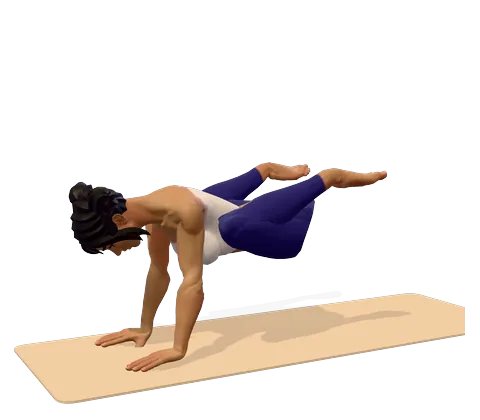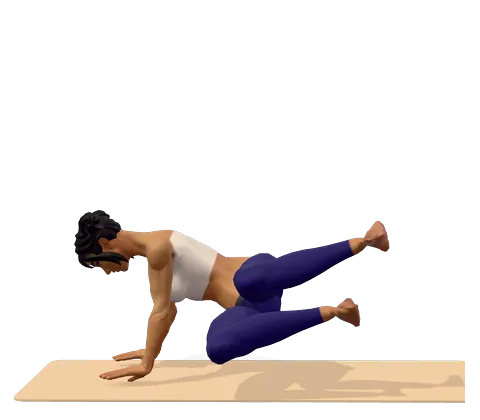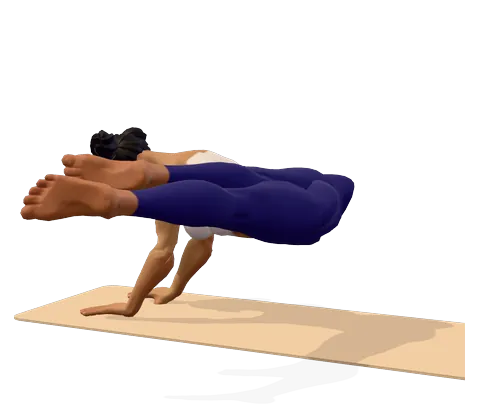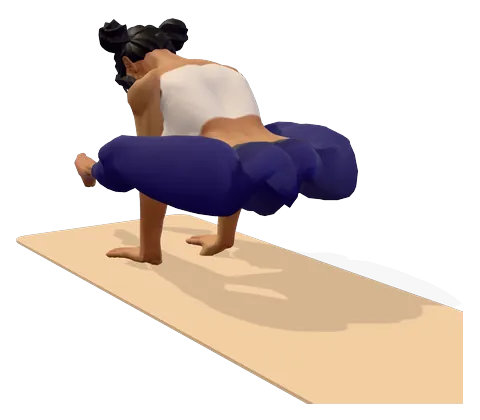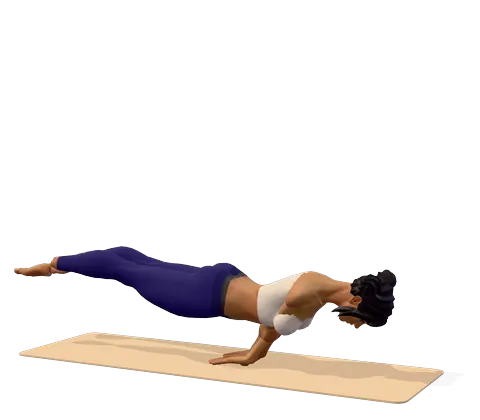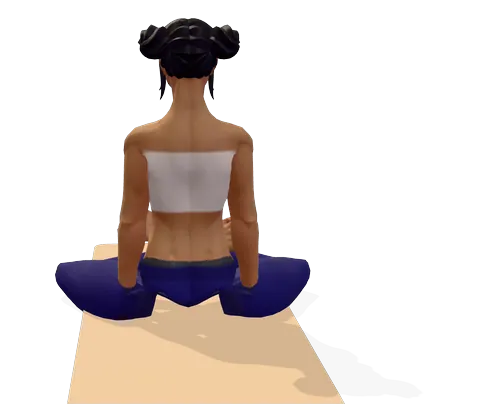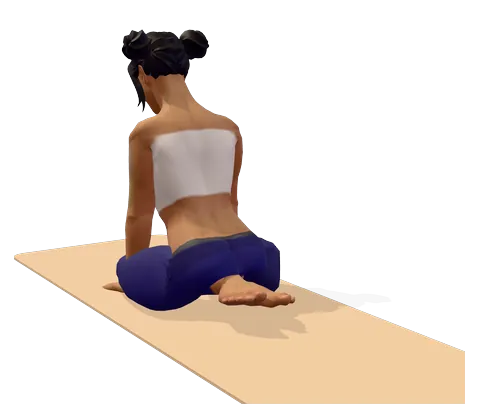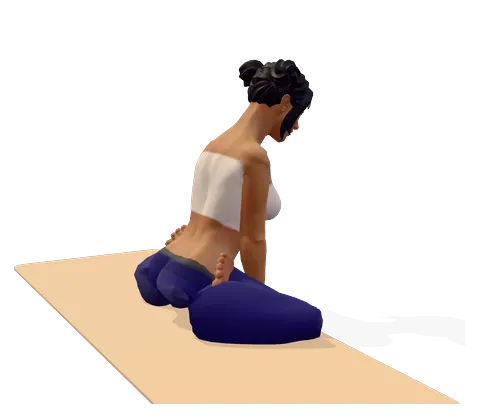
How to do Rooster Pose step by step
- Warm up your hips, knees and wrists first. Then sit in full lotus (Padmasana), with each foot high on the opposite thigh and your spine tall.
- Slide your right hand, fingers first, into the gap between your right thigh and calf, then do the same with your left hand. Work each arm through to the elbow if you can.
- Place both palms flat on the floor beside your hips, fingers spread wide and pointing forward. Your forearms should be close to vertical.
- Lean a little forward, firm your belly and press the floor away with your hands. Lift your hips and folded legs off the mat.
- Keep your chest lifted, shoulders away from your ears and your gaze straight ahead. Breathe evenly.
- Hold for 2–5 breaths (about 10 seconds). Lower your hips to the floor with control.
- Slide your arms out slowly, release the lotus one leg at a time and stretch your legs out in front of you. Shake out your wrists and knees.
Where you feel Rooster Pose: what it stretches and strengthens
Thread your arms through your lotus and press the floor away. In the 3D guide, turn on Body guide: areas that stretch glow green and areas that work glow saffron.
Stretches
- Knees
- Hip flexors
Strengthens
- Arms
- Wrists
- Abs
Benefits and precautions
Benefits
- Strengthens the arms, wrists and shoulders that hold your body weight
- Works the abdominal muscles that lift and steady the folded legs
- Keeps the hips and knees mobile for those who already sit comfortably in lotus
- Builds balance, concentration and body awareness
- Prepares you for other arm balances such as scale pose and crow pose
Avoid or modify if
- Any knee injury, meniscus tear, knee surgery or knee pain in lotus — do not practise
- Wrist, elbow or shoulder injury, or carpal tunnel syndrome
- Pregnancy — the folded legs press on the belly and the balance risks a fall
- Recent abdominal or hip surgery, or a hernia
- If you cannot sit in full lotus without pain for at least a minute, you are not ready for this pose
Rooster pose (Kukkutasana) is an advanced arm balance from classical Hatha Yoga. You sit in full lotus, thread your hands through the gaps between your thighs and calves, and lift your whole body onto your palms, so the folded legs hang like a rooster’s tail feathers. It needs open hips, healthy knees and strong wrists, so this page puts the prerequisites first and the balance second.
What is Kukkutasana? Meaning and origin
The Sanskrit name has two parts: kukkuta means "rooster" or "cockerel" and asana means "pose" or "seat". That is why you will also see it called cockerel pose in yoga books. The Hatha Yoga Pradipika, a 15th-century text, describes it in one line: sit in lotus, insert the hands between the thighs and knees, and rise up on the hands. The rooster posture has changed very little since then.
The rooster position meaning is quite literal. With your arms as legs and your lotus lifted behind them, the body looks like a bird standing on two thin legs with its chest puffed forward. In Hindi the rooster position is called कुक्कुटासन (Kukkutasana).
Do not confuse the yoga pose with golden rooster pose in tai chi and qigong. The tai chi rooster pose is a standing balance on one leg with the other knee lifted, and it is much gentler.
Before you try: prerequisites
Kukkutasana is a level-4 pose on this site. Try it only when all of these are true:
- You can sit in full lotus pose on both sides for a minute or more with no pain inside the knees. This is the non-negotiable part.
- You can hold scale pose (Tolasana), lifting your lotus off the floor with your hands beside your hips, for several breaths.
- You are steady in crow pose or pendant pose (Lolasana), so your wrists are used to carrying your weight.
- You can thread your arms through lotus while seated, as in embryo in womb pose (Garbhasana).
If any of these is missing, stay with the preparation below. Forcing lotus to reach an arm balance is one of the most common ways people injure a knee in yoga.
How to do Kukkutasana (Kukkutasana kaise kare)
The steps above take you in and out safely. These details decide whether you actually lift:
- Lotus high and tight. Draw each foot as close to the hip crease as it comfortably goes. A loose lotus leaves no room for the arms.
- Help the arms slide. Bare, slightly damp skin lets the forearms pass through more easily; traditional teachers sprinkled a little water on the legs.
- Spread the fingers. Press through the whole palm and the base of each finger so the wrists are not doing all the work.
- Lean forward before lifting. Shift your shoulders slightly ahead of your wrists, firm your belly and let your hips float up. Pushing straight down rarely works.
- Stay broad across the chest. Do not hunch; lift the breastbone and look ahead, like the rooster.
How long to hold
Two to five breaths is enough. The pose is a strength effort, and the knees and wrists tire quickly. Rest in a comfortable seat or child’s pose between attempts, and practise on both lotus sides on different days.
Kukkutasana benefits
The real rooster pose benefits are about strength and control. Holding your body on your hands trains the forearms, wrists and shoulders. Lifting a folded lotus asks the abdominal muscles and hip flexors to work hard. Staying balanced with the knees and hips locked in lotus builds focus. Traditional texts also praise the pose for "fire" in the belly; modern research on this pose alone does not exist, so treat claims about digestion or energy as tradition rather than proven fact.
Muscles worked
| Works (strengthens) | Stretches |
|---|---|
| Arms: triceps, biceps and forearm muscles | Knees and ankles (in the lotus fold) |
| Wrists and hands | Hip flexors and outer hips |
| Abdominal muscles and hip flexors | Tops of the feet |
| Shoulders and serratus anterior | — |
Press the Body guide button on the 3D figure to see the areas it works glow saffron and the areas it stretches glow green.
Rooster pose for beginners: a safer path
There is no true beginner version of Kukkutasana, but there is a clear route to it. Spend a few weeks on each stage:
- Hips and knees: bound angle pose, half lotus, then full lotus.
- Wrists and core: plank, crow pose and scale pose from a cross-legged seat.
- Arms through the legs: thread one arm only, keeping the other hand on the floor outside the leg, and lift just the hips.
- Full pose: thread both arms and lift for one breath, then build up.
Think of this page as an asana overview and tutorial, not a quick trick. If you are just starting your asana training, beginners get more from a gentler tutorial such as our yoga for beginners guide and the First Yoga Session on the practice page.
Rooster pose variations
- Scale pose (Tolasana): the same lift with the hands outside the legs. Rooster pose vs scale pose: scale is easier because the arms do not have to pass through the lotus.
- Upward rooster pose (Urdhva Kukkutasana): an Ashtanga and Iyengar variation. From headstand you fold lotus, lower it onto the backs of your upper arms and press up to balance on the hands, with the lotus resting high on the arms. Upward rooster pose in yoga is harder than Kukkutasana and needs a secure headstand as well.
Is rooster pose a yoga pose for back pain?
No. Kukkutasana is not a yoga asana for back pain, and it is not on any list of the best asanas for back pain relief, because the balance loads the wrists and knees and rounds the lower back under effort. If back pain is why you practise, choose gentle beginner yoga poses for back pain: child’s pose for back pain relief, cat and cow pose (cow pose benefits include gentle spinal extension and an open chest), and pigeon pose for lower back pain linked to tight hips. Chair yoga poses for back pain are another good option. Our yoga for back pain plan brings these poses together in one guided session.
Kukkutasana precautions and contraindications
The caution box above lists who should avoid this pose. The biggest risk is to the knee: if lotus is forced, the twist lands on the knee joint instead of the hip. Sharp pain inside or on the side of the knee means stop at once and release the legs slowly. Wrist pain is the second warning sign; if it appears, spend longer on plank and crow pose. See yoga for knee pain if your knees already hurt, and ask a physiotherapist before returning to lotus after an injury.
Is rooster yoga pose for kids? Not really. Children’s knees are still growing, so avoid forcing them into lotus; playful animal poses are a better choice.
कुक्कुटासन (Kukkutasana) — हिंदी में: पहले पद्मासन में बैठें। दोनों हाथों को जांघ और पिंडली के बीच से निकालकर हथेलियाँ ज़मीन पर रखें। हथेलियों पर ज़ोर देकर पूरे शरीर को ऊपर उठाएँ और 2–5 साँस तक रुकें। इससे बाजू, कलाइयाँ और पेट की मांसपेशियाँ मज़बूत होती हैं। घुटने में दर्द, चोट या गर्भावस्था में यह आसन न करें।
Frequently asked questions
How do you do rooster pose?
Sit in full lotus, slide your hands through the gaps between your thighs and calves, place your palms flat on the floor and press down to lift your hips and legs. Hold for a few breaths, lower down and release the lotus slowly.
What are the benefits of Kukkutasana?
The main rooster position benefits are stronger arms, wrists, shoulders and abdominal muscles. It also keeps the hips mobile for people already comfortable in lotus, and trains balance and focus. Claims about digestion come from tradition rather than research.
Is Kukkutasana difficult?
Yes. It is an advanced pose because it combines full lotus, arm threading and an arm balance. Most people need months of hip, wrist and core work first.
What is the difference between rooster pose and scale pose?
Both lift a lotus off the floor on the hands. In scale pose (Tolasana) the hands are outside the legs; in rooster pose they pass through the lotus, which needs more hip opening and stronger wrists.
Can I do rooster pose if I cannot sit in lotus?
No. Full lotus without knee pain is a must. Work on half lotus, bound angle pose and other hip openers, and practise scale pose from a cross-legged seat instead.
What is upward rooster pose?
Urdhva Kukkutasana is a harder variation entered from headstand: the lotus rests on the backs of the upper arms while you balance on your hands. Learn it only after a steady headstand and Kukkutasana.
What is rooster pose called in Hindi?
कुक्कुटासन (Kukkutasana). "Kukkut" means rooster and "asana" means pose.
This page is for general education. Check with your doctor before starting yoga if you are pregnant, have a medical condition or an injury. Stop if you feel pain, dizziness or shortness of breath.