Iyengar yoga is a style of hatha yoga that puts precise alignment first. Poses are held longer than in most classes, each one is taught in careful detail, and props — blocks, belts, blankets, bolsters, chairs and ropes on the wall — help every body find a safe version of the pose. That makes it one of the most adaptable styles for beginners, older students and people living with pain.
Iyengar yoga meaning, definition and founder
The style is named after B.K.S. Iyengar (1918–2014), who learned yoga as a sickly teenager from his brother-in-law, T. Krishnamacharya, and began teaching in Pune, India, in 1937. His 1966 book Light on Yoga described more than 200 poses with photographs and made Iyengar yoga known worldwide. In 1975 he opened an Iyengar yoga institute in Pune, which still trains teachers today.
So the Iyengar yoga meaning is simple: it is the method of one teacher, not a Sanskrit term. Its techniques rest on three ideas he stressed — alignment (the exact placement of each body part), sequencing (a logical order of poses) and timing (how long to stay).
What an Iyengar yoga class is like
Expect a calm, focused room and a teacher who demonstrates, then walks around adjusting details: "lift the kneecaps", "press the outer edge of the back foot down". A 60–90 minute class often has a theme, such as standing poses, forward bends, backbends or inversions.
- Beginners: Iyengar yoga for beginners starts with standing poses like Mountain Pose and Triangle Pose, which build strength and body awareness.
- Holds: Iyengar yoga poses (asanas) are held from 30 seconds to several minutes, with rests in between.
- Inversions such as supported shoulder stand are introduced slowly, on folded blankets to protect the neck.
- Breathing: Iyengar yoga breathing techniques (pranayama) usually come later, once your posture is steady.
Iyengar yoga props and the rope wall
Props and equipment are the signature of Iyengar yoga. A block brings the floor closer, a belt lengthens your arms, a folded blanket lifts the hips or protects the neck, a bolster supports you in rest, and a chair lets you twist or backbend safely — for example, Viparita Dandasana over a chair or bench. Many studios also have a rope wall: ropes fixed at different heights that let you hang in a supported forward bend or lengthen your spine in standing poses. The Iyengar yoga wall benefit is gentle traction without strain.
Is Iyengar yoga hard?
It is slow but not easy. You will rarely feel out of breath, yet holding Warrior II for a minute while thinking about ten small actions is mentally and physically tiring. Is Iyengar yoga suitable for beginners? Yes — arguably more than any other style, because nothing is rushed and every pose has a supported version. Iyengar yoga asks for patience and discipline rather than fitness.
Iyengar yoga benefits: what the research says
Iyengar yoga is one of the better-studied styles, mainly because its standardised teaching is easy to repeat in trials of therapeutic benefits.
- Lower back pain: randomised trials of Iyengar yoga programmes for chronic lower back pain have reported less pain and disability than usual care.
- Neck pain and posture: small trials suggest it can ease chronic neck pain, and the focus on alignment helps many people notice and correct slouching. See yoga for posture.
- Arthritis: small pilot studies, including one of Iyengar yoga in young women with rheumatoid arthritis, found improvements in pain and wellbeing; larger studies are needed.
- Balance and strength: long standing holds build leg strength and steadiness, so Iyengar yoga for seniors is widely recommended.
What is Iyengar yoga good for, then? Mainly pain, posture, mobility and a calm mind. Is Iyengar yoga good for weight loss? Not directly — it burns few calories — but it builds strength and body awareness that support other activity.
With spinal stenosis, supported forward bends in Iyengar yoga often feel better than backbends, but ask your physiotherapist first. Therapy classes for specific conditions are taught by senior teachers.
Who Iyengar suits, and who should take care
Iyengar yoga suits beginners, seniors (chair-based versions are common), people with stiff bodies, and anyone recovering from injury who wants clear, safe instructions. Keen athletes sometimes find it slow; if you want to sweat, try Vinyasa yoga.
Tell your teacher about any injury, surgery or pregnancy. Skip headstand and shoulder stand with high blood pressure, glaucoma, neck problems or during a migraine, and ask your doctor before starting if you have heart disease or osteoporosis.
A 30-minute Iyengar yoga sequence at home
This Iyengar yoga sequence for beginners uses household props: a thick book or block, a belt or scarf, two firm blankets and a wall. Hold standing poses for 30–60 seconds each side.
- Mountain Pose with your back against the wall: feel your heels, buttocks and shoulder blades touch it.
- Triangle Pose with your lower hand on a block and your back to the wall.
- Extended Side Angle Pose, forearm resting on the front thigh.
- Warrior II, then Pyramid Pose with your hands on a chair seat.
- Downward-Facing Dog with your head resting on a block.
- Bridge Pose with a block under your sacrum for two minutes.
- Legs-up-the-wall on a folded blanket for three to five minutes, then Savasana.
The 3D figure lets you check each shape from every side. Build this list in the session builder, or follow the Back Pain Relief session on the guided practice page. For a daily Iyengar yoga home practice, 20 minutes of standing poses is a solid base.
Iyengar vs vinyasa and restorative yoga
Is Iyengar yoga hatha yoga? Yes — it is a school of hatha, with more detail and props. Is it vinyasa? No. Iyengar vs vinyasa yoga is precision versus flow: vinyasa moves on every breath, while Iyengar stops and refines each pose.
How is Iyengar different from restorative yoga? Restorative grew out of Iyengar's supported poses, but it keeps only the resting, fully propped part. Iyengar also includes active standing work, backbends and inversions.
Iyengar yoga meaning and benefits in Hindi:
अयंगर योग (Iyengar Yoga) — हिंदी में: यह योग शैली बी.के.एस. अयंगर के नाम पर है, जिन्होंने पुणे में पढ़ाया। इसमें हर आसन को सही संरेखण (alignment) के साथ, ब्लॉक, बेल्ट, कंबल, कुर्सी और दीवार की रस्सियों की मदद से किया जाता है। अयंगर योग के फायदे: कमर दर्द और गर्दन दर्द में राहत मिल सकती है, मुद्रा (posture) सुधरती है और संतुलन बढ़ता है। शुरुआती और बुज़ुर्ग लोग भी इसे सुरक्षित रूप से कर सकते हैं।
Other types of yoga
Poses you will meet in Iyengar Yoga
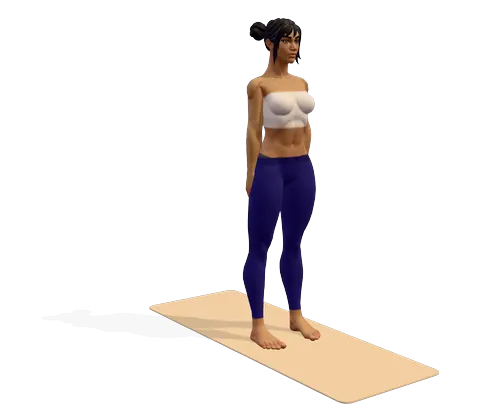 Mountain PoseTadasana
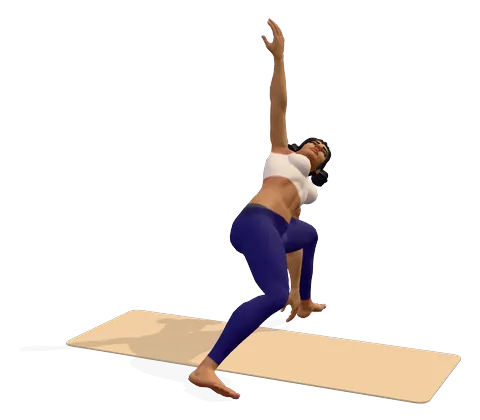 Triangle PoseTrikonasana
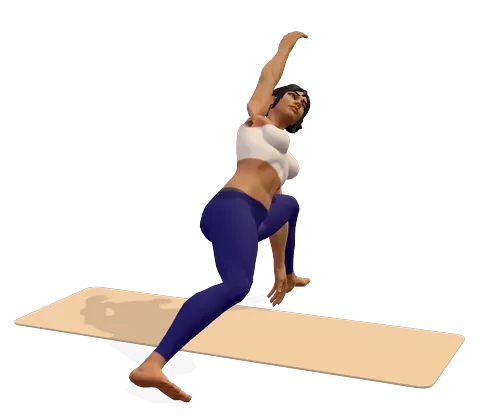 Extended Side Angle PoseUtthita Parsvakonasana
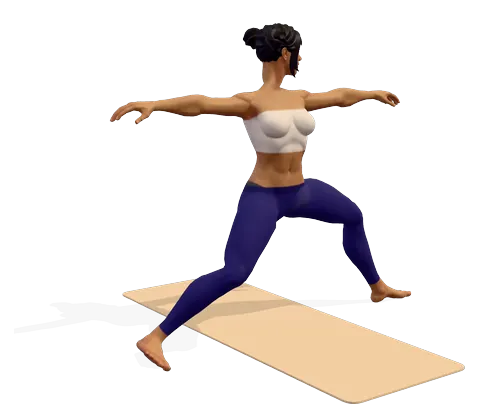 Warrior II PoseVirabhadrasana II
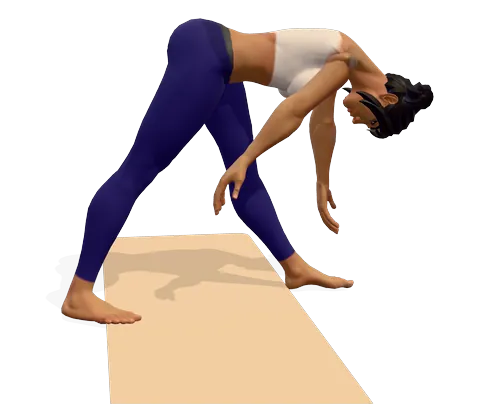 Pyramid PoseParsvottanasana
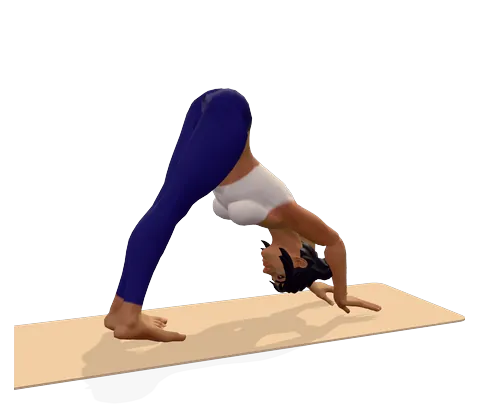 Downward-Facing Dog PoseAdho Mukha Svanasana
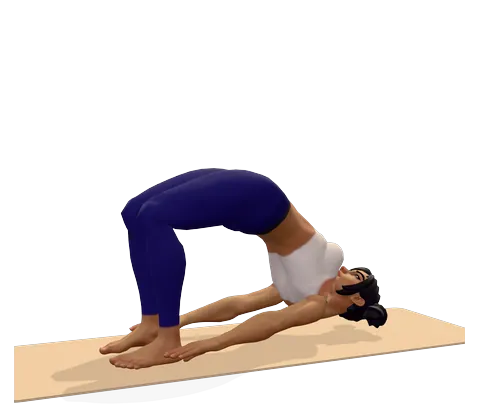 Bridge PoseSetu Bandhasana
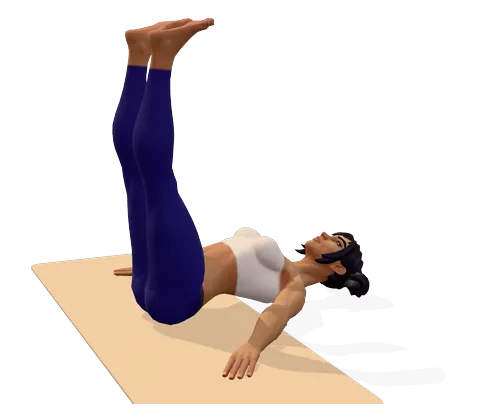 Legs-Up-the-Wall PoseViparita Karani
Frequently asked questions
What is Iyengar yoga in simple words?
A slow, precise style of hatha yoga created by B.K.S. Iyengar, in which you hold poses longer and use props such as blocks, belts and chairs to get the alignment right.
Is Iyengar yoga good for beginners?
Yes. Clear instructions, longer holds and props make it one of the safest ways to learn the basic poses.
What are the benefits of Iyengar yoga?
Trials suggest it can ease chronic lower back and neck pain. It also improves posture, strength, balance and body awareness, and calms the mind.
How is Iyengar yoga different from other styles?
It focuses on exact alignment, logical sequencing and timing, and it uses more props than any other style. It rarely flows from pose to pose.
Can I practise Iyengar yoga at home without props?
Yes. Use a thick book as a block, a belt or scarf as a strap, folded blankets for height, and a wall or sturdy chair for support.
How do I learn Iyengar yoga?
Learn the standing poses first, a few at a time, and practise daily. A certified teacher can check details a 3D model cannot.