Face yoga is a set of facial exercises, gentle self-massage and relaxation techniques for the muscles of the face and neck. You hold expressions such as a lifted smile or puffed cheeks for a few breaths, then massage and release. It is free and easy to try, but the results are smaller and slower than social media suggests.
What is face yoga?
Many small facial muscles attach directly to the skin. The idea is that working them, like any muscle, may make them slightly fuller and firmer, while massage and relaxation release tension in the jaw and forehead. Typical face yoga techniques include:
- Toning: holding shapes such as a closed-lip smile or a lifted jaw against light resistance from your fingers.
- Massage: gentle strokes from the centre outwards, which face yoga teachers call lymphatic drainage.
- Relaxation: softening the brow, unclenching the teeth and slow breathing.
Is face yoga really yoga?
Only partly. Most exercises are modern inventions, but one comes straight from classical Hatha yoga: Simhasana, the lion pose, where you open the mouth wide, stretch the tongue down and breathe out with a roar. The yoga part is mainly the attention to breath and relaxation. Do not confuse it with cow face pose (Gomukhasana), a seated hip and shoulder stretch; cow face pose yoga for beginners has nothing to do with facial muscles.
Does face yoga work? What the research says
The best-known evidence is one small study published in JAMA Dermatology in 2018 by Alam and colleagues. Women aged 40 to 65 did 30 minutes of facial exercises every day for 8 weeks, then every other day until week 20, after training with an instructor. Of 27 women who enrolled, 16 completed the programme. Dermatologists rating their photos judged that upper and lower cheek fullness had improved, and the women's estimated age fell on average from about 50.8 to 48.1 years.
That is encouraging, but the authors themselves point out the limits: the group was small, many people dropped out, all were middle-aged women and there was no control group. So is face yoga effective? Possibly, a little, for cheek fullness, if you practise for months. It is not a proven anti-ageing treatment, and there is no good evidence for the dramatic face yoga before and after photos seen online.
Is face yoga a scam, or is it legit and real? The exercises are harmless and may help slightly; be wary of courses or apps that promise to "lift" your face in days or replace medical treatments.
Face yoga benefits: what is realistic
Face yoga exercises for cheeks, skin and glow
Face yoga for cheeks has the best, if still limited, evidence. Massage brings blood to the skin for a short time, which is why face yoga fans describe glowing skin afterwards, but that flush fades within the hour. Regular sun protection matters more for skin ageing than any exercise.
Double chin, jowls and jawline
A double chin and jowls are mostly fat, loose skin and genetics, and exercise cannot burn fat from one spot. Face yoga for double chin may slightly tone the muscles under the jaw and remind you to hold your head up, which improves how the jawline looks. See yoga for posture for tech neck, which pushes the chin forward.
Wrinkles, nasolabial folds and eyes
Lines on the forehead and between the brows come partly from repeated frowning, so relaxing those muscles is more useful than exercising them. Face yoga for forehead wrinkles is mainly about noticing and softening tension. Face yoga for nasolabial folds and marionette lines is unproven.
Gentle massage may reduce morning puffiness for a while, but face yoga for under-eye bags or hooded eyes cannot change their structure. For tired eyes from screens, see yoga for eye strain.
Relaxation
This may be the most reliable benefit. Many of us clench the jaw and frown while working. Combining face yoga with breathing techniques can ease tension; pair it with Bhramari breathing, which also relaxes the face.
How to do face yoga (face yoga kaise karte hain): a 10-minute daily routine
These face yoga exercises for beginners at home suit men and women over 50 or 60, and seniors too. Wash your hands and face first, sit tall in easy pose or on a chair, and breathe through your nose.
- Jaw release (1 min): let your teeth part, tongue resting behind the upper teeth, and massage the jaw muscles in small circles.
- Forehead smoother (1 min): place your fingertips in the centre of your forehead and glide them slowly out to the temples.
- Cheek lifter (1 min): smile with closed lips, rest your fingers on the top of your cheeks and hold for 5 breaths.
- Fish face (1 min): suck in your cheeks and try to smile; hold for 5 seconds, repeat 5 times. Fish face yoga benefits are said to be for the cheek muscles.
- Balloon (1 min): fill your mouth with air and move it from cheek to cheek. Balloon face yoga benefits are mainly for the cheeks and lips.
- Neck and jawline (1 min): tilt your head back, push your lower lip up and feel the front of the neck stretch. Skip this if you have neck problems.
- Lion's breath (1 min): 3 rounds of Simhasana.
- Massage and rest (3 min): with a little oil or moisturiser, stroke gently from the centre outwards and down the sides of the neck, then close your eyes and breathe.
A few face yoga tips: hold face yoga poses gently, never tug the skin, and practise in the morning for puffiness or at night time to unwind. The study used daily practice for 8 weeks, then every other day.
Skip the massage over active acne, rosacea, eczema or broken skin. If you have jaw pain (TMJ) or recent fillers, Botox or facial surgery, ask your doctor or practitioner first.
Face yoga benefits in Hindi (face yoga ke fayde) — फेस योगा के फायदे: फेस योगा में चेहरे की मांसपेशियों की हल्की कसरत, मालिश और आराम शामिल है। इसे करने के लिए सीधे बैठें, होंठ बंद करके मुस्कुराएँ, गाल फुलाएँ और अंत में सिंहासन (लायन पोज़) करें। एक छोटे अध्ययन में 20 हफ़्ते के अभ्यास से गाल थोड़े भरे हुए दिखे, पर यह कोई चमत्कार नहीं है। इसे सुबह या रात को 10 मिनट करें। मुँहासे या जबड़े में दर्द हो तो न करें।
Other types of yoga
Poses you will meet in Face Yoga
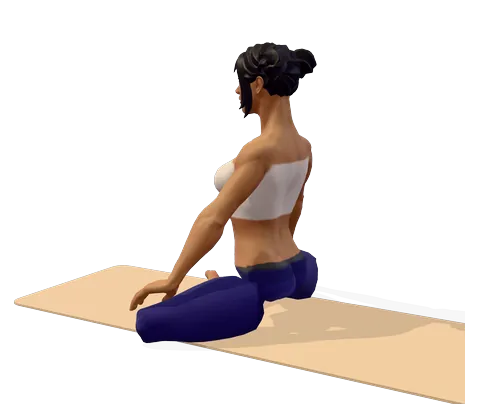 Easy PoseSukhasana
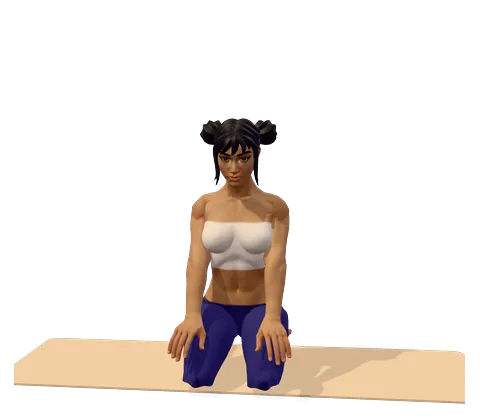 Lion PoseSimhasana
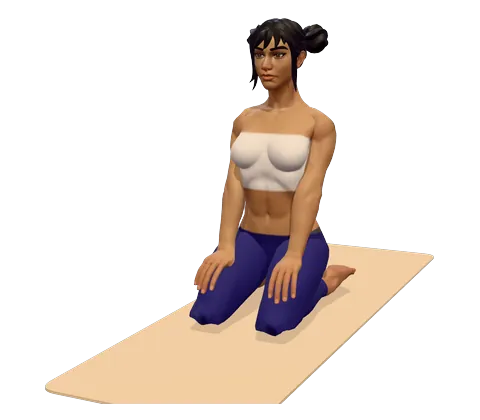 Thunderbolt PoseVajrasana
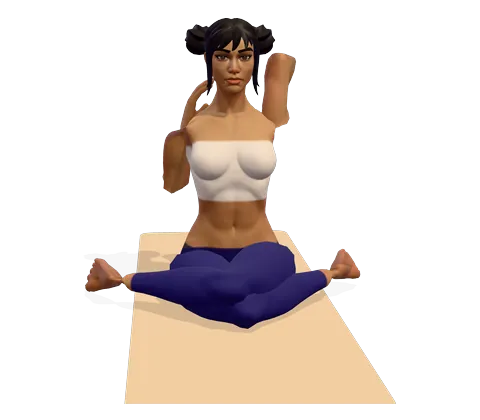 Cow Face PoseGomukhasana
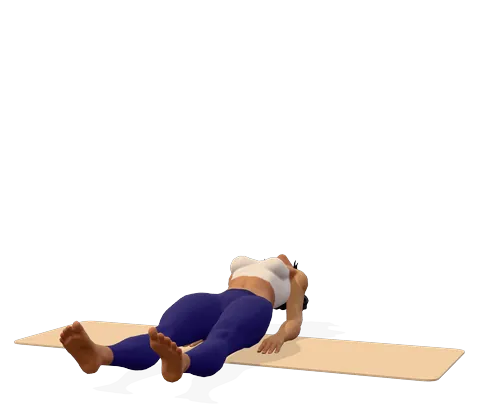 Fish PoseMatsyasana
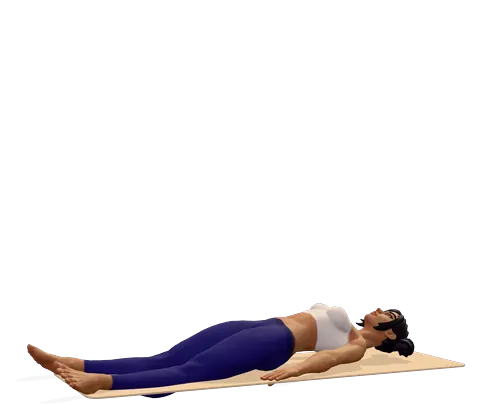 Corpse PoseSavasana
Frequently asked questions
What is face yoga and does it work?
It is a routine of facial exercises, massage and relaxation. One small 2018 study found improved cheek fullness after 20 weeks of regular practice, but it had no control group. It may help a little, especially for relaxation; it is not a facelift.
Can face yoga reduce face fat or a double chin?
Not directly. No exercise burns fat from one area. Toning the muscles under the jaw and better posture can make the jawline look sharper, but overall weight and genetics matter far more.
How long does face yoga take to show results?
In the study, participants practised for 20 weeks. Expect subtle changes after a few months at best. Any glow straight after a session comes from blood flow and fades.
When should I do face yoga (face yoga kab karna chahie)?
Any time that suits you. Morning practice helps with puffiness; practising at night helps you relax before sleep. Ten minutes on most days is enough.
Is face yoga good for your face and safe?
For most people, yes. Use clean hands, light pressure and no pulling. Avoid massage on inflamed skin, and ask your doctor first after fillers, Botox or facial surgery, or with jaw pain.
Can face yoga make wrinkles worse?
Repeated frowning helps create lines, so avoid exercises that crease the forehead. Focus on relaxing the brow and on lower-face toning.