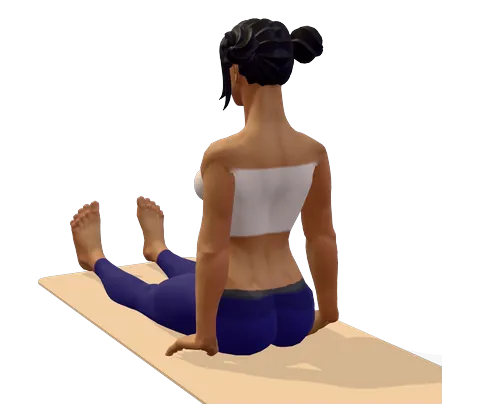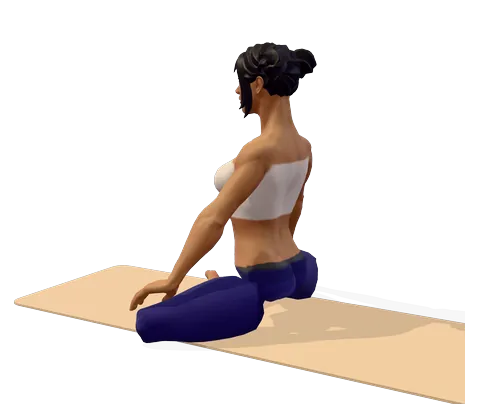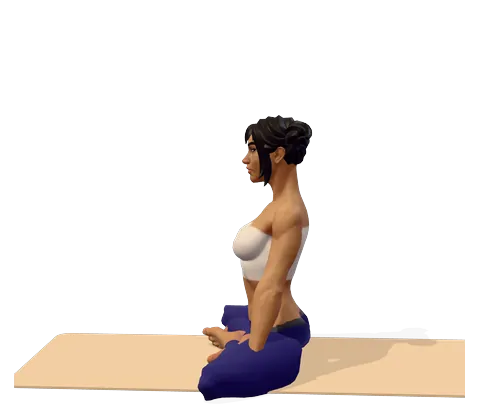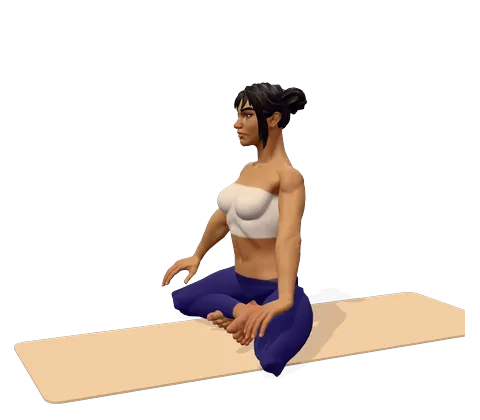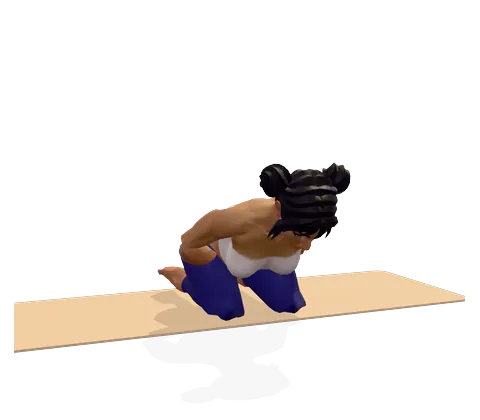
How to do Seated Frog Pose step by step
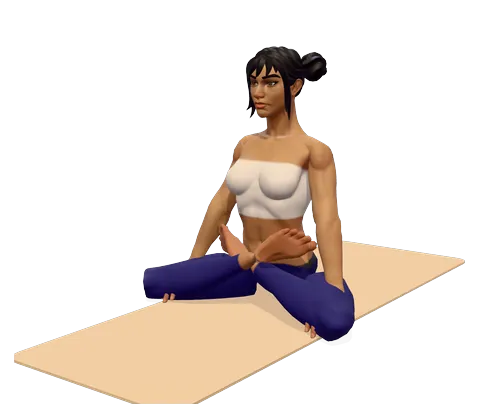
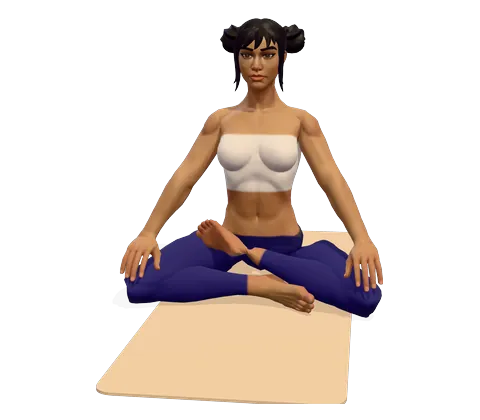
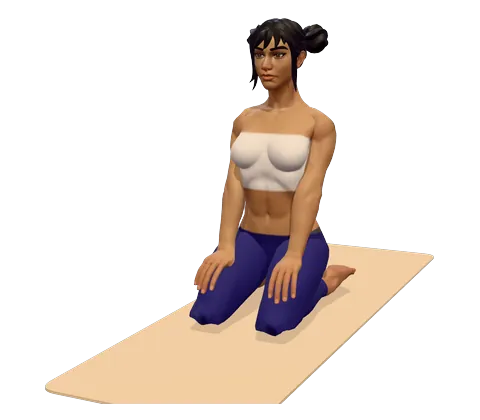
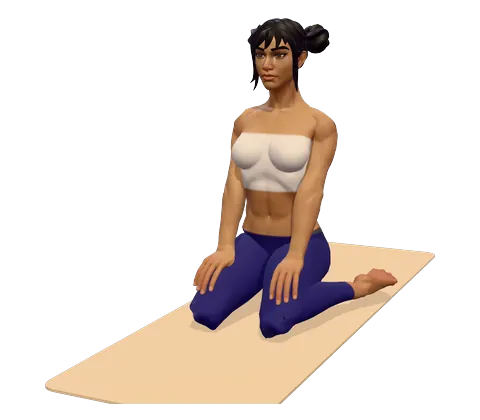
- Kneel and sit back on your heels in Vajrasana, knees together, spine tall.
- Make a fist with each hand, thumbs tucked inside the fingers.
- Place both fists on your belly, one on each side of the navel, knuckles facing each other and pressing gently in.
- Breathe out and fold forward from the hips, bringing your chest toward your thighs so the fists press into the belly.
- Keep your head up and look forward, with the neck long. Keep your buttocks on your heels.
- Hold for 10–20 seconds (2–4 breaths), breathing gently. Do not strain.
- Breathe in and slowly come up to sitting. Relax your hands on your thighs. Repeat two or three times.
Where you feel Seated Frog Pose: what it stretches and strengthens
Press your fists into your belly and fold forward, looking ahead. In the 3D guide, turn on Body guide: areas that stretch glow green and areas that work glow saffron.
Stretches
- Lower back
- Ankles
- Knees
Strengthens
- Abs
Benefits and precautions
Benefits
- Stretches the lower back and the front of the ankles
- Gives the knees a gentle bend in a supported kneeling seat
- Works the abdominal muscles as you fold against the fists
- Traditionally used to massage the belly and support digestion
- Quick and simple, easy to add to a daily routine
Avoid or modify if
- Recent abdominal surgery, hernia or stomach ulcer — avoid
- Pregnancy — avoid; the fists press into the belly
- Knee or ankle injury — sit on a cushion between the heels and buttocks, or do the fold sitting on a chair
- Slipped disc or acute low back pain — avoid the fold or keep it very small
- High blood pressure, heart disease or glaucoma — keep the fold short and your head above your heart; ask your doctor first
- Practise on an empty stomach, two to three hours after a meal
Mandukasana, the seated frog pose, is a kneeling forward bend in which you sit on your heels, press both fists into your belly and fold forward while looking ahead, so the body looks like a frog sitting on the ground. It is a common pose in Indian yoga programmes and is often taught for digestion and as part of routines for people with diabetes. This page covers the Mandukasana meaning, the procedure, the benefits, the precautions and how it differs from other frog poses in yoga.
Mandukasana meaning (Mandukasana in English)
In Sanskrit, manduka means frog and asana means pose, so Mandukasana in English is frog pose. It is also written Manduk asana or Mandook asana, and in Hindi it is मण्डूकासन. Because there are several different "frog poses" in modern yoga, this one is often called seated frog pose or sitting frog pose to avoid confusion.
How to do Mandukasana: procedure and tips
The steps above give the full Mandukasana procedure, as the 3D figure shows it. The correct way to do frog pose in this form is to keep the fists firm, the buttocks down and the gaze forward. These frog pose tips help:
- Fists beside the navel. Place them on either side of the belly button, not on the ribs or the hip bones.
- Fold from the hips. Lead with the chest. The pressure on the belly comes from the fold, not from pushing with the arms.
- Look ahead. Keeping the head up is part of the pose and keeps the back long. Do not crunch the neck; lift the chin only slightly.
- Buttocks stay on the heels. If they lift, fold a little less.
- Breathe gently. Some teachers ask you to hold the breath out in the fold. Beginners should keep breathing normally.
Mandukasana prep: sit in Vajrasana for a minute first so the knees and ankles are ready, and practise on an empty stomach, ideally in the morning.
Mandukasana benefits
What does the frog pose do? The main Mandukasana benefits are a gentle stretch for the lower back and ankles, a supported bend for the knees, and work for the abdominal muscles as you fold against your fists. The fists press into the belly, which many yoga traditions describe as a massage for the digestive organs. As a frog pose exercise, its benefits come from doing it regularly and gently, not from pressing harder.
The health benefits of Mandukasana are often linked with blood sugar: Mandukasana is widely recommended in Indian yoga programmes for diabetes and digestion. It may be a useful part of a regular practice, but there is no good evidence that this single pose lowers blood sugar or cures any condition. If you have diabetes, keep taking your prescribed medicine and see our yoga for diabetes plan. For bloating or constipation, see yoga for digestion.
What muscles does frog pose stretch?
| Stretched | Worked |
|---|---|
| Lower back | Abdominal muscles |
| Front of the ankles and feet | |
| Knees (a deep but supported bend) |
Is frog pose good for you, or bad for you?
For most healthy adults, men and women alike, this frog sitting position is safe and its benefits are simple: a short stretch and a gentle belly squeeze. It can be bad for you if you have had recent abdominal surgery, a hernia, a stomach ulcer or a knee injury, or if you are pregnant. See the precautions below.
Uttana Mandukasana (Uttan Mandukasana) for beginners
Uttana Mandukasana (stretched-up frog pose) is a related pose. You kneel with the knees wide apart and the big toes touching, sit between your feet, then lift your arms, fold them behind your head and hold each opposite shoulder. The back stays upright. Uttan Mandukasana benefits include a stretch for the inner thighs, shoulders and chest and an upright posture for breathing.
For Uttan Mandukasana for beginners, sit on a cushion and open the knees only as far as they are comfortable. Uttan Mandukasana precautions: avoid it with knee, hip or shoulder injuries.
Mandukasana vs Bhekasana and other frog poses
- Mandukasana vs Bhekasana: Bhekasana is lying on the belly, bending the knees and pressing the feet down beside the hips, a strong thigh stretch. Yoga half frog pose (Ardha Bhekasana) does it one leg at a time.
- Wide-knee frog: in many gyms, "frog pose in yoga" means a wide-knee hip stretch on the forearms, often done with a bolster under the chest. Frog pose with bolster is a strong inner-thigh stretch, very different from Mandukasana.
- Frog pose vs crow pose: crow pose is an arm balance with the knees on the backs of the arms. People also compare crow pose vs frog stand, a gymnastics version with bent elbows. Both need strong arms; Mandukasana needs none.
Frog pose for kids
Kids enjoy sitting like a frog and "looking for flies". Keep the frog yoga pose for kids short and playful, without strong pressure on the belly. See yoga for kids for more animal poses.
Mandukasana precautions and contraindications
Mandukasana pose precautions come mainly from the belly pressure and the knee bend. Mandukasana contraindications include pregnancy, recent abdominal surgery, hernia, stomach ulcer and knee or ankle injuries. With a slipped disc or acute back pain, skip the fold. Frog pose for back pain is not a first choice; gentler asanas for back pain relief are in our yoga for back pain plan.
मण्डूकासन (Mandukasana in Hindi): वज्रासन में बैठें, दोनों हाथों की मुट्ठी बनाकर नाभि के दोनों ओर पेट पर रखें। साँस छोड़ते हुए आगे झुकें और सामने देखें। 10–20 सेकंड रुकें, फिर साँस लेते हुए ऊपर आएँ। मण्डूकासन के फायदे (Mandukasana benefits in Hindi): पेट की मांसपेशियों पर काम, कमर और टखनों में खिंचाव, और पाचन में सहायता। गर्भावस्था, पेट के ऑपरेशन या हर्निया में यह आसन न करें।
Where this practice is used
Chakras: Svadhisthana (Sacral Chakra)
Frequently asked questions
What is Mandukasana in English?
Mandukasana means frog pose (manduka means frog). It is also called seated frog pose or sitting frog pose.
What are the benefits of Mandukasana?
It stretches the lower back and ankles, gently bends the knees and works the abdominal muscles. It is traditionally used to support digestion, but it is not a cure for any disease.
Is Mandukasana good for diabetes?
It is often included in yoga programmes for diabetes. Regular yoga may help as part of treatment, but no single pose lowers blood sugar by itself. Keep taking your prescribed medicine.
How long should I hold Mandukasana?
Hold for 10–20 seconds and repeat two or three times, with a short rest sitting up in between.
Who should not do Mandukasana?
Avoid it in pregnancy, after abdominal surgery, and with a hernia, stomach ulcer, knee or ankle injury, or acute back pain.
What is the difference between Mandukasana and Bhekasana?
Mandukasana is a kneeling forward fold with fists pressed into the belly. Bhekasana is done lying on the belly, pressing the feet down beside the hips.
When is the best time to do Mandukasana?
In the morning on an empty stomach, or at least two to three hours after a meal.
This page is for general education. Check with your doctor before starting yoga if you are pregnant, have a medical condition or an injury. Stop if you feel pain, dizziness or shortness of breath.