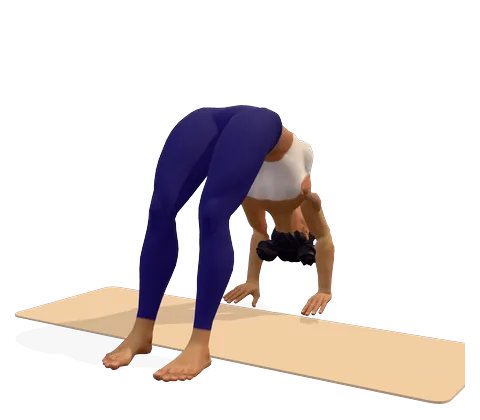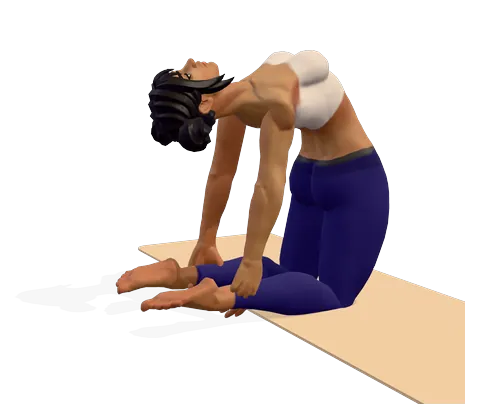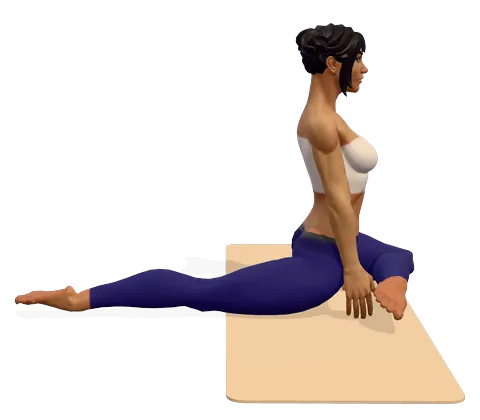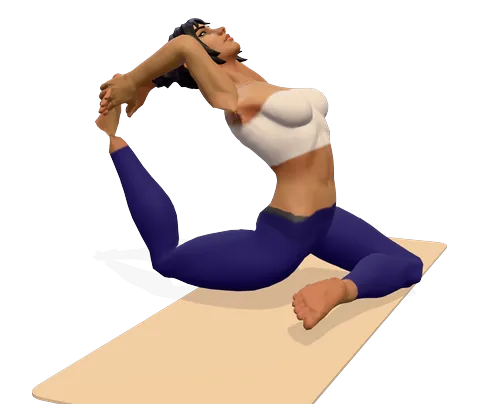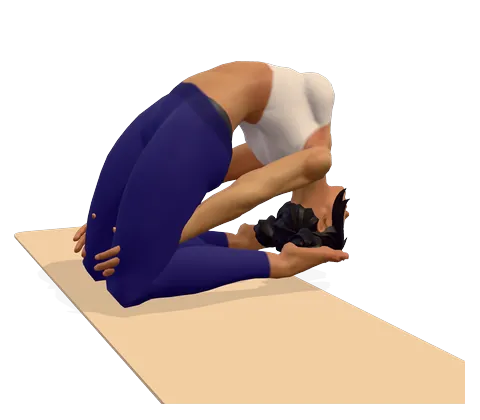
How to do Little Thunderbolt Pose step by step
- Warm up fully with backbends and thigh stretches. Kneel with your knees hip-width apart, thighs upright and the tops of your feet on the mat.
- Place your hands on your lower back, lift your chest and come into a gentle camel pose, hips pressing forward.
- Slide your hands down and hold your knees (some styles hold the ankles or shins instead). Keep your arms straight.
- Breathe out and, with strong thighs, arch back slowly. Let your head drop back and lower the crown of your head toward the floor near your feet.
- Rest the top of your head lightly on the mat, or stop above it. Keep pressing the hips forward so the thighs carry your weight.
- Hold for 3–5 breaths (about 15 seconds), breathing smoothly into the chest.
- To come up, breathe in, press the knees and shins down, lead with your chest and lift your head last. Sit back on your heels and rest in child's pose.
Where you feel Little Thunderbolt Pose: what it stretches and strengthens
Hold your knees and lower the crown of your head toward your feet. In the 3D guide, turn on Body guide: areas that stretch glow green and areas that work glow saffron.
Stretches
- Front thighs
- Hip flexors
- Chest
- Neck
Strengthens
- Lower back
- Glutes
Benefits and precautions
Benefits
- Deeply stretches the thighs (quadriceps), hip flexors, chest and front of the neck
- Builds great strength in the thighs, glutes and back muscles that lower and lift you
- Opens the front of the body in preparation for Kapotasana
- Teaches control in a backbend: every part of the way down and up is slow
- Can feel energising, as backbends often do
Avoid or modify if
- Advanced — only after a comfortable, steady camel pose; not for beginners or children
- Neck injury or neck pain — avoid; the neck bends fully back and may take some weight
- Back injury, spondylolisthesis or disc problems — avoid
- High or low blood pressure, heart disease, glaucoma, migraine or dizziness — avoid; the head goes below the heart
- Knee injury or pain when kneeling — avoid
- Pregnancy — avoid
Little thunderbolt pose (Laghu Vajrasana) is an advanced kneeling backbend. From a camel-like position you hold your knees and arch back until the crown of your head comes down toward the floor near your feet. The backbend is deep, but the real challenge is strength: your thighs have to lower you and lift you up again with control. This guide explains the name, the prerequisites, the steps, the benefits and who should not try it.
What is little thunderbolt pose?
In Sanskrit, laghu means "little" or "light", vajra means "thunderbolt" (also "diamond") and asana means "pose". What does thunderbolt mean here? The vajra is the weapon of the god Indra in Indian mythology, a symbol of unbreakable strength, hard as a diamond. The name suits a pose that needs strong legs and a firm will. Laghu Vajrasana meaning is therefore "little thunderbolt pose".
Little thunderbolt pose in yoga is best known from the Ashtanga intermediate series: Laghu Vajrasana in Ashtanga comes after camel pose (Ustrasana) and before Kapotasana. The 3D guide shows the form with the hands on the knees and the head arching back toward the feet.
Laghu Vajrasana vs Vajrasana
The names are similar, but the poses are very different. What is thunderbolt pose? Vajrasana is a simple kneeling seat: you sit on your heels with a straight back. How to do Vajrasana (or how to perform Vajrasana correctly): kneel, bring your big toes together, let your heels move slightly apart and sit back between them with your hands on your thighs. The benefits of sitting in Vajrasana include a steady, upright posture, and it is the one pose traditionally recommended after meals to support digestion. Vajrasana suits almost everyone, while Laghu Vajrasana is for experienced practitioners only.
| Pose | Shape | Level |
|---|---|---|
| Vajrasana (thunderbolt or diamond pose) | Sitting on the heels, spine upright | Beginner |
| Supta Vajrasana | From Vajrasana, lying back onto the floor | Intermediate |
| Laghu Vajrasana | Kneeling tall, arching back, head toward the feet | Advanced |
Laghu Vajrasana vs Supta Vajrasana: both stretch the thighs, but in Supta Vajrasana you sit on your heels and lie back with support, while in Laghu Vajrasana you stay kneeling tall and hold the whole backbend with your legs. Laghu Vajrasana vs Kapotasana: Kapotasana goes further, with the hands on the heels and the forearms on the floor.
Hero pose vs thunderbolt pose
In thunderbolt pose you sit on your heels. In hero pose (Virasana) your feet are wider than your hips and you sit on the floor between them, which asks more of the knees.
Laghu Vajrasana prerequisites
There is no little thunderbolt pose for beginners, and no shortcut version of Laghu Vajrasana for beginners either. You should be able to do these first, without pain:
- Camel pose with both hands on the heels, hips over the knees, for five calm breaths.
- Lower from kneeling tall toward the floor a little way and come back up using only your thighs, with your arms crossed on your chest.
- A deep thigh and hip-flexor stretch such as low lunge and Supta Vajrasana.
- Look back comfortably with the neck in a long curve, with no pain or dizziness.
The neck is the weak point in this pose. Never drop your head back suddenly or put your full weight on it. If you feel neck pain, pinching in the lower back, or dizziness, stop and stay with camel pose.
How to do Laghu Vajrasana (Laghu Vajrasana kaise kare)
The steps above follow the 3D guide. Important details:
- Hips forward. The further forward the hips stay, the more the thighs work and the less the lower back is squeezed.
- Straight arms. Holding the knees with straight arms keeps your shoulders open and gives you a lever to come back up.
- Slow all the way. Laghu Vajrasana hold time is short, but take several breaths to lower and to rise. Speed is where injuries happen.
- Head light. The crown of the head only touches the floor. Your legs hold you.
- Come up chest first. Breathe in and lift the chest, then the head.
Earlier stages
Practise going halfway back and returning, many times, before you try to reach the floor. A folded blanket or a block under the head reduces the distance and the strain on the neck.
Little thunderbolt pose benefits and Laghu Vajrasana muscles
| Stretches | Works |
|---|---|
| Quadriceps and hip flexors | Quadriceps (holding the weight) |
| Chest and abdomen | Glutes |
| Front of the neck | Muscles along the lower back |
Beyond these physical effects, deep backbends are said to be energising, but there is no research on this specific pose. Thunderbolt pose benefits, such as easier digestion after meals, belong to seated Vajrasana, not to this backbend. Press the Body guide button on the 3D demo to see the stretched areas glow green and the working areas glow saffron.
Laghu Vajrasana contraindications
Little thunderbolt pose contraindications and Laghu Vajrasana precautions are in the caution box above. Avoid this pose with any neck, back or knee problem, in pregnancy, and with blood pressure problems, heart disease, glaucoma or migraine, because the head goes below the heart. It is not one of the little kid yoga poses either; children should stick to gentle backbends such as cobra. After practising, rest in child's pose.
लघु वज्रासन (Laghu Vajrasana) — हिंदी में: घुटनों के बल खड़े हों, हाथों से घुटने पकड़ें और धीरे-धीरे पीछे झुकते हुए सिर का ऊपरी भाग पैरों के पास ज़मीन की ओर ले जाएँ। जाँघों की ताक़त से धीरे-धीरे ऊपर आएँ। लघु वज्रासन के फायदे (Laghu Vajrasana ke fayde): जाँघ, कूल्हे और छाती में गहरा खिंचाव और जाँघों में ताक़त। यह कठिन आसन है; गर्दन, कमर या घुटने की समस्या, रक्तचाप और गर्भावस्था में न करें। साधारण वज्रासन के फायदे (vajrasana benefits in Hindi) इससे अलग हैं: वज्रासन में एड़ियों पर सीधे बैठते हैं और भोजन के बाद यह पाचन में मदद करता है।
Frequently asked questions
What is Laghu Vajrasana?
Laghu Vajrasana, or little thunderbolt pose, is an advanced kneeling backbend. You hold your knees and arch back until the crown of your head comes toward the floor near your feet.
What are the benefits of little thunderbolt pose?
It deeply stretches the thighs, hip flexors, chest and front of the neck, and builds strong thighs, glutes and back muscles. It also prepares you for Kapotasana.
Is Laghu Vajrasana the same as Vajrasana?
No. Vajrasana is a simple kneeling seat on the heels that most people can do. Laghu Vajrasana is an advanced backbend that only shares the name vajra, thunderbolt.
What are the benefits of Vajrasana yoga?
Vajrasana benefits in English, in short: it gives a steady, upright seat for breathing and meditation, gently stretches the thighs and ankles, and is traditionally used after meals to support digestion.
What should I be able to do before Laghu Vajrasana?
A steady camel pose with hands on the heels, controlled lowering and lifting from kneeling using your thighs, and a pain-free neck when looking back.
How long should I hold little thunderbolt pose?
About 15 seconds, or 3–5 breaths. Lower and come up slowly, and rest in child's pose afterwards.
Who should not do Laghu Vajrasana?
Beginners, children, and anyone with a neck, back or knee problem, high or low blood pressure, heart disease, glaucoma, migraine, or who is pregnant.
This page is for general education. Check with your doctor before starting yoga if you are pregnant, have a medical condition or an injury. Stop if you feel pain, dizziness or shortness of breath.