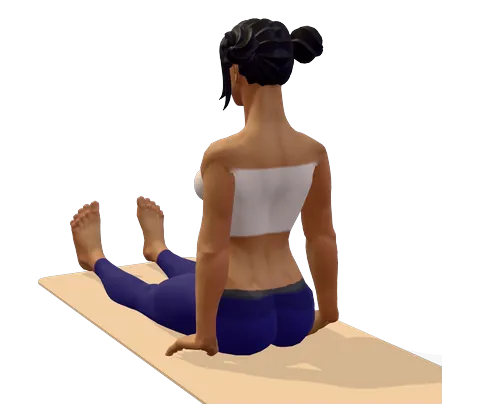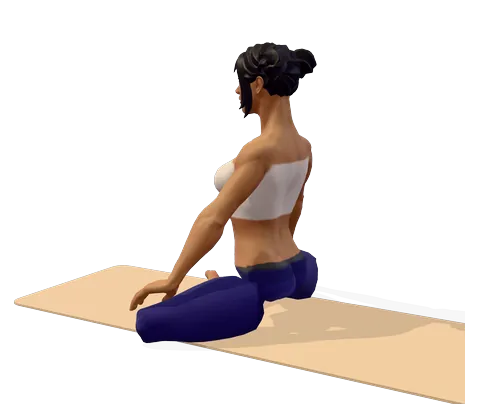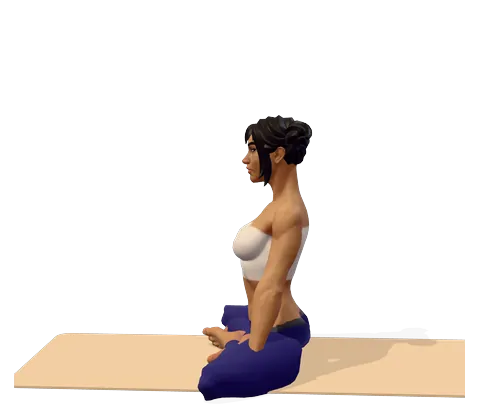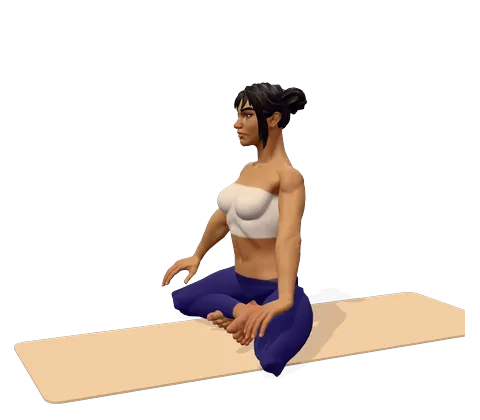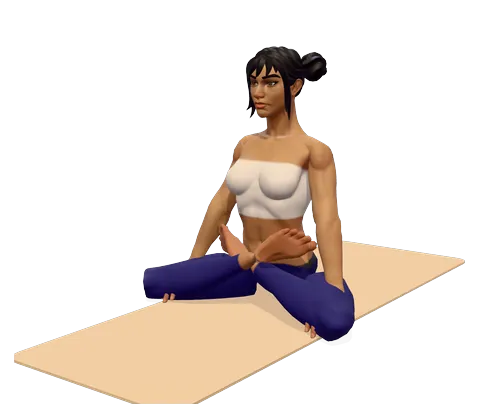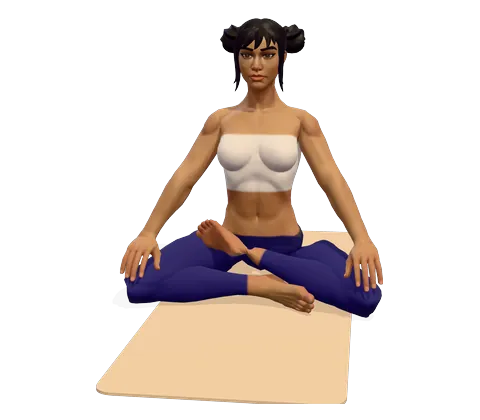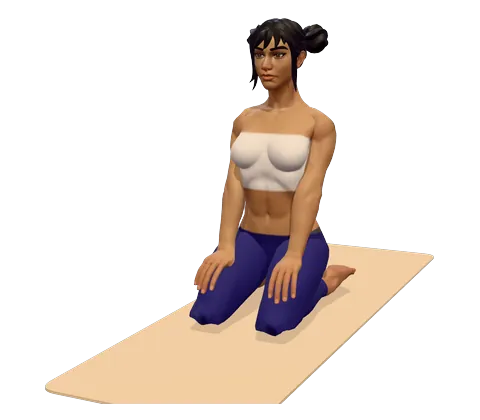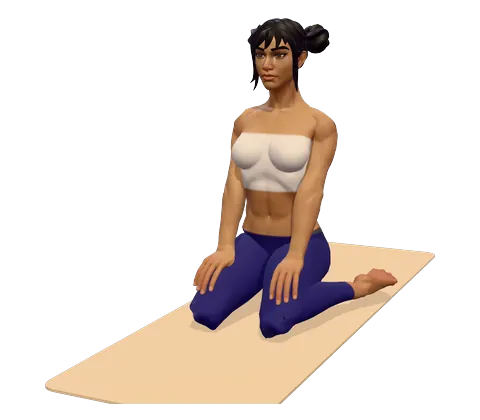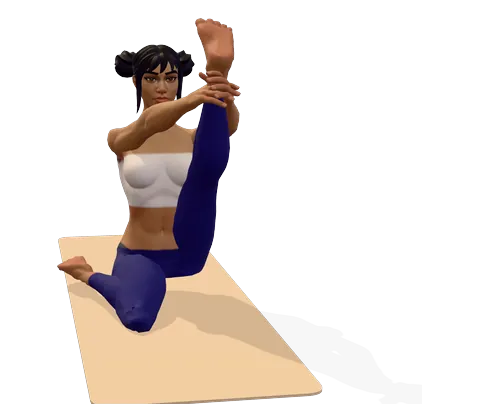
How to do Heron Pose step by step
- Sit in Staff Pose. Bend your right knee and fold the right leg back so the foot rests beside your right hip, toes pointing back (half Hero Pose). Sit on a folded blanket if your hips do not rest evenly.
- Bend your left knee and place the left foot flat on the floor in front of you. Hold the foot or ankle with both hands.
- Sit tall: press both sitting bones down, lift your chest and draw your shoulders back and down.
- Breathe in and slowly straighten the left leg up in front of you, keeping your hands on the ankle or the foot. Use a strap if you cannot reach.
- Draw the straight leg toward your chest while keeping your back straight. Your face and your shin move toward each other, but the spine does not round.
- Hold for 15–20 seconds (3–4 breaths), breathing smoothly.
- Breathe out, bend the left knee and lower the foot. Straighten the right leg, rest, then repeat on the other side.
Where you feel Heron Pose: what it stretches and strengthens
Keep your back straight and draw the lifted leg toward you. In the 3D guide, turn on Body guide: areas that stretch glow green and areas that work glow saffron.
Stretches
- Hamstrings
- Calves
- Front thighs
Strengthens
- Spine
- Abs
- Arms
Benefits and precautions
Benefits
- Gives a strong stretch to the hamstrings and calf of the lifted leg
- Stretches the front of the thigh, knee and ankle of the folded leg
- Strengthens the back muscles and core that hold the spine upright
- Works the arms and shoulders that draw the leg in
- Builds the flexibility and control needed for deeper seated poses
Avoid or modify if
- Knee injury, meniscus tear or knee replacement — do not fold the leg back into Hero; keep that leg straight or cross-legged instead, or skip the pose
- Hamstring tear or strain — avoid until healed; then start with a bent knee and a strap
- Slipped disc, sciatica or acute low back pain — avoid; the leg pull can round and load the lower back
- Ankle injury or pain on the top of the foot — sit on a higher prop or skip the pose
- Pregnancy — avoid the full pose; a lying hamstring stretch with a strap is a safer choice, with your doctor’s or midwife’s approval
Heron pose (Krounchasana) is an advanced seated pose in which one leg is folded back beside the hip and the other is lifted straight up and drawn toward the face, like the long neck of a heron. It gives one of the deepest hamstring stretches in yoga while asking you to keep a straight, upright back. This page explains the Sanskrit name, who is ready for it, how to do it step by step, easier variations and the precautions.
Krounchasana is a level 3 (advanced) pose. Do not attempt the full shape until you can sit comfortably in Hero Pose and do a flat-backed seated forward bend. If you have a knee, hamstring or lower back injury, skip it.
Heron pose meaning and Sanskrit name
In Sanskrit, krauncha (क्रौंच) is a heron or a crane-like water bird, and asana means pose. So the heron pose Sanskrit name is Krounchasana, also spelled Kraunchasana, Krounch asana or kronch asana. The lifted leg is the heron's neck and head, and the upright body is the standing bird.
Prerequisites: heron pose prep
Before you try the full heron pose yoga shape, check these four points. If any of them is not true yet, practise the prep poses instead:
- Hero Pose is comfortable. You can sit in Hero Pose (Virasana) for a minute with no pain inside the knees, even if you need a block under your hips.
- Your hamstrings allow a flat-backed fold. In seated forward bend you can reach your shins or feet without rounding your lower back.
- You can lift a straight leg lying down. Reclining hand-to-big-toe pose with the leg near vertical is the safest heron pose prep, because the floor keeps your back straight.
- You have practised the folded leg. The three-limbed forward bend uses the same folded leg and teaches you to stay level.
How to do heron pose safely
The steps above follow the 3D guide: right leg folded back, left leg lifted, both hands on the left ankle. A few cues make the difference:
- Back first, leg second. Keep the spine long and the chest lifted. If lifting the leg higher makes your back round, lower the leg. A lower leg with a straight back is the real pose.
- Folded foot points straight back. The foot rests just outside the hip, toes pointing behind you. This protects the knee.
- Use a strap. A strap around the ball of the foot lets you straighten the leg without collapsing forward.
- Elbows wide, shoulders down. Pull the leg in with your arms while your shoulder blades stay low on the back.
- Warm up well. Never do Krounchasana cold. Place it after standing poses and a few gentler seated stretches.
Heron pose benefits
The main heron pose benefits are flexibility and posture together. The lifted leg's hamstrings and calf get a strong stretch, the folded leg's thigh and ankle stretch at the same time, and the back muscles, abdominals and arms all work to keep the spine upright. That combination is why teachers use it to build the control needed for deeper seated poses. As with any demanding pose, the benefit comes from regular, careful practice, not from forcing one hold.
Muscles stretched and worked
| Stretched | Worked |
|---|---|
| Hamstrings and calf of the lifted leg | Muscles along the spine, holding the back straight |
| Quadriceps, knee and ankle of the folded leg | Abdominal muscles and hip flexors lifting the leg |
| Arms and upper back drawing the leg in |
Heron pose for beginners and variations
If you are new to it, these heron pose variations keep the same idea with less strain:
- Bent-knee heron: hold the foot with the knee bent and simply sit tall. Straighten the leg a little at a time over weeks.
- Strap heron: loop a strap around the foot and hold it with both hands, arms straight.
- Cross-legged base: if Hero Pose hurts your knees, keep the bottom leg straight on the floor or crossed in front instead of folded back.
- Heron pose twist (revolved heron pose): for experienced students, hold the lifted foot with the opposite hand and turn the chest toward the leg. Only try it once the basic pose is easy.
In a heron pose flow, teachers often place it between Hero Pose and a seated forward bend, then follow it with a gentle twist. You can build that heron pose yoga variations sequence in the sequence builder.
Heron pose vs hero pose
The names sound alike and many people search one for the other. Hero Pose (Virasana) is the kneeling seat with both legs folded back and the hips between the feet. Heron pose uses a half hero base and lifts one leg. The hero pose Sanskrit name, Virasana, comes from vira, a hero or warrior.
The hero pose benefits are gentler: it stretches the thighs, knees and ankles and gives an upright seat for breathing. Among the quoted health advantages of hero pose, better posture while sitting is the most realistic one. Hero pose for beginners is usually done sitting on a block. In hero pose yoga, keep the feet pointing straight back, the same instruction that protects your knee in heron pose. For full hero pose instructions step by step and the benefits of hero pose in yoga practice, see our Hero Pose page.
Heron pose precautions and back pain
Krounchasana is not a yoga pose for back pain. Pulling a straight leg toward the face can round and load the lower back, which is risky with a slipped disc or sciatica. If you are looking for back pain yoga poses or simple workouts and poses for back pain, gentler choices such as supported pigeon pose for lower back pain linked to tight hips, or the poses in our yoga for back pain plan, are a better start. People with knee problems should look at yoga for knee pain before any pose with a folded leg.
Frequently asked questions
What is Krounchasana?
Krounchasana (heron pose) is an advanced seated pose. One leg folds back beside the hip, the other lifts straight up in front, and both hands draw it toward the face while the back stays straight.
What does krauncha mean?
Krauncha is the Sanskrit word for a heron or crane-like water bird. The lifted leg looks like the bird’s long neck.
What are the benefits of heron pose?
It stretches the hamstrings and calf of the lifted leg and the thigh and ankle of the folded leg, and it strengthens the back, core and arms that keep you upright.
Can beginners do heron pose?
Beginners should start with the prep poses: Hero Pose on a block, seated forward bend and reclining hand-to-big-toe pose. Then try heron with a bent knee or a strap.
Why does my back round in heron pose?
Your hamstrings are not ready for the leg height you are asking for. Lower the leg, bend the knee or use a strap until you can keep your chest lifted.
Who should not do heron pose?
Skip it with a knee, ankle or hamstring injury, a slipped disc, sciatica or acute back pain, and during pregnancy.
Is heron pose the same as hero pose?
No. Hero pose (Virasana) is a kneeling seat with both legs folded. Heron pose folds one leg and lifts the other.
This page is for general education. Check with your doctor before starting yoga if you are pregnant, have a medical condition or an injury. Stop if you feel pain, dizziness or shortness of breath.