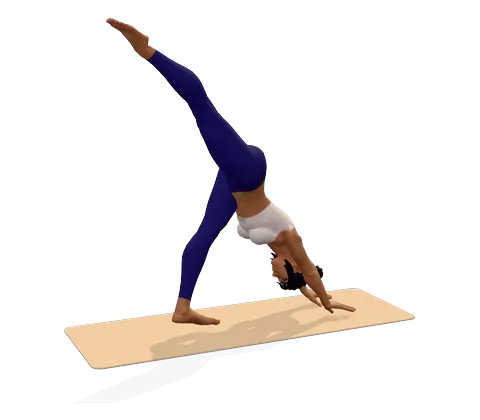
How to do Three-Legged Dog Pose step by step
- Start in downward-facing dog: hands shoulder-width apart, feet hip-width apart, hips lifted high so your body makes an upside-down V.
- Spread your fingers and press both hands firmly into the mat. Let your head hang between your upper arms.
- Shift a little weight onto your left foot. Breathe in and lift your right leg straight up behind you.
- Keep both hips level and facing the floor, as if the lifted leg continues the line of your spine. Point or flex the lifted foot.
- Keep pressing the left heel toward the floor; bend the standing knee slightly if your hamstrings are tight.
- Hold for 15–30 seconds (3–5 breaths), pushing the floor away with your hands the whole time.
- Breathe out and lower the right foot back beside the left in downward dog. Rest, then repeat with the left leg lifted.
Where you feel Three-Legged Dog Pose: what it stretches and strengthens
Lift one leg high while pressing both hands firmly down. In the 3D guide, turn on Body guide: areas that stretch glow green and areas that work glow saffron.
Stretches
- Hamstrings
- Calves
- Hip flexors
Strengthens
- Shoulders
- Arms
- Glutes
Benefits and precautions
Benefits
- Stretches the hamstrings and calves of the standing leg and the front of the hip of the lifted leg
- Strengthens the shoulders, arms and wrists, which carry more weight than in downward dog
- Works the glutes and the back of the lifted leg
- Trains balance and body control on three points instead of four
- Prepares you for lunges, arm balances and dynamic sun salutation flows
Avoid or modify if
- Wrist pain or carpal tunnel syndrome — put your hands on blocks or try the forearm version (dolphin)
- High blood pressure, glaucoma, a detached retina or a migraine attack — the head is below the heart; skip it or keep it very short
- Shoulder injury — build strength in downward dog and plank first
- Later pregnancy — skip it unless your teacher or midwife says it is fine; use the wall version
- Hamstring tear or acute sciatica — bend the standing knee well and keep the lift low, or avoid it
Three-legged dog pose (Eka Pada Adho Mukha Svanasana) is downward-facing dog with one leg raised in line with your spine. Taking one foot off the floor sends more weight into your hands and the standing leg, so the pose asks for more shoulder strength and more balance than ordinary down dog. It is used in vinyasa and power classes to move between poses, and it is a useful step toward lunges and arm balances. Below you will find what the name means, how to do it well, what it works, easier options and when to skip it.
What is three-legged dog pose? Sanskrit meaning and pronunciation
The three-legged dog pose Sanskrit name is Eka Pada Adho Mukha Svanasana. Word by word: eka means one, pada means foot or leg, adho means downward, mukha means face, svana means dog and asana means pose. So the Adho Mukha Svanasana meaning is "downward-facing dog", and the full name means "one-legged downward-facing dog". The shape looks like a dog stretching with one back leg lifted, which is where the English name comes from.
For the Adho Mukha Svanasana pronunciation, say AH-doh MOO-kah shvah-NAHS-uh-nuh, and add AY-kah PAH-dah in front for the one-legged version. You will also hear it called down dog split, one leg downward dog or three-legged downward-facing dog. Some teachers call the same shape one-legged mountain pose (Eka Pada Parvatasana), after the Parvatasana of Surya Namaskar.
Adho Mukha Svanasana vs Parvatasana
What is a downward dog in the first place? It is the inverted V shape on hands and feet. Parvatasana, the mountain pose of some Surya Namaskar traditions, is almost the same shape; teachers often ask for the heels down and the eyes toward the navel. The yoga name for downward dog in most modern classes is simply Adho Mukha Svanasana. Lifting one leg from either version gives you the three-legged dog.
How to do three-legged dog pose correctly
If you want to know how to do downward dog correctly, the same rules apply here, plus two more. First, set a solid base: hands shoulder-width apart, fingers spread, weight through the knuckles as well as the heel of the hand. Second, keep your hips square. Beginners often let the hip of the lifted leg roll open so the leg goes higher. It feels bigger, but the square version is the classic three-legged dog yoga pose, and it keeps the stretch in the right place.
- Lift from the back of the leg. Think "long" rather than "high". The lifted foot usually ends near hip height or a little above.
- Keep pushing the floor away. The shoulders should not sink toward the mat when one foot leaves the floor.
- Relax the neck. Let your head hang between your upper arms and look toward your knees.
The 3D figure shows this square shape with the right leg lifted. Rotate it to see how the lifted leg continues the line of the back.
Three-legged dog pose benefits
The benefits of Eka Pada Adho Mukha Svanasana build on the downward facing dog pose benefits you may already know. You get the same long stretch for the back of the legs, but the arms and shoulders work harder, the glutes of the lifted leg switch on and you have to balance. In short, the three-legged downward dog yoga pose benefits your shoulders, legs and balance at the same time. It is a good strength builder for people who find plank tiring, and it teaches you how to control your hips before moving into lunges.
Three-legged dog vs downward dog: muscles worked
| Downward dog | Three-legged dog | |
|---|---|---|
| Stretches | Hamstrings, calves, shoulders | Hamstrings and calves of the standing leg, hip flexors of the lifted leg |
| Strengthens | Shoulders, arms | Shoulders and arms (more load), glutes of the lifted leg |
| Balance | Stable on four points | Three points, needs core control |
So what muscles does downward dog stretch? Downward dog stretches mainly the hamstrings, calves and the back of the shoulders. Press the Body guide button beside the 3D figure to see the stretched areas glow green and the working muscles glow saffron.
Three-legged dog pose variations and modifications
- Downward dog on knees: if the full shape is too hard, rest your knees on the mat and lift one leg straight back from there. It is a good downward dog yoga option for beginners.
- Hands on blocks: raising the floor takes weight off the wrists and makes it easier to keep a long spine.
- Open-hip three-legged dog: bend the lifted knee and let the hip open, heel toward the opposite buttock. It stretches the front of the hip and the side of the body.
- Knee to nose: from the leg lift, round your back and draw the knee toward your nose to work the abdominals. Many flows repeat this 3–5 times.
- Flip the dog: from open-hip three-legged dog, turn over into wild thing, a playful yoga pose you can call flip the dog. Only try this once the base pose feels steady.
- Standing alternative to downward dog: place your hands on a wall at hip height, walk back until your body makes an L shape, then lift one leg. Seniors and people with wrist or blood-pressure concerns can use it.
Most of these downward dog yoga variations also work as downward facing dog modifications when both feet stay down. Like all modifications for yoga poses, these change the load, not the purpose. If you like forearm work, try dolphin pose or the forearm plank (Makara Adho Mukha Svanasana).
Where three-legged dog fits in a flow
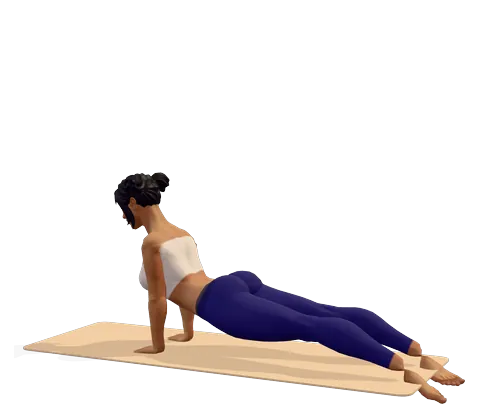
A common sequence is mountain pose to downward dog, then a downward dog leg lift, then a big step forward into low lunge or warrior I. Warm up with a few rounds of downward-facing dog and other gentle yoga such as cat-cow. Balance the pose with upward-facing dog (the Urdhva Mukha Svanasana pose), then rest in child's pose or the yoga puppy dog pose, extended puppy. Other one-legged yoga poses you can explore later include the one-legged bridge pose and, much later, the one-legged crow pose.
Who should avoid three-legged dog?
Because your head is lower than your heart, avoid it with uncontrolled high blood pressure, glaucoma, eye surgery or during a migraine attack, and come out if you feel dizzy. People with wrist, shoulder or hamstring injuries should start with the easier versions above or ask a physiotherapist first.
एक पाद अधोमुख श्वानासन (Three-Legged Downward Dog Pose) — हिंदी में: अधोमुख श्वानासन (उल्टा V आकार) में आएँ और दोनों हथेलियाँ मज़बूती से ज़मीन पर दबाएँ। साँस लेते हुए दायाँ पैर सीधा पीछे और ऊपर उठाएँ, कूल्हे बराबर रखें। 3–5 साँस रुकें, पैर नीचे लाएँ और दूसरी ओर करें। यह आसन कंधे और बाजुएँ मज़बूत करता है और पैरों के पीछे की मांसपेशियों को खींचता है। हाई ब्लड प्रेशर या ग्लूकोमा में न करें।
Frequently asked questions
What are the benefits of three-legged dog pose?
It stretches the hamstrings and calves, strengthens the shoulders, arms and glutes, and trains balance and hip control. It also prepares you for lunges and arm balances.
How do you pronounce Adho Mukha Svanasana?
AH-doh MOO-kah shvah-NAHS-uh-nuh. The one-legged version adds "Eka Pada" (AY-kah PAH-dah) at the front.
What is a down dog split?
Down dog split is another name for three-legged dog: the yoga downward dog pose with one leg up high behind you. Some teachers let the hip open for a higher leg; the classic version keeps the hips square.
How long should I hold three-legged dog?
Hold for 15–30 seconds (3–5 breaths) on each side. In a flowing class you may hold it for just one breath before stepping forward.
Is three-legged dog good for beginners?
Once downward dog feels comfortable, yes. Start with the knees on the mat or the hands on a wall, and keep the lifted leg low.
What is the difference between Adho Mukha Svanasana and Parvatasana?
They are almost the same inverted V shape. Parvatasana is the name used in some Surya Namaskar traditions; lifting one leg from either gives you the three-legged version.
What is three-legged downward dog pose in Hindi?
एक पाद अधोमुख श्वानासन (Eka Pada Adho Mukha Svanasana). "Eka pada" means one leg and "adho mukha svana" means downward-facing dog.
Who should not do three-legged dog?
Avoid it with uncontrolled high blood pressure, glaucoma, recent eye surgery, a migraine attack or later pregnancy, and modify it with wrist, shoulder or hamstring injuries.
This page is for general education. Check with your doctor before starting yoga if you are pregnant, have a medical condition or an injury. Stop if you feel pain, dizziness or shortness of breath.