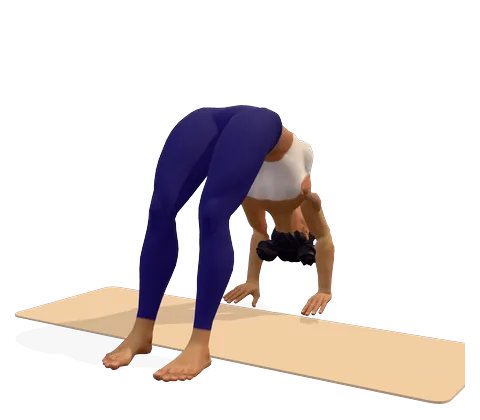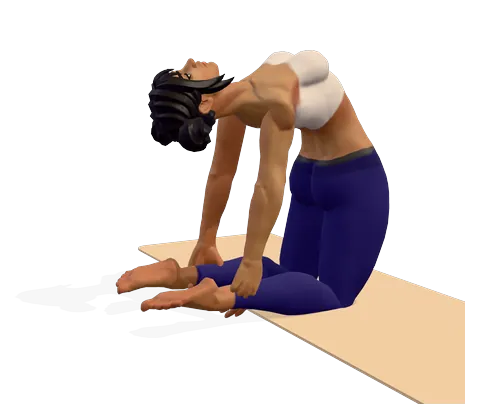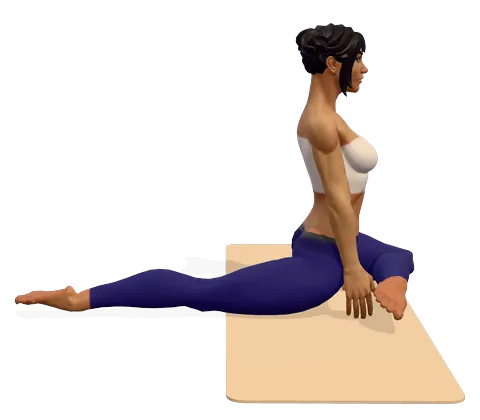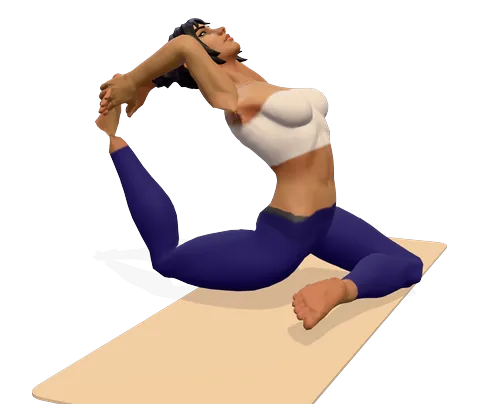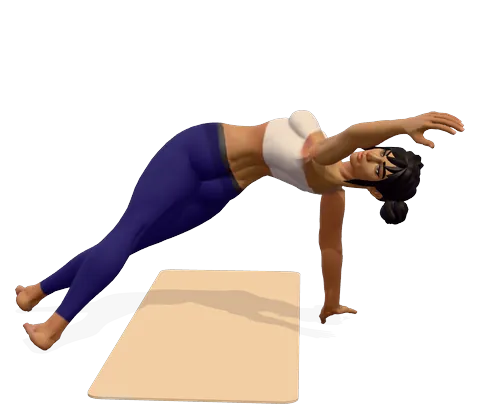
How to do Wild Thing step by step
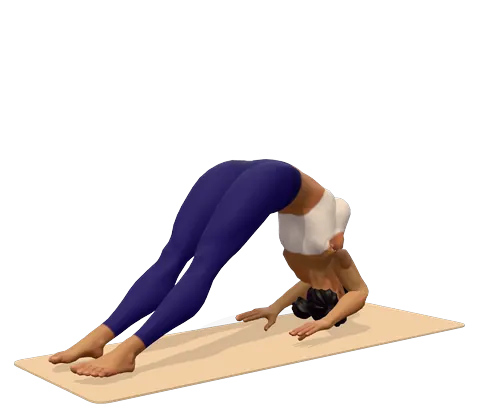
- Warm up first with a few rounds of Downward-Facing Dog, Plank and Side Plank. Start in Downward-Facing Dog.
- Shift forward and roll onto the outer edge of your right foot. Stack your left foot on top, lift your left arm and come into Side Plank on your right hand, right hand under your shoulder.
- Bend your left knee and step your left foot back behind you, placing the ball of the foot on the mat about hip-width from your right foot. Keep your right leg long.
- Press firmly into your right hand and both feet and lift your hips high. Let your chest turn up toward the ceiling.
- Reach your left arm over your head and back, palm facing the floor behind you. Let your head follow only as far as your neck feels easy.
- Stay for about 15 seconds (2–3 breaths), keeping your right shoulder strong and away from your ear.
- To come out, bring the left arm back up, lift the hips and swing your left foot back to Side Plank or Downward-Facing Dog. Rest, then repeat on your left hand.
Where you feel Wild Thing: what it stretches and strengthens
Push through your supporting hand and let your heart open to the sky. In the 3D guide, turn on Body guide: areas that stretch glow green and areas that work glow saffron.
Stretches
- Chest
- Shoulders
- Hip flexors
Strengthens
- Arms
- Glutes
- Wrists
Benefits and precautions
Benefits
- Opens the chest and the front of the shoulders
- Stretches the hip flexors and the front of the body on the lifted side
- Strengthens the supporting arm, wrist and shoulder
- Works the glutes and the back of the legs to hold the hips high
- Builds shoulder stability and body control for deeper backbends
- Feels energising, which makes it a popular peak in flowing classes
Avoid or modify if
- Wrist pain or carpal tunnel syndrome — skip the pose or try it from a forearm side plank
- Shoulder injury, rotator cuff problems or a history of dislocation — avoid loading one arm in a backbend
- Lower back or sacroiliac (SI) joint pain — keep the lift small or choose a gentler backbend
- Neck pain — keep your head in line with your spine instead of dropping it back
- Pregnancy — avoid the full pose; a supported side plank with the lower knee down is safer, with your midwife or doctor’s approval
Wild thing (Camatkarasana) is a modern backbend in which you balance on one hand, step the top foot back behind you and open your chest to the ceiling while the free arm sweeps overhead. It is also called flip dog, because many people enter it by "flipping" over from Downward-Facing Dog. The wild thing yoga pose asks for shoulder strength and a supple front body, so it usually comes near the peak of a flowing practice rather than at the start.
What is wild thing in yoga?
The Sanskrit name Camatkarasana (also spelled Chamatkarasana) comes from camatkara, which means wonder, surprise or a miracle, and asana, pose. So the wild thing meaning is roughly "the pose of wonder". In Hindi, chamatkar (चमत्कार) is the everyday word for a miracle, which is a nice way to remember it.
This is not a pose from the old Hatha yoga texts. It became popular in modern vinyasa classes, especially in the Anusara style, where it was described as an expression of an open, joyful heart. Today it appears in most power and vinyasa yoga classes.
Before you try it: what you need
Camatkarasana is a level-3 pose. You are ready to try it when:
- You can hold Side Plank on each hand for 30 seconds with your hips lifted and your shoulder steady.
- Downward-Facing Dog feels comfortable for a minute, with no wrist pain.
- You are used to gentle backbends such as Bridge Pose and Camel.
If your supporting shoulder sinks toward your ear or your wrist hurts, come out. Collapsing into the shoulder is the most common cause of strain in this pose.
How to do wild thing pose: key points
The 3D guide shows the first side on the right hand with the left foot stepping back. As you follow the steps above, focus on these details:
- Hand under or just ahead of the shoulder. Placing the supporting hand a touch forward gives the shoulder more room as you arch.
- Push the floor away. Keep the supporting arm straight and strong; think of lifting your ribs away from your hand.
- Lift from the hips, not the lower back. Squeeze your glutes gently and press the feet down so the arch spreads through the upper back.
- Top foot lands softly. Step the foot back with a bent knee; you do not need to reach far.
- Head last. Look up at your top hand first; let the head drop back only if your neck is comfortable.
Flip dog vs wild thing: are they the same?
Mostly, yes. The flip meaning is literal here. Flip dog usually describes the way in: from Three-Legged Dog you bend the lifted knee, open the hip and "flip your dog" over so the foot lands behind you. Wild thing is often taught from Side Plank, as the 3D figure shows, with the free arm reaching overhead. The finished shapes are nearly the same, so many teachers use the two names for one pose.
The flip dog entry is faster and more dynamic; the side plank entry gives you more control over the shoulder. For a first try, use side plank.
Wild thing pose benefits
The main benefits of wild thing yoga are a strong opening across the chest, shoulders and hip flexors, combined with real strength work for the supporting arm, wrist and the glutes. Because you balance on one arm while arching, it also trains shoulder stability and coordination.
Many people find the open-chest shape uplifting, which is one reason it is placed near the end of energising flows. As with any single pose, these benefits build over weeks of steady practice.
Is wild thing good for back pain?
Not usually. It is a loaded backbend, so it is not a good choice when your back already hurts. If you are looking for something natural for back pain, gentle options such as Child's Pose, cat-cow and the bird dog exercise for lower back pain are safer places to start. Our yoga for back pain plan lists them, and a doctor or physiotherapist can tell you what is best for your back.
Muscles stretched and worked
| Stretched | Worked |
|---|---|
| Chest and front of the shoulders | Supporting arm: triceps and shoulder stabilisers |
| Hip flexors of the lifted side | Wrist and forearm of the supporting hand |
| Front of the body along the arch | Glutes and hamstrings, lifting the hips |
Wild thing pose for beginners
Wild thing yoga for beginners is about building the shape in stages, so the shoulder learns to carry you before the arch gets deep.
- Lower knee down: start from a side plank with the lower knee on the mat, then step the top foot back and lift the hips a little.
- Top hand on the hip: keep the free hand on your hip until your shoulder feels steady.
- Small arch: lift the hips only until you feel the front of the hip open, not to the maximum.
- Short holds: two breaths per side is enough while you build strength.
A simple wild thing yoga sequence
Warm up with Surya Namaskar, then move through Downward-Facing Dog, Three-Legged Dog and Side Plank on each side. Add wild thing for 2–3 breaths per side, return to Downward-Facing Dog and rest in Child's Pose. Experienced students sometimes move from wild thing into Wheel Pose; if you are wondering how to do Chakrasana (Wheel), learn it first from lying on your back, not from this transition. You can build this flow in the session builder.
चमत्कारासन (Camatkarasana) — हिंदी में: दाएँ हाथ पर साइड प्लैंक में आएँ। बायाँ घुटना मोड़कर बायाँ पैर पीछे ज़मीन पर रखें। दाएँ हाथ से ज़मीन दबाते हुए कूल्हे ऊपर उठाएँ और बायाँ हाथ सिर के ऊपर से पीछे ले जाएँ। 2–3 साँस रुकें, फिर दूसरी तरफ़ करें। इससे छाती और कंधे खुलते हैं और बाँहें मज़बूत होती हैं। कलाई या कंधे में चोट हो तो यह आसन न करें।
Frequently asked questions
What is wild thing in yoga?
Wild thing (Camatkarasana) is a one-armed backbend. From side plank you step the top foot back behind you, lift the hips and reach the free arm overhead so the chest opens to the ceiling.
Is flip dog the same as wild thing?
Nearly. Flip dog usually means entering the shape from Three-Legged Dog by flipping the hips open; wild thing is often entered from side plank. The final pose is almost the same.
Is wild thing pose good for beginners?
It is an intermediate pose. Beginners can try it with the lower knee on the mat and the free hand on the hip, once side plank feels steady.
How long should I hold wild thing?
About 15 seconds, or 2–3 breaths, on each side. Come out as soon as your supporting shoulder starts to sink.
What are the wild thing yoga benefits?
It opens the chest, shoulders and hip flexors and strengthens the supporting arm, wrist, shoulder and glutes. It also trains balance and shoulder control.
Why does wild thing hurt my wrist?
Too much weight in the heel of the hand is the usual cause. Spread your fingers, press through the knuckles and fingertips, and warm up the wrists first. If pain continues, skip the pose.
Who should avoid wild thing pose?
People with wrist, shoulder, neck, lower back or SI joint injuries, and people who are pregnant, should avoid the full pose or ask a professional for a safer version.
This page is for general education. Check with your doctor before starting yoga if you are pregnant, have a medical condition or an injury. Stop if you feel pain, dizziness or shortness of breath.