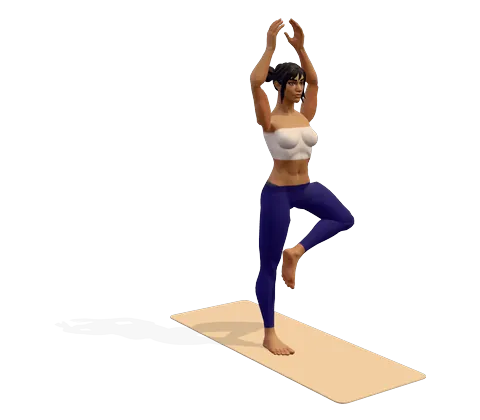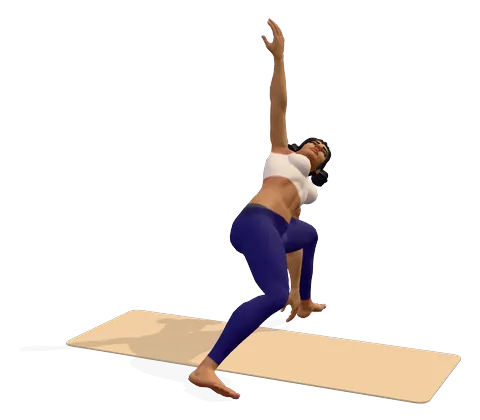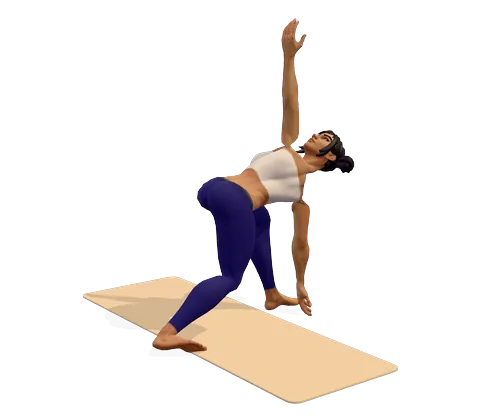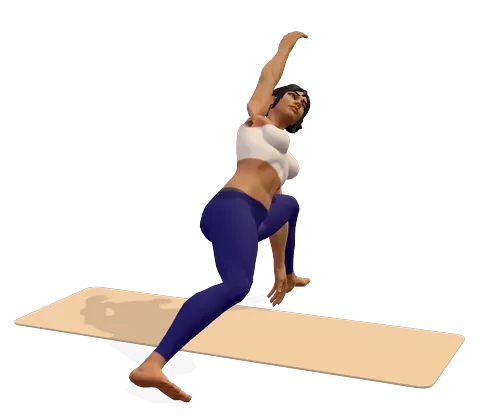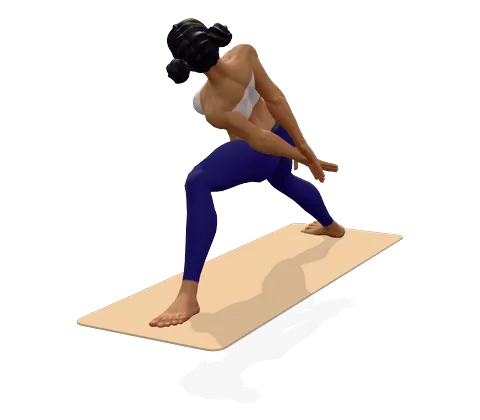
How to do Bound Side Angle Pose step by step
- Start in extended side angle on the left: feet wide, left toes turned out, left knee bent over the left ankle, right leg straight and the outer edge of the right foot pressed down.
- Lower your chest along your left thigh so your left shoulder comes to the inside of your left knee.
- Breathing out, reach your left arm down and thread it under your left thigh, palm facing back.
- Sweep your right arm behind your back, bend the elbow and reach your right hand toward your left hip crease.
- Clasp your fingers, or hold a strap between your hands. Press your left knee back against your arm.
- Roll your right shoulder open, turn your chest toward the ceiling and look up or straight ahead. Hold for 15–20 seconds (3–5 breaths).
- To come out, release the hands, place your left hand on the floor or a block, press into both feet and rise up as you breathe in. Repeat on the right side.
Where you feel Bound Side Angle Pose: what it stretches and strengthens
Clasp your hands behind you and roll your top shoulder open. In the 3D guide, turn on Body guide: areas that stretch glow green and areas that work glow saffron.
Stretches
- Chest
- Shoulders
- Inner thighs
Strengthens
- Front thighs
- Glutes
- Side waist
Benefits and precautions
Benefits
- Opens the chest and the front of the shoulders, the opposite of a desk-bound slump
- Stretches the inner thighs and groin of the front leg
- Strengthens the quadriceps, glutes and the obliques that hold the torso in a twist
- Improves shoulder rotation and the awareness needed for binds in other poses
- Builds stamina, heat and focus in a strong standing pose
- Prepares the body for bound revolved side angle and other deep binds
Avoid or modify if
- Shoulder injury, rotator cuff problems or a history of dislocation — skip the bind and keep the top arm on your hip
- Knee pain in the front leg — bend less, keep the knee over the ankle and never let it drop inward
- Groin, hip or sacroiliac (SI) joint pain — shorten the stance and do not pull yourself deeper with the arms
- Pregnancy — the bind and the twist press the belly; use open extended side angle with a block instead, and ask your midwife or doctor first
- Low blood pressure, dizziness or neck pain — look down at the mat and come up slowly
Bound side angle pose (Baddha Parsvakonasana) is a deep lunge to the side in which your arms wrap around the front thigh and clasp behind your back. It is extended side angle with a bind, so it asks for everything that pose asks for (strong legs, open hips, a long side body) plus free shoulders and some patience. It is an intermediate to advanced pose: read the prerequisites below before you try the full clasp.
What is bound side angle pose?
The Sanskrit name explains it. Baddha means "bound", parsva means "side", kona means "angle" and asana means "pose". Some teachers use the longer name Baddha Utthita Parsvakonasana, "bound extended side angle pose", because it starts from extended side angle pose. The extended side angle pose Sanskrit name, Utthita Parsvakonasana, simply adds utthita, "extended". Both names describe the same standing bound side angle pose.
Is it the same as bound angle pose?
No. What is bound angle pose? That is Baddha Konasana, a seated pose with the soles of the feet together and the knees open. The supported reclined bound angle is its lying version, and Supta Baddha Konasana benefits are mostly rest and a gentle hip opening. Many angles in yoga poses are named after the shape of the legs: seated wide angle pose (Upavistha Konasana) is another example. The names overlap, but the poses have nothing else in common.
Prep poses and prerequisites
Try the full bind only when all of these feel easy:
- You can hold extended side angle yoga pose for five calm breaths with your front knee over the ankle and your forearm or hand low.
- Your shoulders can take the arm behind the back without pain, for example in the arms of Cow Face Pose or when you hold your elbows behind your back.
- Your hips allow a deep lunge, as in Low Lunge and Lizard Pose.
Good prep poses for bound side angle are Warrior II, extended side angle, revolved side angle pose in yoga sequences, and a few shoulder rolls. Always warm up first; a cold shoulder is the one most likely to get hurt in a bind.
How to do bound side angle pose, stage by stage
The steps above follow the 3D figure, left side first. Build the bind in three stages and stop at the stage where you can still breathe smoothly.
Stage 1: half bound side angle pose
From extended side angle, keep your left forearm on your thigh and wrap only the right arm behind your back, reaching the right hand toward the left hip. This half bind teaches the top shoulder to roll open. For many people this is the whole pose for weeks.
Stage 2: bind with a strap
Thread the left arm under the thigh and hold a strap or a towel between your hands behind your back. Walk the hands closer only when the chest can stay open.
Stage 3: full bind
Clasp your fingers or one wrist. The bind is a result, not the goal: if clasping makes your chest drop toward the floor, go back to the strap.
Common mistakes and fixes
- Front knee drifts inward. Press the knee back against the arm so it stays over the little-toe side of the foot.
- Back foot lifts. Anchor the outer edge of the back foot; that keeps the back leg straight and the pose stable.
- Chest collapses. Take the shoulder deeper under the thigh first, then roll the top shoulder open.
- Neck strains to look up. Look ahead or down. The gaze is optional.
Bound side angle pose benefits
Bound extended side angle benefits are the side angle pose benefits plus a strong shoulder and chest opening. The legs work hard: the front quadriceps and glutes hold a deep lunge while the back leg stays straight. The obliques keep the torso turned, and the bind draws the top shoulder back, stretching the chest and the front of the shoulder. People who sit hunched at a desk often feel this chest opening most. The pose also builds heat and concentration, and it is a stepping stone toward the bound revolved side angle pose.
Is it a yoga pose for back pain?
Not a first choice. Gentle poses for yoga for back pain come earlier; see our yoga for back pain plan. If your back is healthy, the pose can strengthen the muscles around the spine, but stop if you feel a pinch in the lower back or pain down a leg.
Muscles stretched and worked
| Stretched | Strengthened |
|---|---|
| Chest and front of the shoulders | Quadriceps and glutes of the front leg |
| Inner thighs and groin | Obliques, holding the torso turned up |
| Top shoulder, rolled open by the bind | Back leg and the muscles around the ankle |
The Body guide on the 3D figure shows the chest, shoulders and inner thighs glowing green (stretch) and the thighs, glutes and obliques glowing saffron (work).
Bound side angle pose variations and modifications
- Bound side angle pose kneeling: lower the back knee onto a folded blanket. This bound side angle pose on knees yoga version takes weight off the legs so you can learn the bind.
- Block under the front hand during stage 1 instead of the forearm on the thigh.
- Shorter stance if the groin or knee complains.
- Bound revolved side angle pose: a harder twisted side angle pose in which the opposite arm wraps the front leg. Learn revolved extended side angle without the bind first.
These modifications for yoga poses are not "less": a clean half bind is better practice than a forced full bind.
Bound extended side angle vs extended triangle
The main difference between extended side angle vs triangle pose is the front knee: bent to about 90 degrees in side angle, straight in triangle pose. So bound extended side angle vs triangle pose is a strong lunge with a bind against a straight-leg hamstring stretch. The benefits of triangle pose lean toward the back of the legs; the bound side angle leans toward the thighs, hips and shoulders. A triangle pose with bind exists too, but it is harder, because the straight front leg leaves less room for the arm.
Who should not do bound side angle pose?
Skip the full bind with a shoulder injury, a recent knee or hip injury, or strong SI joint pain, and use the open version in pregnancy after asking your midwife or doctor. If you are new to yoga, spend a few months on beginner poses first. You can practise extended side angle with voice guidance in our guided sessions and add the bind once it feels steady.
Frequently asked questions
What is bound side angle pose in Sanskrit?
Baddha Parsvakonasana: baddha means bound, parsva means side, kona means angle. It is also called Baddha Utthita Parsvakonasana, bound extended side angle pose.
Is bound side angle pose hard?
It is an intermediate to advanced pose. It needs strong legs, open hips and free shoulders. Start with the half bind or a strap and move to the full clasp over weeks or months.
What if I cannot reach my hands?
Use a strap or a towel between the hands, or practise the half bind with only the top arm behind your back. Both give most of the benefit.
How long should I hold bound side angle pose?
Hold for 15–20 seconds (3–5 breaths) on each side. Come out earlier if your breath becomes short or your shoulder hurts.
Is bound side angle the same as bound angle pose?
No. Bound angle pose (Baddha Konasana) is a seated pose with the soles of the feet together. Bound side angle is a standing lunge with the arms clasped around the front thigh.
Can I do bound side angle pose while pregnant?
The bind and twist press on the belly, so most teachers suggest open extended side angle with a block instead. Ask your midwife or doctor before any new standing pose in pregnancy.
What are good prep poses for bound side angle?
Warrior II, extended side angle, low lunge, lizard pose and the arms of cow face pose. Revolved side angle also prepares the twist.
This page is for general education. Check with your doctor before starting yoga if you are pregnant, have a medical condition or an injury. Stop if you feel pain, dizziness or shortness of breath.