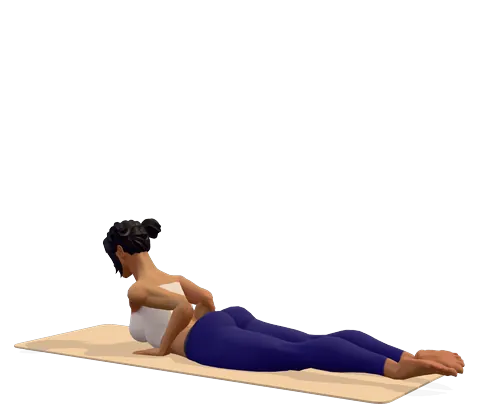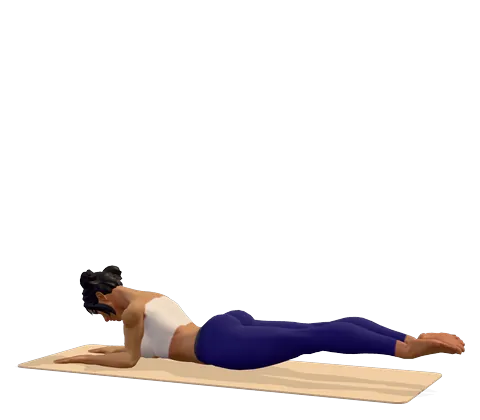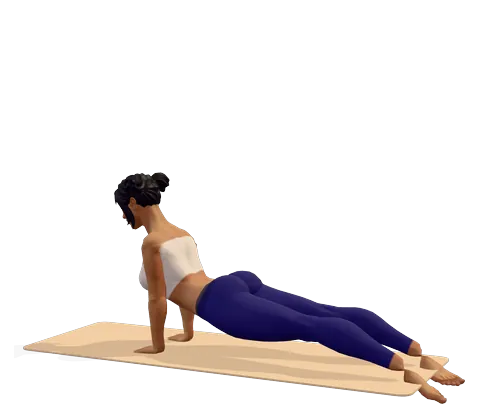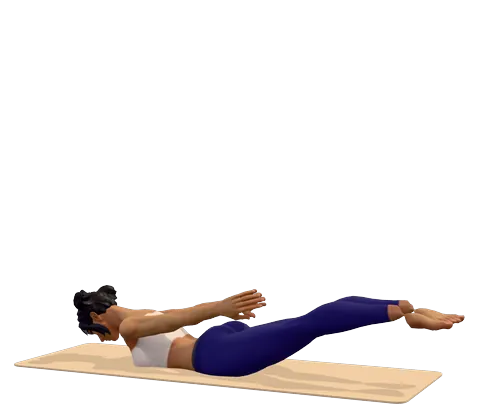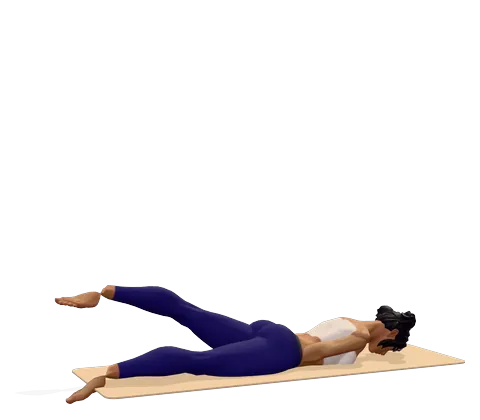
How to do Half Locust Pose step by step
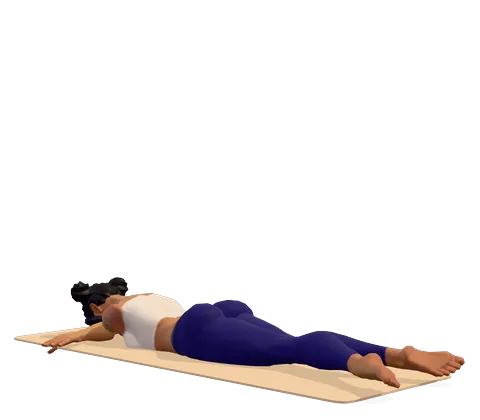
- Lie on your front with your legs straight and together and the tops of your feet on the mat. Rest your chin on the floor.
- Place your arms alongside your body, palms down, or slide them just under your thighs, palms down or in loose fists.
- Press both hips evenly into the mat and lengthen your left leg back from the hip.
- Breathe in and lift your straight left leg as high as you can without twisting your hips or bending the knee. Keep the right leg long and resting on the mat.
- Keep your chin down, your neck long and your shoulders relaxed. Press your arms and the resting leg lightly into the floor.
- Hold for 2–4 breaths (10–15 seconds).
- Breathe out and lower the left leg slowly. Rest, then repeat with the right leg. Do 2–3 rounds on each side.
Where you feel Half Locust Pose: what it stretches and strengthens
Lift one straight leg without twisting your hips. In the 3D guide, turn on Body guide: areas that stretch glow green and areas that work glow saffron.
Stretches
- Hip flexors
Strengthens
- Glutes
- Lower back
- Hamstrings
Benefits and precautions
Benefits
- Strengthens the glutes, hamstrings and lower back muscles
- Stretches the front of the hip (hip flexors) of the lifted leg
- A gentle, one-side-at-a-time way to build back strength before full locust
- Helps you notice and correct an uneven pelvis
- Counters long hours of sitting, which weaken the glutes and tighten the hips
Avoid or modify if
- Pregnancy after the first trimester — do not lie on your belly; try a standing leg lift holding a chair
- Recent abdominal surgery, hernia or a peptic ulcer
- Acute low back pain, spondylolisthesis or a disc injury — keep the lift very small or ask your physiotherapist first
- High blood pressure or heart disease — breathe freely and never hold the breath while lifting
- Stop if you feel pinching in the lower back or pain down the leg
Half locust pose (Ardha Salabhasana) is a backbend lying on your front in which you lift one straight leg at a time while the rest of your body stays on the mat. Because only one leg lifts, it is much easier than full locust, and it lets you feel each side of your lower back and glutes separately. Half locust is often the first back-strengthening yoga pose taught in hatha and therapy-based classes. This page covers what the name means, how to do it, what it works, easier and harder versions, and who should take care.
What is half locust pose? Sanskrit name and meaning
The half locust pose Sanskrit name is Ardha Salabhasana, also spelled Ardha Shalabhasana. Ardha means half, salabha (or shalabha) means locust or grasshopper and asana means pose. The locust pose meaning comes from the shape of the full pose: legs raised behind you like the back end of a grasshopper that is about to jump. In the half version only one leg rises.
The 3D guide can show you the shape from any side. Rotate the figure and you will see the lifted left leg, the hips flat on the mat and the chin resting on the floor.
How to do half locust pose correctly
The steps above take you in and out. These points make the difference:
- Length before height. Reach the leg back first, then lift. A long leg lifted 15 centimetres is better than a high leg with a twisted pelvis.
- Hips stay square. Both hip bones press evenly into the mat. If one side lifts, lower the leg until it stops.
- Straight knee. The lift comes from the glutes and hamstrings. A bent knee turns it into a different exercise.
- Chin down, neck long. Keeping the chin on the floor protects the neck. Some people prefer the forehead down; that is fine too.
- Breathe. Lift on the breath in and keep breathing while you hold. Do not strain or hold the breath.
How to do locust pose in full, and how to do Shalabhasana safely, both start here: once you can lift each leg easily for a few breaths, you are ready to lift both together.
Half locust pose benefits
The main half locust pose benefits are stronger glutes, hamstrings and lower back muscles. These muscles weaken with long hours of sitting, and they matter for standing, walking and lifting. Working one leg at a time also shows you if one side is weaker than the other. The locust pose yoga benefits are similar but stronger, since full locust lifts both legs and often the chest too, so the whole back of the body works.
Anatomy of the locust: muscles worked
| Strengthens | Stretches |
|---|---|
| Gluteus maximus of the lifted leg | Hip flexors at the front of the lifted leg |
| Hamstrings | Front of the thigh (mildly) |
| Lower back muscles (erector spinae, quadratus lumborum) | Abdomen (mildly) |
Press the Body guide button by the 3D figure and it works like a live diagram of the locust muscles: the glutes, lower back and hamstrings glow saffron and the hip flexors glow green.
Is half locust good for back pain?
Gentle back-strengthening exercises like this one are part of many yoga and physiotherapy programmes for chronic low back pain, and the one-leg version keeps the load small. Start with low lifts and stop if pain sharpens or spreads down a leg. Our yoga for back pain and yoga for sciatica pages explain how to build up slowly. Keep any treatment your doctor has prescribed.
Half locust pose variations
- Tiny lift: raise the leg only a few centimetres. Good for beginners and sensitive backs.
- Arms under the thighs: the traditional hand position; it lifts the pelvis slightly and helps the leg rise.
- Opposite arm and leg: lift the right arm and the left leg together, then switch. This is a prone version of bird dog.
- Full locust: lift both legs and the chest together in Salabhasana, where the locust full body shape works the entire back.
Half locust vs half bow, half bridge and half lotus
Ardha ("half") appears in many pose names, and the names are easy to confuse:
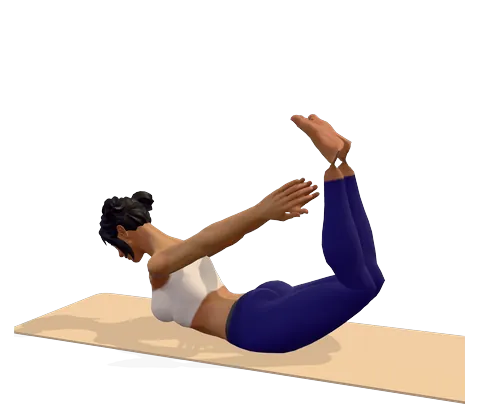
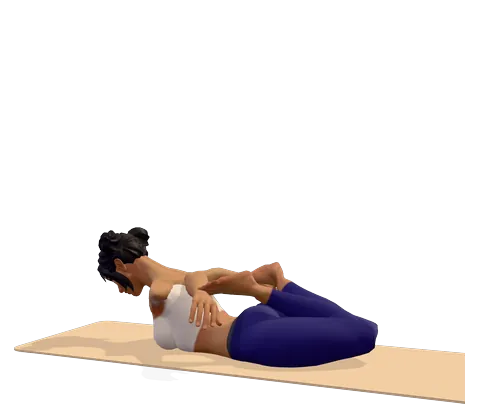
- Half bow pose (Ardha Dhanurasana): in Sanskrit, dhanu means bow. You lie on your front, bend one knee and hold that ankle, which adds a thigh stretch. The half bow pose benefits are a deeper quad and chest stretch. Half bow is the natural next yoga pose for beginners after half locust, and half bow variations include holding a strap around the ankle. See half bow.
- Half bridge pose: a gentle yoga bridge on your back with the hips lifted a little. Half bridge pose is called Ardha Setu Bandhasana in Sanskrit and अर्ध सेतु बंधासन in Hindi. Half bridge pose benefits include stronger glutes, trained from the other side. See bridge pose.
- Half lotus pose (Ardha Padmasana): a seated yoga pose with one foot on the opposite thigh, used for meditation; the standing half lotus is a balance. Half lotus pose benefits are a steady seat and open hips. It has nothing to do with locust except the similar name. See half lotus.
- Half frog yoga pose (Ardha Bhekasana) and half monkey (Ardha Hanumanasana) are other "half" poses: a thigh stretch on your front and a hamstring stretch in a kneeling lunge.
Other ardha poses have their own benefits: the benefits of Ardha Matsyendrasana are a seated spinal twist (for beginners, keep the lower leg straight), the benefits of Ardha Chakrasana come from a standing backbend, and Ardha Kati Chakrasana benefits the side of the waist.
How to use locust poses in a practice: before and after
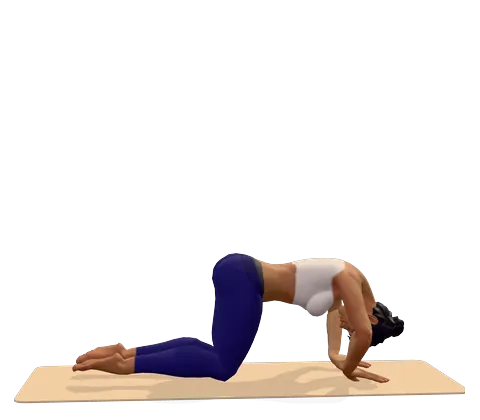
Before half locust, warm up with crocodile pose and a few rounds of cat-cow. After it, rest in child's pose, then move on to full locust or half bow. A simple back routine is half locust, baby cobra and child's pose, repeated twice. You can build it with the session builder or follow a ready-made session on the practice page.
Frequently asked questions
What are the benefits of half locust pose?
It strengthens the glutes, hamstrings and lower back, stretches the front of the hip and shows you whether one side is weaker than the other. It is a safe way to build strength before full locust.
What is the Sanskrit name for half locust pose?
Ardha Salabhasana, also spelled Ardha Shalabhasana. "Ardha" means half and "salabha" means locust or grasshopper.
How long should I hold half locust?
Hold each leg for 2–4 breaths (10–15 seconds) and do 2–3 rounds on each side.
Can you show me a picture of the locust pose?
The 3D figure at the top of this page shows half locust from every side, which is clearer than a photo or image of the locust. Drag it to rotate and double-tap to reset.
Should my hands be under my thighs?
Either way works. Hands under the thighs is the traditional position and gives a little lift; arms by your sides is simpler and easier on the elbows.
Is half locust easier than full locust?
Yes. Lifting one leg puts much less load on the lower back than lifting both legs and the chest, so start here.
Who should avoid half locust pose?
Avoid it in pregnancy after the first trimester, after abdominal surgery, and with a hernia, peptic ulcer or acute back injury. With high blood pressure, keep breathing freely and do not strain.
What is the difference between half locust and half bow pose?
In half locust you lift a straight leg. In half bow you bend one knee and hold the ankle, which adds a stretch for the front of the thigh.
This page is for general education. Check with your doctor before starting yoga if you are pregnant, have a medical condition or an injury. Stop if you feel pain, dizziness or shortness of breath.