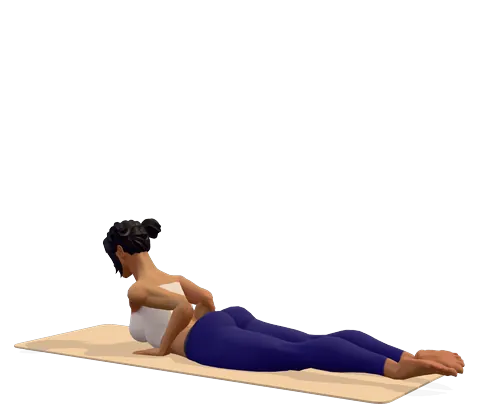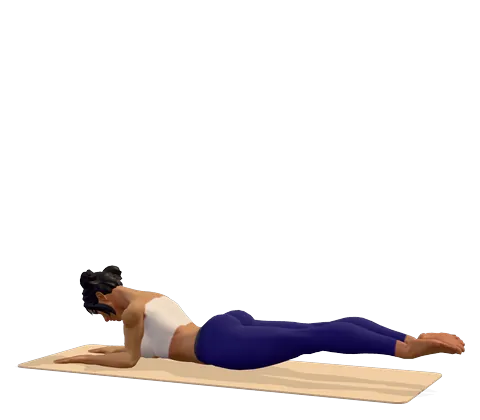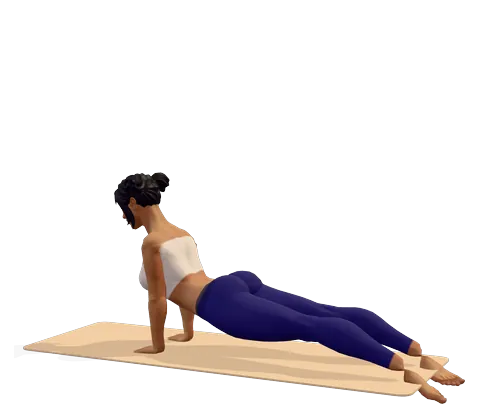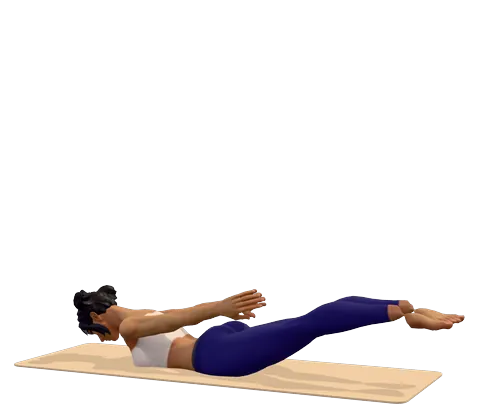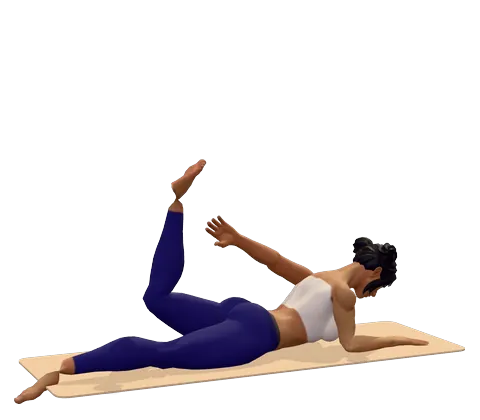
How to do Half Bow Pose step by step
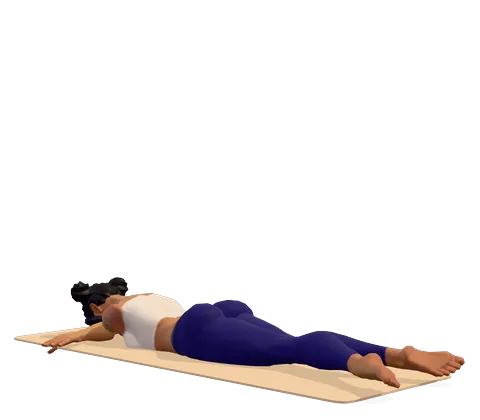
- Lie on your front with your legs straight and hip-width apart and your forehead on the mat.
- Come up onto your right forearm, elbow under your shoulder and forearm pointing forward, so your chest lifts a little like in sphinx pose.
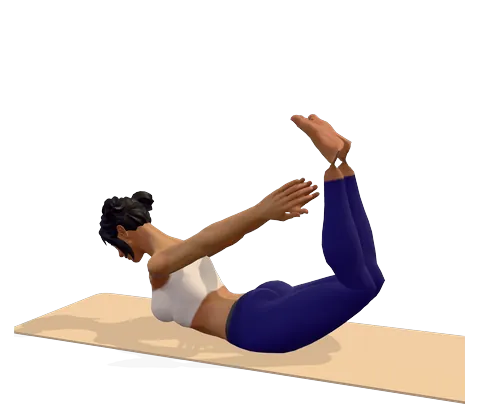
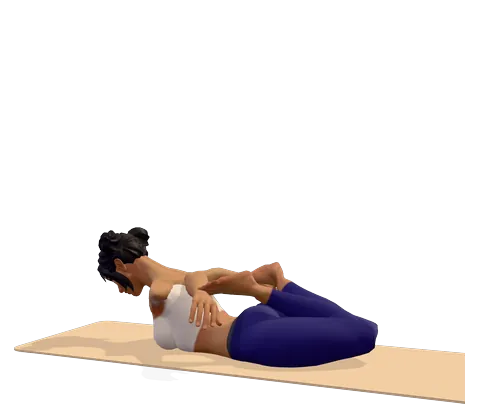
- Bend your left knee and bring your left heel toward your left buttock. Reach back with your left hand and hold the outside of your left ankle.
- Press your pubic bone and your straight right leg into the mat. Keep both hips facing down.
- Breathing in, kick your left foot back into your hand. Let this lift your left thigh a little off the floor and open the front of your left shoulder.
- Hold for 3–5 slow breaths (about 20 seconds). Keep your neck long and your gaze forward, not up.
- Breathing out, release the ankle, lower the leg and rest on your front. Then repeat on the right side, propped on your left forearm.
Where you feel Half Bow Pose: what it stretches and strengthens
Kick your foot into your hand to lift the thigh. In the 3D guide, turn on Body guide: areas that stretch glow green and areas that work glow saffron.
Stretches
- Front thighs
- Hip flexors
- Chest
Strengthens
- Lower back
- Glutes
Benefits and precautions
Benefits
- Stretches the front of the thigh, the hip flexor and the chest of the working side
- Strengthens the lower back and buttock muscles in a gentle, controlled way
- Prepares the body for full bow pose, one side at a time
- Shows and helps balance differences between the left and right side
- Counters the rounded, hip-flexed shape of long hours of sitting
- Often included in gentle backbend sequences for posture and back strength
Avoid or modify if
- Pregnancy — do not lie on your belly; try a standing quad stretch at a wall instead
- Recent abdominal surgery, hernia or a peptic ulcer
- Knee injury or pain at the back of the knee when it bends fully — use a strap
- Acute lower back pain, spondylolisthesis or spinal stenosis — ask your physiotherapist first
- Shoulder injury on the side of the lifted arm — keep the lift very small or skip the pose
Half bow pose (Ardha Dhanurasana) is a prone backbend in which you lie on your front, prop yourself on one forearm and hold one ankle behind you. Working one half of the body, then the other, keeps it a balanced yoga pose and a gentler way to learn bow pose.
What is half bow pose in yoga?
In full bow pose you hold both ankles and lift your chest and thighs so the body curves like an archer's bow. The half bow pose yoga version keeps one leg straight on the floor and the chest supported on one forearm. You keep the thigh and hip stretch with much less load on the lower spine.
Half bow pose Sanskrit meaning
The half bow pose Sanskrit name is built from three words: ardha means "half", dhanu means "bow" and asana means "pose" or "seat". So Ardha Dhanurasana is simply "half bow pose". Some books call a version with the free arm stretched forward on the floor utthita ardha dhanurasana.
How to do half bow pose step by step
The steps above show the left side first, as the 3D figure does. A few points make the pose feel right:
- Forearm, not hand: resting on the forearm keeps the chest low. If you straighten the arm, the lower back takes most of the bend.
- Kick, don't pull: the lift comes from pressing the foot back into the hand. Pulling the ankle toward the buttock with the arm only squeezes the knee.
- Hips level: the hip of the bent leg tends to roll up and out. Keep both hip points on the mat.
- What you should feel: a strong stretch along the front of the thigh and hip, some work in the buttock and lower back, and an opening across the front of the shoulder. Nothing should pinch in the knee or lower back.
When holding a bow pose of any kind, breathe slowly through the nose. If the breath becomes short or strained, you are lifting too high.
Half bow pose benefits
The main half bow pose benefits are a deep, one-sided quadriceps and hip flexor stretch plus gentle strength for the back of the body. Because each side is done on its own, you notice if one thigh is tighter than the other — common in runners and people who sit a lot. Ardha Dhanurasana benefits the chest and shoulders too: the arm that reaches back opens the front of that shoulder.
What is bow pose good for?
Bow pose benefits include a stronger back, a more open chest and hip fronts, and better awareness of posture. The half version gives many of the same benefits of bow pose yoga with less effort. Like the benefits of cobra pose, the benefits of yoga poses like this build with regular, gentle practice rather than long, forceful holds.
Muscles stretched and worked
| Stretched | Worked (strengthened) |
|---|---|
| Quadriceps (front of the thigh) | Lower back muscles (erector spinae) |
| Hip flexors (psoas and front of the hip) | Gluteus maximus (buttock) |
| Chest and front of the shoulder | Upper back and back of the shoulder, which hold the arm back |
Turn on the Body guide in the 3D viewer to see the stretched areas glow green and the working areas glow saffron.
Half bow pose for beginners and modifications
Half bow pose for beginners is often easier with props. These modifications for yoga poses of this type keep the stretch without strain:
- Half bow pose with strap: loop a strap around the front of the ankle and hold the strap if your hand does not reach.
- Supported half bow pose: place a folded blanket under the hips or the thigh of the straight leg if the pubic bone feels sore.
- Half bow pose on side: lie on your right side, head on your arm, and hold your top ankle. This half side lying bow pose takes all pressure off the belly and lower back.
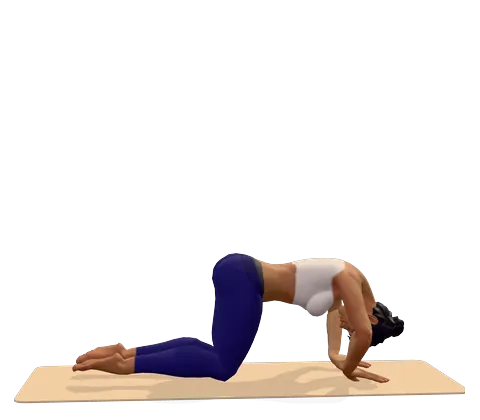
- Kneeling half bow pose: from all fours, reach one hand back for the opposite foot. The kneeling single leg half bow pose adds balance and core work.
- Standing half bow pose: stand near a wall, bend one knee and hold the ankle behind you — a simple quad stretch and the base of dancer pose.
Standing bow pulling pose is the name used in some hot yoga classes for a standing version of this shape. Standing bow pose vs dancer pose: they are very similar; the yoga standing bow pose usually keeps the torso more level. Bowed half moon pose (also called half moon bow pose) adds the same foot hold to half moon, a balancing half moon pose for experienced students; there is also a revolved half moon bow pose.
How to do bow pose after half bow
How to do full bow pose: when both sides of the half bow feel easy, lie on your belly, bend both knees, hold both ankles and kick the feet back to lift chest and thighs together. How to do bow pose for beginners is the same, only lower — lift a few centimetres and hold for two or three breaths. Upward facing bow pose (wheel pose) is a very different, much deeper backbend and is not the next step.
Half bow pose vs half frog pose and bow pose
In the half frog yoga pose (Ardha Bhekasana) the hand presses the top of the foot down beside the hip, so it is a stronger stretch for the knee and ankle. In half bow the foot presses back into the hand and the thigh lifts, so the back and buttock work more. It is also different from bow and arrow pose (archer pose), a seated pose that draws one foot toward the ear. Half bow pose vs bow pose: the full pose lifts both legs and the chest together and needs much more back strength and flexibility.
Is half bow a good yoga pose for back pain?
Gentle back-strengthening poses are part of many yoga poses for back pain relief programmes, and half bow can fit there because the lift is small and controlled. Among yoga poses for low back pain it counts as a strengthening, not a resting, pose. As a yoga pose for lower back pain it works best for stiffness from sitting, not for a new injury. If you are choosing poses for yoga for back pain, start with sphinx and crocodile pose, and add half bow only when those feel easy. See the full guide to yoga for back pain for a safe sequence.
Dhanurasana benefits and contraindications
Both half and full bow pose press the belly into the floor and arch the spine, so the same cautions apply: no prone poses in pregnancy, after abdominal surgery or with a hernia, and extra care with knee, shoulder and lower back problems. If the lower back hurts, lower the thigh, press the pubic bone down and rest the forehead on the mat. Stop if you feel pain spreading into a leg.
Poses before and after half bow
Warm up with cobra pose and half locust. A seated half hero yoga pose (one foot folded beside the hip) and the arms of a half cow face pose prepare the thigh and shoulder. After half bow, rest in child's pose or a gentle half happy baby pose to release the lower back. You can add all of these to your own sequence in the session builder and let the voice guide count the breaths.
Frequently asked questions
How do you do half bow pose?
Lie on your front, come up onto one forearm, bend the opposite knee and hold that ankle with the hand on the same side. Press your hips down and kick your foot into your hand so the thigh lifts slightly. Hold for 3–5 breaths, then switch sides.
What is half bow pose good for?
It stretches the front of the thigh, the hip and the chest on one side and strengthens the lower back and buttocks. It is also a safe way to prepare for full bow pose.
How long should I hold Ardha Dhanurasana?
About 20 seconds, or 3–5 slow breaths, on each side. Beginners can repeat it twice on each side rather than holding longer.
What if I cannot reach my ankle?
Loop a strap around your ankle and hold the strap. You can also do the pose lying on your side, which makes it easier to reach.
Why does my knee hurt in half bow pose?
Usually because the arm is pulling the heel hard toward the buttock. Hold the ankle more loosely, use a strap and let the lift come from the leg pressing back.
Can I do half bow pose lying on my side?
Yes. Lie on one side, rest your head on your lower arm and hold your top ankle. This takes pressure off the belly and lower back.
This page is for general education. Check with your doctor before starting yoga if you are pregnant, have a medical condition or an injury. Stop if you feel pain, dizziness or shortness of breath.