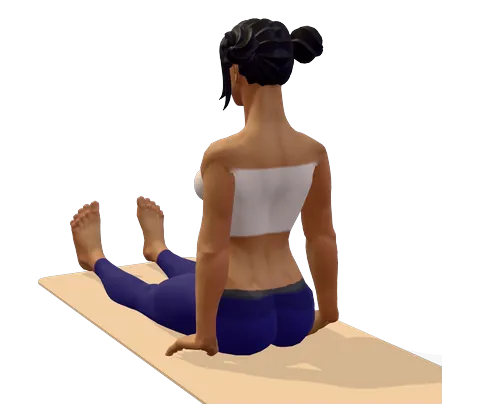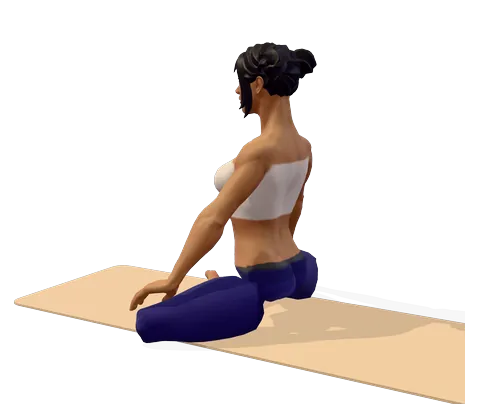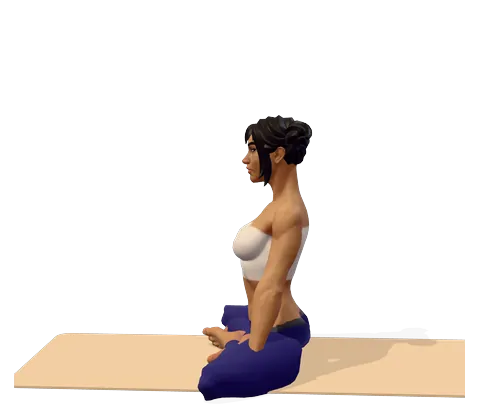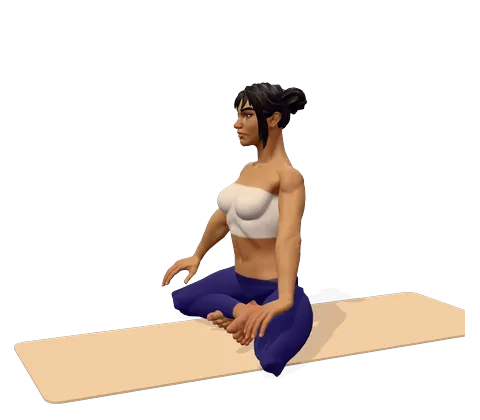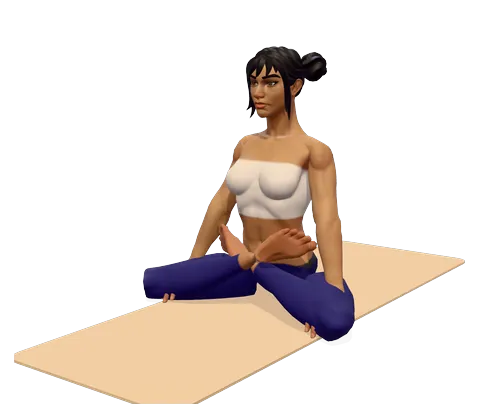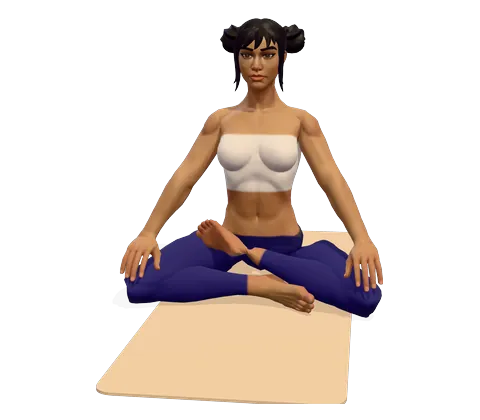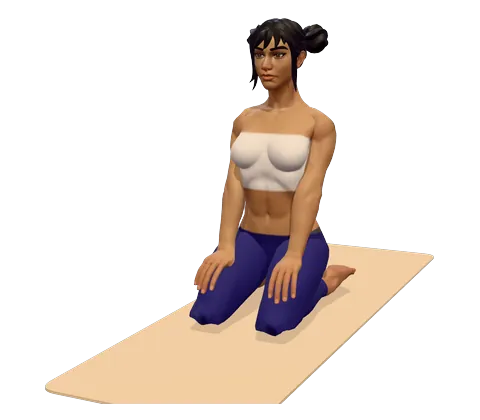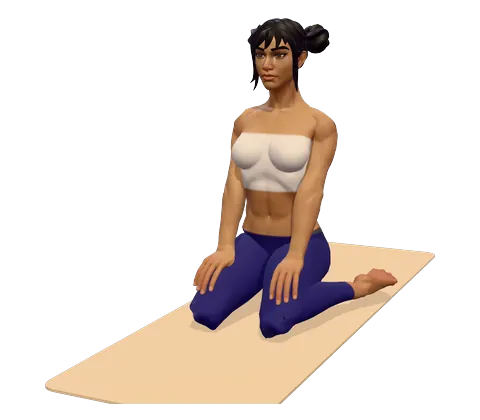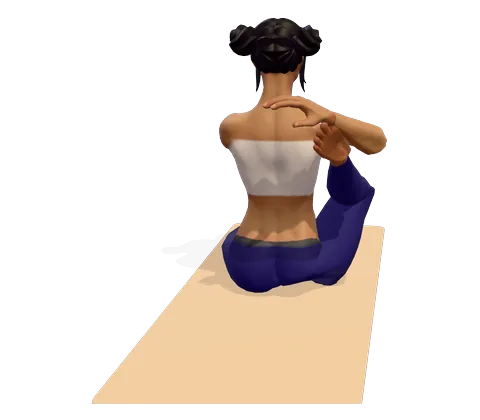
How to do Archer Pose step by step
- Sit in staff pose with both legs straight in front of you and your spine tall. Sit on a folded blanket if your lower back rounds.
- Lean forward and hold your left big toe with the first two fingers and thumb of your left hand. Hold your right big toe the same way with your right hand.
- Keep the left leg straight on the floor. Breathing in, bend your right knee and draw your right foot up and back toward your right ear, lifting the right elbow like an archer drawing a bowstring.
- Keep your chest lifted and your gaze forward, past the left foot. Do not bring your head down to meet the foot.
- Hold for 15–20 seconds, breathing evenly. The straight leg stays active, with the toes pointing up.
- Breathing out, lower the right foot slowly back to the floor and release both toes.
- Shake out the legs, then repeat on the other side with the left foot drawn toward the left ear.
Where you feel Archer Pose: what it stretches and strengthens
Draw your foot toward your ear like pulling a bowstring. In the 3D guide, turn on Body guide: areas that stretch glow green and areas that work glow saffron.
Stretches
- Hamstrings
- Shoulders
- Hip flexors
Strengthens
- Arms
- Spine
Benefits and precautions
Benefits
- Improves flexibility in the hamstrings, hips and groin
- Strengthens the arms, shoulders and upper back as they draw the leg
- Builds coordination, balance on the sit bones and concentration
- Works the core to keep the spine upright
- Prepares the body for advanced seated poses such as leg-behind-the-head variations
Avoid or modify if
- Hamstring tear or pain at the sit bones — skip it until healed and use a strap
- Hip, knee or groin injury, or a hip replacement — ask your physiotherapist first
- Herniated disc, sciatica or sacroiliac joint pain — the pull on the leg can aggravate them
- Pregnancy — skip the full pose; gentle hamstring stretches with a strap are safer
- Shoulder injury — keep the lifted foot low and use a strap instead of pulling hard
Archer pose (Akarna Dhanurasana) is a seated pose in which one leg stays straight while you pull the other foot up toward your ear, like an archer drawing an arrow back to shoot. It asks for open hamstrings and hips, strong arms and steady concentration all at once, so it is usually taught to intermediate students. This page covers how to do Akarna Dhanurasana step by step, its benefits, the poses that prepare you for it, variations and who should avoid it.
What is archer pose in yoga?
The Sanskrit name of archer pose describes the picture: a means "toward" or "near", karna means "ear", dhanu means "bow" and asana means "pose". So the Akarna Dhanurasana meaning in English is "bow pose toward the ear"; the meaning behind the name archer pose is a bow drawn until the string reaches the ear. That is why yoga teachers also call it shooting bow pose or archer's bow pose: the shape copies the shooting position of a bow and arrow in archery. In Hindi it is आकर्ण धनुरासन.
Akarna Dhanurasana is a yoga pose taught in Iyengar yoga and in many Hatha classes. Do not confuse it with bow pose (Dhanurasana), a backbend done lying on your front, or with the "archer pose" of bodybuilding, which is a flexing pose for the camera, not a yoga exercise.
How to do Akarna Dhanurasana step by step
The steps above show one side, as the 3D guide does. These details decide whether the shooting bow posture feels light or strained:
- Straight leg first. The leg on the floor is your anchor. Keep the thigh pressing down and the toes pointing up; if it bends, your hamstrings are not ready for the full pose.
- Lift from the hip, not the knee. The lifted leg should rotate outward from the hip so the knee opens to the side. Pulling a foot up with a closed hip twists the knee.
- Draw with the back. Imagine the archer's elbow sliding back: shoulder blades move together and the chest stays open.
- Head stays up. Bring the foot toward the ear, not the ear down to the foot.
- Breathe evenly. Holding your breath is a sign you have gone too far.
How long to hold archer pose
Hold for 15–20 seconds on each side. Repeat once more if you feel warm and steady. Short, clean holds are better than long, wobbly ones.
Archer pose benefits (Akarna Dhanurasana ke fayde)
Among archer pose benefits in yoga, flexibility comes first. The straight leg stretches its hamstrings and calf, and the lifted leg opens the hip, groin and outer thigh. Because the arms must actively draw the leg up, the shoulders, upper back and arms also work hard, which is unusual for a seated stretch.
Balancing on the sit bones with the limbs doing different jobs also trains coordination and concentration. That is one reason archer-style poses are used for focus and attention, as in our yoga for memory and focus plan. Traditional sources add claims about digestion and the abdominal organs; these are not proven, so treat them as traditional ideas rather than health benefits.
Archer pose muscles worked and stretched
| Stretches | Strengthens |
|---|---|
| Hamstrings and calf of the straight leg | Biceps, shoulders and rhomboids of the drawing arm |
| Hip, groin and outer thigh of the lifted leg | Muscles along the spine that keep you upright |
| Chest and front of the drawing shoulder | Deep abdominal muscles and hip flexors |
Archer pose for beginners: preparatory poses and props
Most people cannot draw the foot to the ear on their first try. Build it in stages. Good Akarna Dhanurasana preparatory poses are:
- Reclining hand-to-big-toe pose for the hamstrings, lying on your back with a strap.
- Head-to-knee pose and seated forward bend for the straight leg.
- Bound angle pose and "cradling" the lifted shin in both arms for the hip.
Easier archer pose variations used in yoga classes: bend the front knee a little, draw the lifted foot only to the chest or chin, loop a strap around the front foot instead of holding the toe, and sit on a folded blanket. Over weeks the foot travels higher.
Archer pose variations
- Cross-grip version: some schools hold the opposite big toes, crossing the arms, which adds a twist through the upper back.
- Akarna Dhanurasana II: in the more advanced stage, the lifted leg straightens up toward the ceiling while you keep hold of the toe, like a fully drawn bow.
- Standing archer: in Kundalini yoga, archer pose is a standing lunge with the front knee bent, one arm stretched forward and the other pulled back at shoulder height, as if drawing a bow. Held for a few minutes, it builds leg strength and focus. It is a different posture that shares the name.
Archer pose vs bow pose (Dhanurasana)
Both names use dhanu, bow, but the shapes are different. In bow pose you lie on your belly and hold both ankles, lifting the chest and thighs so the whole body curves like a bow; it is a backbend that stretches the front of the body. What is bow pose good for? The health benefits of Dhanurasana are mainly back strength and chest opening. In archer pose you sit upright and only one leg becomes the "bowstring", so it is a hamstring and hip stretch with arm work.
Akarna Dhanurasana contraindications and precautions
Check the caution box before you begin. The main risk is forcing the foot toward the ear before the hip and hamstrings allow it, which strains the knee, the sit bones or the lower back. If you feel pain in the knee, hip or back, rather than a stretch, lower the foot and use a strap. Warm up well before attempting the full shooting bow pose; it is not a pose to do cold.
A short archer pose sequence
This Akarna Dhanurasana sequence starts with reclining hand-to-big-toe pose and head-to-knee pose; then practise archer pose on both sides. Finish in staff pose and a gentle seated forward bend. You can save this as your own routine in the sequence builder and let the voice guide time each pose.
आकर्ण धनुरासन (Akarna Dhanurasana in Hindi: meaning, steps and benefits): पैरों को सामने सीधा फैलाकर बैठें। बाएँ हाथ से बाएँ पैर का अँगूठा और दाएँ हाथ से दाएँ पैर का अँगूठा पकड़ें। बायाँ पैर सीधा रखते हुए दाएँ घुटने को मोड़ें और दाएँ पैर को धीरे-धीरे दाएँ कान की ओर खींचें, जैसे धनुष की डोरी खींचते हैं। 15–20 सेकंड रुकें, फिर दूसरी ओर करें। आकर्ण धनुरासन के फायदे: जाँघों के पीछे की मांसपेशियाँ और कूल्हे लचीले होते हैं, बाजू मज़बूत होते हैं और एकाग्रता बढ़ती है। कमर, घुटने या कूल्हे में चोट हो तो यह आसन न करें।
Frequently asked questions
What is archer pose in yoga?
Archer pose (Akarna Dhanurasana) is a seated pose where one leg stays straight and the other foot is drawn up toward the ear, like an archer pulling a bowstring. It stretches the hamstrings and hips and works the arms and shoulders.
What does Akarna Dhanurasana mean?
A means toward, karna means ear, dhanu means bow and asana means pose: "bow pose toward the ear". It is also called shooting bow pose.
Is archer pose hard?
Yes, it is an intermediate-to-advanced pose because it needs flexible hamstrings and hips plus arm strength. Start with a strap and bring the foot only to your chest.
What are the benefits of Akarna Dhanurasana?
It improves hamstring and hip flexibility, strengthens the arms and shoulders, and builds coordination and concentration.
Is archer pose the same as bow pose?
No. Bow pose (Dhanurasana) is a backbend lying on your front. Archer pose is a seated stretch in which one leg is drawn up like a bowstring.
What are the benefits of the Kundalini yoga archer pose?
In Kundalini yoga it is a standing lunge with one arm stretched forward and the other pulled back, as if drawing a bow. It mainly builds leg strength, stamina and focus, and it is a different posture from seated Akarna Dhanurasana.
Who should avoid archer pose?
Skip it with a hamstring tear, hip or knee injury, disc problem, sciatica or during pregnancy, and ask a physiotherapist if you are unsure.
This page is for general education. Check with your doctor before starting yoga if you are pregnant, have a medical condition or an injury. Stop if you feel pain, dizziness or shortness of breath.