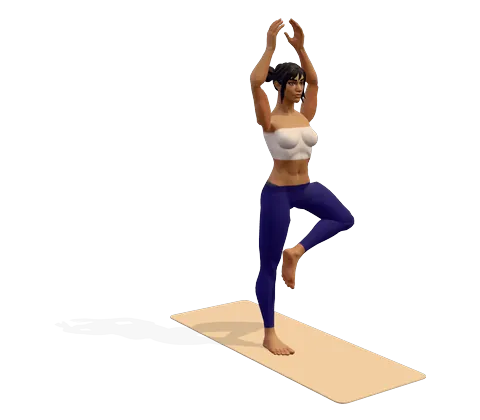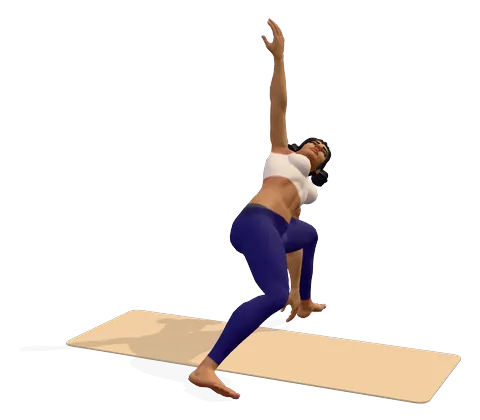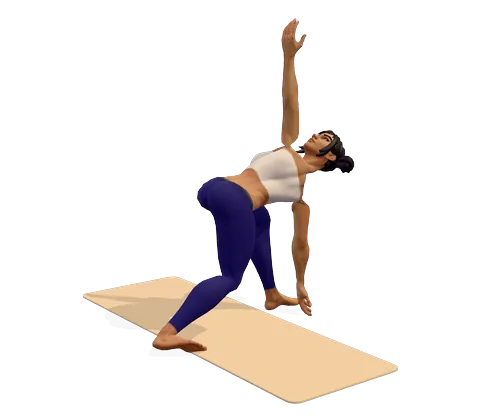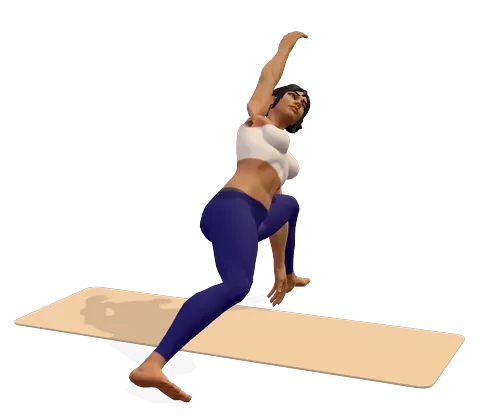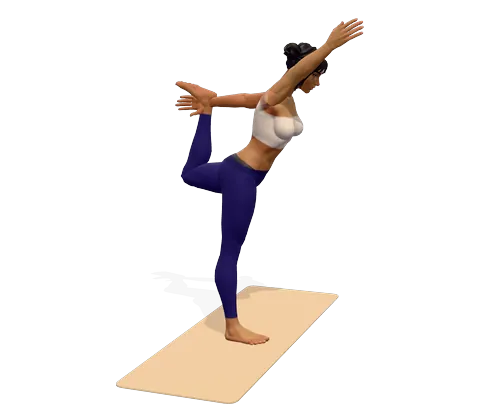
How to do Dancer Pose step by step
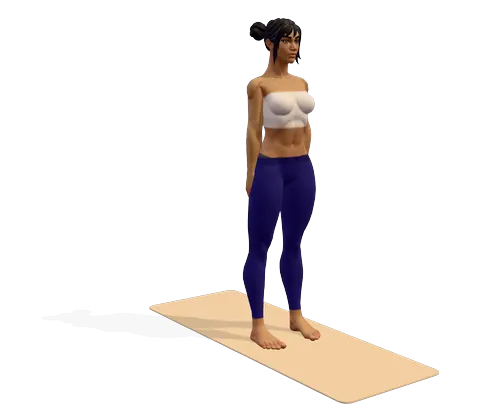
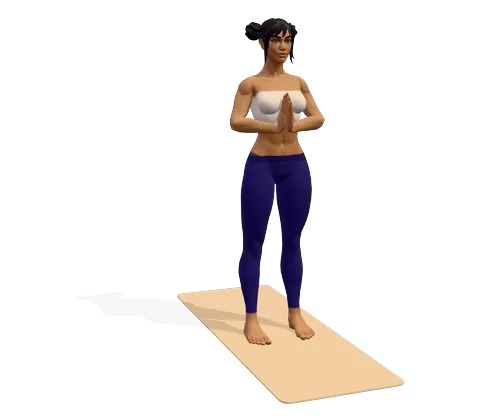
- Stand in Mountain pose with your feet hip-width apart. Shift your weight into your right foot and fix your gaze on one still point in front of you.
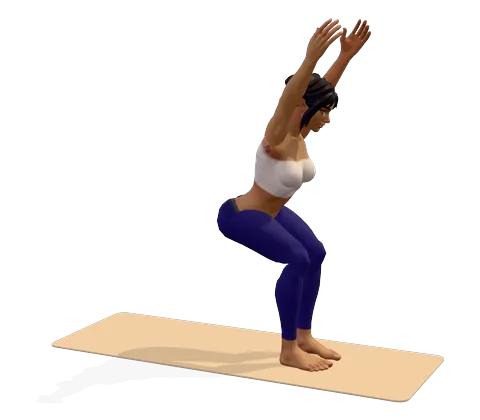
- Bend your left knee and bring your left heel toward your buttock. Reach back with your left hand and hold the inside of your left ankle (or the top of the foot), thumb pointing up.
- Bring your knees close together for a moment and lengthen your tailbone down. Stand tall with a firm, slightly soft right knee.
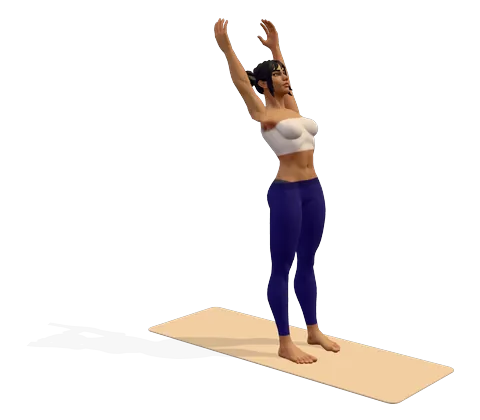
- Raise your right arm forward and up, palm facing down or in, fingers reaching toward your focus point.
- Breathing in, press your left foot back into your hand so the leg lifts behind you. As the foot rises, let your chest tip forward a little to balance the kick.
- Hold for 3–5 steady breaths (about 20 seconds). Keep both hips facing forward and your standing leg strong.
- Breathing out, lower the left knee, let go of the foot and stand on both feet. Shake out the legs, then repeat on the other side.
Where you feel Dancer Pose: what it stretches and strengthens
Kick your foot into your hand to open the front of the body. In the 3D guide, turn on Body guide: areas that stretch glow green and areas that work glow saffron.
Stretches
- Front thighs
- Hip flexors
- Chest
Strengthens
- Glutes
- Hamstrings
- Ankles
Benefits and precautions
Benefits
- Trains balance, steadiness and concentration on one leg
- Stretches the front of the thigh (quadriceps), hip flexors, chest and shoulders
- Strengthens the standing leg, ankle and buttock muscles
- Builds back strength in a controlled, standing backbend
- A counter-shape to long hours of sitting with rounded shoulders
- A lively peak pose that prepares you for deeper backbends
Avoid or modify if
- Ankle, knee or hip injury on either leg — practise the quad stretch at a wall instead
- Low blood pressure, vertigo or dizziness — keep a hand on a wall or chair
- Lower back pain that worsens when you arch — keep the lifted foot low and the chest upright
- Shoulder injury or recent dislocation — use a strap instead of stretching the arm back
- Pregnancy — balance changes as the belly grows, so only practise with support and your doctor’s OK
Dancer pose (Natarajasana) is a standing balance in which you hold one foot behind you, kick it into your hand and reach the other arm forward. It combines balance, a gentle backbend and an open front body. Below: how to do dancer pose step by step, what it is good for, the muscles used, easier variations and who should skip it.
What is dancer pose in yoga?
Dancer pose is a one-legged standing backbend. The Sanskrit name has three parts: nata means "dancer" or "actor", raja means "king" or "lord", and asana means "pose". So the Natarajasana meaning is "pose of the lord of the dance" — Nataraja is the dancing form of Shiva, shown in Indian art balancing on one leg inside a ring of fire. That is why you will also see it called lord of the dance pose or the dancing Shiva pose. In English it is simply dancer pose.
Pronunciation: nah-tah-rah-JAH-sah-nah. In Hindi it is written नटराजासन.
How to do dancer pose step by step (Natarajasana kaise kare)
The steps above take you in and out safely. These dancer pose cues solve the problems most people meet in the first weeks:
- Fix your gaze first. Pick a point on the floor or wall that does not move before you lift anything. A wandering gaze is the most common reason for wobbling.
- Kick, don't pull. The lift comes from pressing the foot back into the hand, not from yanking the ankle up with the arm. This spreads the bend along the spine instead of pinching the lower back.
- Keep the hips level. The lifted knee likes to swing out to the side. Point it straight back, toward the wall behind you.
- Tip forward only as much as the leg rises. Chest and back leg move like a seesaw. If you drop the chest without lifting the leg, you are just bending forward.
- Soft, strong standing knee. Avoid locking it back; grip the floor with all four corners of the foot.
Which grip should you use?
Most beginners hold the inside of the ankle with the thumb pointing up. This is the simplest dancer pose grip and keeps the shoulder comfortable. In the advanced grip the hand turns so the elbow points up and the hand holds the foot from above, which opens the shoulder much more. Only try that once the basic version feels steady.
Dancer pose benefits
What is dancer pose good for? Mostly balance, focus and opening the front of the body. Natarajasana benefits include:
- Balance and concentration. Standing on one leg with a moving arm and leg trains the small stabilising muscles of the foot and ankle and demands full attention. It is one of the poses in our yoga for memory and concentration plan and in the Balance and Focus session.
- A stretch for desk bodies. The hip flexors and quadriceps of the lifted leg lengthen, and the chest and shoulders open — the opposite of sitting hunched over a screen, as in our yoga for posture guide.
- Leg and back strength. The standing leg, buttock and the muscles along the spine all work to hold you up.
Dancer pose muscles used
| Stretches | Strengthens |
|---|---|
| Quadriceps and hip flexors of the lifted leg | Standing-leg quadriceps, hamstrings and calf |
| Chest (pectorals) and front of the shoulders | Gluteal muscles on both sides |
| Abdominal muscles | Erector spinae (back muscles) and small ankle stabilisers |
Dancer pose for beginners and modifications
You do not need to kick high to get the benefits. These dancer pose modifications keep it safe while you build strength and balance:
- Dancer pose at the wall or with a chair: rest your front hand on a wall or the back of a chair. This is the best version for beginners, seniors and anyone with low blood pressure.
- Dancer pose with a strap: loop a strap around the front of the ankle if you cannot reach it. Hold the strap and walk the hand closer over weeks.
- Standing quad stretch: simply hold the ankle with the knees together and stay upright. This is the first stage of the pose and a good warm-up.
- Dancer pose on the floor: lie on your side and hold the top ankle behind you. This lying-down version stretches the same muscles with no balance at all.
- Dancer pose for kids: children enjoy it as a "ballerina" or "statue" game; keep it short and playful.
Advanced variations: king dancer pose
In the full or king dancer pose (sometimes called Purna Natarajasana), both hands reach over your head to hold the lifted foot, and the foot comes close to the back of the head. It needs very open shoulders and a deep, pain-free backbend, so build it only after poses like camel and bow pose feel easy.
Dancer pose vs standing bow
Standing bow pulling pose (Dandayamana Dhanurasana) is the name used in hot yoga for a very similar shape. The difference is mostly emphasis: in standing bow the chest usually travels further forward, toward level with the floor, and the kick is strong and long. In classical Natarajasana the chest stays higher and the foot lifts more toward the head. Both train balance and open the front body; choose the one your class or body prefers.
Dancer pose sequence: warm-up, prep and cool down
Because it is a peak pose, dancer pose feels far easier after a short warm-up. A simple dancer pose sequence:
- Warm up with a few rounds of Surya Namaskar.
- Prepare the hips with low lunge and a standing quad stretch.
- Wake up your balance with tree pose.
- Practise dancer pose on both sides.
- Cool down with a gentle forward fold, then rest in child's pose as the counterpose.
You can build this flow in the sequence builder, or play the ready-made Balance and Focus session from the guided sessions, where the 3D figure shows each transition.
Natarajasana precautions and contraindications
Dancer pose suits most healthy people, but go gently with any condition in the caution box above. Common mistakes are yanking the ankle, letting the knee splay out and collapsing into the lower back. If you feel sharp pain in the back, knee or shoulder, lower the leg and come out.
नटराजासन (Natarajasana) — हिंदी में: सीधे खड़े हों और वजन दाएँ पैर पर लाएँ। बायाँ घुटना मोड़ें और बाएँ हाथ से बायाँ टखना पकड़ें। दायाँ हाथ आगे और ऊपर फैलाएँ, फिर पैर को हाथ में दबाते हुए पीछे उठाएँ और छाती थोड़ी आगे झुकाएँ। 3–5 साँस रुकें, फिर दूसरी ओर करें। नटराजासन के फायदे: संतुलन और एकाग्रता बढ़ती है, जाँघ, कूल्हे और छाती में खिंचाव आता है और पैर मज़बूत होते हैं।
Health conditions this pose is used for
Yoga for memory and concentration
Frequently asked questions
What is Natarajasana and its benefits?
Natarajasana (dancer pose, or lord of the dance pose) is a standing balance and backbend. It improves balance and focus, stretches the thighs, hip flexors, chest and shoulders, and strengthens the standing leg and back.
How long should I hold dancer pose?
Hold for 3–5 slow breaths, about 20 seconds, on each side. Beginners can repeat a shorter hold two or three times rather than struggling through one long one.
Why do I keep falling out of dancer pose?
Usually the gaze moves, the standing knee locks, or the chest drops before the leg lifts. Fix your eyes on one point, keep a micro-bend in the standing knee and move chest and leg together. A wall under your front hand helps while you learn.
Is dancer pose good for beginners?
The full pose is intermediate, but the standing quad stretch and the wall-supported version are fine for beginners. Build up over a few weeks.
What is the difference between dancer pose and standing bow?
They are close relatives. Standing bow pulling pose (Dandayamana Dhanurasana) usually brings the chest lower and kicks the leg longer; classical dancer pose keeps the chest higher and lifts the foot more.
Who should not do dancer pose?
Skip it or use a wall if you have an ankle, knee, hip or shoulder injury, low blood pressure or dizziness, or back pain that worsens with arching. In pregnancy, practise only with support and your doctor’s approval.
What does Natarajasana mean in English?
Nata means dancer, raja means king or lord, and asana means pose — "pose of the lord of the dance", a name for Shiva as the cosmic dancer.
This page is for general education. Check with your doctor before starting yoga if you are pregnant, have a medical condition or an injury. Stop if you feel pain, dizziness or shortness of breath.