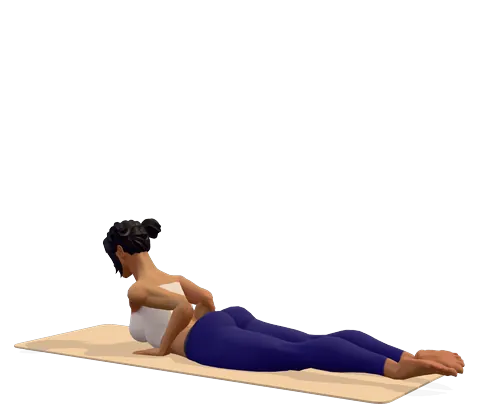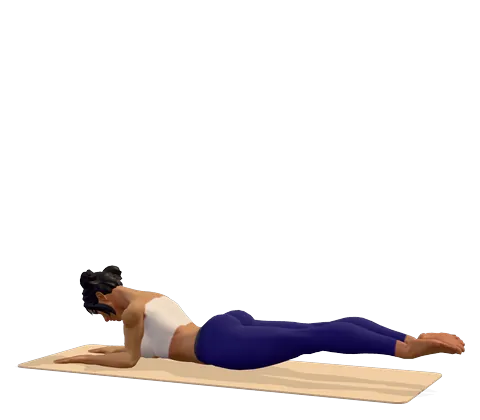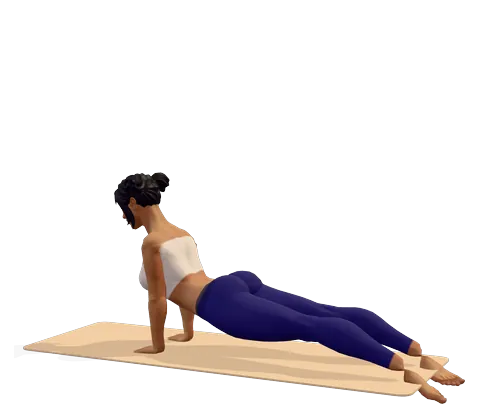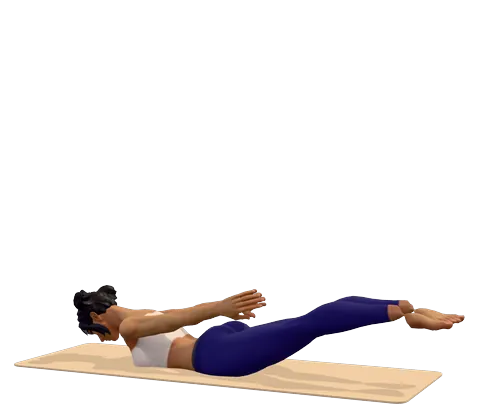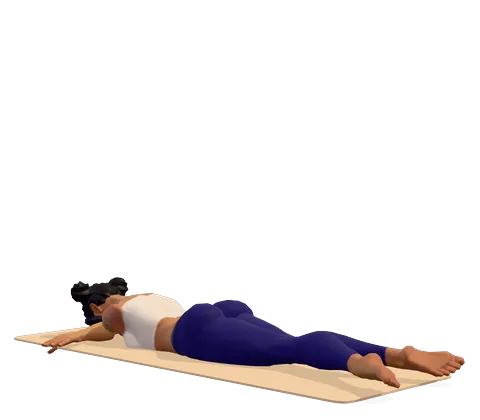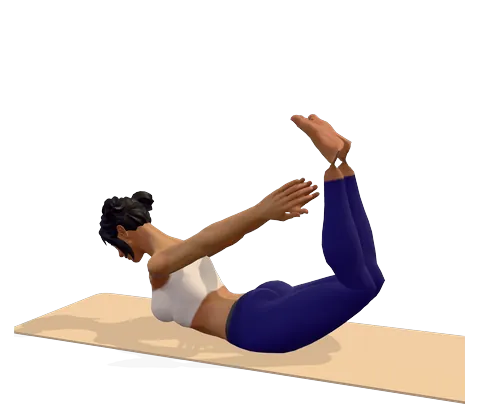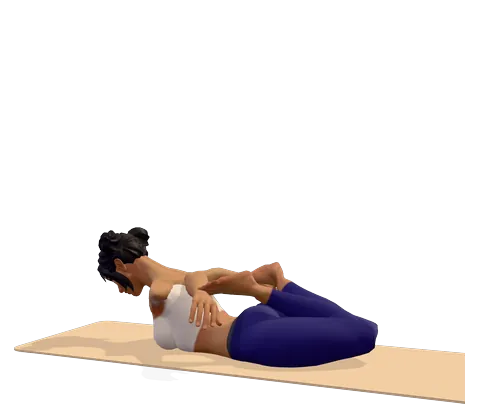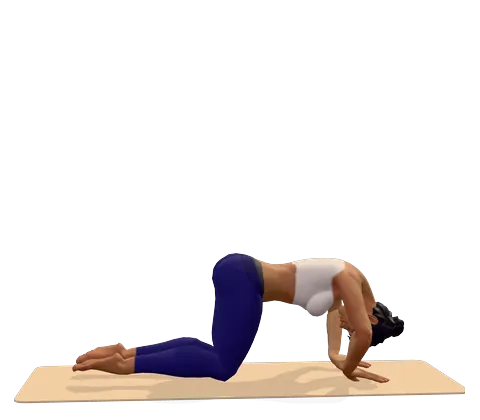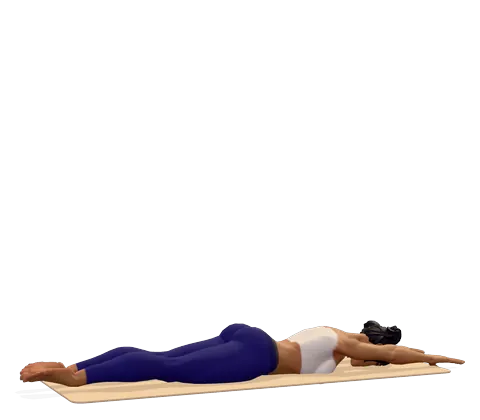
How to do Reversed Corpse Pose step by step
- Lie on your front with your legs straight and a little apart, the tops of your feet resting on the mat.
- Stretch both arms forward past your head, shoulder-width apart, palms facing down.
- Rest your forehead on the mat or on a folded towel so your nose is free and your neck is long.
- Let your legs, belly, shoulders and face soften. Allow your whole weight to sink into the floor.
- Breathe slowly through the nose. Notice your belly pressing gently into the floor as you breathe in.
- Stay for about a minute, or longer if it is comfortable.
- To come out, bend your elbows, bring your hands under your shoulders and turn your head to one side. Rest a moment, then press back into child's pose or roll onto your back.
Where you feel Reversed Corpse Pose: what it stretches and strengthens
Stretch your arms overhead and let your whole body rest on the floor. In the 3D guide, turn on Body guide: areas that stretch glow green and areas that work glow saffron.
Stretches
- Shoulders
- Abs
Benefits and precautions
Benefits
- Gives the body a rest between poses done lying on the front, such as cobra and locust
- Gently lengthens the shoulders, the sides of the body and the abdomen
- Lets the lower back settle after backbends
- Makes belly breathing easy to feel, which can help you calm down
- A comfortable alternative to Savasana for people who relax better face down
Avoid or modify if
- Pregnancy — do not lie on your belly; rest on your left side with a pillow between the knees instead
- Recent abdominal surgery or a painful hernia
- Shoulder pain with the arms overhead — keep your arms by your sides or fold them under your forehead
- Blocked nose or breathing trouble when lying face down — turn your head to one side or rest on your back
- Lower back pain when lying flat on the front — place a thin pillow under your belly
Reverse corpse pose (Advasana) is a resting pose done lying on your front. Where Savasana has you lie on your back, Advasana turns you over: legs long, arms stretched over your head, forehead on the mat. It is simple, needs no strength and is often used to rest between backbends such as cobra and locust. This page explains how to do reverse corpse pose, its benefits, props that make it comfortable, and who should rest in a different position.
What is Advasana?
First, what is corpse pose? In yoga, corpse pose (Savasana) is lying still on your back at the end of practice, letting the body and mind rest. Advasana is its prone partner, which is why it is called reverse corpse pose, prone relaxation pose or sometimes inverted corpse pose. It is not an inversion — your head is not below your heart — only the body is turned face down.
Advasana meaning
The Sanskrit name is usually translated as "face-down pose"; asana means "pose" or "seat". Do not confuse Advasana with Navasana, which is boat pose, a strong core pose done sitting up. Some books list the pose as "reverse corpse pose (Savasana)" because it is simply Savasana done face down.
How to do Advasana (Advasana kaise kare)
The steps above follow the 3D figure. Because this pose is about letting go, the details are about comfort:
- Forehead, not nose: rest on the forehead so the nose has space. A folded towel under the forehead helps if the floor feels hard.
- Arms long but soft: reach the arms forward, then let them relax. If the shoulders pinch, bend the elbows slightly or move the arms wider.
- Feet relaxed: let the heels fall out or in, whatever is easiest.
- Belly soft: let the belly spread onto the floor as you breathe in. This makes belly breathing easy to feel.
If you wonder how to do Shavasana on your back, the idea is the same: lie still, soften every muscle and let the breath be natural. See the corpse pose guide.
Reverse corpse pose benefits
Reverse corpse pose benefits are mostly about rest. It lets the heart rate and breathing settle after effort, and the gentle reach of the arms lengthens the shoulders, the sides of the body and the abdomen. Lying face down, many people feel the breath moving into the back and belly, which can make them calmer; that is why prone rest often appears in yoga for stress relief. Some yoga schools traditionally recommend Advasana for people with a stiff neck or a stooping posture, but this is based on tradition, not research.
Advasana for relaxation and sleep
Advasana is one of the simple yoga poses for relaxation, alongside Savasana, crocodile pose and child's pose. Among yoga poses for relaxation and sleep it suits people who naturally sleep on their front. For a longer guided rest, try Yoga Nidra or the Bedtime Yoga for Sleep session in guided practice.
Advasana vs Savasana and crocodile pose
| Pose | Position | Arms | Best for |
|---|---|---|---|
| Savasana (corpse pose) | On the back | By the sides, palms up | The relaxing pose at the end of yoga |
| Advasana (reverse corpse pose) | On the front | Stretched overhead | Rest between prone poses; a light shoulder stretch |
| Makarasana (crocodile pose) | On the front | Folded under the head | Rest with less shoulder stretch; easy belly breathing |
So which is the right yoga corpse pose? Savasana yoga is usually the final rest. Reverse corpse pose yoga is a short rest in the middle of practice, or a choice for anyone who finds lying on the back uncomfortable.
Is Advasana good for back pain?
Many people with back pain find lying on the front comfortable, and resting prone between gentle backbends is part of many yoga poses for back pain relief routines. Advasana is not a treatment on its own, but it is a calm place to return to. If the lower back aches when you lie flat, place a thin pillow under your belly. Some workouts poses for back pain include this kind of rest between sets. For a full plan of poses for yoga for back pain and lower back pain relief, see yoga for back pain. If getting to the floor is hard, chair yoga poses for back pain are a good alternative.
Advasana for beginners
This is a very good yoga pose for beginners because it asks nothing except stillness. It is also useful for beginners after some workouts: poses for relaxation like this help the body switch from effort to rest. If you are new, try it between popular yoga poses for beginners such as cobra and half locust: lift, then rest in Advasana for a few breaths, then lift again. Used this way it fits well into beginner yoga poses for back pain routines. There is no video on corpse pose here, but the 3D guide shows the shape and the voice guide times the rest for you.
अद्वासन (Advasana) — हिंदी में: पेट के बल सीधे लेट जाएँ और दोनों हाथ सिर के आगे फैला दें, हथेलियाँ नीचे। माथा ज़मीन या मुड़े तौलिये पर रखें और पूरे शरीर को ढीला छोड़ दें। धीमी, सहज साँस लेते हुए लगभग एक मिनट रुकें। यह आसन पेट के बल किए जाने वाले आसनों के बीच आराम देता है और कंधों को हल्का खिंचाव देता है। गर्भावस्था में यह आसन न करें।
Advasana precautions
Advasana is gentle, but lying face down is not right for everyone. In pregnancy, rest on your left side instead. After abdominal surgery, wait until your surgeon says lying on the belly is fine. With shoulder pain, keep the arms by your sides. If lying on your front makes breathing harder, rest on your back or side.
Frequently asked questions
What is reverse corpse pose?
Reverse corpse pose (Advasana) is a resting pose done lying face down with the legs long and the arms stretched overhead. It is the prone version of Savasana.
What are the benefits of Advasana?
It lets the body rest between poses done on the front, gently lengthens the shoulders and abdomen, lets the lower back settle after backbends and makes belly breathing easy to feel.
How long should I stay in Advasana?
About a minute between poses, or longer at the end of a practice if you are comfortable.
Is Advasana the same as Savasana?
No. Savasana is done lying on your back. Advasana is done lying on your front. Both are resting poses.
Can I do Advasana during pregnancy?
No. Avoid lying on your belly in pregnancy. Rest on your left side with a pillow between your knees instead.
What if my neck hurts face down?
Place a folded towel under your forehead, or turn your head to one side and switch sides halfway through.
This page is for general education. Check with your doctor before starting yoga if you are pregnant, have a medical condition or an injury. Stop if you feel pain, dizziness or shortness of breath.