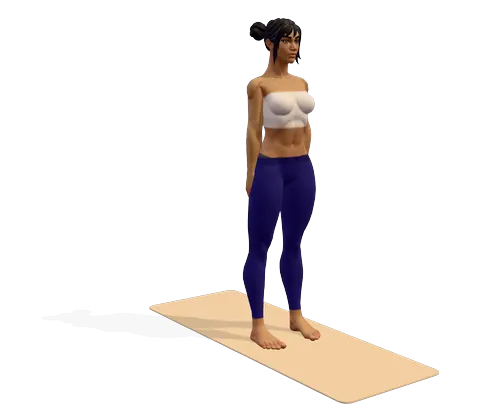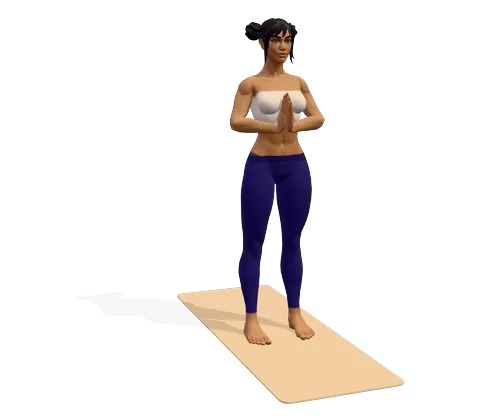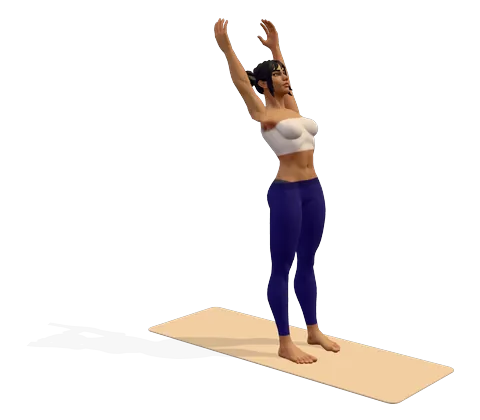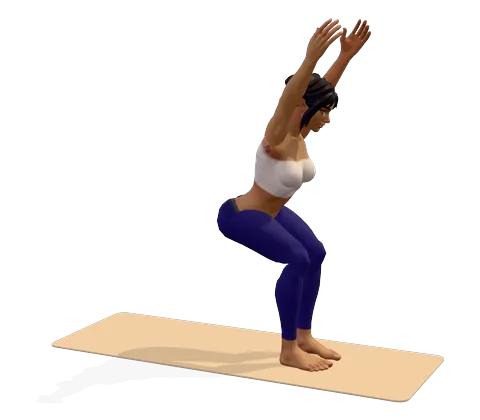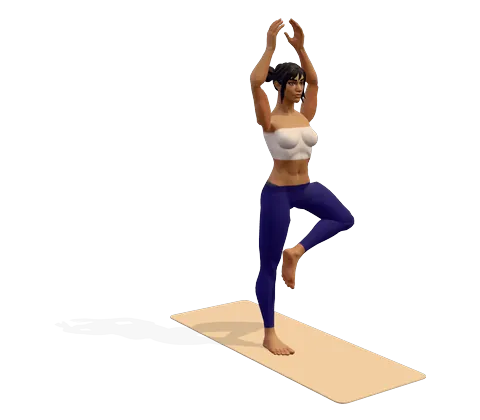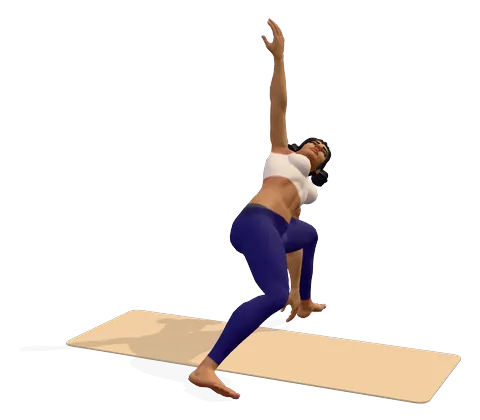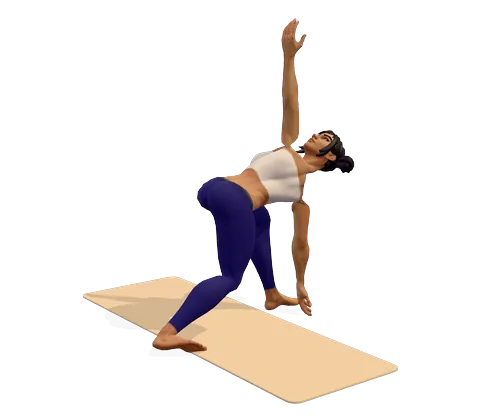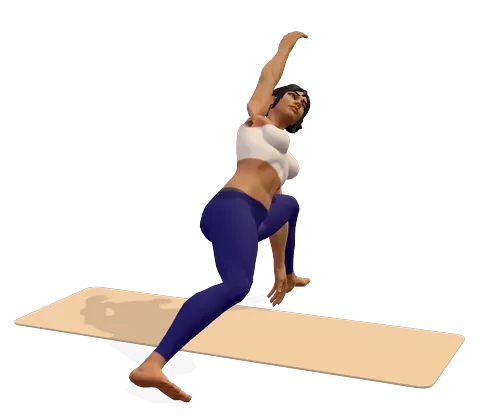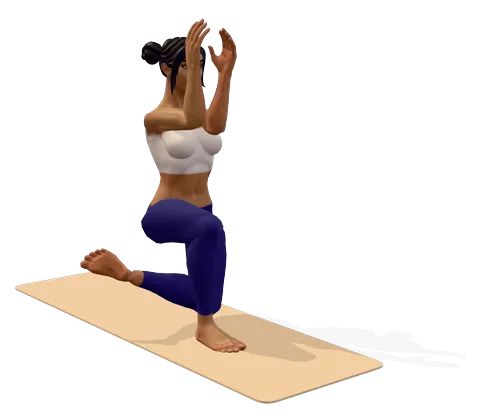
How to do Horse Face Pose step by step
- Sit on the mat and bring your left foot into half lotus, the top of the foot resting high on your right thigh, close to the hip crease.
- Place your hands on the floor or on two blocks beside your hips. Lean forward and lower your left knee onto a folded blanket.
- Step your right foot forward and plant it flat beside your left knee, right knee bent and pointing forward.
- Press into the right foot and the left knee to lift your hips until your pelvis is level and your trunk is upright.
- Bring your arms in front of your chest, cross them at the elbows and press your palms or the backs of your hands together, fingers pointing up.
- Balance for 3–5 slow breaths (about 15–20 seconds), gaze at one still point and keep your chest lifted.
- Unwrap the arms, put your hands back on the floor, sit down and release the half lotus slowly with your hands. Rest, then repeat on the right side.
Where you feel Horse Face Pose: what it stretches and strengthens
Balance on the bent leg and keep your spine upright. In the 3D guide, turn on Body guide: areas that stretch glow green and areas that work glow saffron.
Stretches
- Hip flexors
- Glutes
Strengthens
- Front thighs
- Ankles
- Abs
Benefits and precautions
Benefits
- Opens the hips, especially the outward rotation needed for lotus and half lotus
- Strengthens the thigh and buttock of the standing leg
- Trains balance, focus and body awareness on a small, unstable base
- Stretches the back of the shoulders and upper back through the arm wrap
- A useful test of how ready your hips and knees are for deeper seated poses
Avoid or modify if
- Any knee injury, meniscus tear, knee surgery or knee replacement — the half-lotus knee is loaded while you kneel on it
- Hip replacement or hip pain when the leg turns outward — ask your surgeon or physiotherapist
- Pregnancy — the balance and the deep hip rotation are not advised; choose a supported seated pose
- Ankle stiffness or injury — the ankle of the lotus foot must not sickle or twist
- Shoulder injury — skip the arm wrap and keep your hands at your chest or on a chair
- Stop at once if you feel sharp pain inside the knee; tightness in the outer hip is normal, knee pain is not
Horse face pose (Vatayanasana) is an advanced balancing pose from classical Hatha yoga. You kneel on one knee with that foot tucked in half lotus on the opposite thigh, stand the other foot on the floor, lift your hips and wrap your arms in front of your face. It asks for open hips, healthy knees and a steady mind, so most people build up to it over weeks. Below: what it is, how it differs from the "horse pose" of many classes, how to prepare and who should not try it.
What is horse face pose in yoga?
Vatayanasana was made widely known by B.K.S. Iyengar's book Light on Yoga. The Sanskrit word vatayana is a poetic name for a horse, "one that moves like the wind" (vata means wind), and asana means pose. So Vatayanasana (horse face pose) literally means "horse pose"; the English name adds "face" to separate it from the horse stance used in martial arts.
Why is it called horse face pose?
Teachers explain the name in slightly different ways. The usual idea is about shape: picture a horse's face from the side, long and narrow. In the finished pose, the upright trunk with the arms pressed together in front of the face makes a similar long line. Seen from the front, the crossed arms and narrow base make the pose look like a horse's head. The horse face is only an image to help you remember the shape. In the 3D guide you can rotate the figure to compare the side view and front view of horse face pose yourself.
Horse face pose vs horse pose and goddess pose
Ask "what is horse pose in yoga" and most answers describe something different: a wide-legged squat with the feet turned out and the spine upright, borrowed from the horse stance of martial arts.
- Benefits of horse stance pose: it strengthens the thighs, buttocks and inner legs and builds stamina in the legs.
- Horse pose vs goddess pose: they are close cousins. Goddess pose usually turns the toes out more and lifts the arms into a "cactus" shape; horse stance often keeps the feet more parallel with the hands at the chest or on the thighs.
- Vatayanasana horse pose: the classical pose on this page, with one knee down, one foot in half lotus and the arms wrapped. It works hips and balance more than leg strength.
How to do Vatayanasana step by step
The steps above show the full route in and out. The 3D guide demonstrates the left side first: left foot in half lotus, left knee down, right foot standing. These points make the difference between a steady horse face pose and a wobbly one:
- Pad the kneeling knee. A folded blanket or a second mat under the knee spreads the weight.
- Keep the lotus foot high. The top of the foot should sit in the hip crease, not halfway down the thigh. A low foot twists the ankle and puts strain on the knee.
- Stack the standing knee over the ankle. Your right shin stays vertical, and the foot presses down through the heel.
- Square the pelvis. Both hip points face forward. If one hip drops, lower your hips a little until you can keep them level.
- Arms like eagle pose. Cross the elbows in front of the chest and lift the forearms, as in eagle pose.
How long to hold it
Hold for 15–20 seconds on each side at first, and rest between sides. Coming in twice with good form beats one long hold while the knee complains.
How to prepare: cow face, pigeon and kneeling poses
Vatayanasana depends on hip rotation. Work on these poses first, and try the full pose only when each one is comfortable:
- Half lotus: if the foot cannot rest on the opposite thigh in a seated half lotus without knee pain, you are not ready to kneel on that knee.
- Cow face pose: what is cow face pose? A seated pose with the knees stacked and one arm reaching up behind the back to clasp the other hand. The cow face pose arms stretch the shoulders, and its benefits for the outer hips carry over directly. A half cow face pose, with the lower leg straight, is a gentler start. A reclined cow face pose (on your back, knees crossed, holding the shins) works the same muscles without body weight.
- Pigeon pose: opens the outer hip of the front leg.
- Thunderbolt pose (Vajrasana): a simple test of whether your knees accept kneeling. To perform Vajrasana, kneel, bring your big toes together and sit back on your heels. If this hurts, keep horse face pose for later.
Vatayanasana benefits
Horse face pose benefits come mostly from its demand for hip mobility and balance. The lotus hip turns strongly outward, which stretches the deep buttock muscles and the front of the thigh. The standing leg works like a lunge, strengthening the thigh and buttock. Because the base is so small, the pose needs full attention, which is why it is often described as good for concentration.
There is no research on this particular pose, so treat bigger claims with care: hip opening, leg strength, balance and a shoulder stretch are what you can expect.
Muscles worked in horse face pose
| Stretches | Strengthens |
|---|---|
| Deep hip rotators and outer buttock of the lotus leg | Quadriceps and buttock of the standing leg |
| Front of the ankle and top of the foot (lotus side) | Hip stabilisers on both sides |
| Upper back and back of the shoulders (arm wrap) | Deep core muscles that keep the trunk upright |
Horse face pose for beginners: easier versions
- Hands down: keep your fingertips on blocks beside the hips instead of wrapping the arms. You still get the hip opening with much less balance.
- No lotus: kneel on the left knee with the left shin flat behind you and the right foot forward (a low lunge), then add the arm wrap. This keeps the balance and shoulder work and removes the knee risk.
- Lying down: practise the leg shape on your back — one ankle on the opposite thigh, like a figure four — before you ever put weight on it.
Who should not do horse face pose
This is not a pose for everyone. Skip it with the conditions in the caution box, and never force the lotus foot into place with your hands while the knee hurts. The knee is a hinge and does not rotate far; when the hip is tight, the twist ends up in the knee instead. Pain inside the knee means come out, not push through.
Horse face pose is not a pose for back pain either. If your back is the main concern, gentler asanas for back pain relief such as cat-cow, child's pose and sphinx are a better start, and pigeon pose for lower back pain helps some people by releasing tight hips. See our yoga for back pain plan and check with a physiotherapist.
What to do before and after
Warm the hips for 10 minutes first with hip circles, lunges, cow face and pigeon. Afterwards, sit in staff pose with the legs straight and shake them out gently, then rest. How to do Shavasana: lie on your back, let the feet fall open and the arms rest away from the body, close your eyes and breathe normally for a few minutes. Add corpse pose to your own hip-opening sequence in the sequence builder.
Frequently asked questions
What is Vatayanasana?
Vatayanasana, or horse face pose, is an advanced kneeling balance. One foot rests in half lotus on the opposite thigh, that knee rests on the floor, the other foot stands flat and the arms wrap in front of the face.
Is horse face pose the same as horse pose?
No. In most classes "horse pose" means horse stance, a wide-legged squat similar to goddess pose. Horse face pose (Vatayanasana) is a kneeling balance with one foot in half lotus.
What are the benefits of horse face pose?
It opens the hips, strengthens the thigh of the standing leg, improves balance and focus, and stretches the upper back and shoulders through the arm wrap.
Is Vatayanasana safe for the knees?
Only for healthy knees and open hips. If half lotus or kneeling hurts your knee, practise the easier versions without the lotus foot, or skip the pose.
How long should I hold horse face pose?
Start with 15–20 seconds (3–5 breaths) on each side. Practise the left side first, rest, then the right side.
Which poses prepare you for Vatayanasana?
Half lotus, cow face pose, pigeon pose, eagle arms and thunderbolt pose. When these feel easy and pain-free, try the full pose with your hands on blocks.
Can beginners do horse face pose?
Beginners should start with the low-lunge version and eagle arms, or practise the leg shape lying on the back. The full pose is best left until half lotus is comfortable.
This page is for general education. Check with your doctor before starting yoga if you are pregnant, have a medical condition or an injury. Stop if you feel pain, dizziness or shortness of breath.