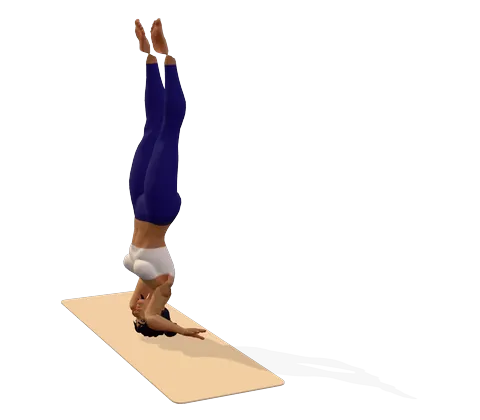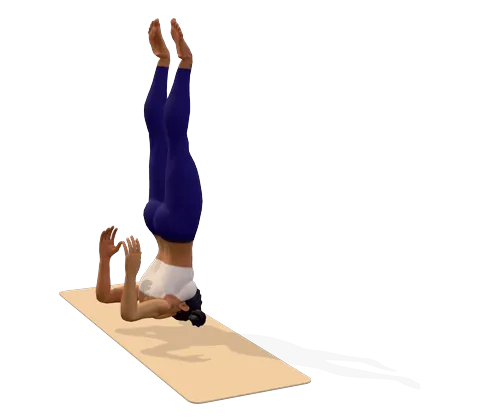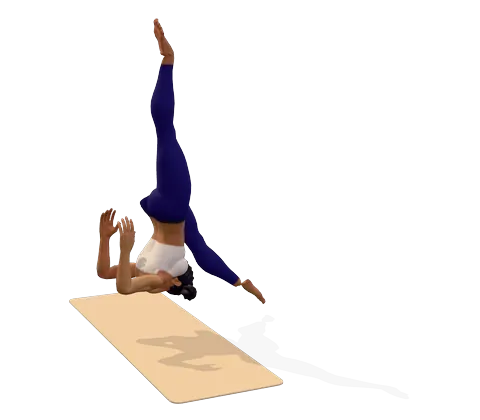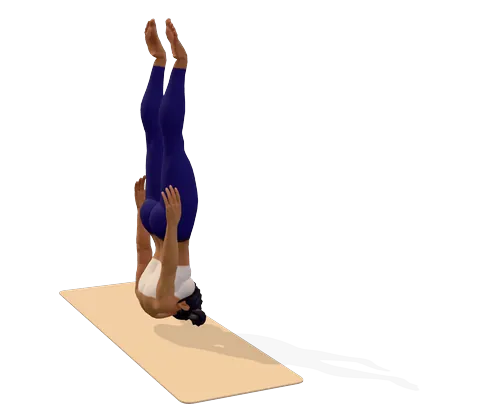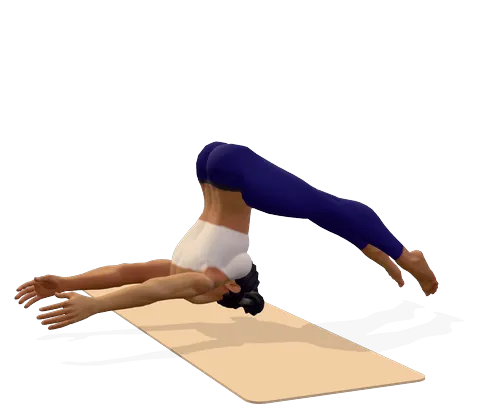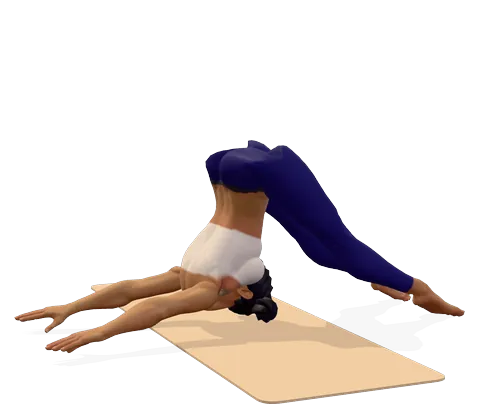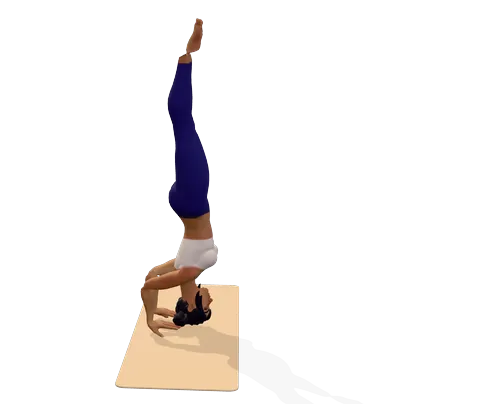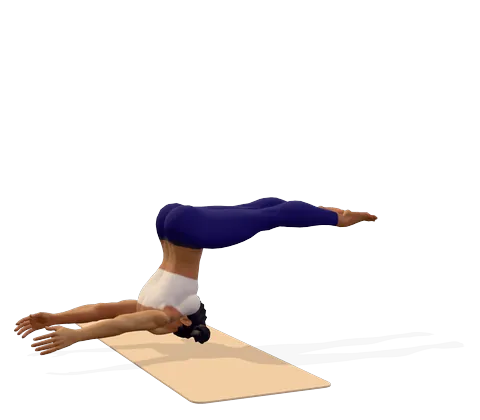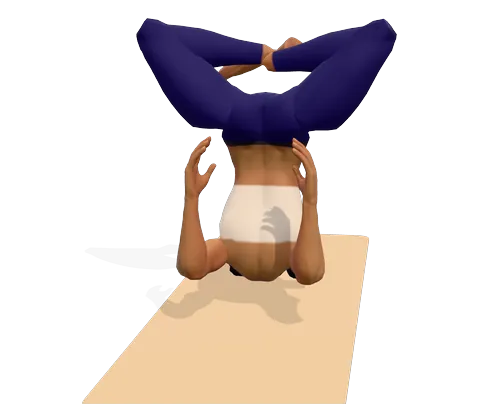
How to do Lotus in Shoulder Stand step by step
- Warm up with hip openers, then come into supported shoulder stand (Salamba Sarvangasana) on a folded blanket, hands supporting your back and hips over your shoulders.
- Keep your left hand on your back. With your right hand, bend your right knee and place your right foot high on your left thigh.
- Return your right hand to your back. Bend your left knee and fold your left foot over onto your right thigh, using your left hand only if the knee is completely comfortable.
- Point your knees towards the ceiling so the lotus balances over your hips. Keep your elbows in and your hands high on your back.
- Keep your neck still, your gaze towards your chest and your breath slow.
- Hold for 2–4 breaths (about 15 seconds).
- Unfold the lotus one leg at a time, straighten both legs into shoulder stand, then roll down slowly. Practise with the other leg on top next time.
Where you feel Lotus in Shoulder Stand: what it stretches and strengthens
Fold your legs into lotus and balance them over your hips. In the 3D guide, turn on Body guide: areas that stretch glow green and areas that work glow saffron.
Stretches
- Knees
- Hip flexors
- Neck
Strengthens
- Abs
- Shoulders
Benefits and precautions
Benefits
- Stretches the hips, knees and ankles in the lotus fold for those already comfortable in Padmasana
- Works the abdominal and shoulder muscles that keep the body upright on the shoulders
- Stretches the back of the neck and upper back, as in shoulder stand
- Trains balance and calm focus while upside down
- Prepares you for other lotus variations in shoulder stand, such as Pindasana
Avoid or modify if
- Any knee injury, meniscus tear, knee surgery or pain in lotus — do not practise
- Neck injury, cervical spondylosis, disc problems or osteoporosis
- High blood pressure, heart disease, glaucoma or a detached retina
- Pregnancy, epilepsy, a migraine attack, or a cold or sinus infection
- On a full stomach; many people choose to skip inversions during their period
- If you cannot sit in full lotus on both sides without pain, you are not ready for this pose
Urdhva Padmasana (lotus in shoulder stand) is an advanced inversion: from supported shoulder stand, you fold your legs into full lotus and balance the lotus over your hips with your knees pointing up. It is also called upward lotus pose, and in lotus shoulder stand yoga classes it usually comes near the end of the inversion sequence. Because it asks for healthy knees in lotus and a safe neck in shoulder stand at the same time, it is a level-4 pose on this site. This page explains what the pose is, what you need before you try it, and when to skip it.
Urdhva Padmasana meaning
The name has three parts: urdhva means "upward" or "raised", padma means "lotus" and asana means "pose". So Urdhva Padmasana is "raised lotus": the lotus position turned upside down. In Hindi it is ऊर्ध्व पद्मासन. In Iyengar yoga and in Light on Yoga it is taught as a variation of supported shoulder stand (Salamba Sarvangasana), the classic shoulder stand pose in yoga. A related pose, Urdhva Padmasana in Sirsasana, folds the lotus in headstand instead; it is even harder.
What is the lotus position in yoga?
Lotus pose in Sanskrit is Padmasana: a seated position with each foot resting on the opposite thigh, soles facing up. The lotus position in yoga is the classic seat for meditation and breathing. The lotus flower yoga pose gets its name from the plant: a lotus grows from muddy water yet opens clean above it, which is why a lotus represents purity and awakening in Indian traditions. The meaning of the lotus symbol is also part of Padmasana and its significance as a meditation seat. See our lotus pose guide for how to sit in Padmasana safely, with the full Padmasana procedure and benefits.
Prerequisites: are you ready?
Only try lotus in shoulder stand when all of these are true:
- You can sit in full lotus on both sides for a few minutes with no pain inside the knees.
- You can fold your legs into lotus with little or no help from your hands.
- You can hold supported shoulder stand for at least a minute with a steady neck, using a folded blanket under your shoulders.
- You are comfortable in plow pose and can come down from shoulder stand with control.
Never force lotus while upside down. In shoulder stand you cannot see your knees or ease in slowly, and a twisting force on the knee can tear the meniscus. If one knee complains, stop and unfold at once.
How to do Urdhva Padmasana (Urdhva Padmasana kaise kare)
The steps above show the method with one hand always supporting the back. These details keep it safe:
- Blanket under the shoulders. A firm fold under the shoulders, with the head on the mat, protects the curve of the neck.
- Hips over shoulders first. Get a stable shoulder stand before you bend a single knee.
- Knees point up. Once in lotus, aim the knees at the ceiling. If they fall towards your face, your back rounds and the neck takes more weight.
- Never turn the head. Keep looking towards your chest the whole time.
- Change the legs. Alternate which leg goes on top from one practice to the next.
Some practitioners fold lotus while sitting, lie back and roll up with the lotus already in place. This avoids folding the legs upside down but needs a strong core; it is fine if it is comfortable for you.
Urdhva Padmasana benefits
The benefits of this pose combine those of its two parts. Like the lotus seat, it keeps the hips, knees and ankles mobile for people already comfortable in Padmasana. Like shoulder stand, it stretches the back of the neck and upper back and works the abdominal and shoulder muscles that keep you upright. Balancing a lotus upside down also trains focus. Traditional texts praise the lotus pose in yoga for calm and steady breathing, and those lotus pose yoga benefits belong mainly to the seated form; the benefits of sitting in the lotus position are best gained by sitting, and there is little research on the inverted version itself.
Is it a yoga pose for lower back pain? No. It loads the neck and rounds the upper back, so it is not among the yoga poses for back pain relief. Choose gentle poses from our yoga for back pain plan instead.
Modifications and variations
- Half lotus in shoulder stand: fold only one leg into Ardha Padmasana, the half lotus pose of yoga, and keep the other leg straight up. Change sides. This is the best choice if full lotus is not yet easy, and it builds on the half lotus sitting position.
- Cross-legged shoulder stand: simply cross the shins in shoulder stand, with no lotus at all.
- Hands on the knees: in the classical version, the hands leave the back and the straight arms support the knees. Experts only.
- Pindasana (embryo in shoulder stand): from lotus, lower the knees towards the head and wrap the arms around the legs.
Modifications for yoga poses like this one exist to protect the knees and neck; there is no benefit in forcing the full shape.
What to do after lotus in shoulder stand
Roll down slowly and rest on your back. Fish pose, done with the legs straight or in lotus, is the classic counter-pose for the neck. Then rest in Savasana. You can add these to your own sequence with the sequence builder or follow a guided session on the practice page.
ऊर्ध्व पद्मासन (Urdhva Padmasana) — हिंदी में: पहले सर्वांगासन में आएँ, हाथों से पीठ को सहारा दें। फिर एक-एक पैर मोड़कर हवा में पद्मासन बनाएँ और घुटनों को छत की ओर रखें। 2–4 साँस रुकें और धीरे-धीरे पैर खोलकर नीचे आएँ। पद्मासन के फायदे की तरह यह कूल्हों को लचीला रखता है और पेट व कंधे मज़बूत करता है। घुटने या गर्दन की चोट, हाई ब्लड प्रेशर या गर्भावस्था में यह आसन न करें।
Frequently asked questions
What is Urdhva Padmasana?
Urdhva Padmasana (upward lotus pose) is full lotus done in shoulder stand: your weight is on your shoulders, your hands support your back and your legs are folded in lotus with the knees pointing up.
What is a lotus pose?
Lotus pose (Padmasana) is a seated position with each foot resting on the opposite thigh. It is the classic meditation seat in yoga and the base for lotus variations such as this one.
Is lotus in shoulder stand safe?
Only for experienced practitioners with pain-free knees in lotus and a healthy neck. Avoid it with knee or neck injuries, high blood pressure, glaucoma, pregnancy or during a migraine.
How long should I hold Urdhva Padmasana?
About 15 seconds, or 2–4 breaths. Change which leg is on top each time you practise.
What can I do instead if lotus is too hard?
Fold one leg into half lotus in shoulder stand, or simply cross your shins. Keep working on half lotus and lotus while seated.
What are Padmasana benefits in Hindi?
पद्मासन के फायदे: रीढ़ सीधी रहती है, मन शांत होता है और ध्यान व प्राणायाम में स्थिरता आती है। Urdhva Padmasana adds the effort of shoulder stand, so it is much harder.
This page is for general education. Check with your doctor before starting yoga if you are pregnant, have a medical condition or an injury. Stop if you feel pain, dizziness or shortness of breath.