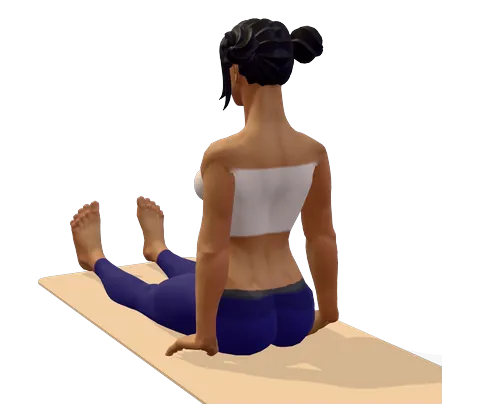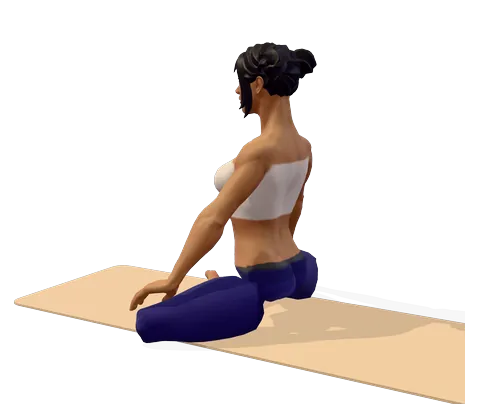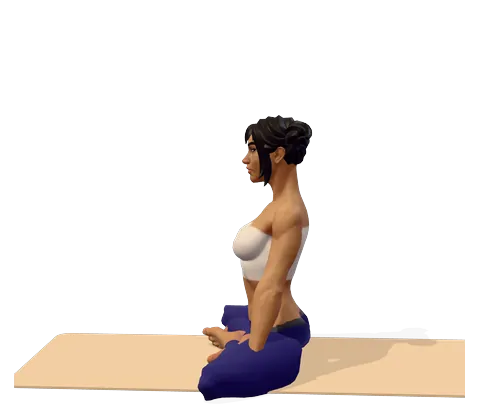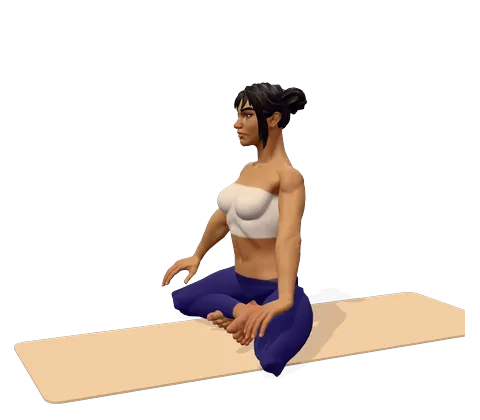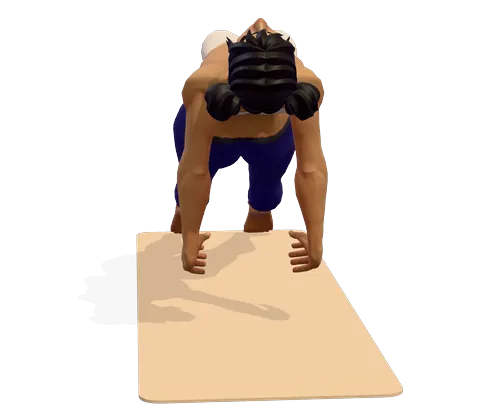
How to do Upward Plank Pose step by step
- Sit in staff pose with your legs straight. Place your hands on the floor about a hand-length behind your hips, shoulder-width apart, fingers pointing toward your feet.
- Lean back slightly onto your hands and press your heels into the floor.
- Breathe in and press into your hands and feet to lift your hips until your body forms a straight line from shoulders to heels.
- Point your toes toward the mat and try to bring the soles of your feet down. Squeeze your thighs and glutes so the hips stay high.
- Keep your arms straight with a slight softness in the elbows, and your shoulders directly over your wrists.
- Keep your chin slightly tucked, or let your head release back only if your neck is comfortable. Hold for 15–30 seconds.
- Breathe out and lower your hips slowly to the floor. Shake out your wrists and sit in staff pose for a few breaths.
Where you feel Upward Plank Pose: what it stretches and strengthens
Lift your hips high and push through your hands. In the 3D guide, turn on Body guide: areas that stretch glow green and areas that work glow saffron.
Stretches
- Chest
- Shoulders
- Abs
Strengthens
- Glutes
- Hamstrings
- Arms
Benefits and precautions
Benefits
- Strengthens the glutes, hamstrings and the muscles along the spine
- Builds strength in the triceps, shoulders and wrists
- Stretches the chest, fronts of the shoulders and the fronts of the ankles
- Counters rounded shoulders and a forward head, which supports better posture
- Works as a natural counter-pose after seated forward bends
- Trains the core to hold the body in one long line
Avoid or modify if
- Wrist injury or carpal tunnel syndrome — make fists, put a wedge under the heels of the hands, or try the pose on your forearms
- Shoulder injury, especially at the front of the shoulder — try reverse table top with bent knees, or skip it
- Neck injury — keep the chin tucked and do not drop the head back
- Elbows that lock or hyperextend — keep a micro-bend in the arms
- Later pregnancy — skip it or use a gentle reverse table top only if your prenatal teacher agrees
Upward plank pose (Purvottanasana) turns the familiar plank upside down: you sit, place your hands behind you and lift your hips until your body forms one long slope from shoulders to heels. It strengthens the back of the body and stretches the front, which makes it a good antidote to hours of sitting. It is also called reverse plank, and you will find this upward plank exercise in yoga classes and gym workouts alike. This page explains how to do Purvottanasana step by step, the muscles it works, easier versions and who should be careful.
What is upward plank pose?
The Sanskrit name of upward plank pose has three parts: purva means "east", uttana means "intense stretch" and asana means "pose". Traditional practice faced the rising sun in the east, so the front of the body is its "east side". The Purvottanasana meaning in Sanskrit, "intense stretch of the east", therefore describes a stretch of the whole front of the body. In Hindi it is पूर्वोत्तानासन.
In yoga, upward plank pose is also called reverse plank, and it is known as upward-facing plank pose or inverted plank. It is the natural partner of Paschimottanasana, the "west" stretch, and in the Ashtanga primary series it follows the seated forward bends to balance them.
How to do Purvottanasana correctly
The steps above take you up and down. These points give reverse plank proper form, so it feels strong rather than shaky:
- Lift from the glutes. Squeeze the buttocks and press through the heels. If the hips sag, the lower back takes the load.
- Shoulders over wrists. Hands placed too far back strain the front of the shoulders.
- Chest wide. Draw the shoulder blades toward each other and lift the breastbone.
- Feet down. Aim to bring the soles toward the floor. If the feet cramp, bend the knees.
- Head is optional. Letting the head hang back is the classic finish, but a tucked chin is safer for most necks.
In Purvottanasana (upward plank pose), where are the fingers facing?
Traditionally the fingers point forward, toward your feet, as the 3D guide shows. If your wrists or shoulders complain, turn the hands slightly out, or point the fingers to the sides. Avoid pointing them back toward your body, which can strain the front of the shoulder.
How long to hold reverse plank
Start with 15–20 seconds and repeat 2–3 times. As you get stronger, build up to a 30–60 second reverse plank hold. Quality matters more than time: come down once the hips start to drop.
Upward plank pose benefits (Purvottanasana ke fayde)
What is reverse plank good for? It works the whole posterior chain — glutes, hamstrings and the muscles along the spine — while stretching the chest and fronts of the shoulders. Those are the areas that weaken and tighten with desk work, so the pose is part of our yoga for posture plan.
It also builds arm and wrist strength, trains the core to hold a straight line, and prepares you for harder backbends. Is reverse plank effective? Yes: as a body-weight exercise, reverse plank trains the same muscles as a bridge but also loads the arms and shoulders. Reverse plank benefits for men and women are the same.
What about reverse plank benefits for weight loss? It builds muscle, but a short hold burns only a small amount of energy. For weight loss it helps as part of a regular practice with good food and movement; you can estimate your session with the yoga calories calculator.
Reverse plank muscles worked
| Strengthens | Stretches |
|---|---|
| Gluteus maximus and hamstrings | Chest (pectorals) |
| Erector spinae along the spine | Front of the shoulders (anterior deltoids) |
| Triceps, rear shoulders and wrist muscles | Hip flexors and the fronts of the ankles |
| Abdominals and deep core | Front of the neck (if the head releases back) |
Purvottanasana for beginners: reverse table top
If the full pose is too much, start with Ardha Purvottanasana, also called reverse table top. Bend your knees with the feet flat, hip-width apart, then lift the hips until your thighs and chest form a flat table. The benefits of Ardha Purvottanasana are similar, it is easier on the wrists and shoulders, and it teaches the glutes to do the lifting. Other Purvottanasana modifications and reverse plank variations for beginners:
- Place your hands on blocks to reduce the angle at the shoulders.
- Keep the head neutral, gazing at your toes.
- Hold for just a few breaths and repeat instead of one long hold.
Purvottanasana variations
- One leg up: from the full pose, lift one straight leg — for example upward plank pose with the left leg up — then change legs. It challenges balance and the glutes.
- Reverse plank marches: in reverse table top, lift one foot a little off the floor, then the other, keeping the hips level.
- Reverse plank knee tuck: from the full pose, draw one knee toward the chest, then extend again.
- Reverse plank hip dips: lower the hips a few centimetres and lift again with control. In the gym, people choose these up-downs or a still hold.
Reverse plank vs plank and glute bridge
Reverse plank vs plank: plank pose faces the floor and mainly works the abdominals, chest and fronts of the shoulders; upward plank faces the ceiling and works the glutes, back and rear shoulders. Many people do both. Reverse plank vs glute bridge: bridge pose keeps your shoulders on the floor, so it is an easier reverse plank alternative that needs no wrist strength. Reverse plank vs reverse table top: the table-top version has bent knees and is the beginner step.
Is reverse plank good for back pain?
Strong glutes and back muscles support the spine, so reverse plank, starting with the table-top version, can help people with mild, stable lower back pain. During a flare, or if lifting the hips hurts, skip it and see the gentler options in yoga for back pain.
Purvottanasana contraindications and precautions
Check the caution box before practising. The most common mistakes are sagging hips, hands too far behind, locked elbows and throwing the head back. Stop if you feel pain in the wrists, the front of the shoulders or the neck. Purvottanasana preparatory poses include staff pose, reverse table top and gentle chest openers; afterwards, rest in a forward bend to complete the sequence. You can practise the pair with the voice guide in the guided sessions.
पूर्वोत्तानासन (Purvottanasana in Hindi: meaning, steps and benefits): पैरों को सामने सीधा फैलाकर बैठें और हथेलियाँ कूल्हों के पीछे रखें, उंगलियाँ पैरों की ओर। साँस लेते हुए हाथों और एड़ियों पर दबाव देकर कूल्हों को ऊपर उठाएँ, ताकि कंधों से एड़ियों तक शरीर एक सीधी रेखा में हो। 15–30 सेकंड रुकें और साँस छोड़ते हुए नीचे आएँ। पूर्वोत्तानासन के फायदे: कमर, नितंब और बाजू मज़बूत होते हैं और छाती व कंधे खुलते हैं। कलाई, कंधे या गर्दन में चोट हो तो इसे न करें; शुरुआत घुटने मोड़कर (रिवर्स टेबल टॉप) करें।
Health conditions this pose is used for
Yoga for posture and tech neck
Frequently asked questions
What is Purvottanasana and its benefits?
Purvottanasana (upward plank or reverse plank) is a pose where you lift your hips from sitting until your body forms a straight line. It strengthens the glutes, hamstrings, back, arms and shoulders, and stretches the chest and fronts of the shoulders.
What does the reverse plank work?
Mainly the glutes, hamstrings and back muscles, plus the triceps, rear shoulders and core. It also stretches the chest and fronts of the shoulders.
How long should I hold reverse plank?
Beginners can hold for 15–20 seconds and repeat 2–3 times. Build up to 30–60 seconds, and come down as soon as the hips start to sag.
Where should my fingers point in upward plank pose?
Toward your feet in the classic version. Turn them slightly out if your wrists or shoulders feel strained.
Is reverse plank good for back pain?
The bent-knee reverse table top can help strengthen the muscles that support the spine when back pain is mild and stable. Skip it during a flare or if it hurts, and ask a physiotherapist.
What is the difference between reverse plank and plank?
Plank faces the floor and works the front of the body. Reverse plank faces the ceiling and works the back of the body, while stretching the chest and shoulders.
Why is it called upward plank pose?
Because you face upward in a plank-like straight line. The Sanskrit name Purvottanasana means intense stretch of the east, the front of the body.
This page is for general education. Check with your doctor before starting yoga if you are pregnant, have a medical condition or an injury. Stop if you feel pain, dizziness or shortness of breath.