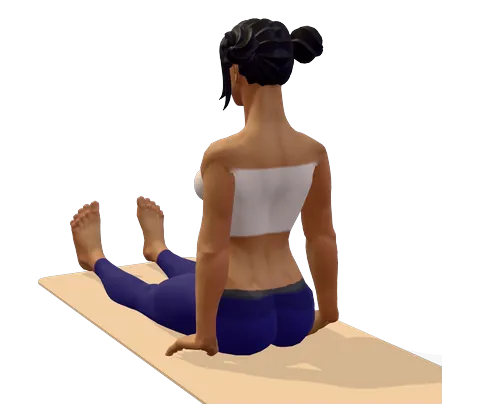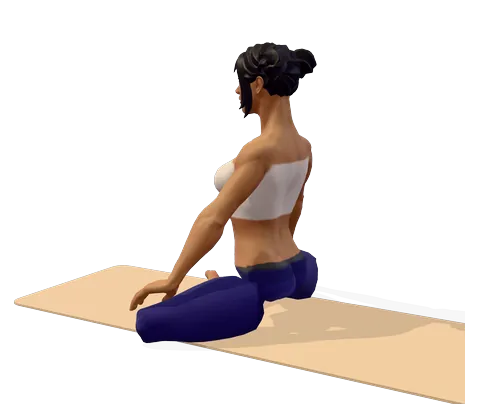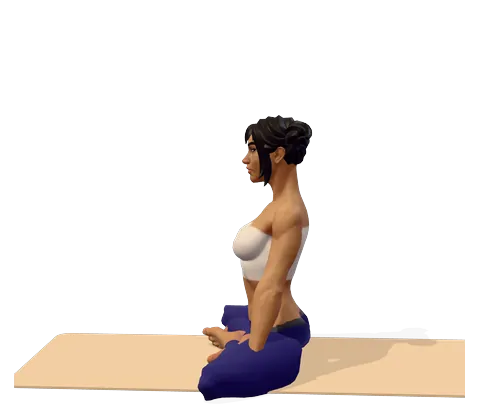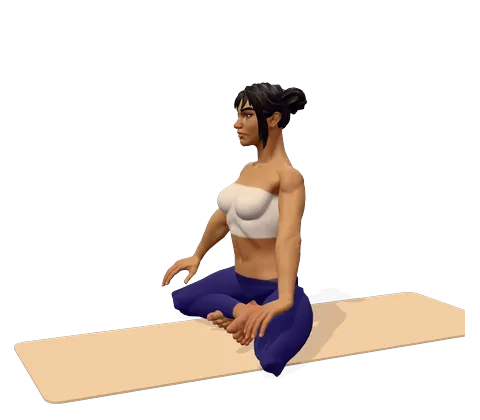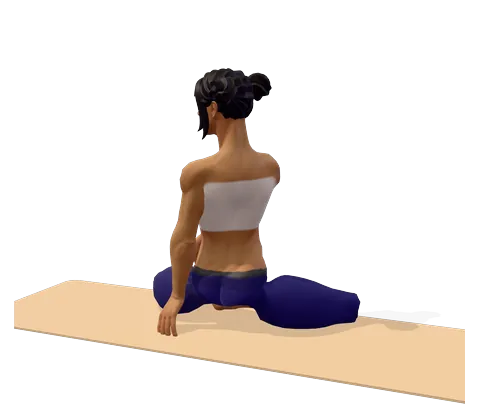
How to do Easy Seated Twist step by step
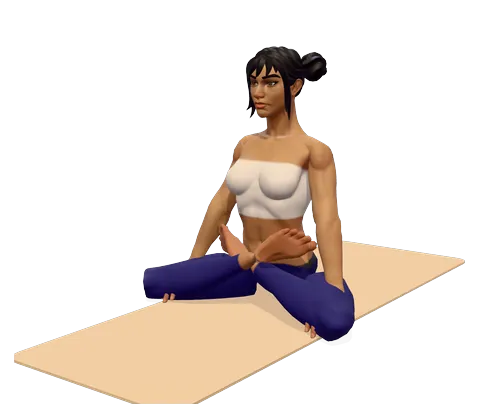
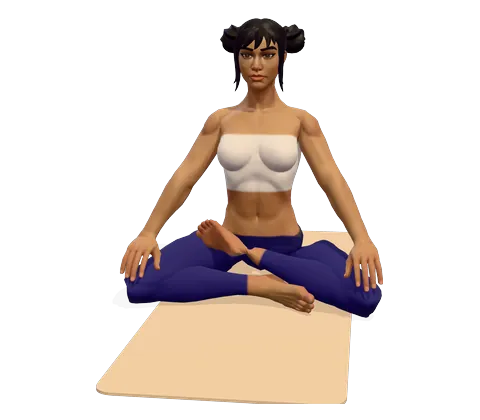
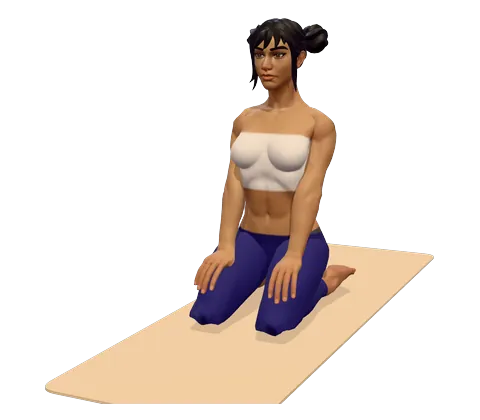
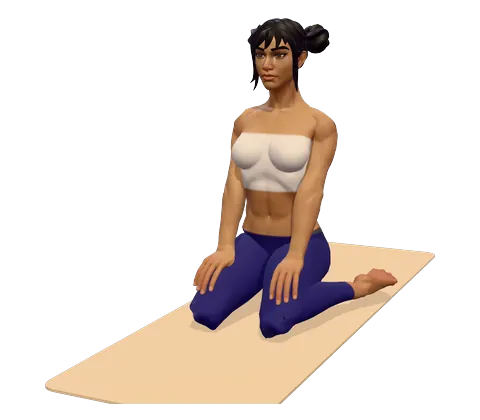
- Sit cross-legged in Easy Pose (Sukhasana) on your mat or on a folded blanket, so your hips are a little higher than your knees.
- Place your right hand on your left knee and set your left fingertips on the floor behind your left hip.
- Breathing in, lengthen your spine from the base up to the crown of your head.
- Breathing out, turn your belly, then your ribs and chest, to the left. Let your head follow last and look over your left shoulder.
- Hold for 20–30 seconds (4–6 breaths). On each inhale grow a little taller; on each exhale relax into the turn without forcing it.
- Breathing in, return to the centre. Change the cross of your legs and repeat to the right with your left hand on your right knee.
Where you feel Easy Seated Twist: what it stretches and strengthens
Lift through your spine as you breathe in and twist as you breathe out. In the 3D guide, turn on Body guide: areas that stretch glow green and areas that work glow saffron.
Stretches
- Side waist
- Spine
- Upper back
Benefits and precautions
Benefits
- Improves the rotation of the whole spine, especially the upper back
- Stretches the side waist (obliques) and the muscles between the ribs
- Eases stiffness from long hours of sitting at a desk
- Encourages an upright seat, which makes breathing easier
- Gentle enough for beginners, seniors and a short break at home or work
- Can feel calming as part of a slow, breath-led practice
Avoid or modify if
- Slipped disc, sciatica or a recent back injury — twist only a little and ask your physiotherapist first
- Recent abdominal or spine surgery, or a hernia — skip twists until your doctor clears you
- Pregnancy — keep the twist small and turn mainly from the upper back, with no pressure on the belly; ask your midwife or doctor
- Knee or hip pain in the cross-legged seat — sit on a higher cushion or on a chair
- Severe osteoporosis — twist gently and do not pull with the hand on the knee
Easy seated twist (Parivrtta Sukhasana) is a gentle spinal twist done in a simple cross-legged seat. You rest one hand on the opposite knee, place the other hand behind you, and turn your chest and head to the side. It is one of the very easy yoga poses, and among the easiest yoga poses for beginners: there is no balance, no strength test and no tricky leg shape, so it is a good first twist for beginners, seniors and anyone who sits all day.
Easy seated twist Sanskrit name
The easy seated twist Sanskrit name is Parivrtta Sukhasana. Parivrtta means "revolved" or "turned", sukha means "easy" or "comfortable", and asana means "pose". So it is literally the revolved easy pose: Easy Pose (Sukhasana), the easy seated pose yoga classes use for breathing and meditation, with a twist added. The word parivrtta appears in other revolved poses too, such as the revolved triangle yoga pose, revolved side angle pose and revolved half moon pose.
How to do an easy seated twist
The steps above follow the 3D figure, which turns to the left first. These seated torso twist instructions make the twist comfortable and effective:
- Sit high. A folded blanket or a firm sitting cushion under your hips lets the pelvis tip forward and the spine rise. If your knees are higher than your hips, your lower back rounds and the twist gets stuck. If you have back pain, a sitting cushion makes a long seat far more comfortable.
- Length first. Inhale to grow tall, exhale to turn. Never twist from a slump.
- Turn in order: belly, ribs, chest, then head. The neck should not do most of the work.
- Light hands. The hand on the knee and the fingertips behind you guide the turn. Do not lever yourself deeper.
- Shoulders soft. Keep both shoulders level and away from your ears.
Easy seated twist for beginners and modifications
- Tight hips: sit higher on a cushion or block, or stretch one leg forward.
- Sore knees: put blocks or folded blankets under the knees.
- Chair yoga seated twist: sit tall on a chair with your feet flat, hold the outside of the left knee with the right hand and the back of the chair with the left, and turn left. This seated spinal twist exercise helps beginners and seniors who cannot sit on the floor.
- Seated side stretch: before twisting, reach one arm overhead and lean to the side for a breath or two. A seated side stretch in yoga warms up the same side muscles.
These modifications for yoga poses keep the benefit and remove the strain.
Easy seated twist benefits
The main seated twist benefits are for the spine. Rotating slowly moves the joints of the upper and middle back, which get stiff after long hours at a desk or in a car. The twist also stretches the obliques and the muscles between the ribs, so many people notice that breathing feels freer afterward. Because you have to sit tall to twist well, the pose trains the benefits of sitting up straight: less slumping and a more open chest.
Seated torso twist benefits are about mobility and comfort, not strength or burning calories. The benefits of spinal twist practice, like the benefits of torso twists and any gentle movement, build over weeks of regular turns, not from one deep crank.
Is it good for lower back pain?
For general stiffness, many people find a seated torso twist for lower back pain eases the ache, and it is one of the beginner yoga poses for back pain in our yoga for back pain plan. Keep the turn small and the spine long. With a slipped disc or sciatica, ask your physiotherapist first, and see yoga for sciatica for safer choices. It also fits well into yoga for office workers as one of several seated stretches and seated exercises for back pain. Used gently, it is one of the simplest yoga poses for back pain relief.
Seated torso twist muscles worked
| Stretched | Gently worked |
|---|---|
| Obliques and side waist | Deep core muscles that turn the torso |
| Muscles along the spine | Upper back muscles that keep you upright |
| Upper back and the muscles between the ribs |
The Body guide on the 3D figure lights up the obliques, spine and upper back in green while the figure twists.
Easy seated twist vs similar twists
- vs Vakrasana: in the simple seated twist yoga pose, Vakrasana, one leg is straight and the other knee is bent, so the bent knee gives the arm something to press against and the hip stretches more. Easy seated twist is gentler.
- vs Ardha Matsyendrasana: half lord of the fishes crosses one foot outside the opposite knee for a deeper twist and hip stretch.
- vs the seated Russian twist: what is a seated Russian twist? The seated Russian twist exercise is an ab move in which you lean back and rotate quickly side to side, often with a weight. This yoga move, a seated cross-legged twist, is slow and held and aims at mobility; it is not a seated twist ab exercise.
- vs standing twists: yoga standing twist poses such as revolved chair pose add leg strength and heat; the seated version is calmer.
Seated relatives outside the twist family include revolved head-to-knee pose; Parivrtta Janu Sirsasana benefits lean more toward a side stretch and the hamstrings.
When to practise it
This is one of the easiest at home yoga poses. Do it in the morning as a seated back twist stretch, at your desk as a break, or near the end of a practice before resting. Two rounds on each side, 20–30 seconds each, are enough. Pair it with the gentle routines on our guided sessions page, or add it to your own flow with the session builder.
Precautions
Even gentle twists need care. The usual bend, lift and twist precautions for back problems apply: move slowly and stop if pain spreads down a leg. Skip twists after recent abdominal or spine surgery or with a hernia until your doctor clears you. In pregnancy, keep the twist small and away from the belly, and ask your midwife.
Where this practice is used
Chakras: Manipura (Solar Plexus Chakra)
Frequently asked questions
What is easy seated twist in Sanskrit?
Parivrtta Sukhasana: parivrtta means revolved, sukha means easy and asana means pose. It is also called revolved easy pose.
What are the benefits of the easy seated twist?
It improves the rotation of the spine, stretches the obliques and the muscles between the ribs, eases stiffness from sitting and encourages an upright posture.
How long should I hold easy seated twist?
Hold for 20–30 seconds (4–6 breaths) on each side, and repeat once or twice.
Which way should I twist first?
Many teachers start by turning to the right, others to the left; it does not matter much as long as you do both sides equally. Our 3D guide turns to the left first.
Can I do an easy seated twist on a chair?
Yes. Sit tall with your feet flat, hold the outside of one knee with the opposite hand and the chair back with the other, and turn slowly.
Is easy seated twist safe in pregnancy?
A small twist from the upper back, with no pressure on the belly, is usually fine for many people, but ask your midwife or doctor first.
What is the difference between easy seated twist and simple seated twist?
Easy seated twist is done cross-legged. Simple seated twist (Vakrasana) has one leg straight and the other knee bent, which gives a slightly deeper twist and hip stretch.
This page is for general education. Check with your doctor before starting yoga if you are pregnant, have a medical condition or an injury. Stop if you feel pain, dizziness or shortness of breath.