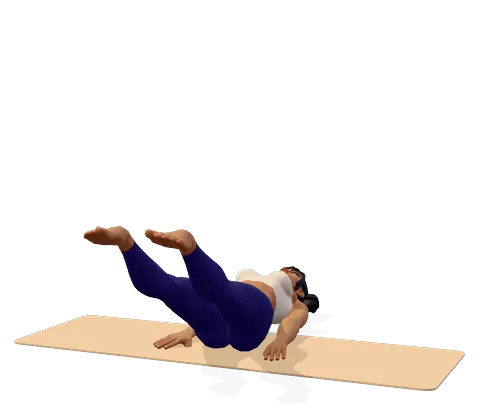
How to do Raised Leg Pose step by step
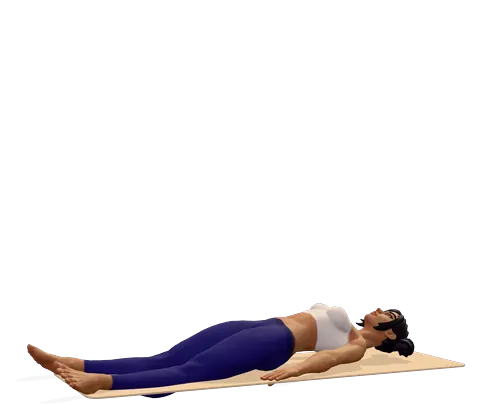
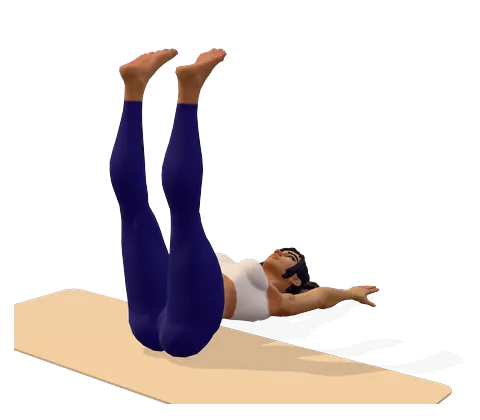
- Lie on your back with your legs straight and together, arms beside your body, palms pressing lightly into the mat.
- Draw your navel gently toward your spine so your lower back rests closer to the floor. Relax your shoulders and neck.
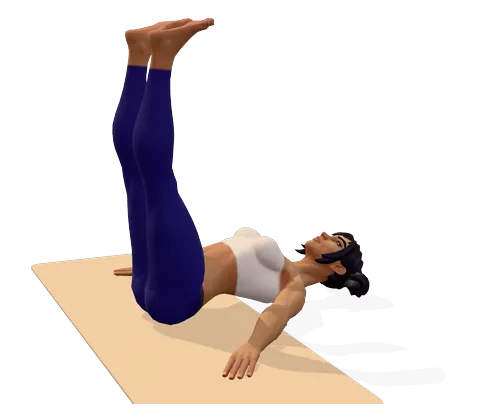
- Breathe in and slowly lift both straight legs off the floor, keeping the knees straight and the feet together. Stop at a low angle where your lower back stays down.
- Point or flex your feet and keep breathing evenly. Do not hold your breath.
- Hold for 3–5 breaths (about 10–20 seconds) while the belly stays firm and the back stays grounded.
- Breathe out and lower your legs slowly, with control, until your heels touch the mat.
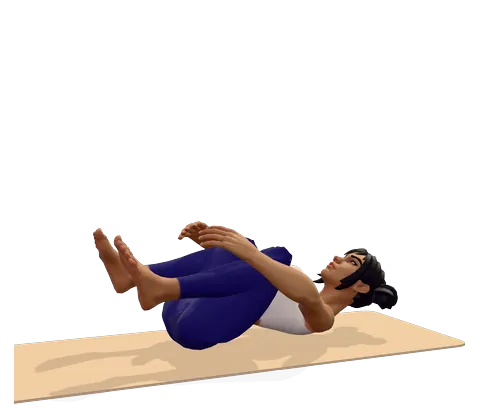
- Rest in corpse pose or hug your knees to your chest for a few breaths before repeating.
Where you feel Raised Leg Pose: what it stretches and strengthens
Lift your legs slowly, keeping your lower back on the floor. In the 3D guide, turn on Body guide: areas that stretch glow green and areas that work glow saffron.
Stretches
- Hamstrings
Strengthens
- Abs
- Hip flexors
- Front thighs
Benefits and precautions
Benefits
- Strengthens the lower abdominal muscles and the deep core
- Works the hip flexors and the front of the thighs
- Builds the control you need for boat pose, shoulder stand and other core poses
- A simple, no-equipment core exercise you can do on any mat or firm floor
- Traditionally used in yoga routines for digestion and a toned belly, alongside diet and activity
Avoid or modify if
- Lower back pain or a disc problem — lift one leg at a time or keep the knees bent
- Pregnancy, recent abdominal surgery, a C-section or abdominal separation (diastasis recti) — skip it until your doctor clears strong core work
- Hernia — avoid it, as it raises pressure in the abdomen
- Uncontrolled high blood pressure or heart disease — keep the hold short and never hold your breath
- Stop if your lower back arches off the floor or you feel pain in the back or groin
Raised leg pose (Uttanpadasana) is a core exercise done lying on your back: you lift both legs, straight and together, a short way off the floor and hold them with your belly muscles. It looks simple, yet holding the legs low is harder than lifting them high, so it is a quick test of core strength. This page covers the correct form, the benefits of Uttanpadasana, the muscles it uses, a gentler bent-knee version and who should not do it.
What is raised leg pose in yoga?
Uttanpadasana, also written Uttana Padasana, comes from three Sanskrit words: uttana ("raised" or "stretched out"), pada ("leg" or "foot") and asana ("pose"). So the name literally means "raised leg pose". In Hindi it is उत्तानपादासन. You may also hear it called lifted leg pose or elevated leg pose, and if you were looking for the name of this legs-raised position, Uttanpadasana is it. Instead of flat Uttanpadasana images for beginners, the 3D guide lets you rotate the figure and see the leg angle from every side.
What is a leg raise in yoga terms? It is a supine leg raise: the leg raise supine position that gym workouts use, but held still with slow breathing instead of repeated quickly. It is common in Indian school yoga, in Hatha classes and in core sequences, often just before boat pose.
How to do raised leg pose with proper form
The steps above give you the full Uttanpadasana procedure. The key to leg raises proper form is simple: your lower back decides how low your legs go.
- Find your angle. Some schools hold the legs at 30 degrees, others use a straight leg raise at 45 degrees or 60 degrees. Pick the lowest height at which your lower back stays on the mat.
- Straight but not locked knees. Squeeze the thighs and reach through the heels.
- Arms as anchors. Press the palms lightly down. You can also slide your hands under your hips for more support.
- Soft face and neck. If your chin juts forward or your shoulders lift, you are straining. Raise the legs a little higher, or rest.
- Breathe. Holding the breath raises blood pressure. Breathe slowly through the nose throughout.
How long and how often
Hold for 3–5 breaths, then lower and rest. Repeat 3–5 times. Beginners are better off doing several short holds with good form than one long hold with a shaking, arched back. Do it on an empty stomach, two to three hours after a meal.
Raised leg pose benefits
What are leg raises good for? Mainly core strength. The main Uttana Padasana benefits, and the advantages of leg raises in general, are:
- Stronger lower abdomen. The deep and lower belly muscles work hard to keep the pelvis still while the legs hang in the air.
- Hip flexor and thigh strength. Useful for walking, climbing stairs and many standing poses, which makes it one of the simpler yoga poses for leg strength.
- Body control. Learning to move your legs without arching your back is the basis for safe core work in yoga and in sport.
- Digestion (traditional). Yoga tradition says the gentle pressure on the belly helps digestion and gas. There is little research on this one pose, but many people find core poses and wind-relieving pose comfortable for the tummy.
Does raised leg pose reduce belly fat?
Not by itself. Leg raises exercise benefits are about muscle, not burning fat from one spot. Stronger abdominal muscles can make the belly feel firmer, but fat loss depends on overall movement, food and sleep. Our yoga for belly fat plan combines Uttanpadasana with other active poses.
Muscles worked in Uttanpadasana
| Works (strengthens) | What it does in the pose |
|---|---|
| Rectus abdominis and transverse abdominis | Keep the pelvis and lower back steady |
| Iliopsoas (deep hip flexor) | Lifts and holds the legs |
| Rectus femoris and quadriceps | Lift the thigh and keep the knee straight |
| Obliques | Stop the body rolling or twisting |
So, what muscle raises the leg? Mostly the iliopsoas and the rectus femoris, the hip flexors. The belly muscles do not lift the legs; they stop the lower back from being pulled into an arch. That is why weak abdominals plus strong hip flexors can strain the back.
Easier versions: knees bent and one leg
- Raised legs pose, knees bent: lift the feet with the knees bent at a right angle, shins parallel to the floor. This modified straight leg raise shortens the lever and is much kinder to the back.
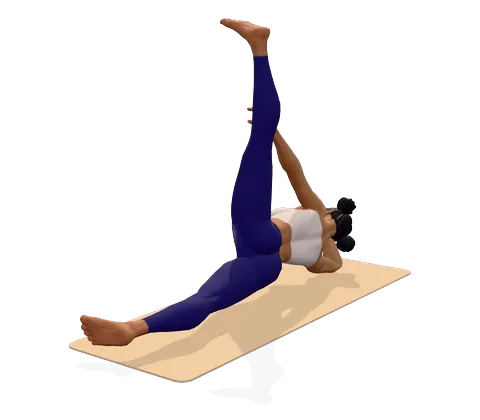
- One raised leg pose (Eka Pada Uttanpadasana): a yoga pose holding one leg up while the other foot stays on the floor, knee bent. Change sides. This is the best starting point after back pain.
- Legs higher: raise the legs toward 90 degrees, as in upward extended feet pose. The higher the legs, the easier the hold.
- Side version: a side-lying straight leg raise, as in side-reclining leg lift, works the outer hip instead.
These modifications for yoga poses keep the same idea, lifting the legs with a steady trunk, while changing how heavy the load feels.
Raised leg pose vs legs up the wall pose
Both are legs-raised positions, but they do opposite jobs. Uttanpadasana is active: your muscles hold the legs in the air. In legs up the wall pose the wall holds your legs and you relax. The benefits of keeping your legs raised against a wall are rest and a sense of lighter legs at the end of the day, not core strength. You can stay in legs up the wall pose as long as 5–15 minutes, while the active lifted leg yoga pose lasts only a few breaths. Many people do raised leg pose in a morning routine and the leg up the wall pose before bed.
You may also see "passive leg raise" online. That is a medical test in which a doctor or nurse lifts a patient's legs to check circulation. It is not a yoga pose.
Uttanpadasana contraindications and back safety
Is raised leg pose a good yoga pose for lower back pain? Usually not the full version. Lifting two straight legs pulls strongly on the lower spine, so during back pain choose the one-leg or bent-knee version, or begin with bridge pose and the gentler asanas for back pain in our yoga for back pain plan. Also skip it in pregnancy, after abdominal surgery or with a hernia, as listed in the caution box.
If you feel the lower back lifting, lower back pain or strain in the neck, come down, rest and try an easier version next time. You can practise this pose with voice cues in the Core Strength session on our guided sessions page.
उत्तानपादासन (Uttanpadasana) — हिंदी में: पीठ के बल लेटें, हाथ शरीर के पास ज़मीन पर रखें। साँस लेते हुए दोनों पैर सीधे और साथ रखकर ज़मीन से थोड़ा ऊपर उठाएँ, कमर ज़मीन से लगी रहे। 3–5 साँस तक रुकें, फिर साँस छोड़ते हुए धीरे से पैर नीचे लाएँ। उत्तानपादासन के फायदे: पेट के निचले हिस्से और जाँघों की मांसपेशियाँ मज़बूत होती हैं। कमर दर्द में एक पैर उठाएँ; गर्भावस्था, हर्निया या पेट के ऑपरेशन के बाद यह आसन न करें।
Health conditions this pose is used for
Frequently asked questions
What are the benefits of Uttanpadasana?
Uttanpadasana strengthens the lower abdominal muscles, hip flexors and thighs, and teaches you to control your legs without arching your back. Yoga tradition also links it to better digestion.
At what angle should I raise my legs?
Different schools use 30, 45 or 60 degrees. Choose the lowest angle at which your lower back stays on the mat, and raise the legs higher if the back starts to lift.
How long should I hold raised leg pose?
Hold for 3–5 slow breaths (about 10–20 seconds) and repeat 3–5 times, resting in between.
Is Uttanpadasana good for back pain?
The full two-leg version can strain a painful back. Try the one-leg or bent-knee version, and ask a physiotherapist if you have a disc problem.
Can raised leg pose reduce belly fat?
It strengthens the belly muscles but cannot burn fat from one area. Combine it with regular activity and a healthy diet.
Who should not do raised leg pose?
Skip it in pregnancy, after abdominal surgery or a C-section, with a hernia or abdominal separation, and during acute lower back pain.
What is raised leg pose called in Hindi?
It is called उत्तानपादासन (Uttanpadasana): "uttan" means raised, "pada" means leg and "asana" means pose.
This page is for general education. Check with your doctor before starting yoga if you are pregnant, have a medical condition or an injury. Stop if you feel pain, dizziness or shortness of breath.