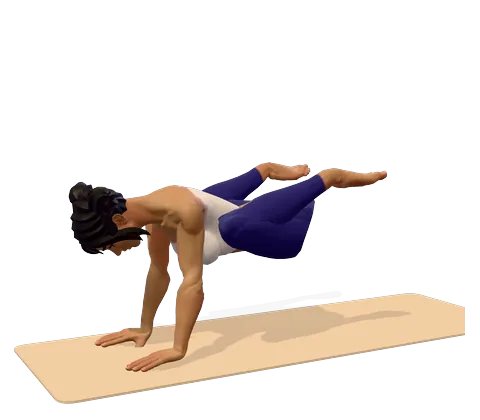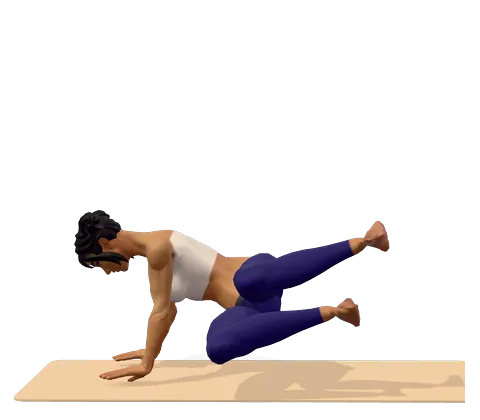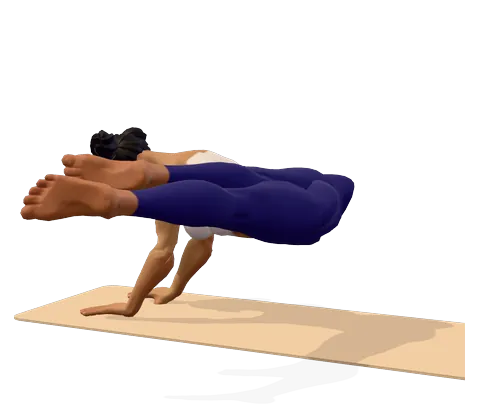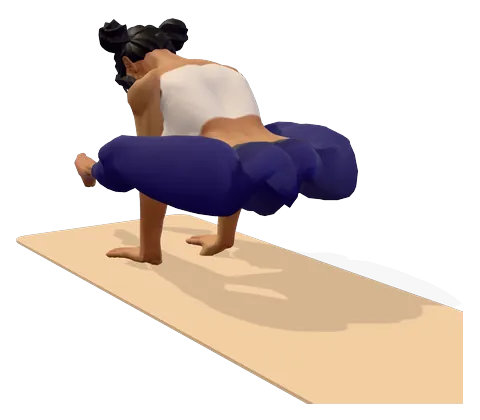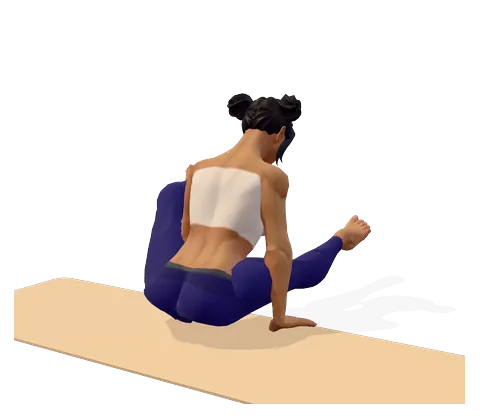
How to do Elephant Trunk Pose step by step
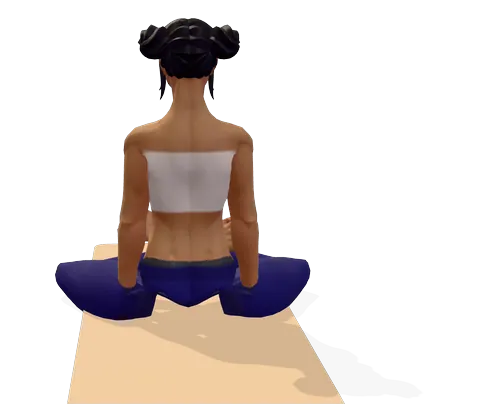
- Warm up your hamstrings and hips. Sit in Staff Pose (Dandasana) with both legs straight in front of you.
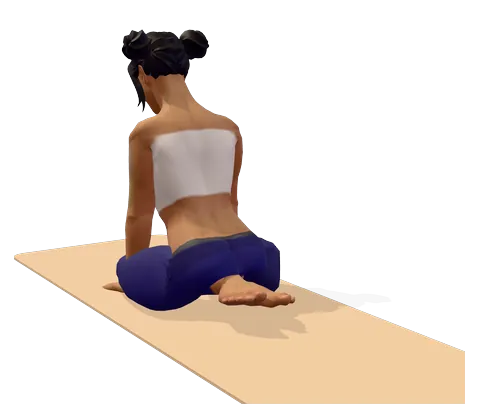
- Bend your left knee and lift your left foot. Slide your left arm under the knee and work the left shoulder behind it, so the back of the thigh rests as high as possible on the upper arm.
- Place both palms flat on the mat beside your hips, fingers pointing forward. The left hand is just outside the left hip, the right hand beside the right hip.
- Straighten your right leg firmly, flex the right foot and press the back of the right knee toward the floor.
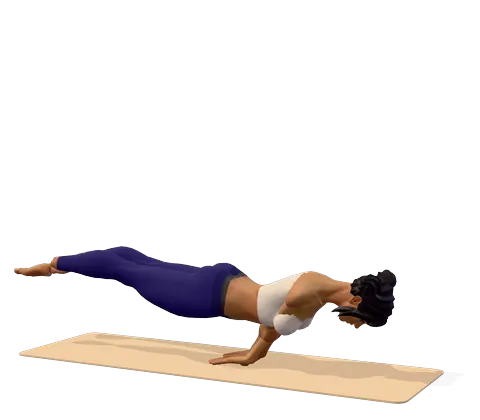
- Squeeze your left leg against your left arm. Press down through both hands, straighten your arms and lift your hips and right leg off the mat.
- Keep your chest lifted and look forward. Stay for about 10 seconds (1–3 breaths).
- Lower your hips and right leg, unhook the left leg and shake out your wrists. Repeat with the right leg over the right arm.
Where you feel Elephant Trunk Pose: what it stretches and strengthens
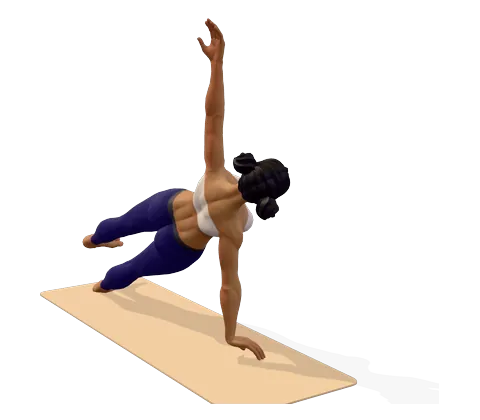
Hook one leg over your arm and lift the other leg off the floor. In the 3D guide, turn on Body guide: areas that stretch glow green and areas that work glow saffron.
Stretches
- Hamstrings
- Hip flexors
Strengthens
- Arms
- Wrists
- Abs
Benefits and precautions
Benefits
- Strengthens the arms, wrists and shoulders
- Works the abdominal muscles and hip flexors to lift the long leg
- Stretches the hamstrings and hips of the hooked leg
- Builds the arm-and-leg grip used in Eight-Angle Pose and other arm balances
- Improves balance and body awareness
Avoid or modify if
- Wrist, elbow or shoulder injury, or carpal tunnel syndrome — avoid lifting; practise only the seated leg hook
- Hamstring or hip injury — avoid hooking the leg over the arm
- Lower back pain, sciatica or a disc problem — avoid; the rounded, loaded spine can aggravate it
- Pregnancy — avoid because of compression of the belly and strong core effort
- Recent abdominal surgery or a hernia — avoid the strong abdominal work
Elephant trunk pose (Eka Hasta Bhujasana) is a seated arm balance. From Staff Pose you hook one leg high over the same-side arm, keep the other leg straight, and then press into your hands to lift your hips and the straight leg off the floor. It is less known than crow, but it is the usual setup for Eight-Angle Pose, and it teaches the arm-and-leg grip that many arm balances rely on.
Elephant trunk pose Sanskrit name and meaning
The Sanskrit name breaks down simply: eka means "one", hasta means "hand", bhuja means "arm" or "shoulder", and asana means "pose". So Eka Hasta Bhujasana is "one hand-arm pose", because one leg rests over one arm.
The English name comes from the elephant trunk position of the body. The leg hooked over the arm hangs and curves like an elephant's trunk, while the straight leg lifted in front is sometimes compared to an elephant with its trunk up. So is the elephant trunk up or down in this pose? The hooked leg hangs down; only the straight leg rises. Children often learn a simpler standing elephant pose in yoga for kids, swinging the clasped arms like a trunk; that is a playful exercise, not this arm balance.
Before you try it: prerequisites
This is a level-3 pose. It is a good fit when:
- You can sit in Staff Pose with a straight back and reach toward your feet in a seated forward bend.
- You can hold Boat Pose for 20–30 seconds.
- Your wrists are comfortable bearing your weight, for example in Plank Pose.
- You have no current injury to the wrists, shoulders, hamstrings or lower back.
If you cannot lift your hips at all, that is normal at first. Keep practising the seated leg hook and the hand press; do not rock or jerk to get up.
How to do elephant trunk pose: key points
The 3D guide shows the left leg hooked first. Along with the steps above, these details help:
- Leg high on the arm. The higher the thigh sits toward the shoulder, the easier the lift. Use your right hand to help place the left leg.
- Hands beside the hips. Hands too far forward or back tip you over. Place them level with your hips, fingers spread.
- Active straight leg. Flex the foot and firm the thigh. A floppy leg feels much heavier.
- Press down, lift up. Think of pushing the floor away with straight arms while drawing your belly in and up.
- Chest open. Keep the chest lifted and the gaze forward instead of collapsing over the legs.
Elephant trunk pose prep
These poses build what you need:
- Hamstrings and hips: seated forward bends and Reclining Hand-to-Big-Toe Pose.
- Leg-over-arm hook: sit, cradle one shin in your arms like a baby, then practise sliding the shoulder under the knee.
- Arm strength for lifting: Pendant Pose or Scale Pose, pressing the hips up from the floor.
- With blocks: put a block under each hand. The extra height gives your hips room to clear the floor.
Elephant trunk pose benefits
The main benefits are strength and control. Your arms, wrists and shoulders lift your body weight, and the abdominals and hip flexors work hard to hold the straight leg up. The hooked leg gets a stretch through the hamstrings and hip. Because it is low to the ground, many students find it a less scary arm balance than crow, and it builds confidence for harder poses.
| Stretched | Worked |
|---|---|
| Hamstrings of the hooked leg | Arms: triceps, shoulders and chest |
| Hip of the hooked leg, including the hip flexor area | Wrists and forearms |
| Abdominals and hip flexors of the lifted leg |
Elephant trunk pose yoga variations
- Heel down: lift only your hips and keep the heel of the straight leg on the floor. This is the best elephant trunk pose for beginners.
- Bent straight leg: bend the long leg slightly to lift it more easily, then straighten over time.
- Into Eight-Angle Pose: from elephant trunk pose, lift the free leg, cross the ankles, lean forward and extend both legs to the side.
- Toward Sage Koundinya: the same arm hook appears in Eka Pada Koundinyasana.
A simple elephant trunk pose sequence
Warm up with a few rounds of Surya Namaskar. Then practise a seated forward bend, Boat Pose, the leg-cradle hip opener and Pendant Pose. Try elephant trunk pose twice on each side, then move into Eight-Angle Pose if it is part of your practice. Finish with a gentle twist and Child's Pose to release the wrists and back.
एक हस्त भुजासन (Eka Hasta Bhujasana, elephant trunk pose in Hindi): दंडासन में बैठें। बायाँ घुटना मोड़कर बाईं जाँघ को बाईं बाँह के ऊपरी हिस्से पर टिकाएँ। दोनों हथेलियाँ कूल्हों के पास ज़मीन पर रखें, दायाँ पैर सीधा रखें। हाथों से ज़मीन दबाकर कूल्हे और दायाँ पैर उठाएँ, 1–3 साँस रुकें। इससे बाँहें और पेट मज़बूत होते हैं। कलाई, कंधे या कमर में चोट हो, या गर्भावस्था में, यह आसन न करें।
Frequently asked questions
What is elephant trunk pose in yoga?
Elephant trunk pose (Eka Hasta Bhujasana) is a seated arm balance. One leg is hooked over the same-side arm, the other leg is straight, and you press into your hands to lift your hips and the straight leg.
Is elephant trunk pose good for beginners?
It is an intermediate pose, but beginners can practise the leg hook and lift just the hips with the heel down. Blocks under the hands make the lift easier.
How long should I hold elephant trunk pose?
About 10 seconds, or 1–3 breaths, on each side. Repeat once or twice rather than holding longer.
What is the meaning of the elephant trunk position?
It describes the shape: the leg over the arm curves down like an elephant’s trunk. The Sanskrit name, Eka Hasta Bhujasana, means one hand-arm pose.
Why can’t I lift my hips in elephant trunk pose?
Usually the leg is too low on the arm, or the arms are short compared with the torso. Hook the leg higher and put blocks under your hands.
Who should avoid elephant trunk pose?
Avoid it with wrist, shoulder, hamstring or lower back injuries, a hernia, recent abdominal surgery and during pregnancy.
This page is for general education. Check with your doctor before starting yoga if you are pregnant, have a medical condition or an injury. Stop if you feel pain, dizziness or shortness of breath.