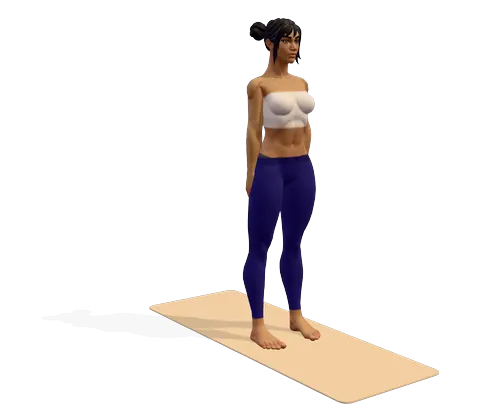
How to do walking meditation
- Find a quiet, flat path about ten to fifteen steps long, indoors or outdoors.
- Stand still in Mountain pose for a moment and feel your weight in your feet.
- Begin to walk slowly, feeling the lifting, moving and placing of each foot.
- Keep your gaze soft and a little ahead of you, not on your feet.
- At the end of the path, stop, stand, turn around slowly, and walk back.
- When the mind wanders, pause, notice, and return to the feeling of the feet.
Benefits
- Combines gentle movement with mindful attention, and suits people who find sitting still hard
- Studies suggest walking meditation can reduce stress and improve mood
- Brings attention into the body and the present moment
- Easy to bring into daily life on short walks
Be careful
Choose a safe, flat and clear path. If your balance is unsteady, walk near a wall or rail, or practise at a normal pace. Keep your eyes open.
Walking meditation is meditation in motion: you walk slowly and deliberately, and the feeling of each step becomes the anchor for your attention, the way the breath is in sitting practice. Your eyes stay open, your body keeps moving, and the mind has something clear and physical to return to. For many people who find sitting still difficult, it is the practice that finally makes meditation click.
What is walking meditation?
In walking meditation you are not going anywhere. You walk back and forth along a short path, usually 10 to 15 steps, and pay close attention to the lifting, moving and placing of each foot. The purpose is the same as in any mindfulness practice: to be fully present, notice when the mind wanders, and come back.
Can you meditate while walking?
Yes, meditation can be done while walking. Buddhist tradition names four postures for meditation, walking, standing, sitting and lying down, and treats all four as equally valid. So is walking a form of meditation? Ordinary walking is not, but walking with steady, deliberate attention is. The difference is where your mind is: on the steps, or on your to-do list.
Kinhin, cankama and Thich Nhat Hanh: walking meditation in Buddhism
Walking meditation in Buddhism goes back to the earliest texts, which describe monks walking up and down a straight path called a cankama. What is walking meditation called in different schools? Here are the main styles:
| Style | How it is done | Pace |
|---|---|---|
| Cankama (Theravada) | Back and forth on a straight path, often noting "lifting, moving, placing" | Very slow to normal |
| Kinhin (Zen) | In a line or circle between periods of seated zazen, hands held at the chest | Very slow in Soto Zen; brisk in Rinzai |
| Thich Nhat Hanh style | Steps matched to the breath, often outdoors, with short phrases | Slow, relaxed |
Kinhin meaning and zen walking meditation
The kinhin meaning is roughly "sutra walk" in Japanese. In Soto Zen, practitioners take about half a step with each full breath, the left hand loosely closed at the chest and the right hand covering it. Kinhin walking meditation stretches the legs between long sits and carries the stillness of zazen into movement.
Walking meditation, Thich Nhat Hanh style
The Vietnamese Zen teacher Thich Nhat Hanh made walking meditation popular around the world. To do walking meditation the Thich Nhat Hanh way, take one or two steps on each in-breath and one or two on each out-breath, and silently add simple phrases such as "I have arrived, I am home." He taught people to walk as if kissing the earth with their feet.
Walking meditation instructions: how to do it well
The walking meditation steps above show the basic method, and the guided voice follows a simple walking meditation script built on them. These mindful walking instructions fill in the details.
- Start in Mountain Pose. Stand still in Tadasana for a few breaths. Feel your weight through heels, the balls of the feet and toes.
- Hands: clasp them loosely in front of you or behind your back, or let them hang. Stillness in the arms keeps attention in the feet.
- Gaze: soft and a few steps ahead, not down at your feet, which strains the neck and affects balance.
- Speed: begin slowly, then go slower still. At very slow speeds the three parts of a step, lifting, moving, placing, become clear.
- Turning: at the end of the path, stop, stand for one breath, and turn slowly, noticing the turn.
- When the mind wanders: stop walking, notice where it went, and then take the next step.
Walking meditation techniques to try
Each of these mindful walking techniques works as a short mindful walking exercise on its own.
- Noting: silently say "lifting, moving, placing", as in vipassana-style noting meditation.
- Breath counting: count steps per breath without changing the breath. If this feels hard, first practise breath awareness meditation sitting down.
- Sense walk: walk at normal speed outdoors and move through the senses: sounds, then the air on your skin, then smells, then colours.
- Circle or labyrinth: a circular walking path for meditation, or a walking meditation maze (a labyrinth, which has only one path), removes the need to turn.
How to do walking meditation outdoors and every day
Indoors, a hallway or the length of a room is enough. For how to do walking meditation outdoors for beginners, choose a flat, quiet path in a park or garden where you will not be disturbed, and walk at a slow-normal pace so you do not look unusual to passers-by. Walking meditation in nature adds birdsong, wind and changing light, which many people find easier to stay with than a bare room.
How long and how often? Ten minutes a day is a good start; the meditation timer can ring a soft bell when time is up. Many retreats alternate 30 to 45 minutes of sitting with 20 to 30 minutes of walking, so walking also pairs well with the seated mindfulness meditation. Mindfulness while walking can also be informal: feel the first 20 steps to the bus stop, or the walk from the car to the office. A walking meditation with a dog works too at a normal pace, as long as the dog is calm and you stay aware of traffic.
Benefits of walking meditation: what research says
Studies suggest walking meditation can reduce stress and boost mood, and it combines two things known to help wellbeing: gentle movement and mindful attention. Several small trials have been run, many of them in older adults in Thailand; Buddhist walking meditation benefits in these trials included better mood and some measures of fitness and balance.
Reviews of mindful walking meditation have found benefits such as lower stress and anxiety. Practising outdoors may add to the effect, since time in green spaces is itself linked with better mood.
Is a walking meditation very effective, then? For stress and mood, it appears to work about as well as other mindfulness practices, and some people find it easier to keep up.
Walking meditation for anxiety is especially useful because movement gives restless energy somewhere to go. For walking meditation for depression, it can support treatment and daily activity, but it is not a replacement for medical care; see yoga for depression and yoga for anxiety.
Common beginner mistakes
- Looking at your feet. Feel them; do not watch them.
- Stiff, robotic walking. Slow does not mean tense. Let the knees stay soft and the arms relaxed.
- Too long a path. A long path invites daydreaming. Ten to fifteen steps is ideal.
- Losing balance at slow speed. Very slow walking is a balance challenge. Widen your stance a little, or speed up slightly.
- Making it a workout. This is not brisk walking for fitness; the goal is attention.
Mindful walking for kids
Children enjoy "slow-motion walking", "walking like a cat", or listening for five sounds on a short walk. Keep it to two or three minutes and make it a game.
Choose a safe, flat, clear path and keep your eyes open. If your balance is unsteady, walk beside a wall or rail, or at a normal pace. Poses like Tree Pose and the plan in yoga for balance and fall prevention can help steady you first. Never practise walking meditation near traffic or while crossing a road.
Walking meditation in Hindi (chalte hue dhyan kaise kare): चलते हुए ध्यान 10–15 कदम का एक शांत, समतल रास्ता चुनें। कुछ पल सीधे खड़े होकर पैरों में शरीर का भार महसूस करें। फिर बहुत धीरे चलें और हर कदम में पैर का उठना, आगे बढ़ना और ज़मीन पर रखना महसूस करें। रास्ते के अंत में रुकें, धीरे से मुड़ें और वापस चलें। मन भटके तो रुकें, ध्यान दें कि मन कहाँ गया, और फिर अगला कदम लें। जिन्हें बैठकर ध्यान करना मुश्किल लगता है, उनके लिए यह अच्छा तरीका है।
For short sitting practice between walks, try the five-minute meditation or read the full meditation guide.
Frequently asked questions
What is walking meditation?
It is a form of meditation in which you walk slowly along a short path and keep your attention on the feeling of each step: lifting, moving and placing the foot. When the mind wanders, you notice and return to the feet. Your eyes stay open throughout.
How do I do walking meditation for beginners?
Find a quiet, flat path about 10 to 15 steps long. Stand still for a moment and feel your feet. Walk slowly, feeling each step, with a soft gaze ahead. At the end, stop, turn slowly and walk back. Start with 10 minutes; the guided voice above leads you through it.
Can you meditate while walking outside?
Yes. Choose a safe, quiet path in a park or garden and walk at a slow-normal pace. Walking in nature adds sounds and light that many people find easy to focus on. Avoid roads and busy paths.
What is kinhin?
Kinhin is Zen walking meditation, practised between periods of seated zazen. In Soto Zen it is very slow, about half a step per breath, with the hands held at the chest; in Rinzai Zen it is brisk.
What are the benefits of walking meditation?
Studies suggest it can reduce stress and improve mood, and small trials in older adults found benefits for mood, fitness and balance. It also suits people who find sitting meditation difficult or uncomfortable.
How long should walking meditation be?
Ten minutes is a good start. On retreats it often lasts 20 to 30 minutes and alternates with sitting meditation. Short informal walks with full attention count too.
Is walking meditation better than sitting meditation?
Neither is better. Walking is easier for restless or sleepy minds and for people with back or knee pain when sitting; sitting allows deeper stillness. Many traditions use both together.
More guided meditations
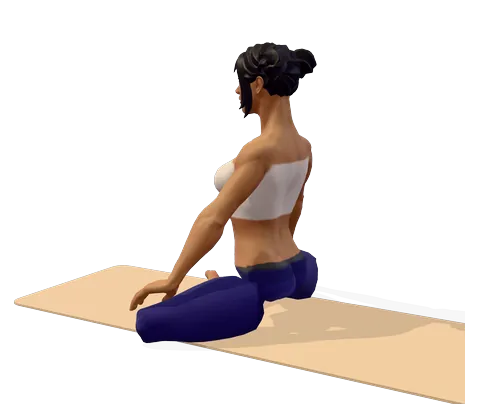 Breath Awareness MeditationRest your attention on the natural breath and gently return to it each time the mind wanders.
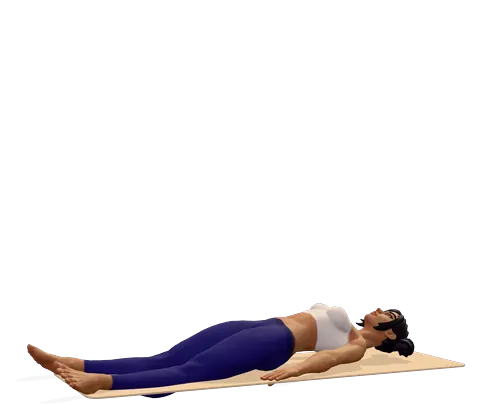 Body Scan MeditationMove your attention slowly through the body from the toes to the head, noticing sensations without trying to change them.Loving-Kindness MeditationSilently repeat warm wishes for yourself, then widen them step by step to others and to all beings.So Hum Mantra MeditationSilently hear the sound "So" as you breathe in and "Hum" as you breathe out, linking a mantra to the natural breath.OM Chanting MeditationChant OM aloud in slow, long breaths, then sit in the silence that follows the sound.Trataka Candle MeditationGaze steadily at a candle flame, then close your eyes and hold the after-image in your mind. See our full Trataka guide for more detail.
Meditation supports health; it does not replace medical or psychological care. If meditation brings up distressing memories or feelings, stop, open your eyes and ground yourself; talk to a professional if it keeps happening. Medical disclaimer.