Kripalu Yoga is a gentle, inward-looking style of Hatha yoga that puts self-awareness and self-compassion ahead of perfect shapes. Teachers invite you to move slowly, breathe fully and notice what you feel, then adjust the pose to suit your body on that day. There is no competition and no "right" depth, which makes it one of the most welcoming styles for beginners, older adults and anyone returning to exercise.
What is Kripalu Yoga?
In one line: Kripalu is a type of yoga that uses postures, breathing and relaxation as a way to become aware of body sensations, thoughts and feelings without judging them. It is often called "meditation in motion". The style is known for its kind tone; teachers use phrases like "find your edge" and "honour your body" rather than pushing you further.
Kripalu Yoga origin and founder
The style is named after Swami Kripalvananda (1913–1981), known as Kripalu or "Bapuji", an Indian yoga master. His student Amrit Desai moved to the United States in 1960, began teaching in Pennsylvania, and in the early 1970s opened an ashram community there. The community later moved to the Berkshires in Massachusetts. In 1994 Desai resigned after allegations about his personal conduct, the ashram model ended, and the organisation (then called the Kripalu Yoga Fellowship) re-formed as a non-profit education and retreat centre.
Where is the Kripalu Yoga center located?
The Kripalu Center for Yoga & Health, in Stockbridge, Massachusetts, near Lenox in the Berkshires, runs Kripalu Yoga retreats, a school of integrative yoga therapy, a school of Ayurveda and teacher training. You do not need to go there to practise the style: the approach works anywhere, including at home.
"J. Kripalu yoga" usually refers to something different: the devotional teachings of Jagadguru Kripalu Ji Maharaj, an Indian spiritual leader. J. Kripalu yoga meditation and philosophy are based on devotion and are not the same as the style on this page.
The three stages of Kripalu practice
- Stage one — learning the poses: you focus on basic alignment and on matching movement with breath. Holds are short.
- Stage two — holding and witnessing: you stay longer in each pose and watch the sensations, emotions and thoughts that come up, without reacting.
- Stage three — meditation in motion: you let the body move spontaneously from pose to pose, guided by inner awareness rather than instructions.
Many teachers sum up the attitude as breathe, relax, feel, watch, allow. You can use those five words in any pose.
What a Kripalu Yoga class looks like
A typical Kripalu Yoga class runs 60–90 minutes. It opens with centring and ujjayi breathing or alternate-nostril breathing, moves into a gentle warm-up, then standing poses, balances and floor poses held for several breaths. Teachers regularly pause to ask "What do you notice?" The class ends with a long relaxation and a moment of silent meditation; many Kripalu teachers also lead Yoga Nidra.
Pace and difficulty
The pace is slow to moderate. Kripalu Yoga classes are labelled gentle, moderate or vigorous, but even the vigorous ones leave room to rest. The poses themselves are familiar Hatha postures: mountain, warrior II, tree, cat-cow, bridge, a lying twist and relaxation. The difficulty comes from paying attention, not from complex shapes.
Benefits and what research says
Kripalu yoga research is limited to small studies, for example with high-school students and professional musicians; some reported lower stress and better mood, but the designs were often weak. Broader research on gentle Hatha yoga suggests it may ease stress, improve flexibility and balance and help with sleep. The emphasis on noticing sensations and emotions overlaps with mindfulness, which has stronger evidence for stress and anxiety. See yoga for stress relief.
Kripalu Yoga therapy
Kripalu integrative yoga therapy applies the same gentle, aware approach one-to-one or in small groups, for people living with pain, illness or stress. It is meant to support medical care, not replace it.
Who it suits, and who should take care
It suits beginners, older adults, people recovering from illness or injury, and anyone who finds fast classes stressful. If you want a hard workout, vinyasa or power yoga may suit you better.
Kripalu Yoga for osteoporosis: the gentle pace suits many people with low bone density, but avoid deep rounded forward bends, strong twists and sit-up movements, and ask your doctor or physiotherapist which poses are safe for you. Some people also find that paying close attention to feelings brings up strong emotions; you can always open your eyes and rest.
Kripalu vs Hatha and restorative yoga
Kripalu is a form of Hatha yoga: the poses are the same, but the teaching stresses awareness and choice over correct form. Compared with restorative yoga, which rests in fully supported poses, Kripalu keeps you moving and working lightly.
How to do Kripalu Yoga at home
Try this 20-minute practice. Before and during each pose, silently repeat: breathe, relax, feel, watch, allow.
- Sit or stand for two minutes, breathing slowly and noticing how you feel.
- Cat-cow for a minute, moving with the breath.
- Mountain pose, then warrior II on each side, holding for five breaths.
- Tree pose near a wall. Notice the small movements that keep you balanced.
- Bridge pose, then a lying twist on each side.
- Five minutes of relaxation.
Follow the poses with the 3D guide and voice in the guided sessions, such as Your First Yoga Session, which uses many of the same poses.
Other types of yoga
Poses you will meet in Kripalu Yoga
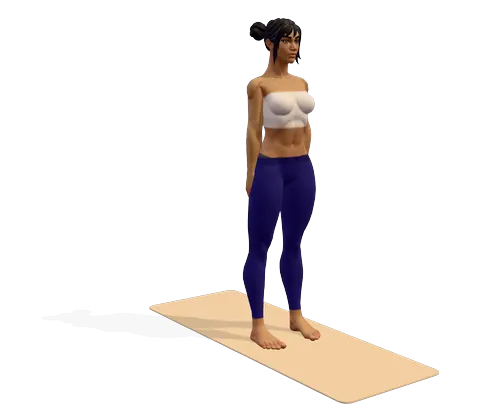 Mountain PoseTadasana
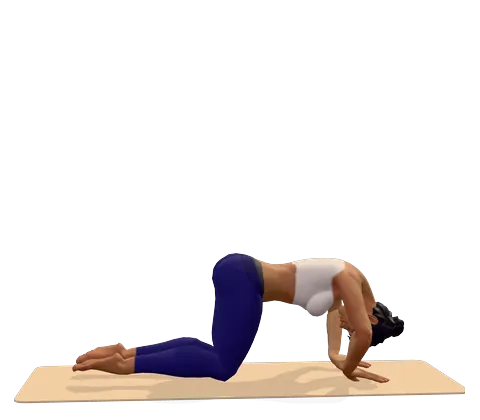 Cat PoseMarjaryasana
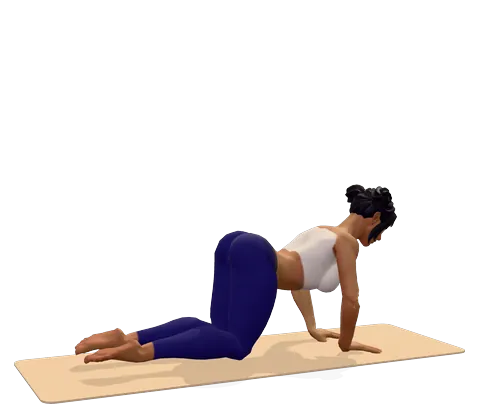 Cow PoseBitilasana
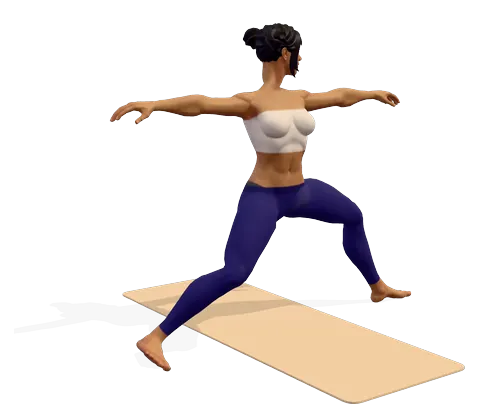 Warrior II PoseVirabhadrasana II
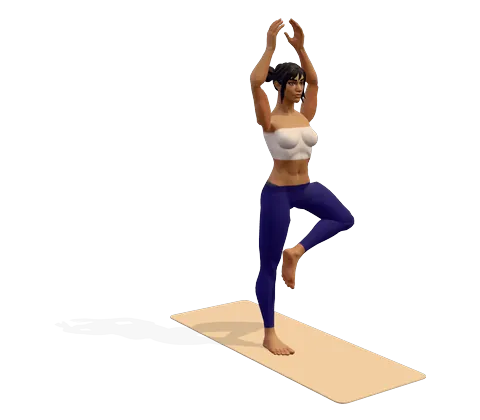 Tree PoseVrikshasana
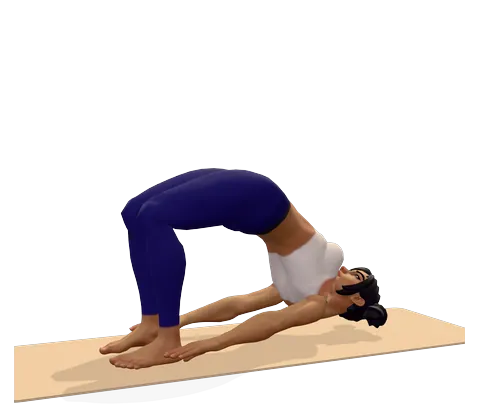 Bridge PoseSetu Bandhasana
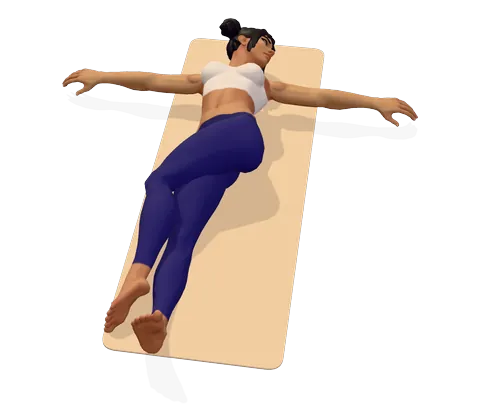 Supine Spinal TwistSupta Matsyendrasana
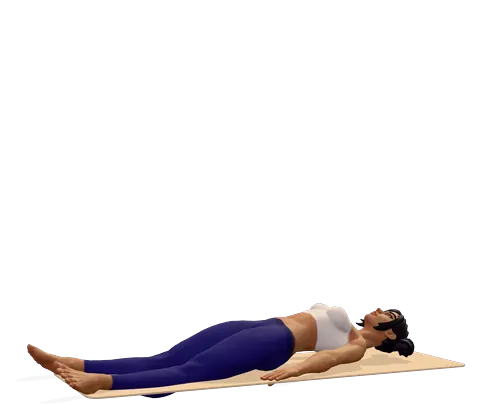 Corpse PoseSavasana
Frequently asked questions
What is Kripalu Yoga?
Kripalu Yoga is a gentle style of Hatha yoga that focuses on self-awareness and self-compassion. You move slowly, notice what you feel, and adapt each pose to your body.
Is Kripalu Yoga good for beginners?
Yes. It is one of the most beginner-friendly styles, because there is no pressure to reach a set depth and rest is always allowed.
Who founded Kripalu Yoga?
It was developed in the United States by Amrit Desai and named after his teacher, Swami Kripalvananda, an Indian yoga master.
Where is Kripalu located?
The Kripalu Center for Yoga & Health is in Stockbridge, Massachusetts, in the Berkshires. The style itself is taught worldwide.
Is Kripalu Yoga the same as J. Kripalu yoga?
No. The "J." stands for Jagadguru Kripalu Ji Maharaj, whose devotional tradition is separate. The style on this page comes from Swami Kripalvananda and Amrit Desai.
How is Kripalu different from vinyasa?
Vinyasa flows quickly from pose to pose. Kripalu is slower, with longer holds and pauses to notice sensations and feelings.