Vinyasa yoga is a flowing style in which you move from one pose to the next in time with your breath, usually one movement per inhale or exhale. Instead of stopping between postures, you link them into a sequence that feels like a slow dance. It is the most common style taught in gyms and studios worldwide, and it can be as gentle or as sweaty as the teacher makes it.
Vinyasa yoga meaning and definition
The Sanskrit word vinyasa joins nyasa, "to place", with vi, "in a special way". A simple vinyasa yoga meaning is therefore "placing poses in a thoughtful order" — step by step, linked by breath. Teachers also use "a vinyasa" for the short linking move of plank, low push-up, upward dog and downward dog.
There is no single founder. The idea of careful, breath-led sequencing goes back to the teacher T. Krishnamacharya in 20th-century India and to Ashtanga yoga, which his student Pattabhi Jois taught. From the 1980s and 1990s, Western teachers loosened the fixed Ashtanga order into free-form "flow" classes, and vinyasa flow yoga was born.
What a vinyasa yoga class is like
A typical class lasts 45–75 minutes. Because the teacher designs a new sequence each time, no two vinyasa classes are the same, but most follow this shape:
- Arrive: a minute of quiet breathing, often with Ujjayi breath, the soft "ocean" sound used through the class.
- Warm up: cat–cow, downward dog and several rounds of Sun Salutation.
- Build: standing flows of lunges, warriors and balances that grow toward a "peak pose", such as a backbend or arm balance.
- Cool down: seated stretches, twists and hip openers held a little longer.
- Rest: five minutes in Savasana.
Music is common, and the pace varies from "slow flow" to a fast power class. Is vinyasa yoga hot? Only if the room is heated; a "hot vinyasa" class runs at about 30–38 °C, but a standard class is at room temperature.
Vinyasa yoga benefits: what the evidence says
Most research looks at yoga in general, not flow classes alone, so treat these points as likely rather than proven. Here is what vinyasa yoga is good for:
- Heart and fitness: brisk flows raise your heart rate to a light-to-moderate level, similar to a brisk walk. Is vinyasa yoga good cardio? It helps, but running or cycling trains the heart harder.
- Strength: the strength benefits of vinyasa yoga are the same for men and women: repeated planks and low push-ups build the shoulders, arms and core, a form of bodyweight strength training.
- Flexibility and mobility: moving through lunges and folds many times loosens the hips and hamstrings — useful for runners and desk workers.
- Mood and focus: matching movement to breath keeps your mind on the mat, and regular yoga is linked with lower stress and better mood. Many people use a short morning vinyasa yoga flow for energy.
Is vinyasa yoga good for weight loss? A vigorous class burns more calories than slow hatha, but less than most running. Estimate your own vinyasa yoga calories burned with the yoga calories calculator. Claimed "detox" benefits are marketing: sweating does not remove toxins; your liver and kidneys do.
Is vinyasa yoga good for beginners?
Yes, if you choose the right class. Is vinyasa yoga hard for beginners? A fast class can be, because it moves quickly and assumes you know the poses. The best vinyasa style for beginners is a "slow flow" or "beginner flow", where the teacher holds poses for several breaths and explains the transitions. Learning basic poses in a Hatha yoga class first also helps.
How to get better at vinyasa yoga: drop your knees for low push-ups until you can lower with a straight body; keep your elbows hugging your ribs; step instead of jumping; and rest in Child's Pose whenever your breath becomes rushed. These simple alignment tips protect the wrists and shoulders.
Who should slow down or avoid it: people with wrist, shoulder or recent back injuries; uncontrolled high or low blood pressure, as quick up-and-down moves can cause dizziness; pregnancy, unless the class is prenatal; and osteoporosis. With osteoporosis, a fast vinyasa yoga class with deep forward rounding and loaded twists is not a good fit — ask your doctor or physiotherapist which moves are safe. For seniors, vinyasa yoga works best as a slow flow or chair class.
A 25-minute vinyasa yoga sequence for beginners at home
This routine uses basic vinyasa yoga poses for beginners. Move with your breath and stay in each pose for 3–5 breaths the first time through. Do the standing part on both sides.
- Child's Pose, then cat–cow for one minute.
- Downward-Facing Dog for five breaths.
- Three rounds of Surya Namaskar, slow and steady.
- Low Lunge → Warrior I → Warrior II → Reverse Warrior → Extended Side Angle.
- Plank → Chaturanga (knees down) → Cobra → Downward Dog. Repeat the lunge flow on the other side.
- Chair Pose for five breaths, then Standing Forward Bend.
- Bridge Pose twice, a supine twist each side and Savasana for five minutes.
Prefer to be guided? The Morning Wake-Up and Weight Loss Power Flow sessions on the guided practice page follow this style with a 3D figure and voice. Or build your own flow in the session builder. A daily vinyasa yoga practice of 20 minutes beats one long class a week.
Vinyasa vs hatha, ashtanga, yin and power yoga
| Comparison | Main difference |
|---|---|
| Vinyasa yoga vs hatha | Hatha pauses between held poses; vinyasa keeps moving. So yes, hatha is usually easier than vinyasa yoga. |
| Vinyasa vs ashtanga | Ashtanga vinyasa yoga repeats one fixed sequence; vinyasa flow changes every class. |
| Vinyasa vs yin yoga | Yin holds passive floor poses for minutes; vinyasa is active and quick. |
| Vinyasa vs power yoga | Power yoga is a stronger, fitness-focused form of vinyasa with longer strength holds. |
| Vinyasa vs slow flow | Slow flow is the same style at half speed — ideal for beginners and seniors. |
Read more about Yin yoga and Power yoga.
Vinyasa yoga meaning and benefits in Hindi:
विन्यास योग (Vinyasa Yoga) — हिंदी में: विन्यास का अर्थ है "विशेष तरीके से रखना"। इस योग में साँस के साथ एक आसन से दूसरे आसन में लगातार बहते हुए जाते हैं, जैसे सूर्य नमस्कार में। इसके फायदे: शरीर में ताकत और लचीलापन बढ़ता है, दिल की धड़कन तेज़ होती है और मन एकाग्र होता है। शुरुआत धीमी गति से करें और कलाई या कमर में दर्द हो तो रुक जाएँ।
Other types of yoga
Poses you will meet in Vinyasa Yoga
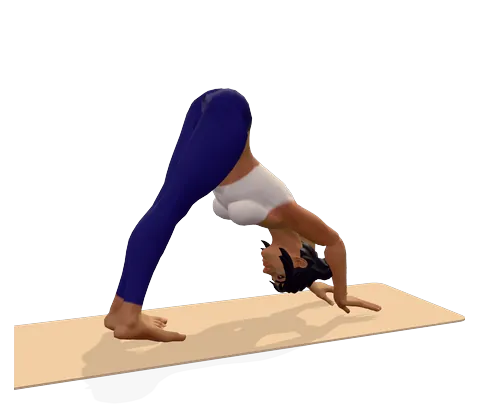 Downward-Facing Dog PoseAdho Mukha Svanasana
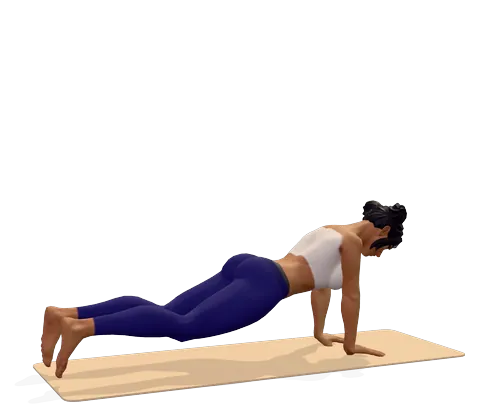 Plank PosePhalakasana
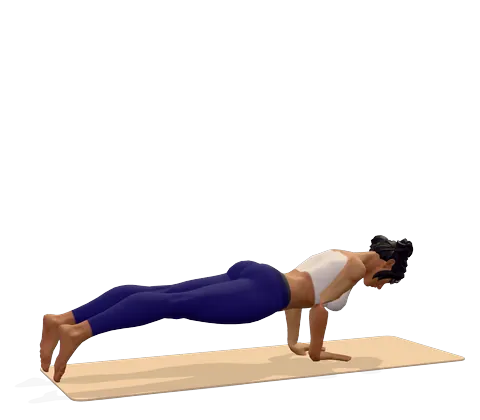 Four-Limbed Staff PoseChaturanga Dandasana
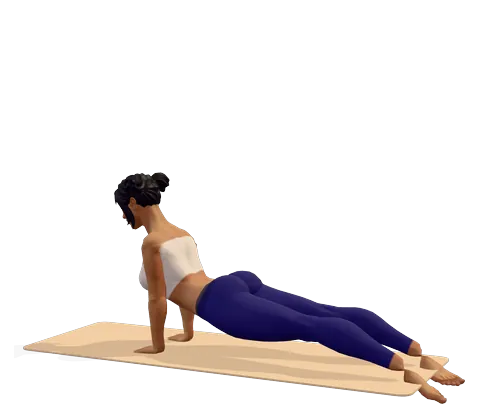 Upward-Facing Dog PoseUrdhva Mukha Svanasana
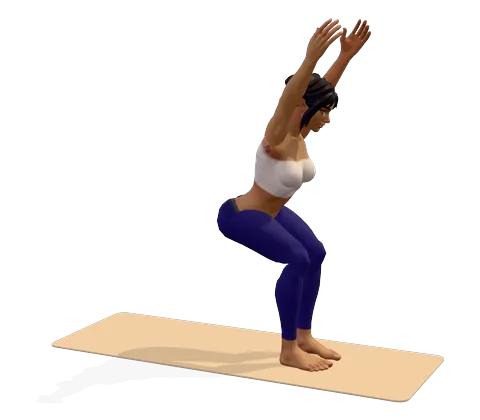 Chair PoseUtkatasana
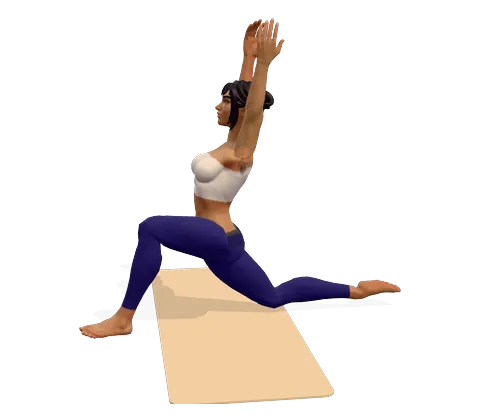 Low Lunge PoseAnjaneyasana
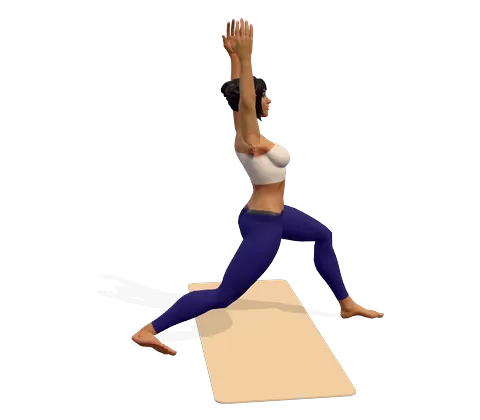 Warrior I PoseVirabhadrasana I
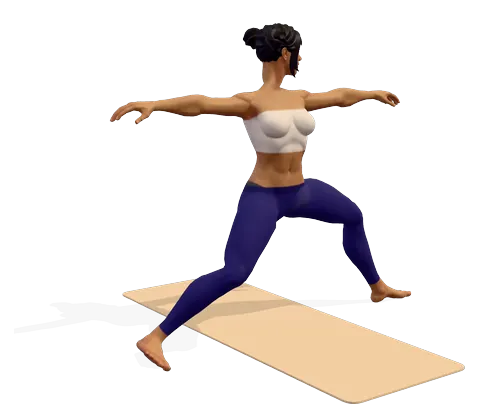 Warrior II PoseVirabhadrasana II
Frequently asked questions
What is vinyasa yoga in simple words?
It is a flowing style where each movement is linked to an inhale or exhale, so the poses join into a continuous sequence rather than being held one at a time.
Is vinyasa yoga good for beginners?
Yes, in a slow or beginner flow class. Fast classes assume you know the poses, so start slowly and rest whenever your breath becomes rushed.
Is vinyasa yoga a good workout?
Yes. It builds strength in the arms, shoulders and core, improves flexibility and raises your heart rate, though it is lighter cardio than running.
Is vinyasa yoga fast paced?
It can be. Speed depends on the teacher: slow flow holds poses for several breaths, while power or hot vinyasa moves quickly.
Is hatha easier than vinyasa?
Usually, yes. Hatha holds each pose with rests in between, which gives you time to learn. Vinyasa links poses without stopping.
Can I do vinyasa yoga with osteoporosis?
Only with medical advice. Avoid fast flows with deep rounded forward folds and forceful twists; a slower, supervised class is safer.