Viniyoga is an approach to yoga that adapts the practice to the individual: their body, age, health, breath and goals. Instead of fitting everyone into the same pose, the teacher changes the pose, the breath and the sequence to fit the person. Movements are slow and led by the breath, and a practice is often designed for one student, which is why this approach is closely linked with yoga therapy.
Viniyoga meaning
The Viniyoga meaning in Sanskrit is "application" or "appropriate use", and in English it is close to "applying yoga in the right way for each person". The word joins vi and ni, two prefixes that add the sense of "specially, fittingly", to yoga. It appears in the Yoga Sutras (3.6), which say the practice should be applied in stages.
Other uses of the word
- Mantra (viniyog): in Vedic chanting, a short sloka said before a mantra names its seer, metre, deity and purpose; that statement of purpose is the mantra's viniyoga.
- Dance: in Bharatanatyam, texts on asamyukta hasta viniyoga (single-hand gestures) list the uses of each gesture: Pataka hasta, the flat open hand, has many meanings, and Mushti (fist) and Mayura (peacock) have their own.
- Other Indian languages: the meaning of viniyogam in Tamil and Telugu, and of viniyoga in Kannada, is use, supply or distribution; in English it is usually translated as "utilisation".
- Hindi: viniyog (विनियोग) also means the allocation of money, so the viniyog meaning in English can be "use", "application" or "appropriation".
Viniyoga lineage and origin
The approach comes from T. Krishnamacharya (1888–1989), the South Indian teacher whose students also shaped Iyengar yoga and Ashtanga yoga. In his later years he taught mostly one-to-one, adapting yoga for people who were ill, injured or elderly. His son T.K.V. Desikachar carried this on in Chennai, and the word "Viniyoga" became the name many students used for this teaching. Desikachar later preferred to describe viniyoga as a principle rather than a brand.
In the United States, his student Gary Kraftsow founded the American Viniyoga Institute in 1999 and wrote a well-known book on yoga for health. Today the Viniyoga lineage includes many independent teachers and therapists.
How Viniyoga works: what a session looks like
A first session usually begins with a conversation about your health, goals and daily life. The teacher then gives you a short practice, often 15–30 minutes, to do at home. Key features:
- Function over form: knees bend in forward bends and arms move freely, so the pose serves the spine rather than the shape.
- Breath leads movement: you move on the inhale or exhale, and the exhale is often made longer to calm the body.
- Repetition before stillness: you move in and out of a pose several times before holding it.
- A clear goal: each sequence builds towards one aim, such as easing the low back or preparing for meditation. Breathing, chanting and meditation are added when useful.
The pace is slow and the difficulty low to moderate, but because practices are tailored, a fit athlete and a person recovering from surgery can both practise Viniyoga.
Viniyoga therapy and research
Viniyoga therapy for the low back has been tested in clinical trials. In two US studies from the 2000s, adults with chronic low back pain who took a series of classes based on this method improved more than people given a self-care book, and about as much as people in stretching or exercise classes. This fits wider evidence that yoga may ease chronic back pain and improve function. Viniyoga for back pain is one of the best-studied uses, although benefits were modest and not everyone improved.
People also use it for stress, recovery after injury, arthritis and conditions such as fibromyalgia, where adaptable, gentle movement matters. Research on Viniyoga for fibromyalgia specifically is limited, so treat it as supportive care alongside your doctor’s plan. The proven benefits of yoga are strongest for back pain, mood, flexibility and balance.
Who it suits, and who should take care
It suits beginners, older adults, people with pain or long-term conditions, and anyone who wants a practice built around their own needs. As a style of Viniyoga for beginners, the pace is kind and every pose has an easier version. People who want a fast, sweaty class may find it slow. If you have a medical condition, get your doctor’s advice and tell your teacher.
Viniyoga vs vinyasa
The names sound alike, and both link movement with breath, but they are different. Vinyasa yoga is a group practice that flows continuously from pose to pose, often at a brisk pace, so it also works as a workout. Viniyoga moves more slowly, repeats a movement before holding it, and is usually shaped for one person. What vinyasa yoga is good for is fitness, strength and a steady, moving meditation, and its benefits come with regular practice. For beginners, the best vinyasa style is a slow flow class, which gives the benefits of vinyasa flow yoga while leaving time to learn each pose.
How to do Viniyoga at home: a gentle low-back routine
This 15-minute sequence follows Viniyoga principles. Move each pose with the breath four to six times, then hold for a few breaths. Stop if pain increases.
- Lie on your back, knees bent. Breathe slowly, making the exhale a little longer than the inhale.
- Knees to chest (Apanasana): exhale and draw the knees in; inhale and let them move away.
- Bridge pose (Dvipada Pitham): inhale and lift the hips as you raise the arms overhead; exhale and lower.
- Cat to child’s pose (Cakravakasana): from hands and knees, exhale and sit back towards the heels; inhale and return.
- A small cobra: inhale to lift the chest a little; exhale to lower.
- Standing forward bend with soft knees, then rest lying down.
Build this sequence in the session builder, or try the ready-made Back Pain Relief session in our guided sessions.
Viniyoga meaning in Hindi (viniyog in Hindi) — विनियोग: संस्कृत में विनियोग का अर्थ है "सही उपयोग" या "व्यक्ति के अनुसार प्रयोग"। विनियोग योग में हर आसन और साँस को व्यक्ति की उम्र, स्वास्थ्य और ज़रूरत के अनुसार बदला जाता है। मंत्र पाठ से पहले बोले जाने वाले विनियोग में ऋषि, छंद, देवता और उद्देश्य बताए जाते हैं। ध्यान दें: "विनियोग विधेयक" (Appropriation Bill) सरकारी बजट से जुड़ा शब्द है, इसका योग से कोई संबंध नहीं है।
Other types of yoga
Poses you will meet in Viniyoga
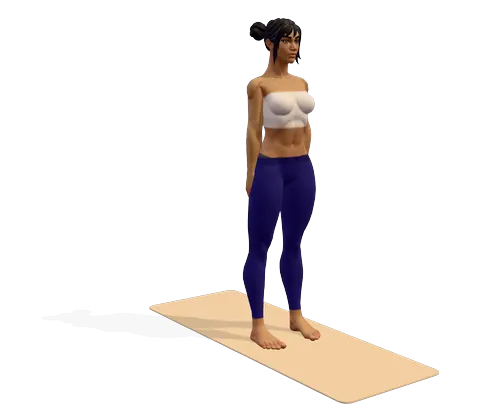 Mountain PoseTadasana
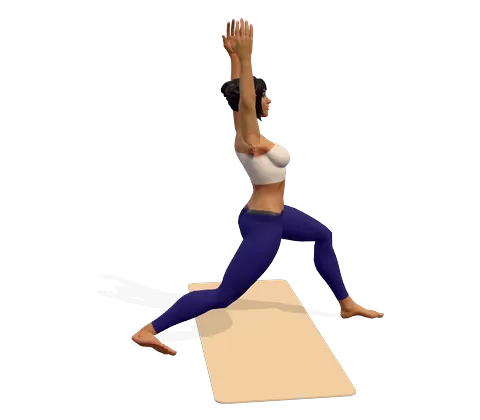 Warrior I PoseVirabhadrasana I
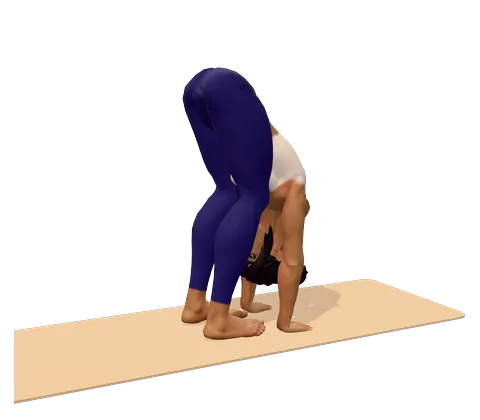 Standing Forward BendUttanasana
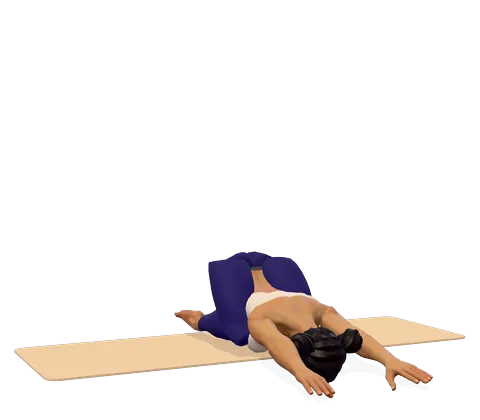 Child’s PoseBalasana
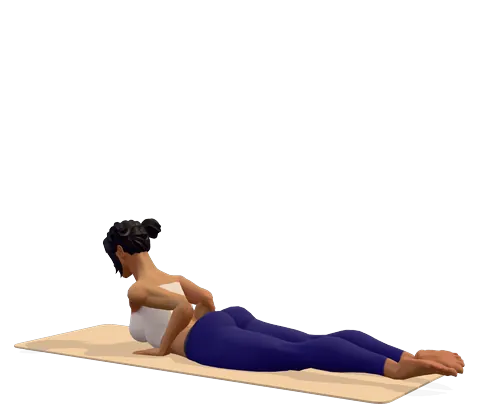 Cobra PoseBhujangasana
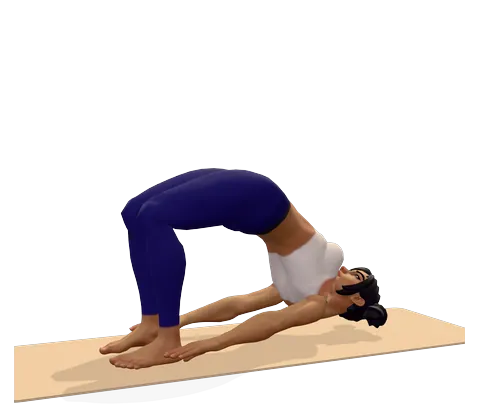 Bridge PoseSetu Bandhasana
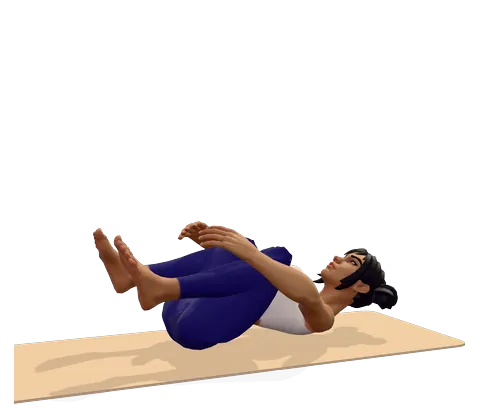 Wind-Relieving PosePavanamuktasana
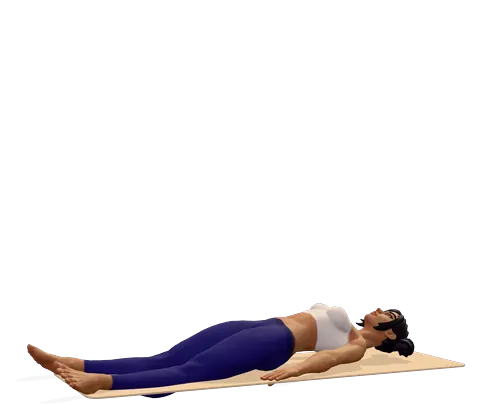 Corpse PoseSavasana
Frequently asked questions
What is Viniyoga?
Viniyoga is a breath-led approach to yoga, from the teaching of T. Krishnamacharya and T.K.V. Desikachar, that adapts poses, breathing and sequences to each person. It is widely used as yoga therapy.
What does Viniyoga mean?
In Sanskrit it means "application" or "appropriate use": applying yoga in the right way for the individual.
Is Viniyoga good for back pain?
Viniyoga-based classes helped adults with chronic low back pain in clinical trials, about as much as stretching classes. Ask your doctor first if your pain is severe or new.
Is Viniyoga good for beginners?
Yes. It is slow and adaptable, and every pose can be made easier. It suits people of any age or fitness level.
What is the difference between Viniyoga and vinyasa?
Vinyasa is a flowing group class style. Viniyoga is slower, repeats movements with the breath before holding them, and is usually tailored to one person.
Viniyoga vidheyak kya hai?
विनियोग विधेयक is the Hindi term for an Appropriation Bill, a law that allows government spending. It has nothing to do with yoga.