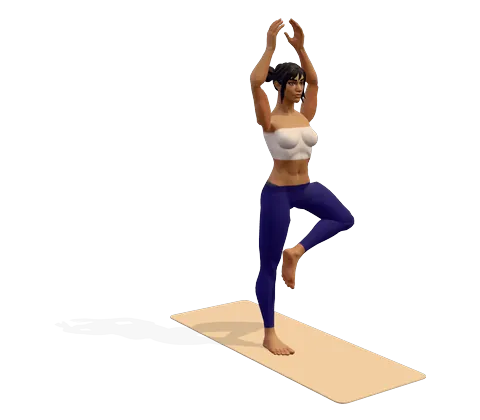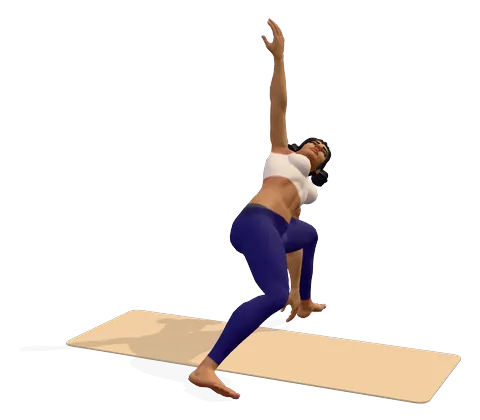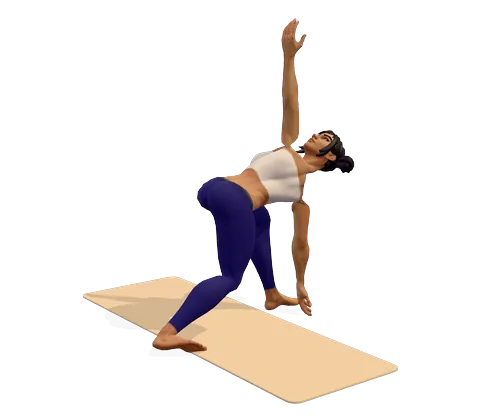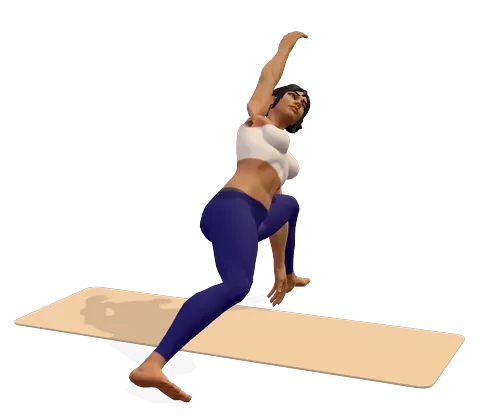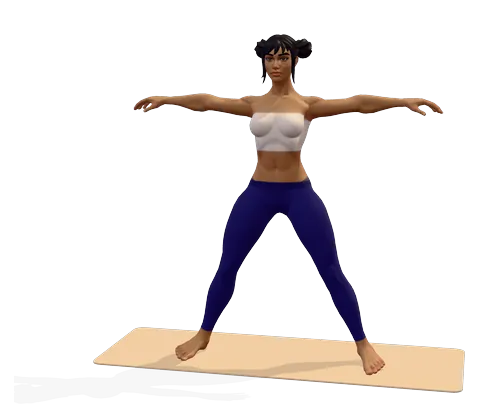
How to do Five-Pointed Star Pose step by step
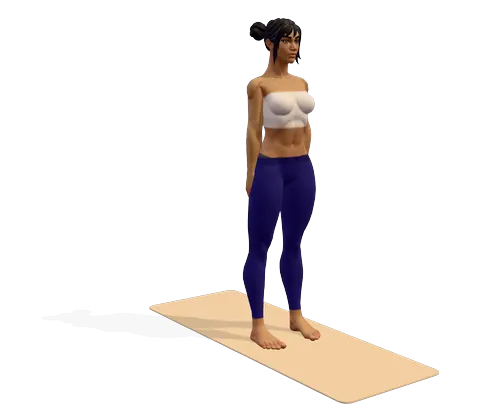
- Stand in Mountain Pose in the middle of your mat, arms by your sides.
- Step your feet wide apart, about one leg-length (roughly 1 metre). Turn your toes slightly out so your knees point the same way.
- Breathe in and raise both arms out to the sides to shoulder height, palms down, fingers wide.
- Press down through both feet, firm your thighs and keep your knees soft, not locked.
- Lengthen up through the crown of your head, relax your shoulders down and look straight ahead.
- Stay for 20–30 seconds (4–6 breaths), stretching out through your fingertips and feet.
- Breathe out, lower your arms and step your feet back together.
Where you feel Five-Pointed Star Pose: what it stretches and strengthens
Stretch out through your fingertips and feet like a five-pointed star. In the 3D guide, turn on Body guide: areas that stretch glow green and areas that work glow saffron.
Stretches
- Chest
- Inner thighs
Strengthens
- Shoulders
- Front thighs
- Arms
Benefits and precautions
Benefits
- Stretches the chest, the front of the shoulders and the inner thighs
- Strengthens the shoulders and arms that hold the arms out
- Works the thighs (quadriceps) and ankles in a wide, stable stance
- Encourages an upright posture and a long spine
- Opens the rib cage so breathing can feel fuller
- Easy enough for children, seniors and complete beginners
Avoid or modify if
- Shoulder injury or frozen shoulder: lower the arms, bend the elbows or rest your hands on your hips
- Knee or hip pain: take a narrower stance and keep the knees in line with the toes
- Low blood pressure or dizziness: step in and out slowly and sit down if you feel light-headed
- Poor balance: stand with your back near a wall, or do the seated version on a chair
- Pregnancy: usually comfortable with a moderate stance; ask your midwife or doctor if unsure
Five-pointed star pose (Utthita Tadasana) is a simple standing pose: feet wide, arms reaching out to the sides, body tall. Your head, two hands and two feet are the five star points, which gives the pose its English name. It looks easy, and it is, but done with attention it works the legs, shoulders and posture muscles at once.
What is Utthita Tadasana? Star pose Sanskrit meaning
In Sanskrit, utthita means "extended", tada means "mountain" and asana means "pose". So the Sanskrit for extended mountain pose is Utthita Tadasana, and the five-pointed star pose is called star pose or extended mountain pose in English-speaking yoga classes. The meaning of the five-pointed star here is simple: the body reaches out evenly in five directions from a steady centre.
If you have seen a photo of someone standing wide with arms out and wondered "what yoga pose is this?", it is almost always this one. It is among the most popular yoga poses for beginners because it needs no flexibility.
How to perform this Tadasana variation well
The steps above match the 3D figure. These details turn a casual stance into real five-pointed star pose yoga:
- Knees follow toes. Knees rolling inward strain the inner knee.
- Arms level with the shoulders, as if your wrists rest on a long shelf.
- Shoulders down. Reach the fingers wide without lifting the shoulders to the ears.
- Ribs over hips. Do not push the chest forward and arch the lower back.
- Soft knees. Firm the thighs but do not lock the knees.
Hold for 20–30 seconds and repeat two or three times. It fits well at the start of a morning yoga routine. If you are still learning how to do Tadasana, practise Mountain Pose first; the same alignment applies here.
Five-pointed star pose benefits
The star pose yoga benefits are modest but real, much like the wider benefits of Tadasana in yoga. Holding the arms out works the shoulders and arms and builds endurance in the upper back. The wide stance works the quadriceps and ankles, and the inner thighs get a mild stretch. Opening the arms stretches the chest, which helps people who sit hunched over a desk.
Benefits for posture, spine and balance
Like other Tadasana variations, this pose teaches you to stack head, ribs and pelvis. The Tadasana benefits for posture and the spine come from repetition: you learn what "tall" feels like and carry it into daily life. The wide base also makes it a gentle first step before narrower balances such as tree pose, so the Tadasana benefits for balance start here.
Benefits for breathing, focus and relaxation
With the arms open, the ribs have room to expand sideways, and many people find breathing feels fuller. Holding still while you stretch in five directions also asks for steady attention, one of the quieter Tadasana benefits for concentration. Lowering the arms slowly on a long exhale can make these simple Tadasana exercises for relaxation too.
Star pose is a light strength pose. For stronger yoga poses for strength, bend the knees into goddess pose. The Tadasana benefits for core strength come mainly from keeping the belly gently engaged.
Muscles stretched and worked
| Stretched | Worked |
|---|---|
| Chest and front of the shoulders | Shoulders (deltoids) and upper back |
| Inner thighs (adductors) | Arms, holding them out long |
| Fingers and wrists, as they spread | Quadriceps and ankles in the wide stance |
Turn on the Body guide in the 3D viewer to see the chest and inner thighs glow green and the shoulders, arms and thighs glow saffron.
Star pose for beginners, kids and seniors
Of all the simple yoga poses for beginners, this is one of the easiest to learn first. These modifications for yoga poses of this kind keep it comfortable:
- Tired shoulders: bend the elbows or bring your hands to your hips.
- Wobbly: stand with your back near a wall.
- Chair version: sit near the front of a chair, feet wide, and raise the arms. It is one of the kindest chair yoga poses for back pain and for seniors.
- Kids: star yoga pose for kids works as a game: grow as big as a star, shrink into a ball, grow again. Extended mountain pose makes kids stand tall without effort. See yoga for kids.
Variations: one leg, shooting star and fallen star
- Five-pointed star pose on one leg: shift your weight to one foot and lift the other a little off the floor to the side. Stay near a wall.
- Shooting star pose (yoga) and fallen star pose: both are side plank variations and far harder. Build up through side plank first.
- Supta Utthita Tadasana: the lying-down star, arms and legs spread wide on your back. A restful choice if you are tired.
Is star pose a good yoga pose for back pain?
For general stiffness from sitting, it can help, because it asks you to stand tall and open the chest. It is gentle enough to count among beginner yoga poses for back pain, but it does not stretch the lower back directly. Combine it with other poses from our yoga for back pain plan. With a disc problem or pain spreading into the leg, ask your doctor or physiotherapist first.
Where it fits among standing poses in yoga
Start in Mountain Pose and raise the arms overhead; the benefits of Hasta Uttanasana, a long side body, prepare you well. Step wide into star pose, then turn one foot out for Warrior II. Finish with Uttanasana, the standing forward bend. Follow this with voice in our guided sessions.
Frequently asked questions
What is five-pointed star pose in Sanskrit?
Utthita Tadasana. Utthita means extended, tada means mountain and asana means pose, so it is also called extended mountain pose.
What are the benefits of extended mountain pose?
It stretches the chest and inner thighs, strengthens the shoulders, arms and legs, supports an upright posture and makes breathing feel more open.
Is star pose good for beginners?
Yes. It is one of the easy yoga poses for beginners and one of the best Tadasana exercises for beginners, because it needs strength and attention but no flexibility.
Can Tadasana exercises help back pain?
Simple standing yoga poses like star pose can ease stiffness from sitting. They are not a treatment on their own; for yoga poses for back pain relief, combine gentle stretches and ask a physiotherapist if pain persists.
What is the difference between star pose and Mountain Pose?
Mountain Pose stands with feet together and arms by the sides. Star pose widens the stance and stretches the arms out to shoulder height.
What is the difference between star pose and standing figure four pose?
Standing figure four pose (standing figure 4 pose) is a one-legged chair pose with one ankle over the other knee. Star pose stands evenly on both feet.
This page is for general education. Check with your doctor before starting yoga if you are pregnant, have a medical condition or an injury. Stop if you feel pain, dizziness or shortness of breath.