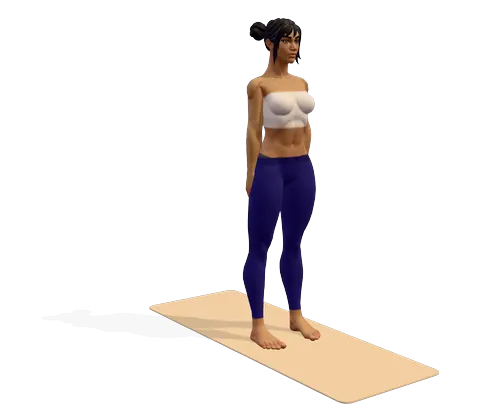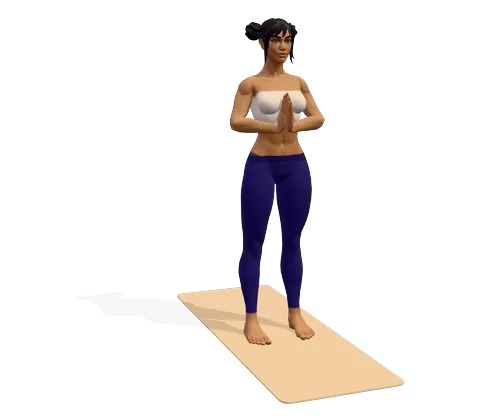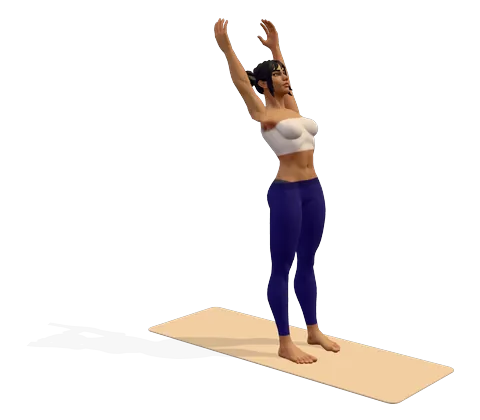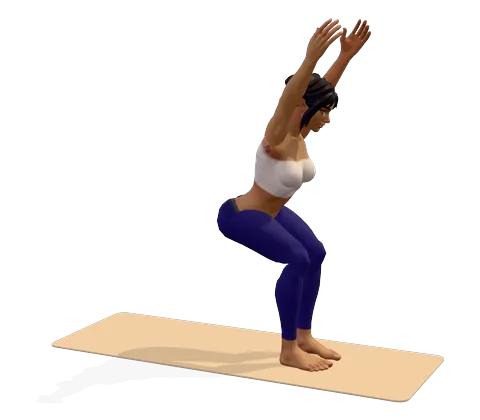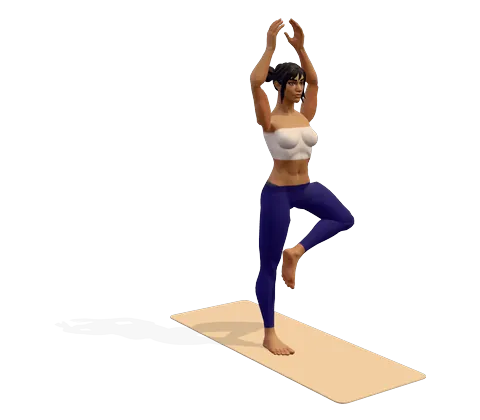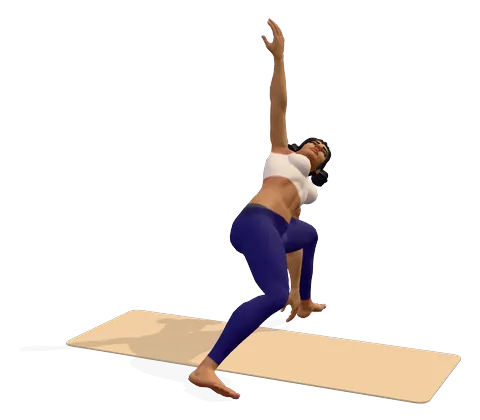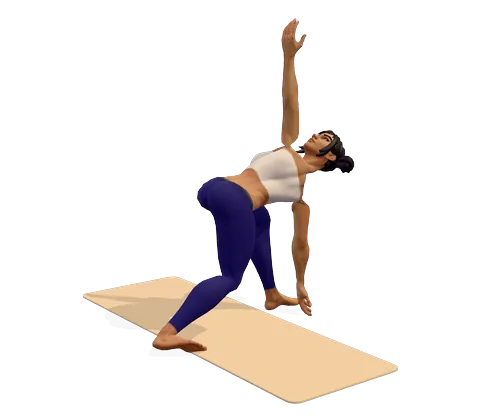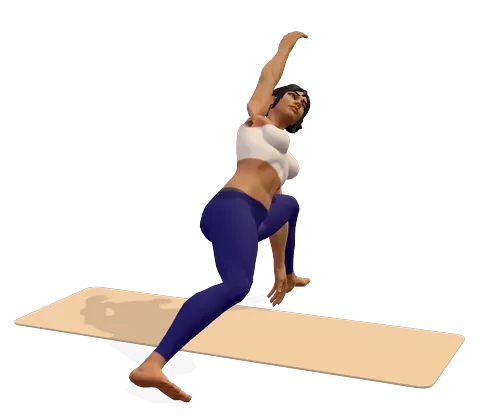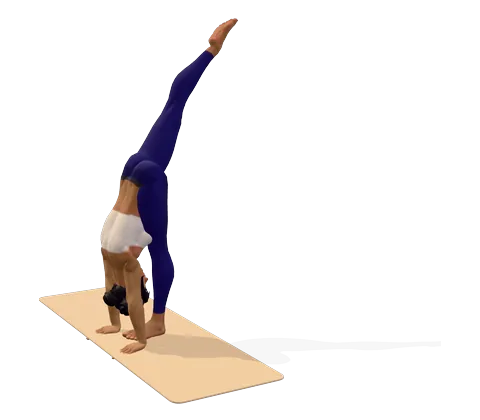
How to do Standing Split step by step
- Stand at the front of your mat with your feet hip-width apart. Breathe in and lengthen your spine.
- Breathing out, fold forward from the hips into a standing forward bend. Bend your knees as much as you need to bring your hands to the floor or to blocks.
- Shift your weight onto your left foot and place your hands on the mat on either side of it, a little in front of your toes.
- Breathing in, lift your right leg straight up behind you. Keep the right toes pointing down so your hips stay square to the floor.
- Keep a slight bend in the standing knee if the hamstring pulls. Let your head hang and bring your chest toward your standing leg.
- Hold this standing split position for 15–20 seconds (3–5 breaths), pressing evenly through the standing foot.
- Breathing out, lower the right leg slowly, return to a standing forward bend, then repeat standing on the right leg.
Where you feel Standing Split: what it stretches and strengthens
Fold over the standing leg and reach the other leg up behind you. In the 3D guide, turn on Body guide: areas that stretch glow green and areas that work glow saffron.
Stretches
- Hamstrings
- Calves
- Hip flexors
Strengthens
- Glutes
- Front thighs
- Ankles
Benefits and precautions
Benefits
- Stretches the hamstrings and calf of the standing leg deeply
- Stretches the hip flexors at the front of the lifted leg
- Strengthens the glutes and back of the lifted leg
- Builds strength and balance in the standing ankle, knee and thigh
- Trains the flexibility needed for front splits and dance
- Calms the mind as a forward fold with the head below the heart
Avoid or modify if
- High blood pressure, glaucoma, retinal problems or recent eye surgery — the head is below the heart; avoid the pose or keep hands high on blocks
- Vertigo, dizziness or low blood pressure — practise near a wall and come up very slowly
- Hamstring tear, sciatica or a disc problem — skip the full fold or bend the standing knee and lift the leg only a little
- Ankle or knee injury in the standing leg — choose a less weight-bearing hamstring stretch
- Pregnancy — avoid the deep fold and the balance; ask your midwife or doctor
A standing split (Urdhva Prasarita Eka Padasana) is a one-legged forward fold in which one leg stays rooted, your hands rest on the floor, and the other leg lifts high behind you. From the side, the legs look like a vertical standing split. It asks for long hamstrings, strong glutes and good balance, and it is a level-3 pose: make sure you meet the prerequisites below before you try the full version.
What is a standing split called in Sanskrit?
The standing split Sanskrit name is Urdhva Prasarita Eka Padasana, sometimes written Eka Pada Urdhva Prasarita Padasana. Word by word: urdhva means "upward", prasarita "stretched out", eka "one", pada "foot" or "leg" and asana "pose": the "one leg stretched upward pose". The Sanskrit name is long, so most English classes just say standing splits.
It is not the gym exercise called a standing split squat (a lunge with the back foot raised), and it is different from a dancer's standing split, where you stand upright and hold one leg up in front or to the side.
Before you start: prerequisites
- You can fold into standing forward bend and touch the floor or a block with only a slight knee bend.
- You can balance steadily in Warrior III for a few breaths.
- You have no uncontrolled high blood pressure, glaucoma or eye condition (see precautions).
If you are new to yoga, spend a few weeks with the beginner poses first.
How to do a standing split
The steps above match the 3D figure: standing on the left leg with the right leg lifting first. These standing split cues fix the common problems and keep your posture clean:
- Height comes from the fold, not the leg. Bring your chest toward your standing thigh first; the leg rises as the fold deepens.
- Hips square. Point the lifted toes down. Turning the hip open makes the leg look higher but twists the lower back.
- Do not kick. A standing split kick with momentum can strain the hamstring. Lift slowly and hold.
- Soft standing knee. Keep a micro-bend and press the big-toe side of the foot down.
- Relax the neck. Let the head hang; looking forward shortens the back of the neck.
How to do a standing split for beginners
Put two blocks on either side of the standing foot and rest your hands on them. Lift the back leg only to hip height at first, like a tilted Warrior III. You can also rest the hands on a wall at hip height and lift the leg behind you. Standing split pose for beginners is about a long back and a level pelvis, not how high the foot goes. These modifications for yoga poses are the safest way to learn how to do a split standing up.
A few standing split flexibility tips: warm up with a few rounds of Surya Namaskar first, never bounce, and stretch a little on both sides rather than a lot on one.
Standing split benefits
The main standing split stretch benefits are for the back of the standing leg: the hamstrings and calf lengthen with your body weight helping. The front of the lifted hip stretches too. At the same time, the glutes and the back of the lifted leg work to hold it up, and the standing ankle, knee and thigh work to keep you balanced. That mix makes it both a flexibility and a strength pose.
Because it is a gentle inversion with the head low, many people find the standing split calming. It is also useful standing split balance practice: small ankle adjustments train steadiness in a way two-footed folds do not.
Is doing the splits good for you?
Flexibility training is good for most people when it is gradual. Doing the splits with yoga builds range slowly and adds strength, which protects the joints. Forcing a split, cold or with bouncing, can strain the hamstrings or the hip.
Doing the splits with back pain
If you have back pain, a standing split is usually not the place to start, because the deep fold loads the lower back. Begin with the gentler poses in our yoga for back pain plan and ask your physiotherapist before deep folds.
What muscles does a standing split stretch?
| Stretched | Strengthened |
|---|---|
| Hamstrings of the standing leg | Glutes of the lifted leg |
| Calf of the standing leg | Quadriceps of the standing leg |
| Hip flexors of the lifted leg | Ankle and foot muscles of the standing leg |
The Body guide on the 3D figure shows this: green for the stretch, saffron for the work.
Standing split progression and variations
- Hands on blocks, leg at hip height. Focus on level hips.
- Hands on the floor, leg higher. Chest toward the thigh.
- Hand to ankle: hold the standing ankle with one or both hands and draw the chest closer.
- Vertical standing split: the chest touches the thigh and the legs form nearly one vertical line.
Other standing split variations bend the lifted knee (easier on tight hip flexors) or open the hip in a flowing class. For a standing split stretch routine that supports the pose, practise half splits, low lunge and three-legged dog two or three times a week.
The half split pose in yoga is the best single prep for the hamstrings, and it is the core of any standing split flexibility training. Over months, this flexibility training leads toward the full front splits, Hanumanasana.
Standing split vs Warrior 3
Both balance on one leg with the other leg behind you. In Warrior III, the body is a horizontal line and the back leg stays at hip height, so it builds more strength. In the standing split, the chest folds down and the leg rises high, so it gives a deeper stretch. Flowing from standing splits to Warrior 3 and back is a good balance drill.
Splits for yoga and dance
In ballet and dance, a standing split usually means standing upright with one leg held high. The yoga version, folded forward with hands down, is a helpful stretch for dancers because it builds the same hamstring length with support from the floor.
Who should avoid the standing split?
Because the head is below the heart, avoid it with high blood pressure, glaucoma or other eye pressure problems; see our yoga for high blood pressure page for safer poses. Skip it with a hamstring tear, sciatica or a recent ankle or knee injury, and in pregnancy. Practise the standing forward bend with voice guidance in our guided sessions while you build up.
Frequently asked questions
What is a standing split called in yoga?
Urdhva Prasarita Eka Padasana, "one leg stretched upward pose". In English, most classes simply use the name standing splits.
How do I do a standing split for beginners?
Rest your hands on blocks beside your standing foot, keep a soft standing knee and lift the back leg only to hip height. Keep both hips facing the floor and hold for a few breaths.
How long does it take to do a standing split?
It depends on your hamstrings. Many people need weeks to months of regular practice. Two or three short sessions a week with half splits and forward bends help.
Why do I lose balance in a standing split?
Usually the weight is in the heel or the leg is kicked up too fast. Put the hands on blocks, press through the big-toe side of the standing foot and lift slowly.
What muscles do standing splits stretch?
Mainly the hamstrings and calf of the standing leg and the hip flexors of the lifted leg. The glutes of the lifted leg and the standing thigh work.
Is the standing split safe with high blood pressure?
Your head goes below your heart, so avoid it with uncontrolled high blood pressure or glaucoma. Ask your doctor, and choose upright poses instead.
Is a standing split the same as a split squat?
No. The gym split squat is a strength exercise, a lunge with the back foot raised. The yoga standing split is a folded balance and stretch.
This page is for general education. Check with your doctor before starting yoga if you are pregnant, have a medical condition or an injury. Stop if you feel pain, dizziness or shortness of breath.